


The “night shift horror” sub-genre has exploded in popularity over the last few years, fueled largely by the indie scene’s fascination with liminal spaces and the inherent creepiness of mundane labor after dark. From The Convenience Store to Happy’s Humble Burger Farm, developers have realized that the best way to scare a player isn’t always with a monster in a closet, but with a minimum-wage job that slowly unravels into a nightmare.
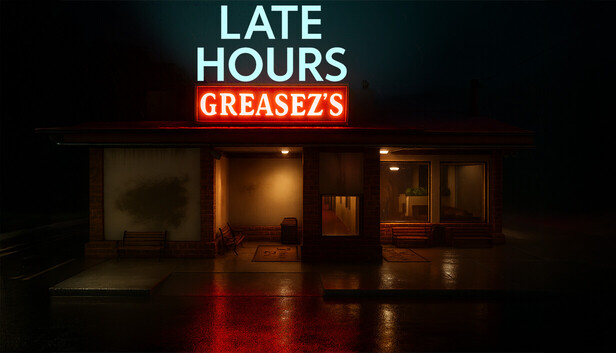
Enter Late Hours, developed by Miguel and Yasmany Roman and published by Rapture Ready Games. Released on the very last day of 2025, this first-person simulation-horror hybrid drops you into the grease-stained uniform of an employee at “Greasez’s,” a 24-hour burger joint that has clearly seen better days.
On the surface, it’s a job simulator about flipping patties and dealing with a demanding manager. Beneath the grime, however, lies a psychological thriller about a crumbling relationship, a stalker in the rain, and the suffocating isolation of the graveyard shift. After clocking in and spending a few terrifying nights behind the counter, it’s clear that while Late Hours nails the atmosphere of a dead-end job, it struggles to balance its gameplay loops with its horror aspirations.

Clocking In: The Simulation Loop
The game wastes no time immersing you in the drudgery of fast-food service. You arrive at Greasez’s in the pouring rain, driving a car that felt like a toaster with a roof rack, only to be immediately bombarded by texts from your aggressive manager. The tone is set instantly: you are expendable, you are underpaid, and if the store isn’t spotless, you’re in trouble.
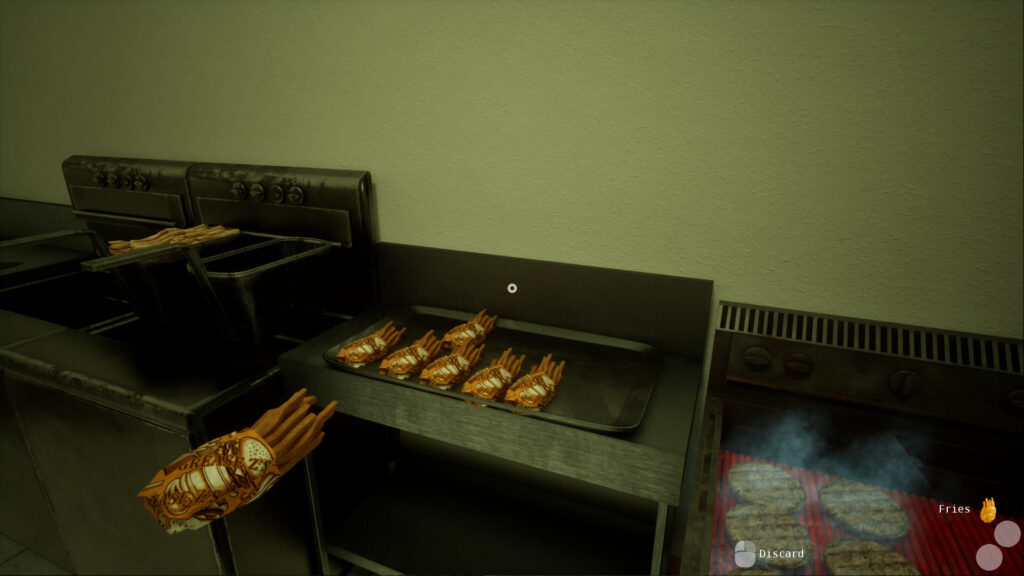
The core gameplay loop is surprisingly detailed for a horror title. You aren’t just walking around waiting for a jumpscare; you have a job to do. The game tasks you with cleaning up trash left by the day crew, stocking the freezer with heavy boxes of meat from an external trailer, and prepping the kitchen for the night rush.
Cooking is a manual, tactile process. You have to place patties on the grill, wait for them to cook without burning, drop fries into the fryer, and assemble burgers according to specific customer orders.
“You want a Greasez’s heart attack? Burger patty, cheese, lettuce, onion,” recounts one player during a frantic rush. The game demands precision. Put the pickles on before the onions? That might be a mistake. Forgot to prep the chicken patties? You’re going to lose time.
This simulation aspect is a double-edged sword. On one hand, it successfully induces the stress of a real rush. When orders start piling up—”Cheese, lettuce, two tomato, two pickles, two onion”—the panic is palpable. On the other hand, the mechanics can feel clunky. Players have noted the frustration of only being able to carry one box of meat at a time from the trailer to the freezer, an artificial limitation that feels more like padding than a genuine gameplay challenge. “It’s called having a job, bud,” one observer joked, but in a video game, these tedious tasks can wear thin quickly.
The Atmosphere: Grease and Grime
Where Late Hours shines brightest is in its presentation. The restaurant itself is a masterclass in disgusting environmental storytelling. It’s not just dirty; it feels unclean. There are roaches skittering across the countertops and floor, visible grease stains on the equipment, and a general sense of decay that permeates every texture.
“This place looks raggedy,” a player commented upon entering. “No wonder y’all ain’t got no business.”
The visual fidelity, powered by Unreal Engine 5, uses lighting to great effect. The harsh fluorescent hum of the kitchen lights contrasts sharply with the pitch-black rainy void outside the windows. The game uses a “dynamic phone system” as your primary connection to the outside world, but even that feels isolating. You receive texts from your partner, Samantha, detailing a relationship on the brink of collapse. The dialogue choices you make—ranging from apologetic to dismissive—determine the fate of your relationship, adding an emotional weight to the shift that most job simulators lack.
However, the game isn’t without its technical hiccups. Screen tearing and unoptimized sensitivity settings have been reported, breaking the immersion for some. Furthermore, the use of AI-generated art for the in-game food posters and music has drawn criticism. While it adds a layer of uncanny valley surrealism—”You can’t even take a picture of your own burger,” a reviewer noted—it also feels like a shortcut that detracts from the otherwise grounded horror.
The Horror: Watching From the Shadows
The horror in Late Hours is a slow burn. It starts with small inconsistencies. A text from an unknown number claiming to be the “old closer.” A strange noise from the back alley. The power is cutting out at the worst possible moment.
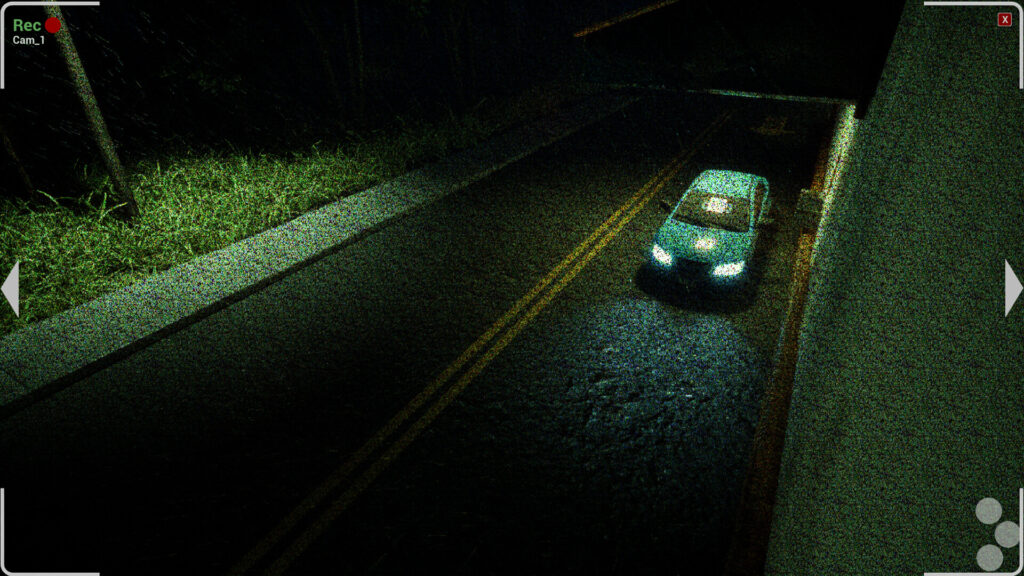
Unlike games that rely on cheap jump scares, Late Hours builds dread through anticipation. You know you have to go out to the trailer to get more meat, but the music has shifted, and there’s a silhouette standing near your car. Do you risk it to keep the manager happy, or do you hide?
The threat eventually escalates from psychological to physical. A masked killer begins stalking the perimeter of the restaurant. The moment players realize they are being hunted is effective because they are simultaneously trying to manage the mundane. You are trying to assemble a veggie burger while a man with a knife is slashing your tires outside.
There was someone trying to kill me with a knife, and the manager didn’t even call for help. Just asked who was going to clean up the mess.
This juxtaposition is the game’s thematic core: the horror of the killer is matched only by the horror of late-stage capitalism. The manager doesn’t care if you die; they care if the fries are burnt. It’s a satirical bite that gives the scares a unique flavor.
The Narrative: Relationship on the Rocks
The subplot involving Samantha offers a break from the kitchen chaos, but its reception is mixed. The text conversations can feel melodramatic and disjointed from the main action. “I’m just trying to vibe and be at work,” one player complained after receiving a heavy “I just miss us” text in the middle of a shift.
The dialogue options often feel binary—you can either be a doormat or a jerk, with little room for nuance. While the idea of balancing a failing personal life with a high-stress job is thematic gold, the execution often feels like an interruption rather than an integration.
Late Hours is a game with immense potential, currently hampered by its ambition and rough edges. The simulation elements are robust but can be tedious to use. The horror is atmospheric but can feel scripted. The narrative is ambitious but can feel corny.
However, for $6.99, it offers a genuinely tense experience unlike most other options on the market. It captures the specific, lonely anxiety of the night shift perfectly. The feeling of being the only light on in a dark world, serving food to faceless strangers while something watches from the dark, is a powerful loop.
If you can look past the AI-generated assets and the clunky inventory management, Late Hours serves up a greasy, unhealthy, but ultimately satisfying slice of horror. Just don’t forget to lock the back door.
| The Good | The Bad |
| Atmosphere: The restaurant feels genuinely gross and lived-in; the rain and lighting create a perfect mood. | Tedious Mechanics: The “one box at a time” rule and lack of clear instructions (like the salad container location) can be frustrating. |
| Tension: Balancing customer orders while being stalked creates a fantastic, high-stakes gameplay loop. | AI Assets: The use of AI for posters and music feels cheap and detracts from the game’s artistic identity. |
| Thematic Depth: The satire of corporate apathy (“manager cares more about profits than your life”) hits hard. | Technical Issues: Screen tearing, sensitivity bugs, and unoptimized performance are present at launch. |
| Price Point: At roughly $7, it offers good value for a short, punchy horror experience. | Clunky Narrative: The relationship drama via text message often feels melodramatic and interruptive. |

Late Hours: Late Hours is a tense, atmospheric job simulator that successfully blends the stress of food service with the dread of a home invasion thriller. While the simulation mechanics can be overly tedious and the narrative subplot feels disconnected, the environmental design and "manager from hell" satire create a uniquely stressful horror experience. – ColdMoon