


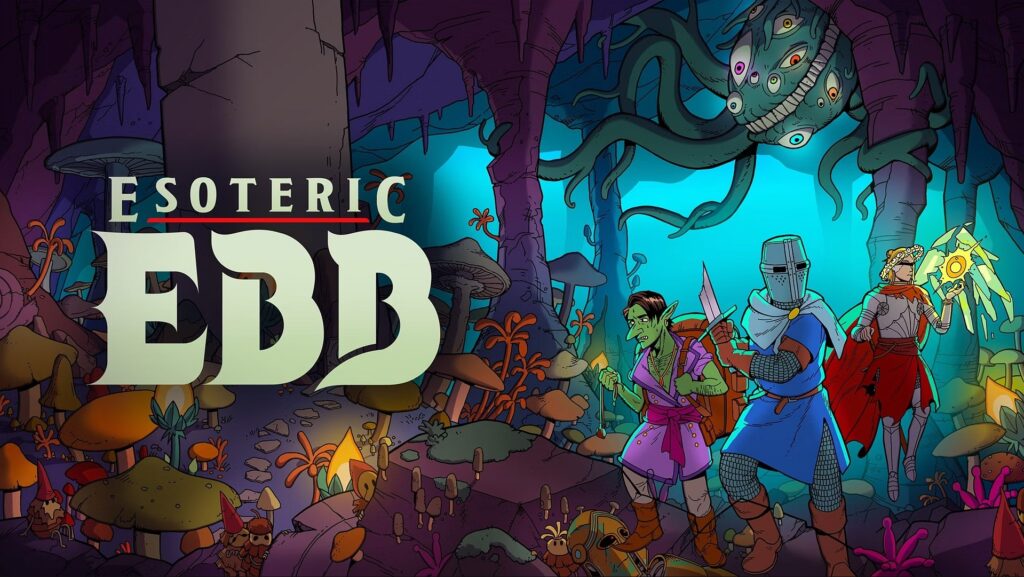
Esoteric Ebb is the most surprising CRPG of 2026 — a solo-developed isometric RPG from Christoffer Bodegård, published by Raw Fury, that begins as an obvious Disco Elysium heir and gradually becomes something distinctly and genuinely its own. By the end you’re not thinking about Disco Elysium at all. You’re thinking about Ragn Hemlin, The Cleric, a glorified government functionary who woke up in a morgue with half a river in his boots, and the bizarre, warm, philosophically rich city of Norvik that somehow made you care deeply about an election in a fantasy world.
The Disco Elysium comparison is unavoidable and should be addressed upfront: yes, Esoteric Ebb takes clear structural inspiration from ZA/UM’s masterpiece. A disgraced investigator, a city saturated with political tension, stat-based inner voices that interrupt your decisions, isometric exploration and dialogue-heavy gameplay. The scaffolding is familiar. What’s built on top of it is not.

Esoteric Ebb’s Norvik: A World Worth Getting Lost In
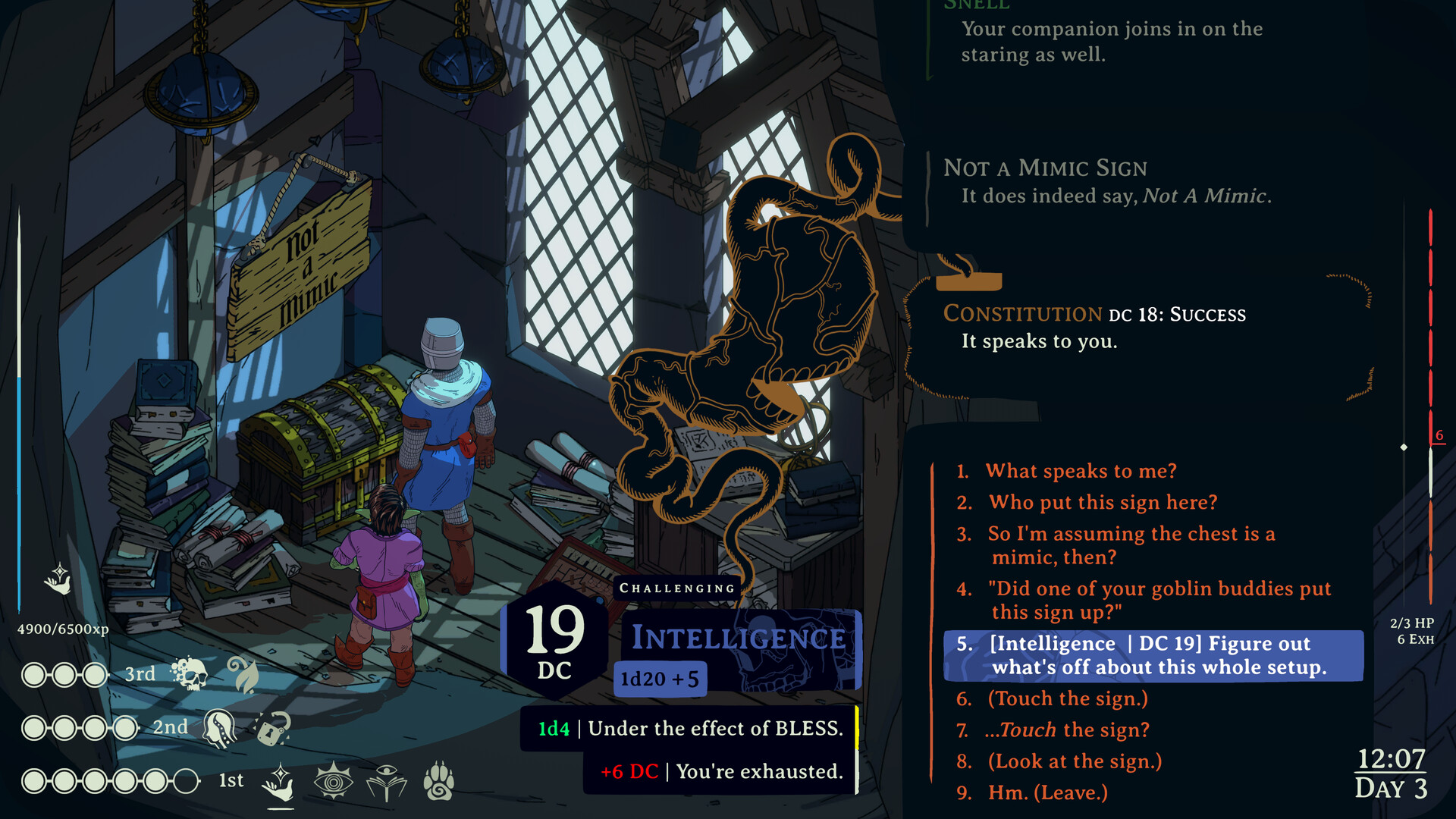
The city of Norvik is the game’s greatest achievement. Set in a post-Arcanepunk fantasy metropolis where mythological creatures sell newspapers at corner shops, ideological factions are preparing for the city’s first democratic election, and the streets are genuinely alive with competing interests, Norvik feels like a place that exists beyond your involvement in it. The political factions — each representing a real-world ideological tendency translated into fantasy terms — aren’t strawmen. They’re people with understandable motivations and genuine grievances, even the ones whose positions the game clearly doesn’t endorse. That’s hard to write and Bodegård mostly pulls it off.
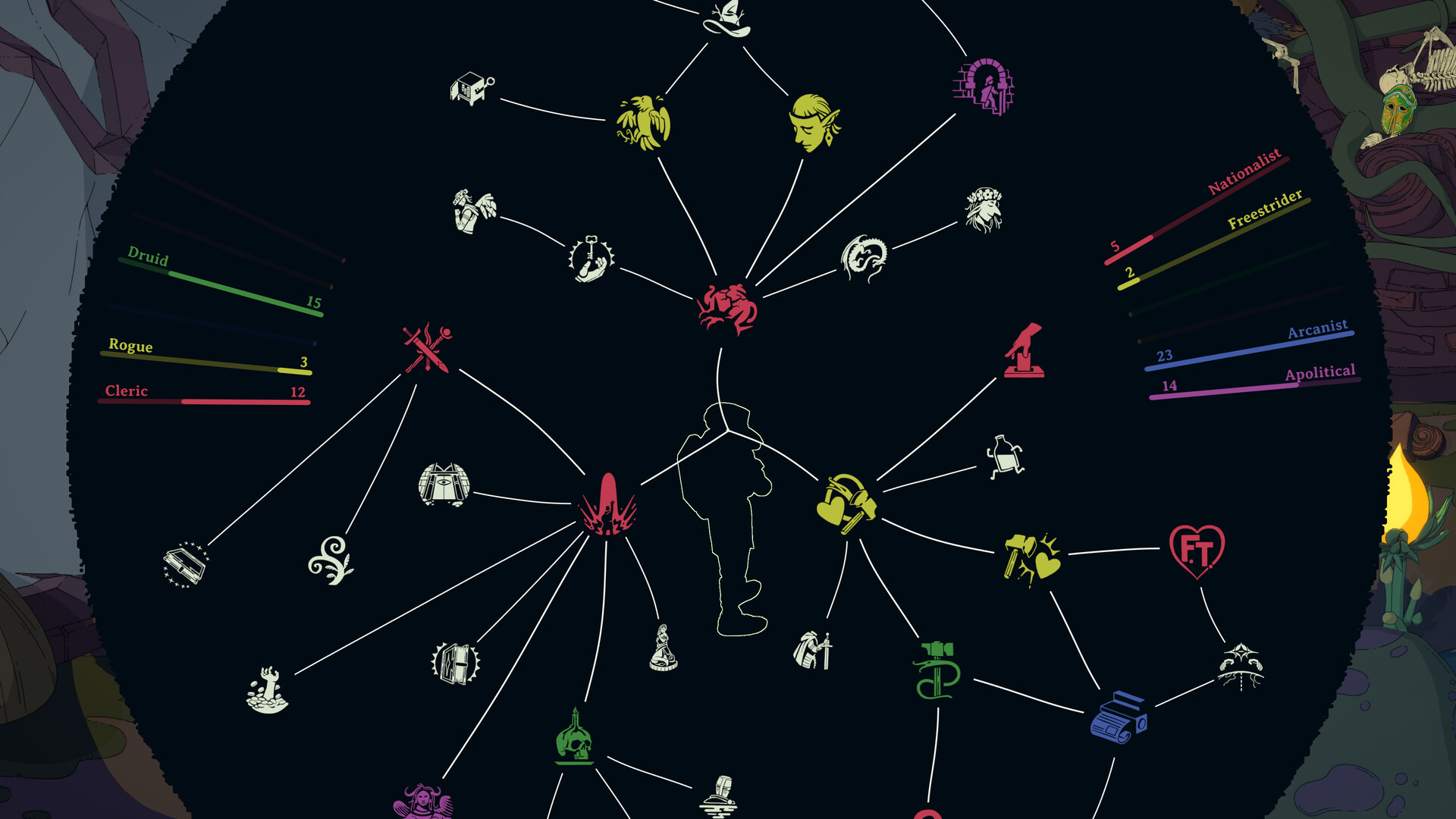
The investigation you’re pulled into — a tea shop explosion, five days before the election — works as both a procedural mystery and a lens through which Norvik’s social tensions are refracted. The city’s history, its power structures, its people, all reveal themselves through the investigation in ways that make the world feel genuinely three-dimensional. Players who explore thoroughly will find a staggering amount of content tucked into corners, conversations, and optional detours. The Questing Tree — which combines quest log, skill tree, and mind map — is one of the more inventive UI ideas in recent RPG design.

The Stat Voice System and What Makes It Work
Where Disco Elysium used abstract psychological concepts as its stat voices, Esoteric Ebb maps its inner dialogue to the D&D stat line — Strength, Dexterity, Wisdom, Intelligence, and so on. Each stat has a distinct personality and political alignment, and they interrupt conversations constantly with their own takes on what’s happening. Strength preaches nationalism. Dexterity screams revolution. Intelligence lobbies for technocratic rule. Wisdom offers quiet, nuanced perspective that most players will find the most consistently reasonable and the most “canon” by the end.
This is a more accessible distillation of Disco Elysium’s concept — D&D stats are immediately graspable in a way that “Electrochemistry” isn’t — and it works. The political alignment of each stat is clever design that turns character building into ideological commitment. You’re not just picking stats; you’re deciding which voices you want amplified in your head for the next 20 hours. The downside is that some stats feel less fully developed in their political nuance than others — Wisdom gets the richest internal arc, while Strength’s early sessions can feel blunt and one-note before finding more texture in the later game.
The Writing: Hilarious, Occasionally Derivative, Distinctly Its Own
Esoteric Ebb is genuinely funny in ways that only Pratchett and Adams comparisons really capture — absurdist comedy that coexists with earnest emotional stakes without deflating them. The Cleric’s relationship with his goblin sidekick serves as the game’s emotional spine, and the warmth of that friendship grounds what could otherwise be pure ironic distance. Players have mentioned being blindsided by emotional moments they didn’t see coming — genuine, earned sentiment from writing that had spent hours building goodwill through comedy.
The game’s roughest edges are also writing-related. Some sequences lean too heavily on references to other games and cultural touchstones, moments that read as nods rather than expressions of Esoteric Ebb’s own voice. There are occasional grammatical inconsistencies and the dialogue can feel slightly tangled when objectives are completed out of the intended sequence. These are the growing pains of an ambitious solo development project rather than structural problems, and they’re considerably more forgivable at $24.99 than they would be at triple-A pricing. The game’s best moments — which are plentiful — are when Bodegård trusts his own world completely and stops looking over his shoulder at what inspired it.
No Voice Acting, the Timed Structure, and Other Things to Know
There is no voice acting in Esoteric Ebb. This is the right call — the game contains an enormous amount of text, the writing voice is distinctive enough to work without performance, and the budget of a solo development project makes full VO an unrealistic prospect. Players who need voices may find the wall of text daunting; players who love reading will be in their element.
The timed structure — five days before the election, each day containing a limited number of actions — creates urgency but also pressure on a first playthrough. It’s possible to miss content by pursuing quests in a particular order, and the game doesn’t always communicate clearly what’s time-sensitive and what isn’t. This is authentic tabletop design rather than bad design, but newcomers should know the game actively encourages multiple playthroughs, and the first run is more about experiencing the world than optimising it.
The Good, The Bad, & The Ugly
| The Good | The Bad | The Ugly |
|---|---|---|
| Norvik Is a Real CityA living, politically complex fantasy metropolis that rewards exploration and feels like it exists beyond your investigation. One of the best CRPG settings in years. | Derivativeness in the Early HoursThe Disco Elysium DNA is most visible in the opening sections, and players who haven’t clicked with the game’s own voice yet may bounce off before it finds itself. | Missed Content on First PlaythroughThe timed structure and lack of clear urgency signalling means it’s genuinely easy to miss significant content without realising. First runs are best treated as exploratory. |
| Exceptional Writing and ComedyAbsurdist humour that coexists with earnest emotional stakes — Douglas Adams and Pratchett comparisons are warranted, and the game’s distinct voice emerges powerfully in its best moments. | Uneven Stat Political NuanceSome stat voices (particularly Wisdom) get richer character arcs than others. Strength’s early sessions feel blunt before finding more texture in the later game. | |
| Questing Tree SystemCombining quest log, skill tree, and mind map into a single system is genuinely inventive and makes progression feel like a living document of your character’s development. | Occasional Writing Rough EdgesGrammatical inconsistencies and dialogue tangles when quests are completed out of order — the marks of ambitious solo development rather than sloppy craft. | |
| Soundtrack That SlapsA chill, thoughtful, not-what-you-expect score that grounds the game’s tone precisely where it needs grounding — preventing the comedy from tipping into pure wackiness. | ||
| Outstanding Value20-25 hours of story content with genuine replay value from build variety and political alignment, at $24.99 from a solo developer. Generously priced for what it delivers. |
The Verdict
Esoteric Ebb is a remarkable achievement — a solo developer’s love letter to the CRPG and tabletop traditions that creates something genuinely new from familiar inspirations. The Disco Elysium comparisons will follow it everywhere and they’re not wrong, but they’re also not the whole story. Norvik is Bodegård’s city. The Cleric is his character. The humour, the warmth, the political earnestness — these are his voice, and by the end of a playthrough they’re entirely recognisable as such.
At $24.99, Esoteric Ebb offers more genuine creativity per dollar than almost any other CRPG on the market. The rough edges and occasional over-reliance on its inspirations are the honest price of a singular creative vision. For fans of Disco Elysium, Planescape: Torment, and narrative RPGs generally — this is absolutely essential. For more RPG coverage, check out our full reviews section.