


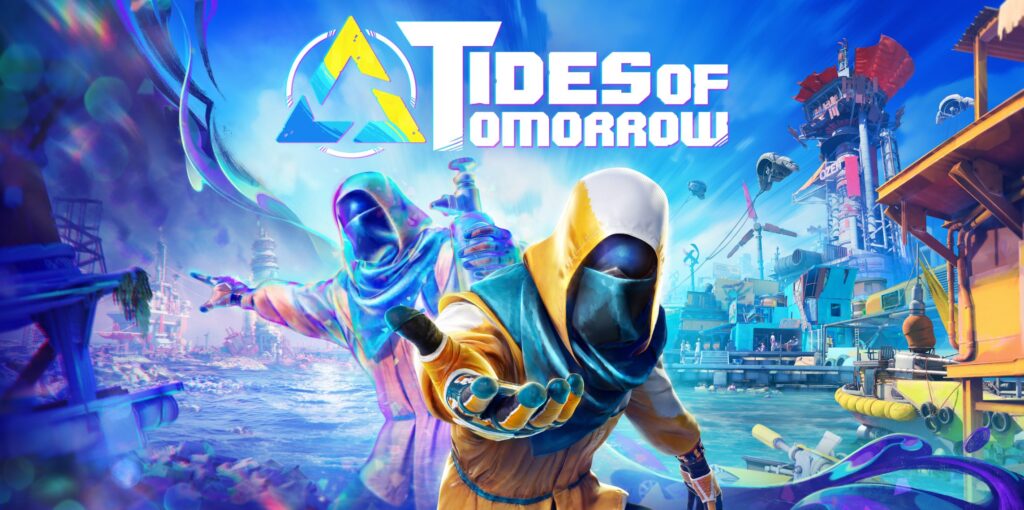
From the creators of Road 96 comes something genuinely unprecedented in narrative gaming. Tides of Tomorrow doesn’t just ask you to make choices that matter—it creates a living tapestry where your decisions directly impact every player who comes after you. This ambitious “Story-Link” system transforms what could have been another choice-driven adventure into a fascinating social experiment wrapped in stunning plasticpunk aesthetics.
A World Drowning in Consequences
Tides of Tomorrow presents a hauntingly beautiful vision of ecological collapse. The ocean planet of Ellend is choking on plastic pollution, with humanity clinging to makeshift floating settlements that evoke the desperate ingenuity of Waterworld. But this isn’t just environmental storytelling for its own sake—the plastic waste has created a terrifying disease called Plastemia that literally transforms victims into plastic husks.
You play as a “Tidewalker,” an amnesiac survivor pulled from the toxic seas with the unique ability to perceive “echoes” of past events. This serves as both your narrative hook and the mechanical foundation for the game’s most innovative feature: following in the literal footsteps of real players who came before you.
The world-building is genuinely compelling, with each floating settlement reflecting different approaches to survival. From the violent Marauders who control the distribution of medicine to the mystical factions who worship the past, every community tells a story about how humanity adapts—or fails to adapt—in the face of catastrophe.


The Story-Link Revolution
What sets Tides of Tomorrow apart is its revolutionary “Story-Link” system. When starting a new game, you select another player to follow—perhaps a friend, a favorite streamer, or even a complete stranger. Their playthrough becomes the foundation for your experience, creating a unique form of asynchronous multiplayer that feels both intimate and profound.
This isn’t just a gimmick. The choices your predecessor made have genuine mechanical and narrative impact. Did they repair that broken ladder? You’ll find it functional when you arrive. Did they anger local guards? You might face increased hostility. Did they leave behind supplies? Those resources await your discovery.
The system creates moments of genuine connection across time and space. Watching ghostly echoes of another player’s actions—seeing them dance, point out hidden items, or make crucial moral decisions—generates an emotional resonance that traditional multiplayer rarely achieves. You’re constantly aware that someone will follow in your footsteps, creating a responsibility that extends beyond your immediate experience.
Gameplay That Supports the Story
While narrative drives the experience, Tides of Tomorrow includes varied gameplay elements that prevent it from feeling like a pure walking simulator. Boat traversal between floating settlements feels appropriately weighty, with your vessel handling like a proper seafaring craft rather than an arcade racer. Naval battles, while simple, provide moments of excitement that break up the more contemplative exploration.
The stealth sections, however, represent the game’s weakest gameplay element. These segments feel overly simplistic and occasionally frustrating, particularly when previous players’ actions have altered guard patterns, making stealth more difficult. The lack of meaningful consequences for being caught reduces tension and makes these sections feel more like obstacles than engaging challenges.
Exploration fares better, with each settlement offering hidden lore, collectibles (including adorable rubber ducks), and environmental storytelling that rewards curiosity. The first-person perspective works well for both intimate character interactions and grand environmental reveals.
Visual Poetry in a Dying World
Artistically, Tides of Tomorrow succeeds brilliantly at making environmental collapse beautiful. The game’s colorful, stylized aesthetic transforms what could have been depressing post-apocalyptic browns and grays into a vibrant palette that makes the world’s tragedy feel more poignant rather than simply bleak.
The plastic-choked oceans are simultaneously gorgeous and horrifying—a visual contradiction that perfectly captures the game’s environmental message. Floating settlements burst with color and creativity, showing how human ingenuity persists even in desperate circumstances. The lighting system particularly impresses, with real-time weather effects that enhance the atmospheric storytelling.
Character animations can feel stiff during important cutscenes, and some facial expressions lack the emotional nuance needed for a narrative-focused experience. However, the overall art direction is so strong that these technical limitations rarely detract from the experience.
Audio That Builds Atmosphere
The sound design deserves special recognition for creating an immersive oceanic world. From the creaking of makeshift settlements to the ambient sounds of a plastic-filled sea, every audio element contributes to the atmosphere. The soundtrack blends electronic and organic elements effectively, though it occasionally feels overwhelmed by the more ambitious diegetic music moments.
Voice acting quality varies significantly. Key characters generally deliver strong performances that convey the story’s emotional weight, but numerous supporting characters sound so amateurish that they break immersion. For a game so dependent on dialogue and character interaction, these inconsistent performances represent a notable weakness.
The Social Experiment in Practice
The Story-Link system’s success depends entirely on player behavior, creating a fascinating social experiment. Early impressions suggest many players are embracing the cooperative spirit, leaving supplies and repairing infrastructure for those who follow. However, the system’s long-term viability remains uncertain as the player base evolves.
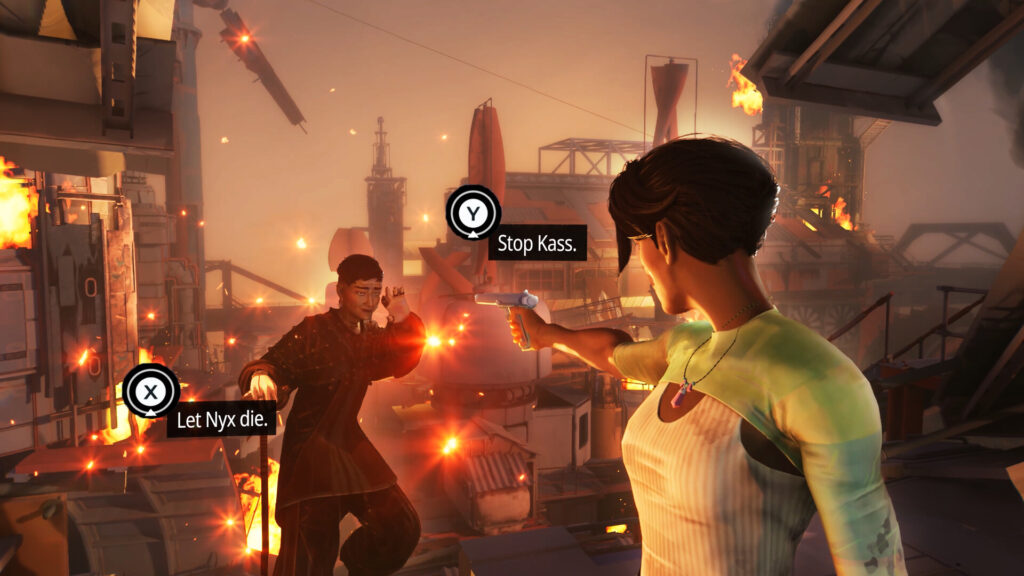
Some consequences feel more meaningful than others. While major story beats can be genuinely affected by previous players’ choices, many decisions result in relatively minor variations that don’t fundamentally alter the experience. The system works best when it creates genuine moral dilemmas about whether to help or hinder future players.

Technical Performance and Accessibility
Performance varies significantly across platforms. PC players with modern hardware report smooth experiences, while Steam Deck users face frame rate issues and visual compromises that diminish the game’s stunning art direction. The lack of DLSS or FSR support feels like a missed opportunity, particularly given the game’s modest system requirements.
The 10-15-hour campaign provides solid value, though replayability depends heavily on your interest in exploring different Story-Link paths. The absence of chapter select or save branching means seeing different outcomes requires complete replays, which may deter some players from exploring alternative choices.
Environmental Message with Nuance
While Tides of Tomorrow clearly advocates for environmental consciousness, it avoids heavy-handed preaching in favor of showing rather than telling. The world’s condition speaks for itself, and the game trusts players to draw their own conclusions about environmental responsibility and collective action.
The parallel between in-game cooperation (leaving supplies, repairing infrastructure) and real-world environmental action feels intentional but never forced. Players naturally develop investment in the world’s future because they know others will inherit the consequences of their choices.
Innovation with Growing Pains
Tides of Tomorrow represents exactly the kind of ambitious experimentation that makes narrative gaming exciting. While the Story-Link system isn’t perfect and the supporting gameplay elements feel uneven, the core innovation is compelling enough to overshadow these limitations.
This is a game that succeeds most when it trusts its central concept. The moments of connection across time and player experiences create emotional resonance that traditional single-player narratives struggle to achieve. When you’re deciding whether to take that last medical supply or leave it for the next player, you’re engaging with storytelling in a fundamentally new way.

Should You Play Tides of Tomorrow?
Play if you enjoy:
- Innovative narrative mechanics and experimental storytelling
- Environmental themes and post-apocalyptic world-building
- Choice-driven adventures with meaningful consequences
- Beautiful, stylized art direction
- Social gaming experiences that connect across time
- Supporting ambitious indie development
Skip if you prefer:
- Action-heavy gameplay with complex mechanics
- Traditional single-player narratives without multiplayer elements
- Extensive voice acting and cinematic presentation
- Challenging gameplay with high skill requirements
- Immediate gratification over long-term narrative payoff
Tides of Tomorrow: Tides of Tomorrow succeeds as a bold experiment in narrative gaming that pushes the medium forward in meaningful ways. While it has rough edges and gameplay elements that don't always land, the Story-Link system represents genuine innovation that creates experiences impossible in any other medium. This is the kind of game that matters beyond its immediate quality—it's exploring new possibilities for how we connect through interactive storytelling. Digixart has created something that feels like the future of narrative gaming, even if it's not quite perfected yet. For players willing to engage with its experimental nature and environmental themes, Tides of Tomorrow offers a uniquely meaningful gaming experience. You're not just playing a story—you're contributing to a living narrative that will continue long after your playthrough ends. In a gaming landscape often focused on individual achievement, Tides of Tomorrow dares to suggest that our choices matter most when they affect others. That's a message worth supporting, wrapped in a game worth playing. – Obsidian