


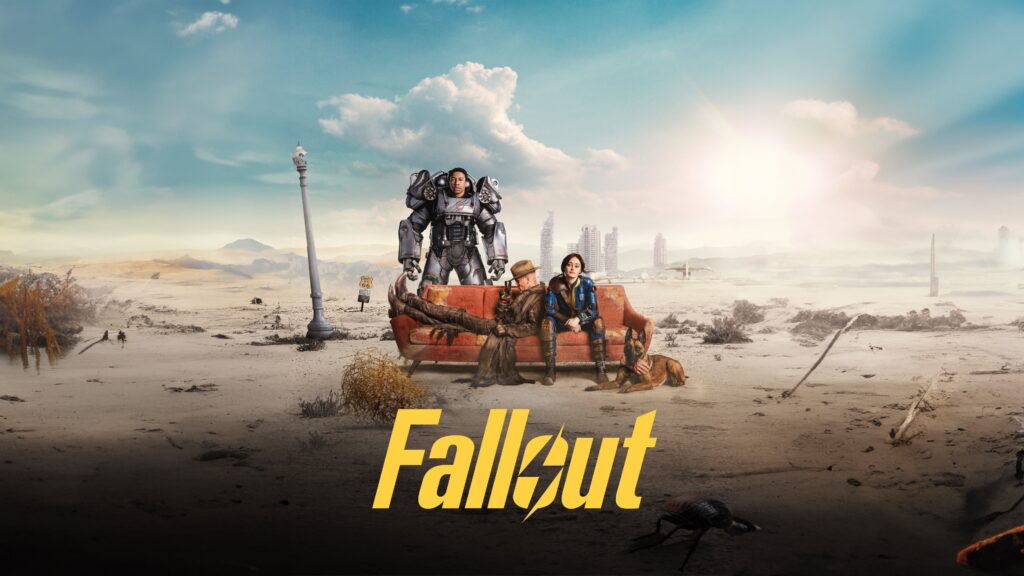
Fallout Season 2 is a better season of television than Season 1 — and a more frustrating one. Taking its cast to New Vegas, introducing Robert House and the NCR and the Legion, and deepening the Ghoul/Cooper Howard dual timeline, it does more of what made the first season exciting and less of what made it drag. Walton Goggins remains the most compelling reason to watch. The Las Vegas setting gives the show a visual and tonal identity that the wasteland road trip of Season 1 couldn’t quite sustain. And by the time the finale rolls out its post-credits tease of Liberty Prime, the promise of Season 3 is substantial.
The frustration is that Season 2 ends in exactly the way all eight-episode prestige seasons seem to end: resolving just enough to feel like a chapter close, punting most of its most interesting threads into the next instalment, and leaving the audience to carry the weight of unresolved setup into a waiting period before Season 3. The finale at 42 minutes is too short for what it was asked to accomplish. That structural problem is real. But the ten episodes of strong material across the season are stronger than anything in Season 1, and the foundation being laid for Season 3 — NCR versus Legion, Liberty Prime, the Enclave, Super Mutants — is the most exciting canvas the franchise has put on screen.
Key Cast
Season 2 Episode Guide

What Season 2 Gets Right
The Ghoul/Cooper Howard dual timeline is the engine of the show, and Season 2 runs it harder and more confidently than Season 1. The 2077 flashbacks this season are genuinely excellent — the Vault-Tec corporate conspiracy, Cooper’s growing awareness of what his wife and company are planning, and the specific moment where that knowledge turns into something harder to name. Walton Goggins playing both the earnest pre-war actor and the 200-year-old ghoul bounty hunter is a performance split that shouldn’t work on paper and does in practice. The parallel structure, when it’s firing well, creates the kind of dramatic irony that keeps viewers watching a second episode when they planned to stop.
Justin Theroux’s Robert Edwin House is the season’s strongest new addition. The character translates from the New Vegas game in ways that felt genuinely uncertain before the season aired, and Theroux makes House’s cold self-interest and technological megalomania land as something other than simple villainy. His dynamic with Lucy is among the best new character pairings the show has introduced. The Vegas setting itself — the Strip, the underground infrastructure, the specific Fallout New Vegas geography given live-action treatment — is a payoff the franchise’s fans have been waiting for since Season 1’s closing shot, and the show largely delivers on it.
Maximus is more interesting this season than last, partly because the show smartly leaned away from the “hapless incompetent fails upward” reading and gave him actual agency in the Brotherhood Civil War storyline. Thaddeus continues to develop in directions that hint at something genuinely strange and potentially interesting for Season 3. These are genuine improvements over Season 1’s handling of both characters.
Where It Stumbles
The Norm subplot is the season’s most persistent structural problem. Two seasons in and the question of what purpose Norm serves in the larger story remains unanswered at the episode level. His plotline inside Vault 33 occupies significant screen time in a season with only 8 episodes and a 42-minute finale, and the payoff it delivers — an Enclave pip-boy, a cryptic “execute phase two” — is the kind of setup-without-execution that feels like it was written for a 12-episode season and compressed into 8. The Vault 33 incest subplot was dispatched mercifully, but the time it occupied before its disposal wasn’t particularly well spent.
The finale’s structure is the clearest symptom of the season’s pacing problem. Five storylines need resolution in 42 minutes. Each gets something — Maximus gets his Deathclaw fight, Lucy gets her confrontation with Hank, the Ghoul gets a clue toward Colorado, Steph gets the Enclave pip-boy — but none of them gets enough time to breathe. The show is clearly operating on the assumption that Season 3 will complete what Season 2 started, and with Season 3 confirmed and filming underway, that’s a reasonable bet. But it means Season 2 functions partially as a 16-episode story broken in two rather than a self-contained arc with satisfying resolution.


The Good, The Bad, & The Ugly
| The Good | The Bad | The Ugly |
|---|---|---|
| Walton Goggins Remains the ShowPlaying both Cooper Howard and the Ghoul across parallel timelines is a dual performance that shouldn’t work and does. He anchors every scene he’s in and is the single strongest reason to watch. | The Finale Is Too Short42 minutes to resolve five storylines is not enough. Each thread gets something, none gets enough. The episode needed to be at minimum an hour, and ideally a two-parter. | The Norm SubplotTwo full seasons and Norm’s purpose in the larger story remains unclear. His screen time in an 8-episode season is an investment that hasn’t paid off yet. Season 3 needs to make this make sense quickly. |
| Robert Edwin HouseJustin Theroux’s House is the best new addition since Season 1. Cold, self-interested, technologically messianic — and the dynamic he creates with Lucy is the season’s most interesting new pairing. | Too Many Threads Punted to Season 3Super Mutants introduced and then largely absent. The Legion shows up and the war is barely begun. Phase Two activated but undefined. Liberty Prime teased in the credits. Season 3 inherits a very large stack. | The Deathclaw Fights Don’t LandFive Deathclaws dispatched in rapid succession should be a highlight. Instead they feel less threatening than the single Deathclaw encounter in Season 1. CGI budget allocation is a recurring issue. |
| New Vegas DeliversThe Strip. The history. The specific geography of Fallout: New Vegas in live action. It was always going to be the payoff Season 1 was building toward, and the show earns it. | Lucy and Maximus Have Zero ChemistryThe show keeps trying to make this relationship the emotional anchor of the protagonist storyline. It doesn’t work and hasn’t since Season 1. Lucy and the Ghoul have infinitely more dynamic. | |
| The 2077 Flashbacks Are Some of the Show’s Best WorkThe corporate conspiracy, Vault-Tec’s nuclear planning, Cooper’s slow realisation — the pre-war timeline is doing genuinely excellent television this season. |
The Verdict
Fallout Season 2 is a better season than Season 1 — more confident, more ambitious, better cast, better set, and more willing to engage with the game lore that its audience actually cares about. The Cooper Howard dual timeline is doing some of the best acting work on television right now. New Vegas delivers. House is a triumph. The foundation being laid for Season 3 — Liberty Prime, NCR versus Legion, the Enclave, Super Mutants — is the most exciting canvas the franchise has built yet. The structural problems are real: the finale is too short, Norm’s purpose remains elusive, too many threads arrive without resolution. But Season 2 is where this show proves it knows what it’s doing and where it’s going. Season 1 was a seven. Season 2 is an eight. If the pattern holds, Season 3 could be something exceptional.
For more TV and movie reviews, check out our full reviews section.