


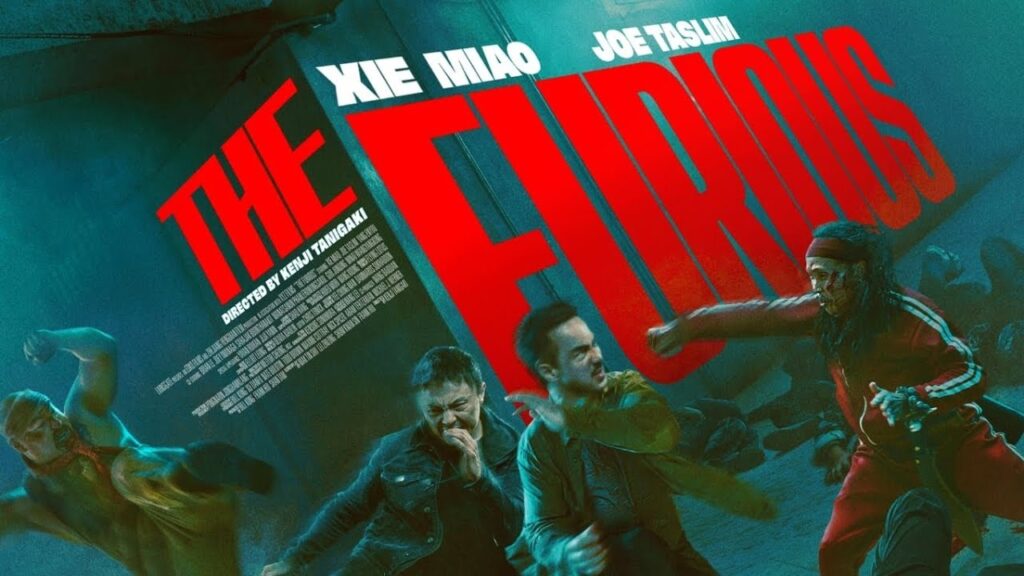
Once in a long while, a martial arts film lands that becomes the thing everyone in the genre is talking about for years afterward. The Raid was one. The Furious is another. Directed by Kenji Tanigaki and starring Mo Tse and Joe Taslim, this Hong Kong action film is 113 minutes of relentlessly escalating, practically executed hand-to-hand combat choreography built around the simplest of premises: a father whose daughter has been taken by a trafficking ring, and the unlikely journalist ally who joins him with his own reason to fight. There is nothing you haven’t seen before in the setup. Everything you see in the execution, you almost certainly haven’t.
The film earned a 98% on Rotten Tomatoes and a 95% audience score on Fandango. Critics have called it the best action film of the year — some have called it the best action film in years. At an estimated $20 million budget, it is an extraordinary return on investment in terms of pure cinematic achievement, and if you see it in theaters before it disappears, you will remember it.
Cast
Why This Film Works
The plot of The Furious is its least important feature and its most reliable structural decision. Wang Wei is a father with a mysterious past — clearly military, clearly capable — whose daughter is kidnapped by a criminal trafficking network. Navin is a journalist whose wife has disappeared while investigating the same network. They find each other in the chaos, figure out they’re on the same side, and proceed to dismantle an entire criminal empire through sheer physical will and coordination. Villains have no particular depth. They are obstacles to be overcome, and the film wastes no time pretending otherwise. That choice frees the runtime entirely for what the film came to do: deliver martial arts choreography at the highest possible level without interrupting it to explain anyone’s feelings.
Tanigaki’s camera understands that these performers are professionals who have trained for decades, and gives them room to show it. Wide shots. Clear spatial staging. Extended takes. No shaky cam, no rapid cut chaos. When Wang Wei fights five people simultaneously across multiple floors, you can follow every limb, every decision, every moment of improvisation and recovery. This is not a compliment directed at The Furious alone — it is also an indictment of how badly most Hollywood action films have failed in this regard for the past fifteen years. The Furious shows that the alternative is not only possible but devastating in its superiority.

Two Heroes Are Better Than One
The decision to give the film two leads with complementary fighting styles is the smartest structural choice in the screenplay. Wang Wei is a brawler — relentless, hammer-bearing, absorbing punishment and continuing forward with the sustained fury of someone who has run out of options. Navin is precise — a mute character who communicates through notes and military hand signals, fights with economy and technical mastery, and whose evasion-focused style contrasts effectively with Wang Wei’s attrition approach. When they fight alongside each other, they don’t just double the action — they create combinations and coverage patterns that feel genuinely tactical. Their partnership is built in battle rather than exposition, and that’s the right choice for this kind of film.
Yayan Ruhian — a Raid alumnus — appears as an archer-combatant hybrid who functions as a recurring escalating threat throughout the film, and his presence in the cast is a direct signal to the audience about the pedigree of the choreography on offer. He delivers. The five-way fight sequence in the film’s extended mid-section, where multiple factions are pursuing conflicting objectives simultaneously, is among the most ambitious action set-pieces staged in recent memory and earns every minute it occupies.
The Emotional Core
Against all expectations, The Furious earns genuine emotion. The Navin subplot — searching for his wife while fighting alongside a man searching for his daughter — reaches a point of genuine impact when the two threads collide. The moment where Navin discovers his wife’s ring among a killer’s trophies, and what happens immediately afterward, lands with real weight because the film has been economical with sentiment throughout. A ring passed between dying men at the end. A beach reunion that earns its warmth. These moments work because the film doesn’t overplay them — it puts them in and moves on, trusting the audience to carry them.


The Good, The Bad, & The Ugly
| The Good | The Bad | The Ugly |
|---|---|---|
| The Fight Choreography Is GenerationalPractical, wide-shot, clear spatial staging. Bodies doing things bodies don’t normally do, captured in a way that lets you follow every second. This is what The Raid did in 2011 and what The Furious does in 2026. Genre-defining. | Villain Depth Is MinimalThe trafficking network antagonists exist to be dismantled rather than understood. For audiences who need moral complexity or character motivation in their villains, this is a deliberate deprivation. The film made the right choice for what it’s trying to be. | Theatres Dropped It FastVOD is July 14. If you want the theatrical experience — and you do — find it now. The Furious belongs on the biggest screen you can access. |
| Two Leads, Two Styles, One Perfect PartnershipWang Wei’s attrition fury and Navin’s precise technical mastery complement each other in every joint sequence. The duo dynamic produces action combinations that a solo protagonist film can’t achieve. | The Over-the-Top Escalation Is a Style ChoiceThe film leans into moments of deliberate absurdity — an improvised human tower, a five-way faction brawl, punishment levels that strain physics. These are intentional creative decisions, not errors. But viewers who prefer strict realism will feel the stretch. | |
| The SoundtrackA techno-inflected score with classical renditions processed into dance-adjacent beats — it has been compared to the Blade club sequence and it’s not wrong. The music keeps the energy pressurised during sequences where almost any other score choice would deflate it. | ||
| $20 MillionThe film cost approximately $20 million. For comparison, the average Marvel production spends more than that on post-production reshoots. The Furious spent its budget on performers, choreographers, and cameras pointed at them. This is what prioritisation looks like. |
The Verdict
The Furious is the action film of the year and a genuine entry into the canon alongside The Raid, Crouching Tiger Hidden Dragon, and the great Hong Kong martial arts films that defined the genre. It is not a perfect film — the villain characterisation is deliberately thin, the absurdity of the escalation is not for everyone, and the daughter subplot tests patience once or twice. But it is a perfect action film in the sense that matters: it understands completely what it is, executes that thing at the highest possible level, and leaves the theatre audience full, exhausted, and arguing about which fight sequence was the best. That’s what this genre can be when it’s working. Go see it while it’s still on a screen worth seeing it on. VOD July 14 if you miss it. Either way — see it.
For more movie reviews, check out our full reviews section.