


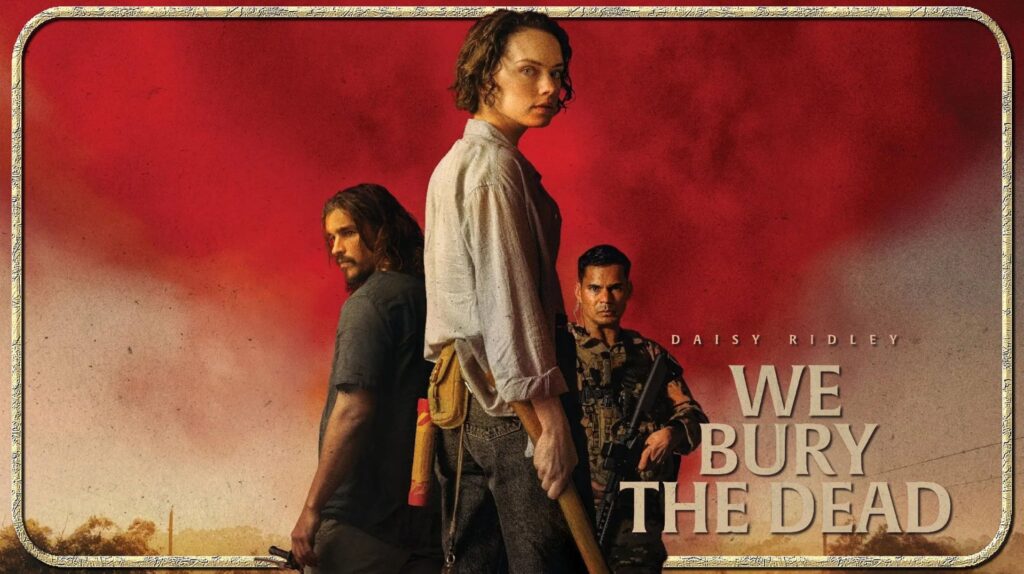
The Aftermath of Tasmania
The zombie genre has been shambling along for decades, often struggling to find a new pulse. We have seen the fast zombies (28 Days Later), the fungus zombies (The Last of Us), and the comedy zombies (Shaun of the Dead). Enter We Bury the Dead, released January 2, 2026, which asks a different question: What if the dead aren’t just hungry, but heartbroken?
Director Zak Hilditch (These Final Hours) returns to the apocalypse, this time focusing on a catastrophic military failure in Tasmania. An experimental weapon has wiped out the city of Hobart, killing 500 people via “neural failure”. But the dead are waking up.
Unlike the hordes of World War Z, this film is intimate. It is a road movie painted in ash and grief, anchored by a raw performance from Daisy Ridley. It is a film that cares less about headshots and more about the heavy, suffocating weight of unfinished business.
A Volunteer in Hell
Daisy Ridley plays Ava, a woman desperate to find her husband, Mitch, who was on a business trip in Hobart when the incident occurred. The U.S. government is in damage control mode, and the area is locked down. To get in, Ava volunteers for a “body retrieval unit,” a grim job that involves dragging corpses from suburban homes to be photographed and dumped into mass graves.
The atmosphere in the first act is stifling. Volunteers surrender their phones, news reporters are banned, and the air is thick with smoke. Ava is paired with Clay (Brenton Thwaites), a builder who copes with the horror through smoking and jokes.
The horror creeps in slowly. We hear rumors that the dead are “hunting,” but the soldiers are tight-lipped. When Ava finally encounters a reanimated corpse, she notes something profound: it doesn’t look like a monster. It looks “lost and scared”. This sets the thematic stage for the rest of the film—these aren’t just targets; they are tragedies.
The Road South: Bicycles and Bandits
Frustrated by the military’s refusal to let her check the southern disaster zone, Ava goes rogue. She and Clay steal motorcycles and head toward the epicenter of the blast. This section transforms the film into a survival drama. The chemistry between Ridley and Thwaites is solid, grounded in the shared trauma of the situation. They bond over sore muscles and shared histories—Ava reveals she is a physical therapist, and Clay hints at an estranged family.
However, the journey takes a dark turn when they encounter Riley (Mark Coles Smith), a soldier stationed at a B&B called “Bluebird”. This sequence serves as the film’s peak horror moment, but not because of the zombies.
Riley is the embodiment of toxic grief. He has trapped Ava, forcing her to cosplay as his dead wife, Katie, wearing her clothes and perfume. He believes his undead, pregnant wife—who is locked in a room—will “wake up” because the dead only rise if they have unfinished business. The tension in the “Bluebird” sequence is palpable, culminating in a brutal struggle where Ava is forced to kill Riley to escape. It serves as a grim mirror to Ava’s own quest: how far will you go to deny the reality of death?
The Undead: Unfinished Business
The lore of We Bury the Dead is its most interesting component. The zombies here are not a hive mind. They are individuals driven by specific compulsions.
In one of the film’s most haunting scenes, Ava encounters a zombie in the middle of the night. Instead of attacking, it is digging a grave for its dead family. Recognizing the creature’s humanity, Ava helps it finish the task, and the zombie sits by the grave, waiting for its own end.
This recontextualizes the threat. The “hunting” mentioned in the marketing isn’t necessarily a hunger for flesh, but a desperate search for closure. Riley’s theory was right: they are lingering because they cannot let go.
The Twist: A Marriage Autopsy
When Ava finally reaches the resort in the south, she finds Mitch. He is dead. But the reunion is not the romantic tragedy we expect.
Ava notices Mitch is missing his wedding ring. She sees two wine glasses and another woman’s ID in the room. Mitch didn’t just die; he died cheating.
The film then delivers a double-twist. In a moment of drunken confession with Clay on the beach, Ava reveals that their marriage fell apart due to fertility issues and arguments over treatment. More shockingly, Ava had an affair first and confessed it to Mitch right before he left. She wasn’t looking for him to save their marriage; she was looking for forgiveness.
This revelation adds layers of complexity to Ava’s character. She isn’t a saintly widow; she is a flawed human being seeking redemption in a wasteland.
The Ending: Fire and Life
The climax is a quiet, Viking-style funeral. Ava wraps Mitch’s body in sheets, puts him on a boat, and sets it on fire, sending him out to sea. It is a moment of release—burning the past so she can survive the present.
The film ends on a note of miraculous horror. Ava and Clay find Riley’s zombie wife, Katie, walking down the road with a bloodied dress and a flat stomach. Nearby, in the ruins, they find a crying, living baby. The dead mother delivered life. It is a grotesque, beautiful, and hopeful conclusion that solidifies the film’s theme: life finds a way, even in the ashes.
The Good, The Bad, & The Grief
| The Good | The Bad | The Ugly |
| Daisy Ridley: Delivers a powerful, nuanced performance that elevates the material. | Pacing: The middle act drags slightly before the encounter with Riley. | Riley’s Obsession: The “forced wife cosplay” scene is genuinely skin-crawling and disturbing. |
| Unique Lore: The concept of zombies motivated by “unfinished business” rather than hunger is refreshing. | Misleading Marketing: The tagline “they hunt” suggests more aggression than the film actually delivers. | The Cheating Reveal: Finding out the “hero” husband died with his mistress is a brutal, realistic gut punch. |
| Visuals: The Tasmanian setting, shrouded in smoke and military blockades, is hauntingly beautiful. | Clay’s Exit: Clay running away from Riley “to pee” felt like a slightly weak plot device to separate them. | |
| The Ending: The discovery of the baby provides a shocking but thematic perfect note to end on. |
Should You Watch It?
Yes, if: You enjoy slow-burn horror, character dramas, and films that prioritize atmosphere over jump scares.
No, if: You are looking for a fast-paced action movie with hordes of zombies to mow down.
Recommended for fans of: Cargo, The Girl with All the Gifts, Maggie, Monsters.
We Bury the Dead: We Bury the Dead will likely divide audiences. Those expecting a Resident Evil action romp will be disappointed by the pacing and the scarcity of combat. However, for those who appreciate the "sad zombie" sub-genre (think Maggie or Cargo), this is a worthy entry. Daisy Ridley proves once again she can anchor a film with grit and vulnerability. The film is a somber, visual poem about the things we leave behind when we die, and the heavy burdens carried by those who survive. – Asmodeus