
It’s Mount & Blade meets Medieval Dynasty with a dash of Rimworld. But is this genre-mashing survival RPG worth the grind in Early Access Bellwright?
There is a specific fantasy that PC gamers chase. It’s the transition from a lone survivor freezing in the woods to a lord commanding armies and managing a bustling economy. We’ve seen it attempted in Kenshi, Medieval Dynasty, and Manor Lords. Now, Bellwright, developed by Donkey Crew and published by Snail Games, attempts to weave these threads into a single, cohesive rebellion simulator.
Originally released in Early Access in April 2024, Bellwright has spent the last two years refining its ambitious blend of survival, city-building, and directional combat. After diving back in following the recent “Walls and Defenses” update in January 2026, it is clear that while this game is a massive time sink that will devour your weekends, it is still wrestling with the jank inherent to such a complex simulation.
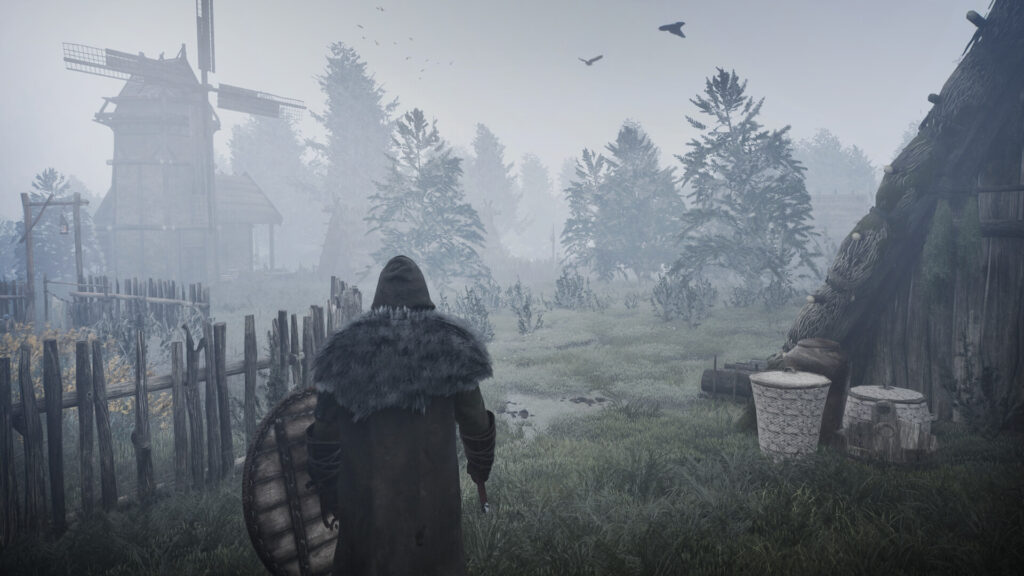
From Outcast to Commander
The premise is classic RPG fare: You are framed for the murder of the Prince and are hiding in the wilderness. To clear your name, you must overthrow the Crown. But you can’t do it alone.
The core loop of Bellwright is its strongest asset. You start in “survival mode”—punching trees, gathering flax, and eating berries. But unlike Valheim or The Forest, the goal isn’t just to build a cool house for yourself; it’s to build a house for others.
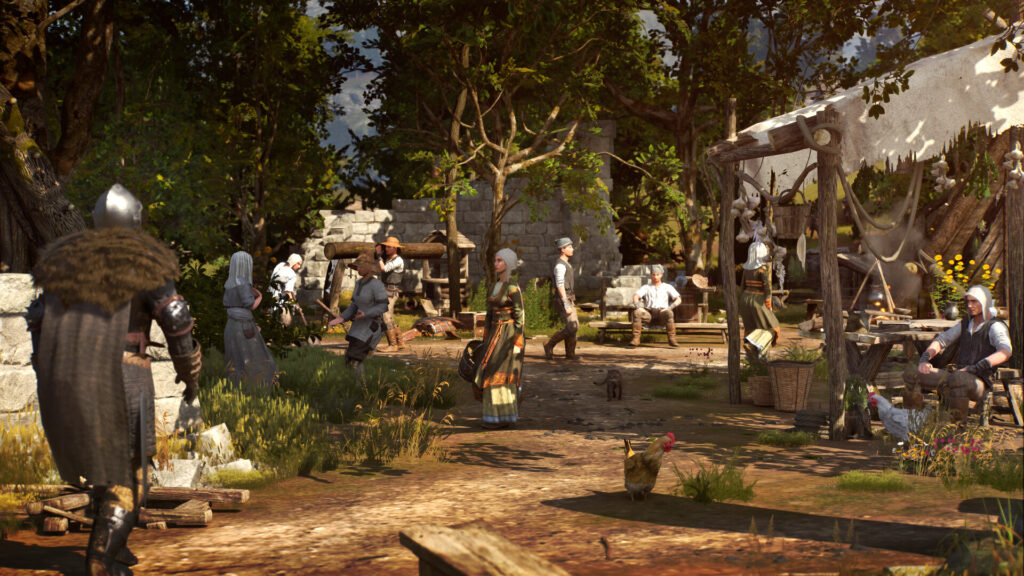
Once you establish your first settlement, the game shifts gears into a colony sim. You recruit villagers, each with their own stats and proficiencies. You aren’t just the hero; you are the foreman. You assign jobs, manage priorities, and set up supply lines. Watching your village transform from a few tents into a self-sustaining machine where NPCs autonomously cook, craft, and farm is incredibly satisfying. As one Steam reviewer noted, “The NPC helpers’ work ethic is impressive.”
The Combat: Mount & Janky
The combat system aims for the tactical depth of Mount & Blade or Kingdom Come: Deliverance, using a directional attack-and-block system. In theory, it’s great. In practice, even two years into Early Access, it feels a bit… floaty.
Weapons lack the visceral “crunch” you want when slamming a maul into a bandit’s helmet. Hitboxes can feel like “pool noodles,” requiring you to be uncomfortably close to enemies to land a hit. While commanding your squad adds a layer of strategy—telling your archers to hold fire while your shield wall advances—the AI can be a mixed bag. Sometimes they execute a perfect flank; other times, your archers shoot you in the back.
However, the stakes make it engaging. When you lead a rebellion to liberate a village from the Crown’s oppression, the scale of the conflict feels earned because you personally gathered the resources to forge every sword your soldiers are holding.
The Grind is Real (and Sometimes Painful)
If Bellwright has a major flaw, it is a lack of respect for the player’s time. This is a slow burn. A very slow burn.
Building structures often requires you to manually hammer in nails or planks, a mechanic that feels immersive for the first hour and tedious for the next hundred. The inventory system is restrictive, and despite the game’s scale, logistics remain a headache. Players have been clamoring for better carts and wagons since launch, and while improvements have been made, moving resources from a forest outpost to your main city can still feel like a chore.
Furthermore, the game utilizes AI-generated voice acting for prototyping (and potentially final assets). While cost-effective for an indie studio, it breaks immersion. The delivery is often stiff and robotic, clashing with the otherwise beautiful weather systems and atmospheric world design.
The Early Access Journey
Despite the rough edges, Bellwright is compelling because the developers are active. The transition from a small camp to managing a region with multiple towns is seamless. The tech tree is deep, the weather system is gorgeous (reminiscent of Valheim’s storms), and the recent updates adding fortifications have made the late-game sieges much more interesting.
It scratches a very specific itch. It’s for the player who played Skyrim and wished they could run the town, or played Banished and wished they could draw a sword and fight the raiders themselves.
| The Good | The Bad |
| Genre Blend: Seamlessly mixes survival crafting with deep colony management and strategy. | Combat Feel: Directional combat feels weightless and “floaty,” with wonky hitboxes. |
| Town Management: Automating your villagers to handle chores is deeply satisfying and well-designed. | The Grind: Manual building and restrictive inventory limits create unnecessary tedium. |
| Visuals: Great weather effects and environments create a strong medieval atmosphere. | Town Management: Automating your villagers’ chores is deeply satisfying and well-designed. |
| Progression: The journey from a starving refugee to a commander of armies is paced incredibly well. | Jank: Pathfinding bugs, NPCs getting stuck, and UI clunkiness are still present in Early Access. |
| Active Devs: Continuous updates (like the recent January 2026 defense patch) show commitment. | AI Assets: The use of AI voice acting and placeholder art significantly breaks immersion. |
Bellwright: Bellwright is a game of massive potential that is currently realizing about 80% of it. It is a grindy, janky, ambitious masterpiece in the making. If you can look past the robotic voice acting and the occasional pathfinding bug, there is a deep, rewarding RPG here that will easily steal 100+ hours of your life. It isn't for the impatient. But for those willing to put in the work, leading the rebellion has never felt so earned. – ColdMoon