


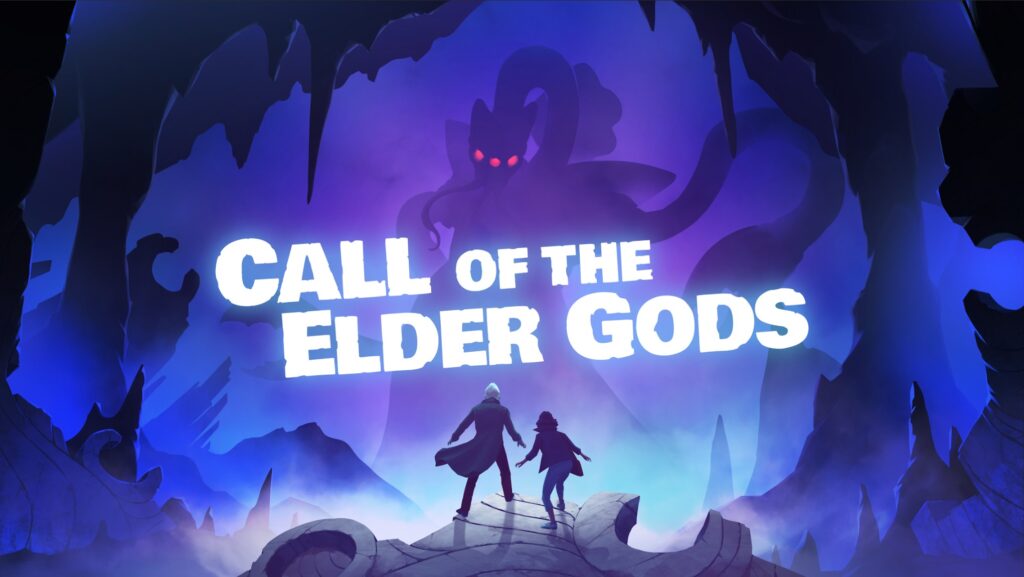
Call of the Elder Gods is the direct sequel to Out of the Blue Games’ 2020 puzzle adventure Call of the Sea, and it arrives having quietly solved the things that sequel-watchers most often worry about: it is larger, more visually striking, more mechanically ambitious, and it tells a more interesting story. The move from Norah’s island investigation to the globetrotting dual-protagonist structure of Harry Everhart and Evangeline Drayton — sweeping from New England libraries to the Australian outback, through frozen wastelands and cities outside of time — signals a studio that has grown its ambitions to match its ideas. The result is one of the more satisfying narrative puzzle adventures of the year.
The Lovecraftian framing is more explicit than the first game — this is directly inspired by “The Shadow Out of Time” and references the wider mythos freely — but Out of the Blue continues to treat the source material as a vehicle for something warmer than horror. This is a pulpy globetrotting adventure with grief and family at its centre, wearing cosmic dread as a costume rather than inhabiting it. If you came to the original Call of the Sea expecting Amnesia and found Myst, you know exactly what register this game operates in.

Call of the Elder Gods — The Dual Protagonist Structure
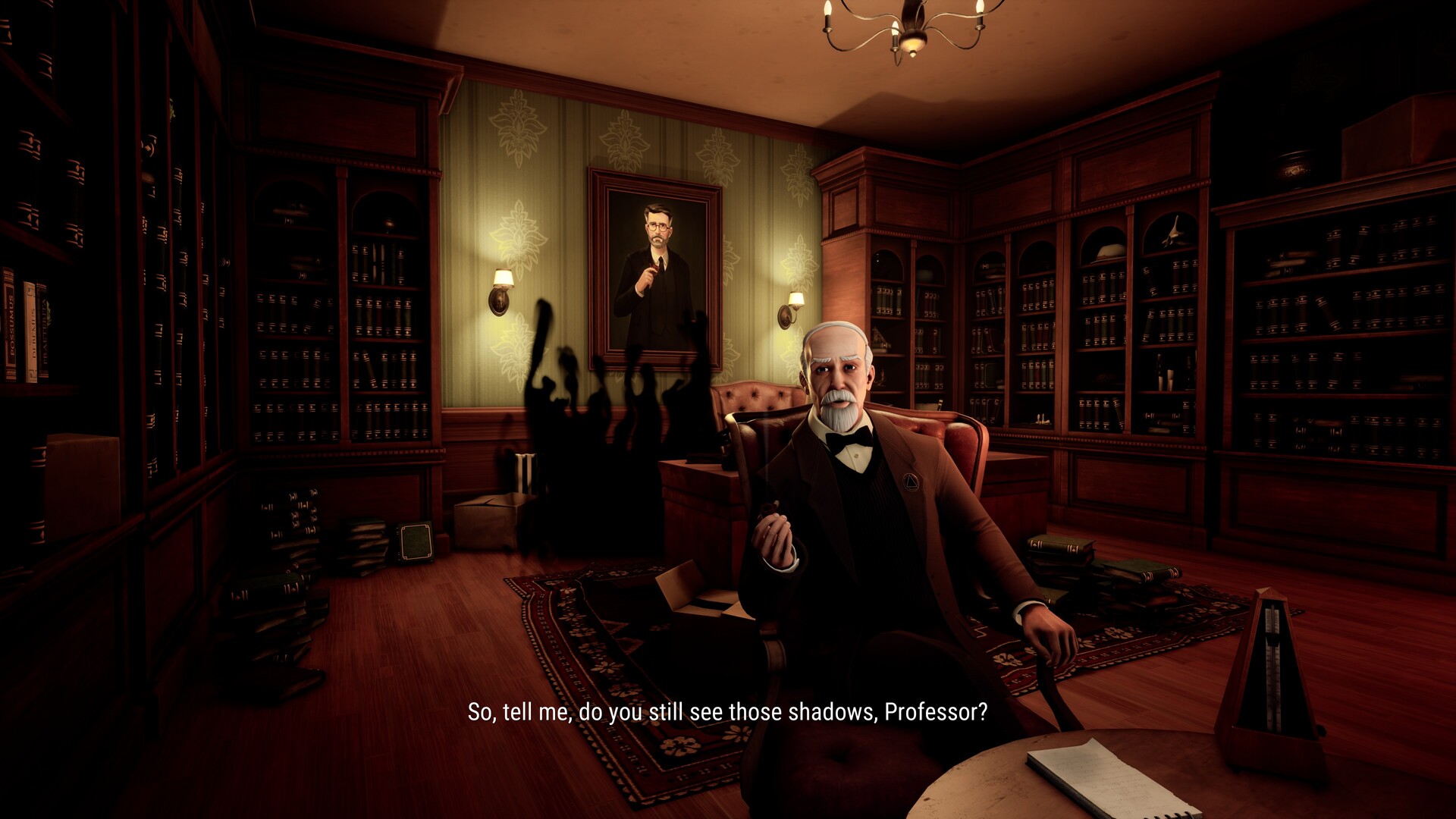
The game’s most significant mechanical addition is the ability to swap between Harry and Evangeline, with each character carrying different knowledge and perspectives across time and space. Multi-part puzzles that require combining observations from both characters — Harry’s academic context and Evangeline’s Yithian-touched intuition — create the game’s best sequences. One mid-game puzzle inspired by Case of the Golden Idol, where the player must piece together environmental clues and intuit how they connect without any direct instruction, represents the best individual puzzle design Out of the Blue have ever created. It is challenging, fair, and produces a genuine “AHA” moment that several players describe completing in a single session without ever reaching for a guide.
Voice casting remains a strength — Yuri Lowenthal and Cissy Jones anchor the adventure with performances that sell the emotional stakes when the writing allows them to. The cel-shaded visual style built in Unreal Engine 5 delivers environments of genuine beauty: the Australian outback in particular has been highlighted as one of the most striking locations the series has produced. The returning composer Eduardo De La Iglesia’s soundtrack serves the atmosphere throughout.
Where the Writing Stumbles
The script carries over some of the first game’s awkward tendencies. Harry’s immediate identification of a distant structure as a spaceship — somehow categorising it as a “flying saucer” before getting anywhere near it — reads as a character looking ahead in a script rather than discovering something. The Nazi imagery in the Swiss chapter is handled with historical context but introduced with a line that deflates tension so abruptly that it snaps the atmosphere. These are moments where the writing reaches for wit and lands in self-parody, and they’re frustrating precisely because they’re surrounded by material that handles itself far better.
Norah’s returning narration — framed as the puzzle notebook — is an elegant solution that mostly works. When it interjects at dramatically critical moments with observations that undercut the scene’s weight, the same problem that some players flagged with Phonopolis’s narrator resurfaces: a voice that is charming at ambient registers can damage sequences that need silence. The game’s emotional climax in particular suffers from this, which is the worst place for it to hit.
The Puzzle Design and Where It Earns Its Keep
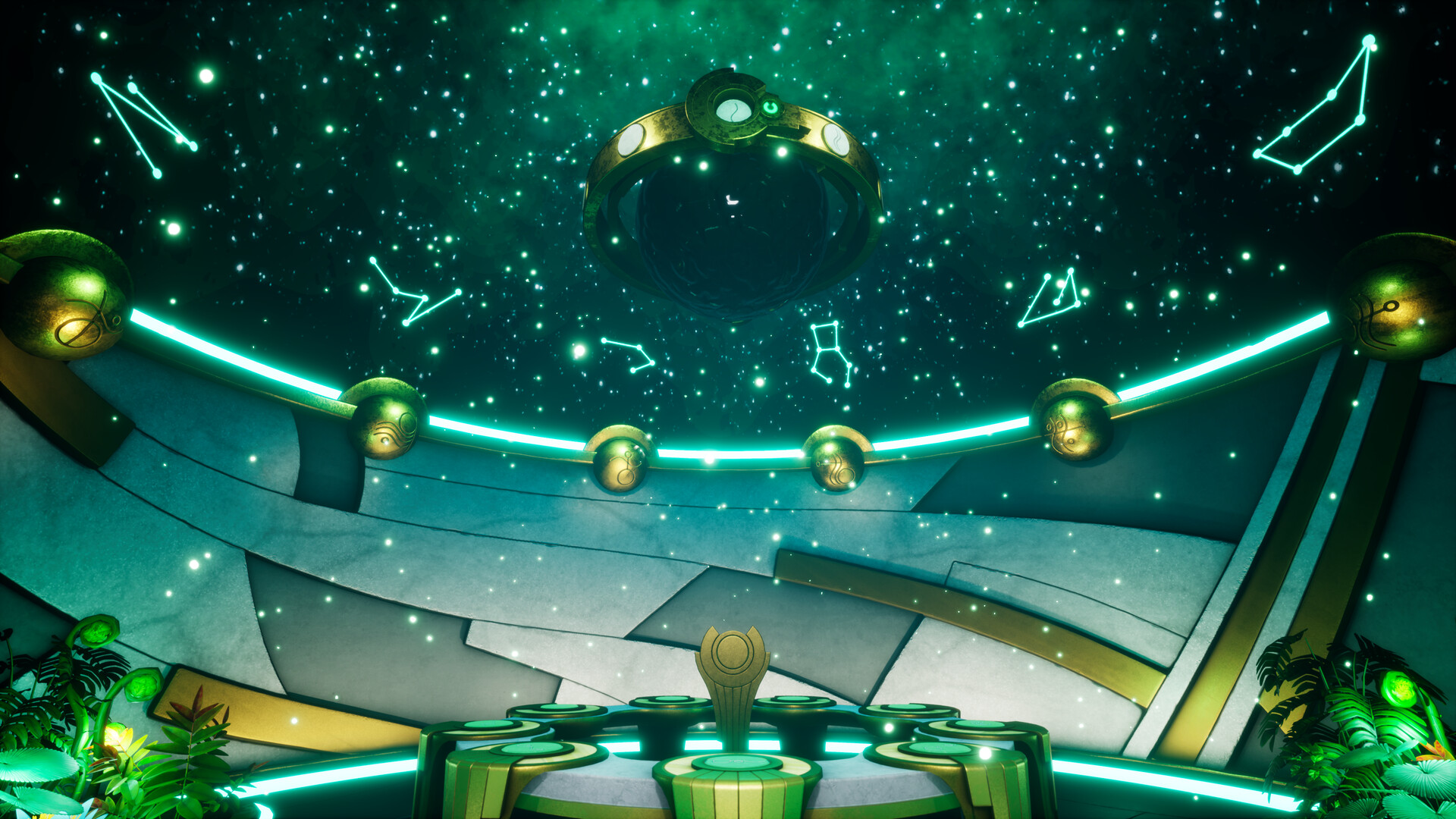
The puzzles are a meaningful step up from the original — more complex, more reliant on player intuition and less on handholding, and generally more satisfying when they click. The interactive object and puzzle-box sequences are highlighted as the design highlights: physical, feedback-rich, and embedded in the world rather than dropped into it. The hints system remains well-implemented, with toggleable assistance that allows players to calibrate the challenge without breaking flow.
One late-game puzzle is the exception — a trial-and-error sequence late in the narrative that multiple players independently identify as the game’s weakest design decision. It occurs in an environment that makes no physical sense, provides clues that don’t communicate the solution, and forces either brute-force experimentation or a guide lookup. In a game where most puzzles are constructed to produce genuine discovery, this one lands as an outlier that should have been cut or reworked. It doesn’t define the experience but it’s impossible to pretend it doesn’t exist.
The dual-ending structure has also drawn criticism. One ending is widely considered the clearly superior resolution; the other feels like a choice added because the first game’s branching structure was praised, without the same narrative commitment behind it. If a choice doesn’t produce two equally considered outcomes, the argument goes, it’s better to not offer the choice at all.
The Good, The Bad, & The Ugly
| The Good | The Bad | The Ugly |
|---|---|---|
| Genuine Puzzle ImprovementThe dual-character structure unlocks multi-part puzzles that the first game couldn’t build. The mid-game Golden Idol-style sequence is the series’ best individual design moment. | Script Awkwardness ReturnsSpecific lines and moments undercut the atmosphere the game is otherwise building well. Not constant, but noticeable enough to matter — especially at the emotional climax. | That One Late PuzzleA trial-and-error sequence in an impossible environment with bad clues is the single weakest design decision Out of the Blue have made across both games. Needs to be called out. |
| Stunning Environment VarietyNew England libraries, the Australian outback, frozen wastelands, cities outside of time — the visual ambition of this sequel over the original is substantial and consistently delivered. | Facial Animation Budget LimitsCutscenes featuring expressionless 3D models during emotional exchanges create disconnect. The 2D character stills handle these moments far better and should have been used more. | |
| Voice CastYuri Lowenthal and Cissy Jones are doing real work with Harry and Evangeline. When the writing gives them space, the performances land the emotional beats the story is reaching for. | Second Ending Feels ObligatoryOne ending is clearly the intended conclusion; the other exists because the first game had branching endings. A weaker choice offered as parity rather than genuine alternate outcome. |
The Verdict
Call of the Elder Gods is the better game — more ambitious, more visually impressive, with stronger puzzle design and a story that actually wants to go places. The writing still has rough edges, the budget limits show in the facial animation, and one puzzle late in the game is a genuine misfire. None of that changes what the game accomplishes across its best sequences, or the fact that Out of the Blue have built something with considerably more range than where they started.
If you played Call of the Sea and wanted more, this delivers more in almost every dimension. If you haven’t played the first game, both are on Steam and the bundle is worth the price. For more puzzle and adventure game coverage, check out our full reviews section.