



Clocking In to the Abyss
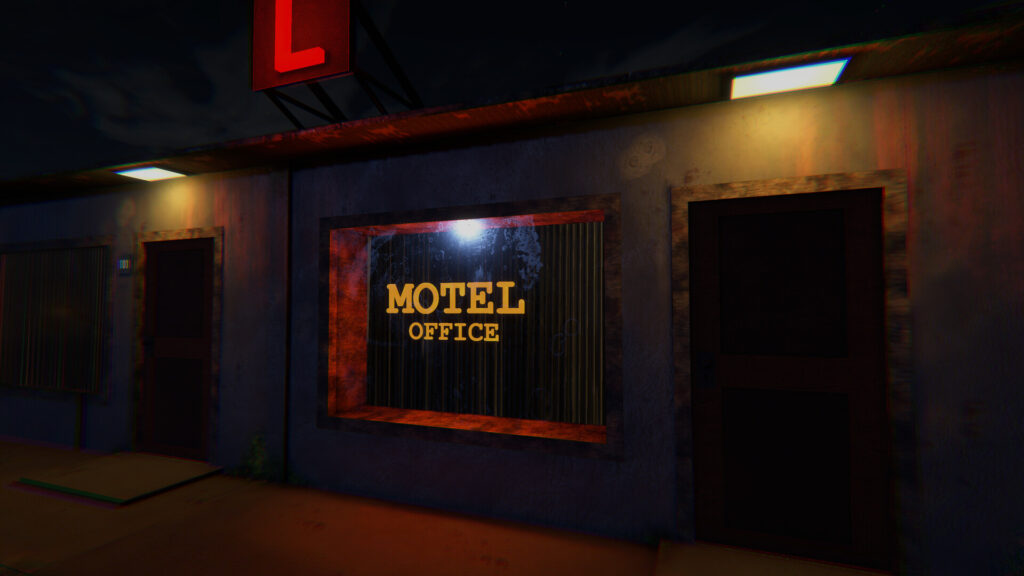
There is a universal, inherent creepiness to working the graveyard shift. When the rest of the world is asleep, the environments we usually consider safe—office buildings, gas stations, and empty parking lots—transform into liminal, hostile spaces.
Developer Arzolath® understands this deeply. Released late last month for the incredibly accessible price of $4.99, Night Clerk is a first-person psychological horror experience that weaponizes the mundane. You play as Daniel Mercer, a young man working the night shift at a failing roadside motel in the spring of 1970.
Currently sitting at a “Mixed” rating on Steam, the game has proven somewhat polarizing. Players expecting a fast-paced, monster-dodging thrill ride akin to Outlast or Amnesia are leaving disappointed. But for those who appreciate slow-burn dread, subtle environmental storytelling, and the terrifying realization that something is standing just out of view on a CCTV monitor, Night Clerk is a brilliant, bite-sized nightmare.

Chores and Paranoia
Night Clerk is fundamentally a “walking simulator” heavily focused on routine. Your shift begins at 11:00 p.m. and ends at 5:00 a.m., and the gameplay revolves entirely around completing the grounded, repetitive tasks left for you by the manager.
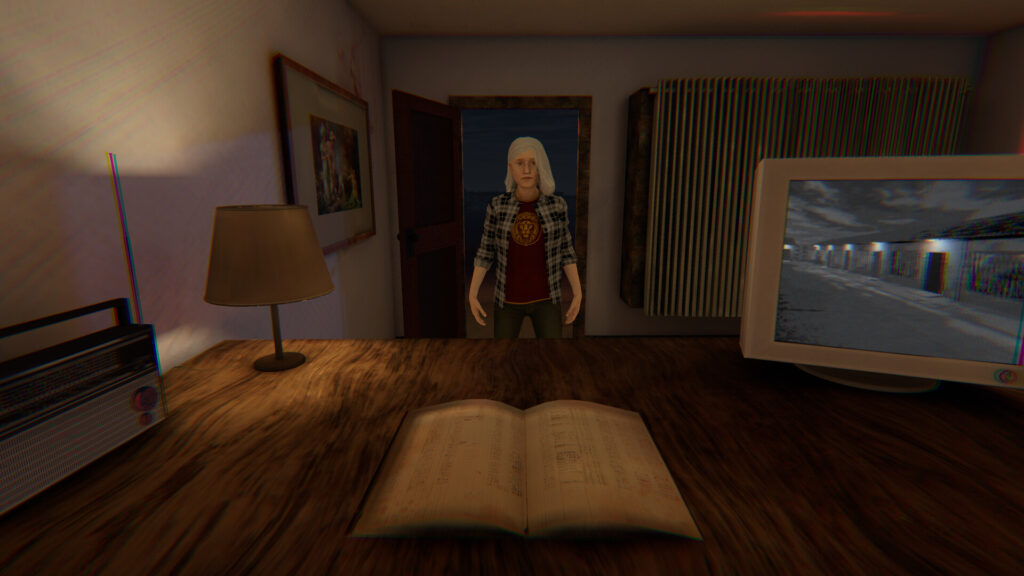
You sit behind the front desk. You wait for the phone to ring. You check guests into their rooms, write their names in the ledger, and hand them their keys. Between arrivals, you are tasked with menial chores: emptying the trash in Room 102, putting fresh towels in Room 106, or resetting the breaker when the exterior lights inevitably fail.
The brilliance of the game lies in its pacing. Arzolath® forces you into a rhythm. You learn the layout of the motel, you get used to the loud, droning hum of the office fan, and you catch a vibe while listening to the radio.
And then, the game begins to slowly, methodically break that rhythm.
The Horror of Observation
There is no combat in Night Clerk. There are no grotesque monsters hiding in the closets, and nothing ever chases you down a hallway. The terror is derived entirely from subtle inconsistencies and the horror of observation.
As the nights progress, the quiet stretches of silence between your chores become agonizing. The phone rings, but nobody is on the other line. A guest calls the front desk to complain about someone breathing heavily outside their door, but when you check the CCTV cameras, the parking lot is completely empty.
The game demands your attention. You begin to notice things that feel slightly wrong. Was that shadow always cast against the ice machine? Did that motel room door just close on its own? Why did the car alarm just go off when the parking lot is deserted?
The game utilizes a fantastic chromatic aberration effect that gives the visuals a hazy, almost VR-like depth. This visual distortion, combined with the incredibly unsettling audio design—the buzzing of fluorescent lights, the crunch of gravel outside the window, the sudden static on the radio—creates a suffocating atmosphere of isolation.
Room 108 and The Branching Narrative
Without diving into heavy spoilers, the narrative hook of Night Clerk centers around a specific guest named Joe, who explicitly requests Room 108, and the historical events of May 14th, 1970.
The game unfolds over several shifts, with the tension escalating each night. The guests behave increasingly strangely, often wandering aimlessly through the parking lot before approaching the desk. The environmental storytelling does a lot of heavy lifting here, relying on the player to piece together the tragic history of the failing motel and the fate of Daniel Mercer.
Interestingly, the game features multiple endings (as indicated by the Steam achievements, currently 9 available to unlock). Your actions, how you interact with the guests, and the clues you uncover determine how your final shift concludes. However, the game does not hold your hand. Figuring out how to break the cycle and achieve anything other than the default “Complicit” ending requires a keen eye and a willingness to explore the property’s dark, terrifying corners.
Brevity and Bugs
While Night Clerk excels in atmosphere, it is an incredibly brief experience. A single playthrough can easily be completed in under 45 minutes. Even for $4.99, some players may find the content offering a bit too sparse, especially since the core gameplay loop consists almost entirely of walking back and forth to empty trash cans.
There are also a few minor technical hiccups that break the immersion. Guests have a bizarre pathing AI, often walking to the far side of the parking lot to stand under a lamppost before eventually turning around and entering the office. The ghost car alarms, while eventually explained by the narrative as “echoes” of past events, initially feel like audio bugs.
Finally, the lack of an option to rebind the keyboard controls is a frustrating oversight for a PC release in 2026, though the game does feature full controller support.

The Good, The Bad, & The Graveyard Shift
| The Good | The Bad | The Ugly |
| The Atmosphere: The dim lighting, the humming electronics, and the quiet isolation perfectly capture the dread of the night shift. | Extremely Short: A single playthrough takes less than an hour, which may leave some players wanting more. | Guest AI Pathing: Customers walking in bizarre, illogical circles before entering the office breaks the grounded immersion. |
| Subtle Horror: Relies on environmental irregularities and CCTV anomalies rather than cheap, loud jumpscares. | No Keybinding: The inability to remap keyboard controls is a frustrating omission for PC players. | |
| Audio Design: The soundscape is phenomenal. Every crunch of gravel or static radio burst puts you on edge. | Repetitive Tasks: The gameplay loop of emptying trash and replacing towels can feel a bit too tedious. | |
| The Price: At $4.99, it is an excellent, bite-sized thriller for a dark weekend evening. |

Should You Buy It?
Yes, if: You love slow-burn, atmospheric horror, you enjoy “desktop/surveillance” games like Five Nights at Freddy’s or Fears to Fathom, and you appreciate subtle, psychological dread.
No, if: You want action-packed survival horror, you demand games with deep, complex gameplay mechanics, or you despise “walking simulators.”
Recommended for fans of: Fears to Fathom, Chilla’s Art games (e.g., The Convenience Store), Iron Lung, Five Nights at Freddy’s.
Night Clerk: Night Clerk is not a game designed to make you scream; it is a game designed to make you deeply, profoundly uncomfortable. By trapping you in the mundane routine of a minimum-wage graveyard shift, Arzolath® strips away your power and forces you to confront the creeping dread of isolation. It is short, simple, and occasionally clunky, but it nails its specific brand of psychological horror with frightening precision. If you have five dollars and an hour to spare, turn off the lights, put on a pair of noise-canceling headphones, and clock in. Just don't answer the phone if Room 108 calls. – Flare