
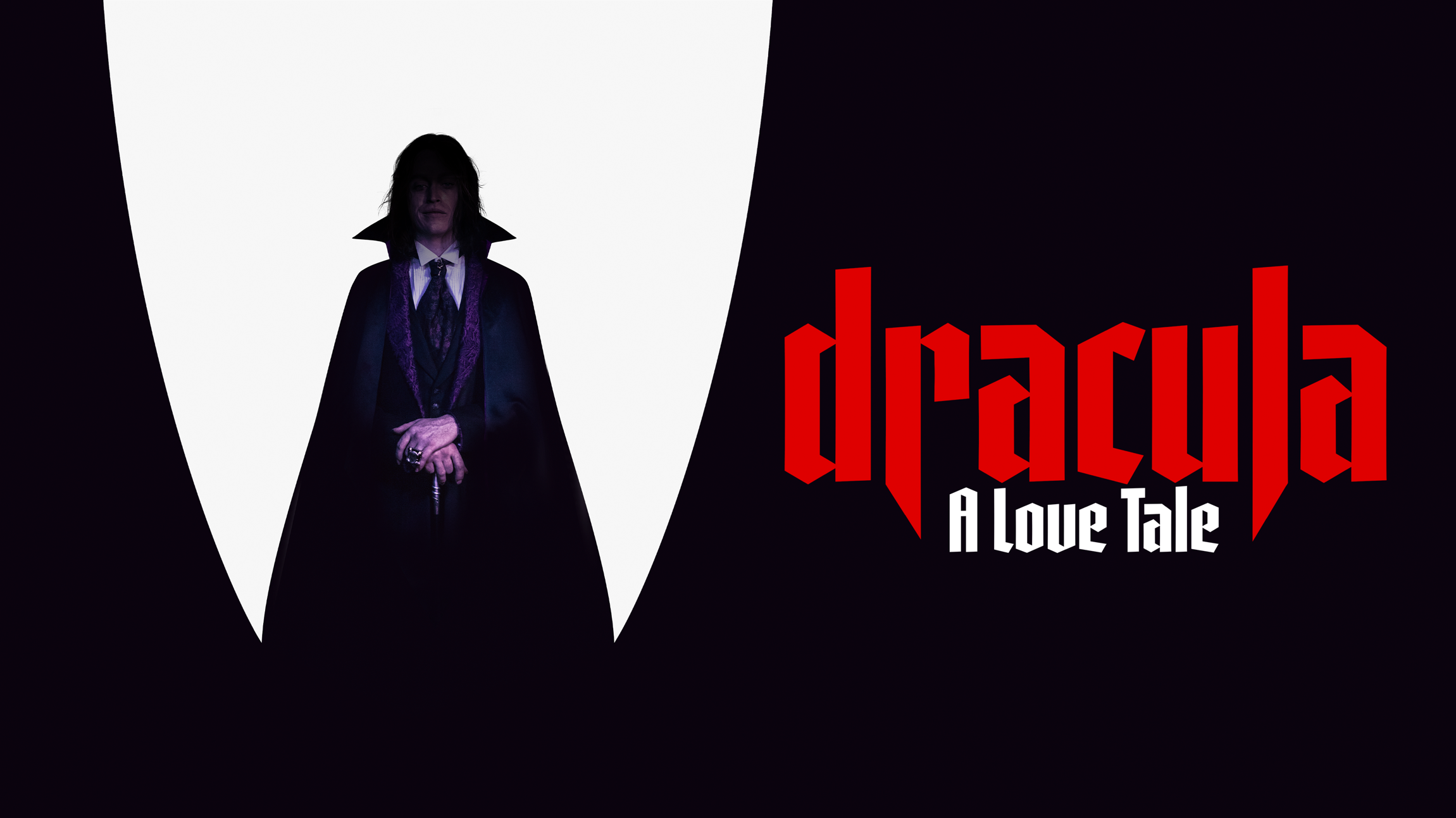
The Prince Returns
There are few stories as well-trodden as Bram Stoker’s Dracula. From Bela Lugosi’s theatrical cape to Gary Oldman’s steampunk shapeshifting, the Lord of Vampires has worn a thousand faces. So, when French auteur Luc Besson (The Fifth Element, Léon: The Professional) announced he was taking a stab at the legend, audiences knew two things for certain: it would be visually spectacular, and it would be weird.
Dracula: A Love Tale, released on February 6, 2026, delivers on both promises. It is a sprawling, operatic retelling of the origin story that leans heavily into the “Love” part of the title. It strips away much of the predator’s horror and replaces it with the widower’s tragedy.
Besson has crafted a film that feels less like a horror movie and more like a twisted fairy tale. It captures the audience’s heart early on, only to break it with an ending that—depending on your perspective—is either profoundly spiritual or frustratingly selfish.
A Warrior for Love
The film opens strongly—perhaps its strongest segment—in the 15th century. We meet Prince Vlad (Caleb Landry Jones), not as a monster, but as a devoted husband and a fierce defender of the church.
The production design here is immaculate. The medieval armor, the sweeping landscapes, and the intricate dresses worn by the Princess (Zoë Bleu) are a feast for the eyes. Besson wastes no time making us fall in love with the couple. Their chemistry is palpable, grounding the supernatural elements in human emotion. We root for them.
The turning point, faithful to the Coppola adaptation and the original lore, is the devastating loss of his wife. Caleb Landry Jones is terrifyingly good in this sequence. When he denounces God, it isn’t a whimper; it’s a primal scream. He channels a rage that feels earned. He becomes a “warrior for love,” angry enough to defy death itself to get her back. This transformation into the eternal vampire feels tragic rather than villainous, setting the stage for a sympathetic anti-hero.
The Cast: Perfect Casting in an Imperfect World
The film’s greatest asset is undoubtedly its cast.
Caleb Landry Jones was born to play this role. Known for his eccentric performances in Get Out and Antiviral, he brings a weird, wiry intensity to Dracula. He isn’t playing the suave, seductive vampire; he is playing a creature in pain. He is a raw nerve ending exposed to the air for 400 years.
Christoph Waltz brings his signature charm and precision to the role of the priest (and later, the hunter). User reviews have noted his ability to deliver “subtle comedy moments” that provide a much-needed chuckle amidst the brooding melodrama. Waltz has a unique talent for being simultaneously comforting and unsettling, a trait that fits Besson’s off-kilter tone perfectly.
Zoë Bleu serves as the emotional anchor. As both the 15th-century Princess and her modern reincarnation, she possesses an ethereal beauty that justifies Dracula’s obsession. She does a lot of heavy lifting in the silent moments, conveying a sense of déjà vu and longing that sells the “reincarnated love” trope.
Style Over Substance: The “Cologne Commercial” Aesthetic
It wouldn’t be a Luc Besson film without moments of extreme stylistic indulgence.
The middle act of the film, which follows Dracula’s journey through the centuries as he searches for his lost love, relies heavily on visual effects. There are sequences involving potions, blood, and the tracking of scents that feel less like a narrative film and more like a high-budget Cologne commercial.
We see Dracula inhaling the essence of a scarf, followed by abstract, slow-motion montages of flowers, blood cells, and memories. It is beautiful, yes, but it can be distracting. At times, the style threatens to overwhelm the story, leaving the audience swimming in imagery while the plot treads water.
Another technical gripe that has surfaced from audiences is the lack of subtitles. The film traverses Europe, featuring dialogue in German, Dutch, and French. For a general audience, the lack of translation in these parts is a baffling oversight that creates a barrier to immersion. You get the gist of what is happening, but the nuance is lost in the language barrier.
The Third Act: Power and Contradiction
As the film hurdles toward its conclusion, it subverts the typical vampire movie tropes. Usually, the third act involves the “bad guy” being easily dispatched by a group of normal humans with wooden stakes.
Dracula: A Love Tale avoids this pitfall. Dracula has spent centuries controlling minds and slaughtering armies; the film respects that power. He easily plows through the men standing in his way. There is a satisfaction in watching him be the unstoppable force of nature that the lore demands.
However, the conflict isn’t physical; it’s spiritual. And this is where the movie loses some of its audience.
The Ending: A Selfish Redemption?
The finale is the most polarizing aspect of the film. After 400 years of waiting, searching, and killing, Dracula finally reunites with his love. He convinces her of their past life. She accepts him. She even allows him to turn her into a vampire so they can be together for eternity.
And then… he changes his mind.
In the final moments, Dracula finds God again. He realizes that true peace lies in death, not in undead existence. He chooses to let go, giving up his life to finally confront the mortality he has evaded for so long.
On paper, this is a poetic, redemptive arc. In execution, it feels incredibly selfish.
As one viewer astutely pointed out: “He found his love… made her a vampire to live with him forever… and then just left her with broken love again.”
By choosing to die after turning her, he leaves her in a horrific position. She is now a vampire, cursed with bloodlust and immortality, but she is alone. Her human husband has rejected her (and brought an army to kill her lover), so she cannot go back to her mortal life. Dracula has essentially stranded her in eternity without a guide or a partner.
He gets his peace. He gets his “heaven.” She gets the curse. For a movie built on the premise of his undying devotion, his final act feels like an abandonment. It leaves the audience with a “ehh, okay, I guess” feeling, rather than the emotional catharsis the runtime promised.
The Good, The Bad, & The Gothic
| The Good | The Bad | The Ugly |
| Caleb Landry Jones: A feral, emotional, and perfect Dracula. He carries the film’s intensity. | The Ending: Dracula’s decision to die feels selfish, leaving his newly-turned love abandoned and cursed. | Missing Subtitles: Large chunks of dialogue in German/French/Dutch are unsubtitled, confusing the audience. |
| Production Design: The armor, the dresses, and the sets are breathtaking. A true visual feast. | Pacing: The middle section drags, feeling like a montage of sensory “vibes” rather than plot. | The Husband Subplot: The human husband is largely forgotten, serving only as a plot device to bring the army. |
| Christoph Waltz: Adds a layer of subtle, intelligent comedy that balances the dark tone. | “Cologne Commercial”: The visual metaphors sometimes veer into pretentious territory. | |
| Power Scaling: Dracula actually feels powerful. He isn’t easily defeated by mortals. |
Should You Watch It?
Yes, if you loved Francis Ford Coppola’s Bram Stoker’s Dracula (1992) or if you enjoy Luc Besson’s distinct, high-energy visual style. It’s a great “vibes” movie.
No, if you want a straightforward horror movie with scares, or if you hate endings that feel philosophically muddy.
Recommended for fans of: Interview with the Vampire, The Fifth Element, Crimson Peak, and Only Lovers Left Alive.
Dracula: A Love Tale: Dracula: A Love Tale is a fascinating mess. It is undeniably one of the best-looking films of 2026, with costumes and cinematography that deserve Academy Award nominations. Caleb Landry Jones delivers a performance that will be remembered as one of the most unique takes on the Count. However, the narrative fumbles the ball at the goal line. By trying to give Dracula a spiritual redemption, Besson accidentally turns him into a bad boyfriend. It is a film you watch for the spectacle, the music, and the mood, but not for the logic. – Asmodeus