



The zombie apocalypse is usually depicted through the barrel of a shotgun or the swing of a baseball bat. We are used to being the survivors running through the streets, scavenging for cans of beans, and aiming for the head. But what happens after the initial panic settles? What happens when bureaucracy tries to reassert itself on the edge of oblivion?
Quarantine Zone: The Last Check, developed by Brigada Games and published by indie powerhouse Devolver Digital, answers this question. Released on January 12, 2026, this simulation-strategy hybrid asks you to holster your weapon and pick up a clipboard. You aren’t a hero; you are a gatekeeper. And your job is to decide who is worth saving and who is already dead.
After spending a week manning Checkpoint Alpha, dealing with contraband flamethrowers, solving graffiti mysteries, and accidentally causing a small outbreak in the quarantine ward (RIP Frank), here is our full review.

The Gatekeeper’s Burden
The premise is immediately gripping. You command a fortified checkpoint at the entrance of a survivor camp. Every day, a line of desperate souls forms at your gate. Your primary objective is to screen them for the virus that has ravaged the world.
The gameplay loop will be instantly familiar to fans of Papers, Please or Contraband Police, but with a visceral, biological twist. Instead of checking for passport discrepancies, you are checking for conjunctivitis, fever, and bite marks.
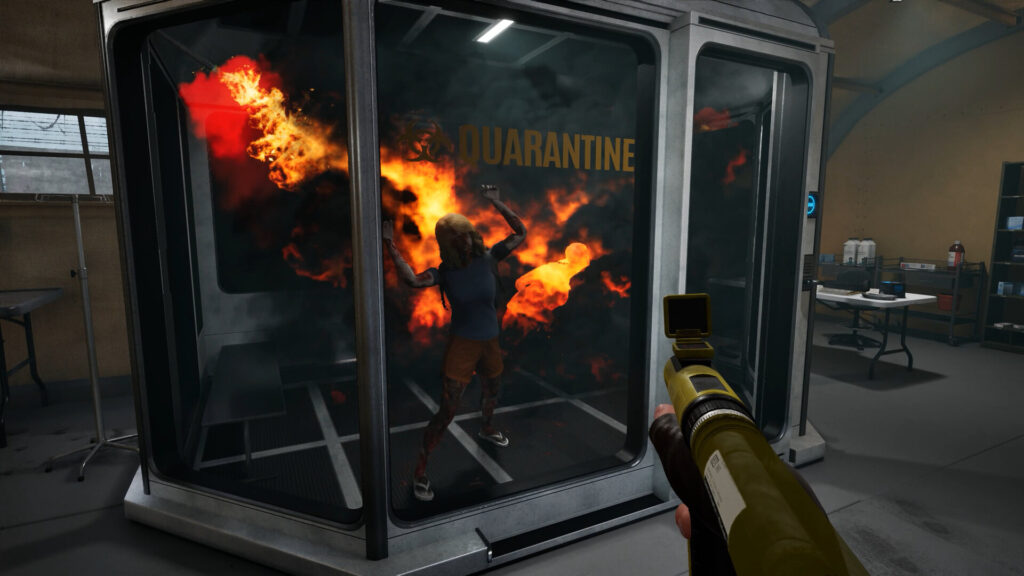
The game starts simply. You have a flashlight and your eyes. You look for red eyes, bloody bandages, or strange sweating. If they look clean, you send them to the Living Block. If they look suspicious—say, a slightly elevated pulse or a bruise on the leg—you send them to Quarantine for observation. And if they are clearly infected? You send them to Liquidation.
The game uses euphemisms like “Liquidation” to mask the horror, but the gunshot that rings out seconds after a survivor walks through that door is a grim reminder of your authority. It is a satisfying, morbidly addictive loop that turns human lives into a series of checklists.
Tools of the Trade
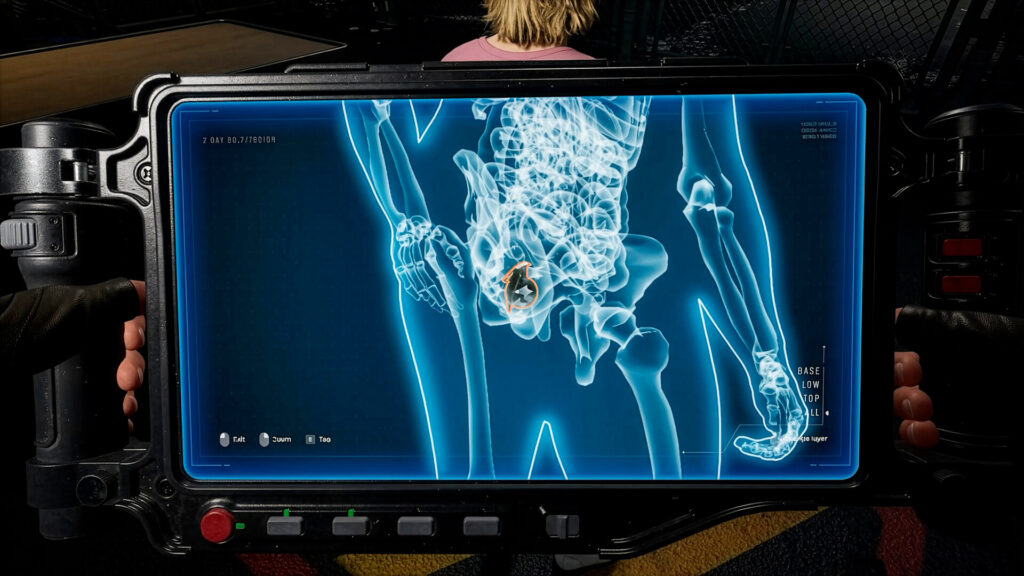
As the days progress, the virus evolves, and so do your tools. What starts with a simple thermometer upgrades to a Reflex Hammer (used to test for slowed reactions in the limbs) and then to a high-tech Scanner that can peer through clothing to find hidden bites or contraband.
The tactile nature of these inspections is the game’s strongest asset. Manually moving the thermometer to a survivor’s forehead, smacking their knee with a hammer to see if they kick, or scanning their backpack for weapons, feels grounded and immersive.
However, the game throws curveballs. During one shift, I was issued a directive banning the use of the Reflex Hammer due to “scientific debate,” forcing me to rely on shakier evidence. In another instance, the scanner was offline for maintenance during a massive wave of refugees. These moments of deprivation create the highest tension, forcing you to rely on gut instinct rather than hard data.
The Narrative: Tragedy and Comedy
While the gameplay is mechanical, the stories are human. The survivors aren’t just procedurally generated mannequins; many have specific dialogue, backstories, and attitudes. You’ll meet “Abe Crow,” an old man in a questionable sweater who might just be the camp’s serial graffiti artist. You’ll encounter “Crazy Dave,” who looks like a zombie but is just… weird.
The game balances grimdark sorrow with unexpected dark humor. During my playthrough, a survivor named Scott tried to smuggle a literal flamethrower into the camp in his backpack. Another claimed the assault rifle in her bag was for “emotional support.”
But for every laugh, there is a gut punch. A woman pleading to be let in because her children are waiting inside, only for you to find a guaranteed infection symptom. A man offering you a bribe because he knows he’s sick. The game forces you to be cold. If you let your guard down—or your empathy up—you risk the entire camp.
In one disastrous playthrough, I let a man named Frank stay in Quarantine too long because his temperature was “borderline.” I hoped he would recover. Instead, he turned overnight, broke out of his cell, and massacred the other three patients in the ward. The morning report was a sobering list of casualties, all because I hesitated to push the Liquidation button.
Base Management: The Shallow End
Outside of the inspection booth, Quarantine Zone introduces a base management layer. You must manage three resources: Food, Power, and Medicine. As you let more survivors in, you need to upgrade the Canteen, the Generator, and the Clinic.
This aspect of the game is functional but lacks the depth of the inspection loop. It often boils down to a simple economy: send survivors to the military to earn cash, then click “Upgrade” on a building. There is rarely a moment when you feel truly resource-starved if you are playing competently. It serves as a nice break from the booth, but strategy veterans might find it a bit “spreadsheet-y.”
Occasionally, the game throws an action sequence at you—piloting a drone to shoot down hordes of zombies attacking the walls. These segments are visually cool but suffer from clunky controls, especially on a gamepad. It’s clear the developers’ hearts were in the simulation, not the shooting.
Performance and Visuals
Visually, the game punches above its indie weight class. The rainy nights at the checkpoint are atmospheric, with dynamic lighting bouncing off raincoats and puddles. The character models are stylized but detailed enough to show the subtle symptoms you need to spot.
Performance on PC is solid, though there are reports of minor UI bugs and hitscan issues with the drone sections. On the Steam Deck, the game is a joy. The touch controls and portable form factor make it perfect for knocking out a few “days” of shifts in bed. It feels like the platform the game was made for.
Summary
| The Good | The Bad |
| Addictive Core Loop: Inspecting survivors for symptoms is satisfying, tense, and mentally stimulating. | Repetitive Endgame: Once you have the X-Ray scanner, the mystery fades and it becomes a bit too easy. |
| Dark Humor: The writing balances the bleak setting with genuinely funny interactions and bizarre contraband. | Repetitive Endgame: Once you have the X-Ray scanner, the mystery fades, and it becomes a bit too easy. |
| Tactile Tools: Using the thermometer, reflex hammer, and scanner feels great and grounded in reality. | Clunky Combat: The drone defense sections feel tacked on and suffer from poor controller sensitivity. |
| Moral Choice: The weight of killing innocent people (by mistake) or doomed people (by necessity) lands hard. | Trial and Error: Some early symptoms (like distinguishing freckles from rashes) can be frustratingly vague. |
| Steam Deck Greatness: Runs beautifully on handhelds, perfect for short bursts of play. |

Quarantine Zone: The Last Check: Quarantine Zone: The Last Check is a tense, engaging, and often hilarious entry into the "bureaucracy simulator" genre. It successfully captures the paranoia of a pandemic, asking you to trust no one—not even the sweet old lady with the knitting supplies. It is not without its flaws. The base building is shallow, and the endgame can become repetitive once you have unlocked all the tools and "solved" the puzzle of infection detection. Some players may find it too easy after the first 10 hours. However, for the $17.99 price tag, it offers a unique 12-15 hour campaign that will stick with you. It challenges your observation skills, tests your morals, and forces you to make the hard calls that no one else wants to make. If you ever thought you could do a better job than the guys in the hazard suits in zombie movies, this is your chance to prove it. Just remember: if they have red eyes, don't listen to their sob story. Send them to Liquidation. – Obsidian