



Some games announce their identity the moment they begin. Magin: The Rat Project Stories, the dark fantasy deckbuilder from Polish studio The Rat Project and published by Daedalic Entertainment, is one of those games. Within minutes of starting you’re inhabiting a world that feels genuinely cold and alive — medieval grime meets industrial machinery, fear and desire made literal through a magic system called Essence, and two protagonists who feel like they’ve already lived difficult lives before you arrived. It’s a compelling opening that makes the game’s subsequent unevenness feel all the more frustrating.
You follow two central characters across an intertwined narrative: Elester, a hardened Magin veteran and hitman living on the fringes of a society that shuns his kind, and Tolen, a younger man only beginning to discover what Essence can do. Their paths converge in a dark fantasy world teetering between medieval tradition and the emergence of industrial, magic-powered machines — and the forces that will do anything to control both.

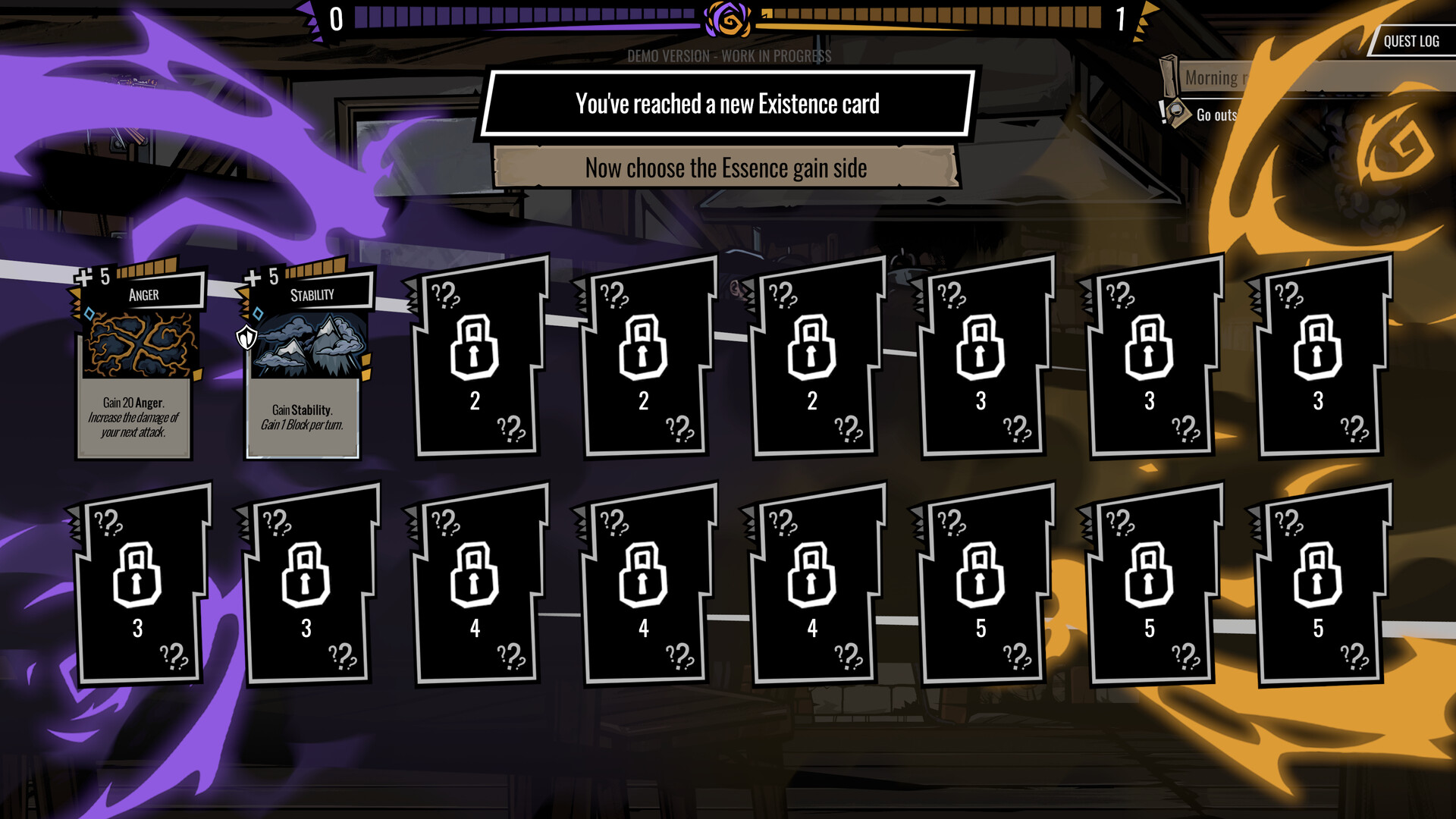
The concept at the heart of Magin is genuinely inspired. Essence — the game’s magic system — isn’t just a combat resource, it’s emotion made tangible. Fear, hope, anger, and despair fuel the cards you carry into battle, and crucially, the deck you build is shaped directly by the choices you make in the world. Respond to characters with aggression, and you earn cards that reflect that. Take a cautious or empathetic approach, and your options shift accordingly. Every narrative decision is also a deckbuilding decision, and that connection gives both systems a weight that most card games never achieve.
The double-sided Essence cards are the mechanical highlight. Cards can flip and shift depending on how they’re used, forcing forward-thinking rather than rote execution of the same strategy. When things click — stacking focus into fear combos that melt enemies in two or three turns, using pre-fight knowledge of enemy types to slot in specific counter cards — the combat feels genuinely satisfying. Players who invest in understanding the system and build with intent will find real depth here.
Whatever criticisms can be levelled at Magin’s systems, its presentation is difficult to fault. The comic-book art style is immediately striking — bold linework, expressive character designs, and environmental detail that makes every location feel like it was hand-designed with care. It channels Witcher-era grit through a lens that’s entirely its own, and the Polish development team’s investment in this world is visible in every frame.
Full voice acting across all dialogues is a significant achievement for a title of this size, and the performances are largely strong. Rather than the wall of silent text common in indie RPGs of this scope, Magin’s characters speak — and the result makes even minor NPCs feel worth engaging with. The soundtrack matches the tone with dark, brooding compositions that give the world an oppressive, lived-in quality. For atmosphere alone, Magin earns genuine respect.
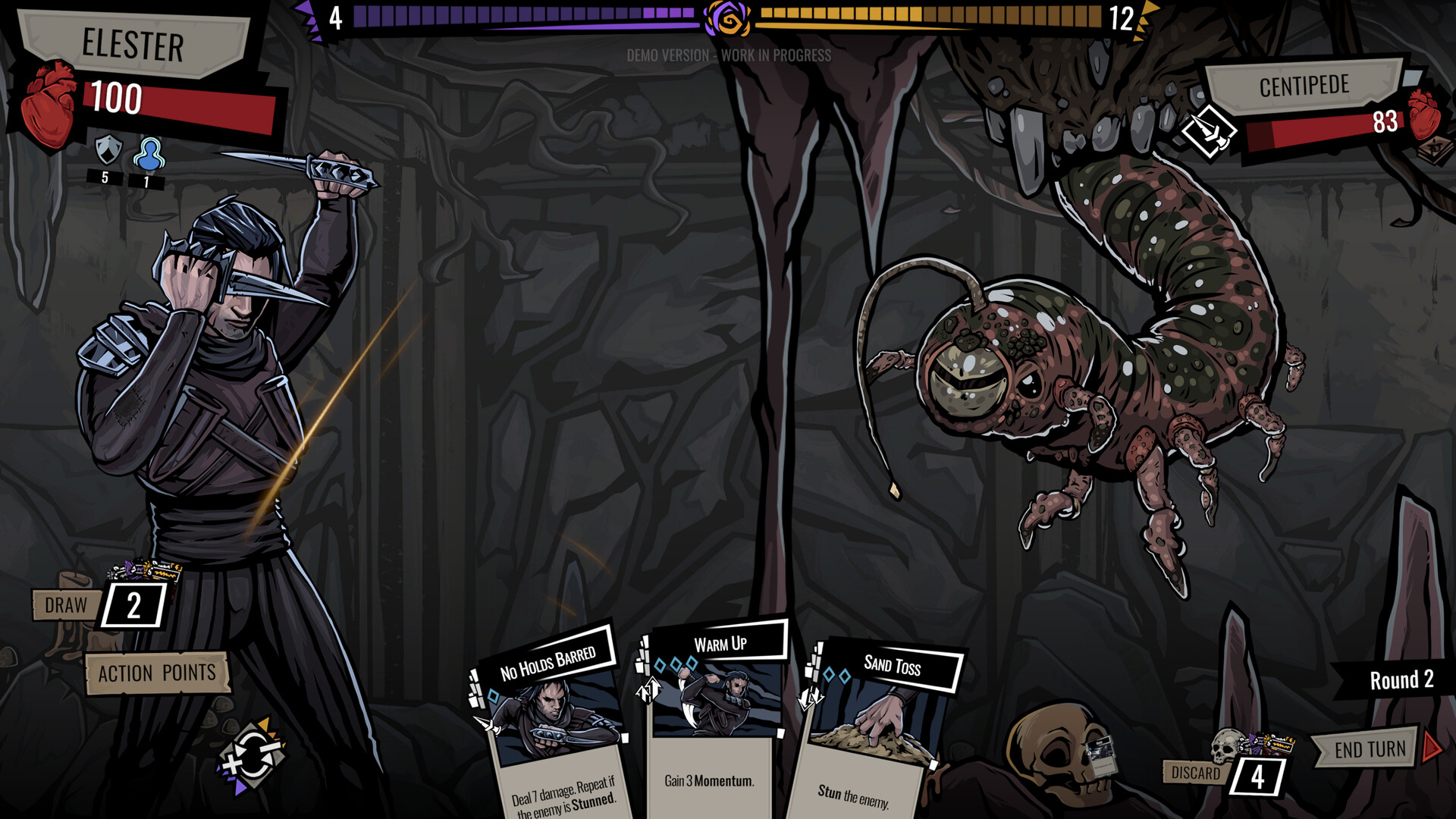
The gap between Magin’s ambition and its execution is where the experience becomes divisive. The combat system’s greatest strength — locking your deck to narrative choices — becomes its most significant weakness over time. Because card acquisition is tied directly to story decisions rather than free experimentation, players who stumble into a certain style early on can find themselves boxed in. The game encourages commitment, but doesn’t always provide the flexibility to course-correct.
Balance is also an issue that varies significantly by difficulty. On Hard, enemy numbers can swing wildly — massive damage spikes followed by turns of pure passive defense that reduce combat to a numbers grind rather than a strategic duel. On Normal the experience is more considered, but certain strategies — particularly stun-heavy decks — can render entire sections trivial, removing the very tension the system is designed to create. The complexity is most engaging in the early game and doesn’t always scale convincingly toward the end.
Pacing occasionally stumbles too, with certain narrative sections slowing significantly without introducing new mechanical ideas to compensate. The writing, while largely strong in tone and character, leans on profanity as a shorthand for adult edge in ways that feel more adolescent than genuinely mature. These are frustrating rough edges on a game that otherwise clearly has something real to say.
| The Good | The Bad | The Ugly |
|---|---|---|
| Essence Card SystemNarrative choices that directly shape your deck is a genuinely inspired design that makes every story decision feel mechanically meaningful. | Balance InconsistenciesHard mode swings between punishing and trivial. Stun-lock strategies on Normal can make entire sections a non-event. | Deck RigidityBeing locked into choices made hours ago with limited ability to experiment can feel suffocating for players who want build flexibility. |
| Stunning Art DirectionA bold comic-book aesthetic with expressive character designs and richly detailed environments that ooze personality and atmosphere. | Uneven PacingSome narrative sections drag without introducing new mechanics, disrupting the flow between story and combat. | |
| Full Voice ActingEvery dialogue fully voiced with largely strong performances — a remarkable achievement for a title of this scale that makes the world feel genuinely alive. | Writing Rough EdgesHeavy profanity occasionally reads as a shorthand for maturity rather than genuine adult storytelling. | |
| Atmospheric Dark WorldA genuinely cold, unnerving setting where medieval tradition and industrial magic collide — with a brooding soundtrack to match. | ||
| Satisfying Combat HighsWhen builds click and combos land — focus into fear chains, pre-loaded counter cards — the turn-based combat delivers real strategic satisfaction. |
Magin: The Rat Project Stories is a game that earns genuine admiration even as it frustrates. The core concept — emotions as cards, narrative as deckbuilding — is one of the more original ideas in the genre, and the world The Rat Project has built around it is atmospheric, beautifully drawn, and fully voiced in a way that belies the team’s size. These are real achievements worth celebrating.
But the execution doesn’t always match the vision. Balance issues, a rigidity to the deck system, and pacing that occasionally loses momentum prevent Magin from reaching the heights its ambition promises. For players who embrace commitment, enjoy dark narrative RPGs, and are willing to build with intent rather than experiment freely, there’s a genuinely compelling experience here. For everyone else, it’s a game that’s easier to respect than to love — but respect it you will.