All Aboard the Sequel Express
When Monster Train 2 launched last year, it had massive shoes to fill. The original game was a watershed moment for the roguelike deckbuilder genre, offering a multi-floor, tower-defense twist on the formula popularized by Slay the Spire. Thankfully, the sequel didn’t just iterate; it evolved, introducing deeper mechanics, richer clans like the Luna Coven and Underlegion, and beautifully refined vertical combat.
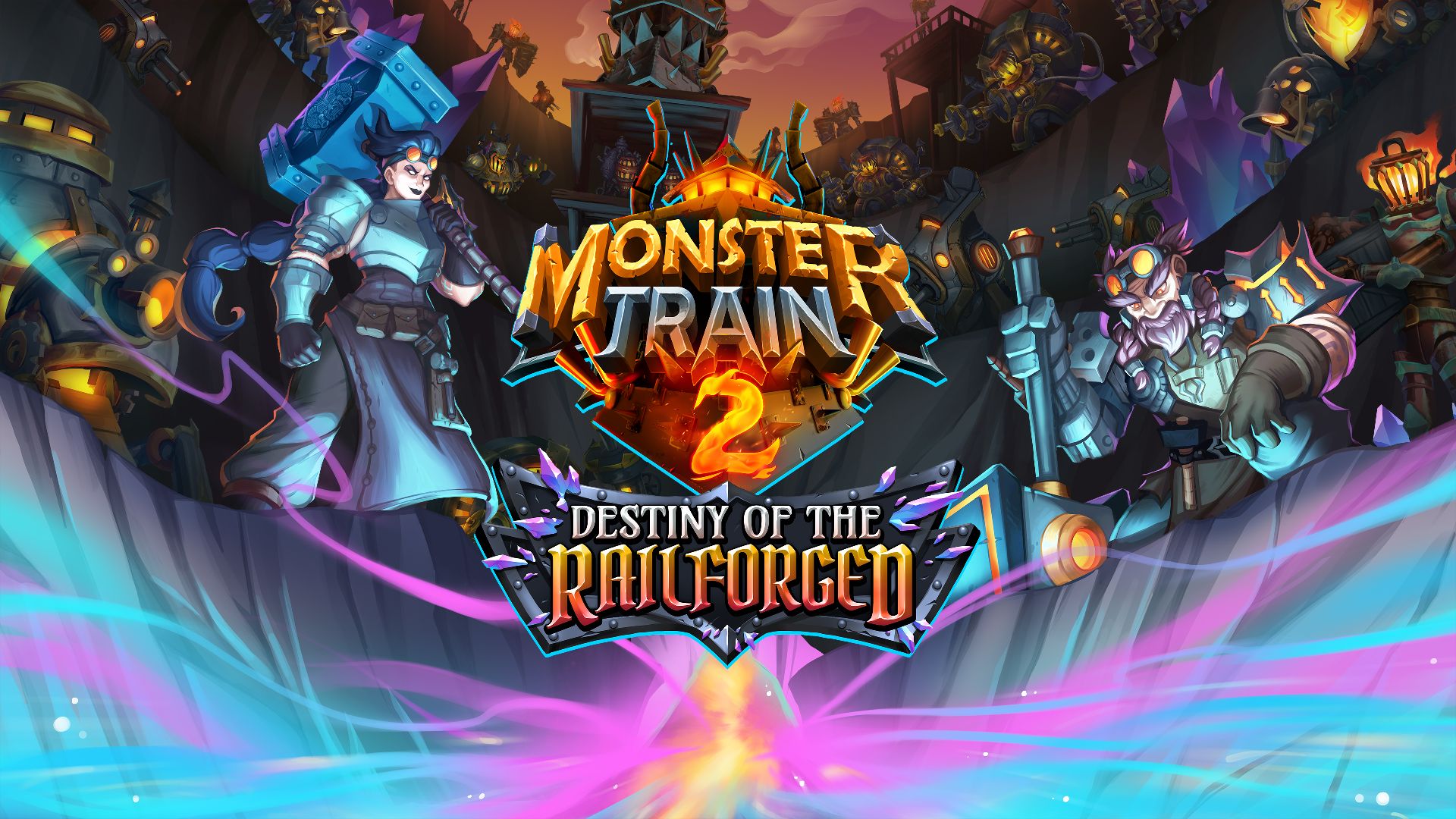
Now, almost a year later, developer Shiny Shoe has released the game’s first paid DLC: Destiny of the Railforged. Priced at a very reasonable $9.99, this expansion adds a brand-new clan, fresh enemies, powerful artifacts, and an entirely new game mode. Having spent dozens of hours forging steel and fighting through the Soulstream, it is clear that while not every addition is perfectly balanced, the sheer amount of strategic depth added here is staggering.
The Railforged Clan: Hammers, Scrap, and Synergy
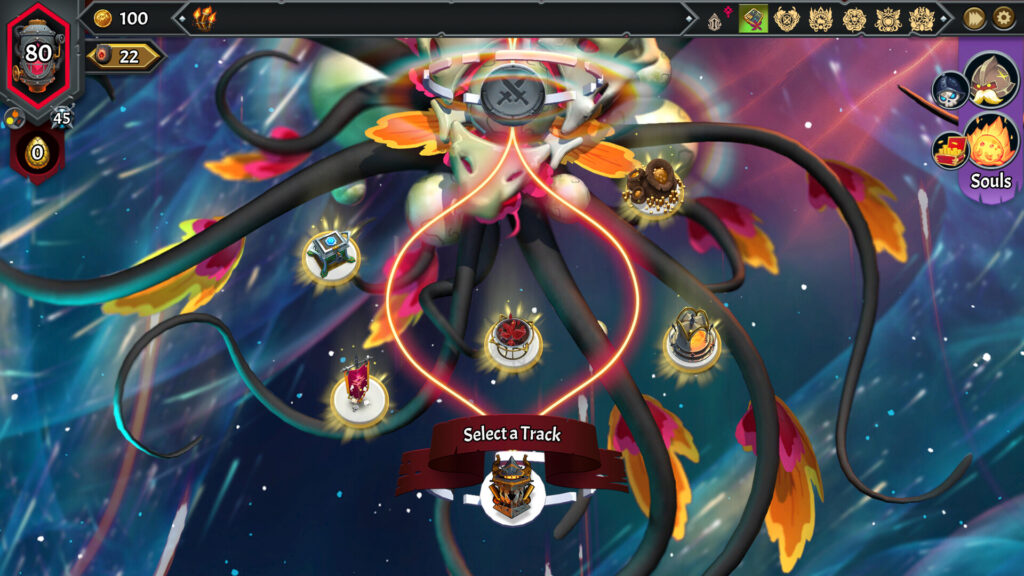
The true star of this DLC is the titular Railforged Clan. Thematically, they are the architects of the train itself. After years of building the rails and the Boneshaker, they have finally picked up their hammers to join the fight against the Titans.
Mechanically, the Railforged are a dream come true for players who love complex engine-building. They introduce two primary mechanics that fundamentally change how you approach floor management: Forge and Smelting.
The Forge Mechanic allows you to spend “Forge Points” whenever you play a Unit or Equipment. These points act as a massive buff, granting additional attack and armor (usually +3/+3) per point spent. The brilliant part is that you can toggle Forge Points on and off at will. This encourages a highly patient, methodical playstyle. Instead of dumping your entire hand during deployment, the Railforged reward you for holding back your strongest units until you’ve amassed enough Forge Points to turn them into unstoppable juggernauts.
Smelting, on the other hand, is arguably the strongest utility mechanic in the game. It allows you to consume (destroy) cards in your hand, melting them down into energy and Forge Points. Got a deck clogged with useless starter cards or enemy blights? Smelt them. It lets you thin your deck on the fly while generating resources for your high-cost heavy hitters.
Add in ridiculous utility cards like the Steel Pulley Claw—a room card with a cooldown of 1 that lets you physically grab and relocate any friendly or enemy unit to a different floor—and the Railforged quickly become one of the most interactive and positioning-heavy clans in the game’s history.
Champion Balance: A Tale of Two Blacksmiths
You lead the Railforged using one of two champions: Herzal or Heph. Unfortunately, this is where the DLC hits a noticeable speed bump regarding balance.
Simply put, Heph is incredible, and Herzal is severely under-tuned.
Heph starts with the ability to craft her own equipment, meaning her upgrade paths that rely on gear are functional from turn one. She generates extra ember and Forge easily, allowing you to breeze through the early game. Herzal, however, feels like a chore. One of his primary upgrade paths requires equipping him with gear, but his starter deck doesn’t provide any, nor does he generate it naturally like Heph. You are left entirely at the mercy of RNG, hoping the game hands you the right tools to make your champion viable.
While experienced players can certainly make Herzal work, the community consensus is clear: if you want a smooth, overpowered run, Heph is the blacksmith you want in your corner.
Soul Savior Mode: High Risk, Mixed Rewards
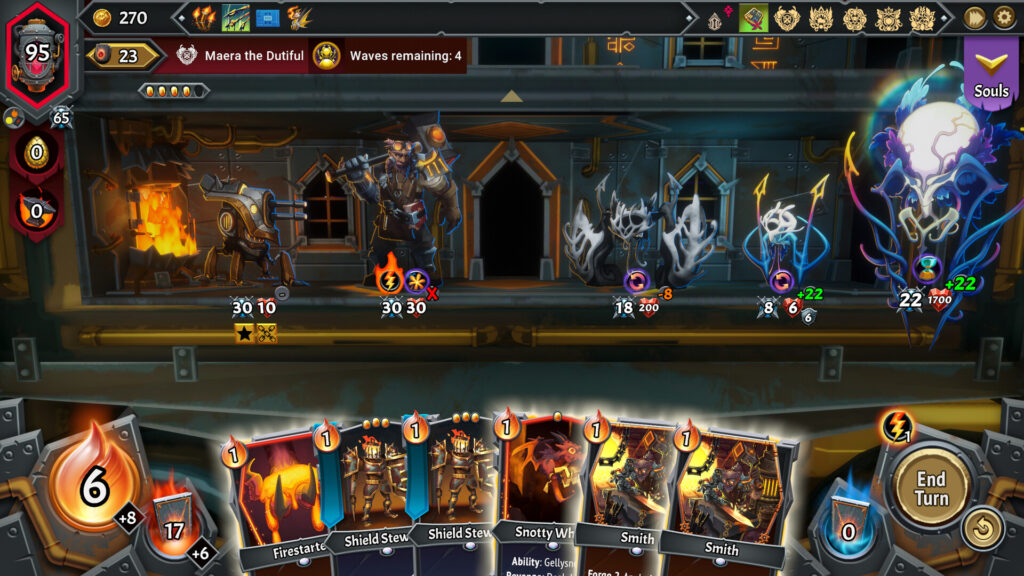
The other major addition in the Destiny of the Railforged DLC is Soul Savior, a brand-new game mode. In this mode, you are tasked with freeing powerful “Souls” from the clutches of a new boss entity known as the Lifemother.
In practice, Soul Savior alters the traditional roguelike run by introducing equippable Souls to your cards. These Souls are essentially cheat codes. When fully leveled up through the mode’s meta-progression, a Soul might grant a unit Titanite, Damage Shield 4, Endless, and reduce its energy cost by two. They are absurdly powerful, and attaching them to your favorite units leads to some of the most broken, satisfying combos in the Monster Train universe.
However, the mode comes with a massive caveat that might frustrate veteran players. In a standard Monster Train 2 run, defeating a major boss grants you a guaranteed choice of a crucial upgrade: +1 Ember, +1 Card Draw, or +1 Floor Capacity. In Soul Savior, these essential upgrades are tied to the Souls themselves, and acquiring them is entirely random.
This means you can easily reach the late game stuck with a base floor capacity of three, desperately praying that the RNG gods offer you a room-sized Soul. Losing a run not because of poor tactical decisions, but because the game simply refused to give you the space needed to play your cards, feels punishing in a way that Monster Train usually avoids. It leans heavily into a “find a cornerstone combo and triple-down on it” mentality, which can make subsequent runs feel slightly repetitive once you figure out the optimal strategy.
Visuals, Sound, and the Returning Wurmkin
It’s worth noting that alongside this paid DLC, Shiny Shoe released a free update bringing back the Wurmkin clan from the first game. Pairing the Wurmkin’s “Etch” triggers with the Railforged’s “Smelt” mechanics creates a symphony of synergistic destruction that is an absolute joy to pilot.
Visually, the new Railforged units look fantastic—all sputtering exhaust pipes, spinning gears, and heavy iron. The soundtrack has also received a shot of adrenaline, with fantastic new heavy metal riffs accompanying the boss encounters in the Soul Savior mode.
The only minor technical gripe is that with the addition of Forge, Smelting, Burst (a decaying multistrike), and the new Soul effects, the screen can become incredibly cluttered. The amount of overlapping status triggers occasionally makes it difficult to read exactly why a unit survived a hit or how an enemy suddenly gained 40 armor.
The Good, The Bad, & The Smelted
| The Good | The Bad | The Ugly |
| The Railforged Clan: Incredibly deep, rewarding mechanics that value patience, positioning, and deck-thinning. | Herzal’s Balance: The male champion is vastly underpowered compared to Heph, relying too heavily on good RNG. | Status Clutter: With so many new mechanics and Souls, the UI can become a confusing mess of overlapping buffs and debuffs. |
| Smelting & Forge: Consuming dead cards for energy is a literal game-changer for high-level strategies. | Soul Savior RNG: Tying essential boss upgrades (like Floor Capacity and Draw) to random drops makes some runs feel unfairly doomed from the start. | |
| Value: At $9.99, the amount of content (new clan, mode, bosses, artifacts) is a massive bargain. | Story: Still virtually non-existent, serving only as window dressing for the mechanics. | |
| Soundtrack: The new heavy metal riffs during boss fights are spectacular. |
Should You Buy It?
Yes, if: You love complex engine-building in card games, enjoyed the first Monster Train, and want a clan that actively lets you manipulate enemy positioning.
No, if: You easily get overwhelmed by too many status effects, or you strongly dislike meta-progression systems where you have to “grind” to unlock a mode’s full potential.
Recommended for fans of: Slay the Spire, Balatro, Inscryption, Cobalt Core.
Monster Train 2: Destiny of the Railforged: Monster Train 2: Destiny of the Railforged is a triumph of expansion design. For less than ten dollars, you are getting a deeply complex, highly synergistic new clan that fundamentally changes how you approach the game's vertical combat. While the new Soul Savior mode introduces some frustrating RNG elements that disrupt the usually tight pacing of a run, and Herzal desperately needs a balance patch, the sheer fun of playing as Heph and building an unstoppable factory of mechanical spiders more than makes up for it. If you own Monster Train 2, this DLC is not just recommended; it is mandatory. – Obsidian