

Congratulations, You Are Expendable
In the crowded landscape of indie gaming, finding a truly addictive gameplay loop is like striking a vein of pure gold. In 2022, Dome Keeper perfected a very specific, high-stress formula: dig down for resources, rush back to the surface, and defend your base from waves of alien horrors.
Now, developer fluckyMachine and publisher Fireshine Games have flipped that formula on its head—literally.
Released earlier this week, ITER-8 tasks players with drilling up instead of down. Set in a bleak, satirical corporate sci-fi universe, you play as Operator #8, an entirely expendable employee of the ITER Corporation’s “vertical ventures department.” Your job is to mine massive alien pillars, extract resources, and defend company property. When you inevitably die, the corporation simply sends down the next numbered clone to pick up where you left off.
Currently boasting a “Mostly Positive” rating on Steam, ITER-8 is a fantastic genre hybrid. It trades some of the extreme, stress-inducing randomness of its predecessors for a more relaxed, progression-heavy experience. But does this corporate grind justify clocking in?
Drill, Defend, Die, Repeat
The core of ITER-8 is split into two distinct, heavily reliant phases: mining and base defense.
The Mining Phase:
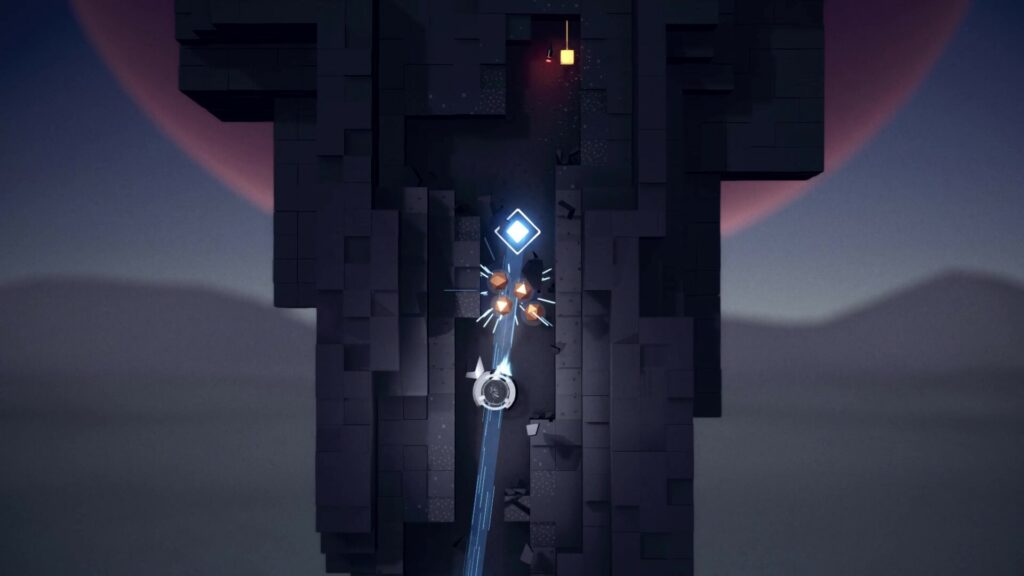
You pilot a specialized mech-drill, ascending through procedurally generated, voxel-inspired alien pillars. The mining mechanics are deeply satisfying. You blast through layers of rock, searching for valuable minerals, technology fragments, and hidden upgrades. There is an undeniable dopamine hit when you drill a long channel with your mining laser, fire a rocket down the tunnel, and watch a massive cluster of resource cubes detonate and rain down into your cargo hold.
However, ITER-8 introduces a unique twist to the standard mining formula. Occasionally, you must exit your ship to engage in micro-explorations. These are small, orthogonal puzzle areas where your pilot must physically navigate the environment to unlock new tech.
The Defense Phase:
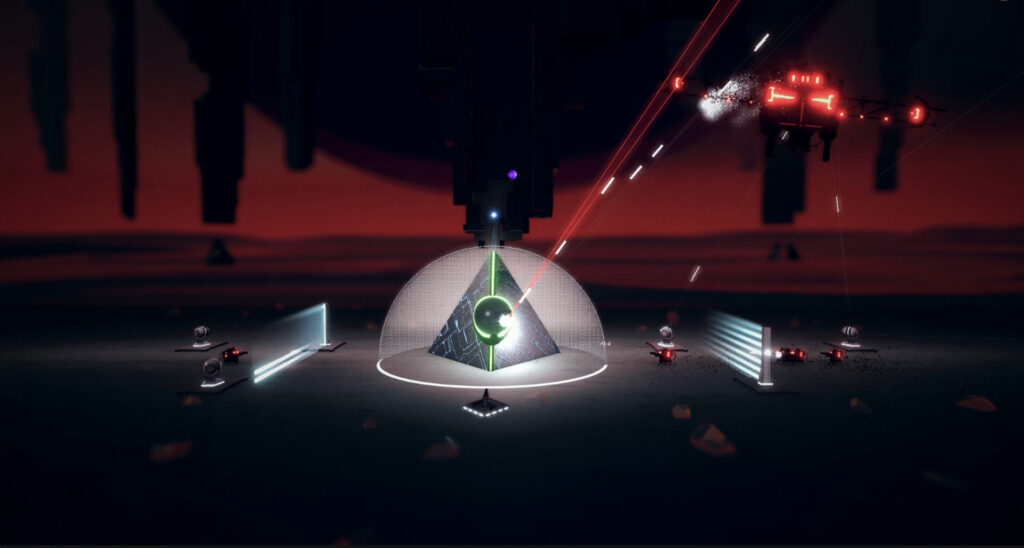
Eventually, your mining activities will attract the attention of the local hostile machine life. A timer ticks down, warning you to return to the surface. Once back at base, the game shifts into a frenetic tower defense mode. You manually control the main gun tower while simultaneously spending your hard-earned resource cubes to build automated defensive turrets.
The synergy between the two phases is excellent. Better mining yields more resources, which buys stronger automated defenses, which allows you to survive longer waves, which gives you more time to mine deeper into the pillar on the next cycle.
Climbing the Corporate Ladder
Where ITER-8 truly distances itself from games like Dome Keeper is in its approach to progression.
Dome Keeper is a notoriously stressful, score-chasing roguelike where death often means starting completely from scratch. ITER-8 is a true roguelite. The “End of Life Policy” ensures that even failed runs contribute to your overall success. Every time an operator dies, the resources gathered are used to purchase permanent, persistent upgrades for the next iteration. You can upgrade your drill speed, weapon damage, base health, and unlock new loadouts.
This makes the game significantly more accessible and relaxing. You aren’t constantly sweating a “game over” screen, because every failure just makes your next clone stronger.
Clunky Cameras and UX Hiccups
Despite the highly addictive loop, ITER-8 is not without its workplace hazards. The game currently suffers from several UI and UX issues that seem to need a bit more time in Quality Assurance.
The biggest culprit is the camera during the “out-of-ship” micro-explorations. Because the camera locks into a fixed, orthogonal perspective, judging depth and height is incredibly difficult. Your character will frequently slide off blocks, fail to jump onto platforms because they are standing a pixel too close, or get stuck behind obscured geometry. These segments are meant to be fun little puzzle breaks, but they often end up being headache-inducing chores.
There are also a few bizarre interface choices. Pressing “down” to enter the tower basement often triggers the exit command, forcing you to fly back in. Furthermore, the game features a highly controversial main menu layout. The “New Game” button does not start a new run; it completely wipes your meta-progression save file. (Be incredibly careful not to click this accidentally, or dozens of hours of grinding will be instantly deleted.
Finally, the late-game mining can become a bit repetitive. Because the game lacks the extreme, randomized “god builds” found in other roguelikes, your progression is very linear. Once you find a weapon that works, there isn’t much incentive to experiment with other loadouts.
The Good, The Bad, & The Expendable
| The Good | The Bad | The Ugly |
| The Gameplay Loop: The transition between satisfying voxel destruction and frantic tower defense is seamless and highly addictive. | Orthogonal Camera: Out-of-ship puzzle sections are frustrating due to a terrible camera angle that obscures depth and geometry. | The “New Game” Button: Placing a button that permanently wipes your entire meta-progression save file right on the main menu is a massive design flaw. |
| Meta-Progression: The persistent upgrade system ensures that even failed runs feel rewarding, lowering the overall stress of the game. | Late-Game Repetition: The lack of randomized, extreme power-builds makes the late-game mining feel a bit like busywork. | |
| Visuals & Audio: The stylized sci-fi aesthetic and dynamic electronic soundtrack perfectly capture the bleak corporate vibe. | UI Quirks: Simple actions, like closing the turret upgrade menu, feel clunky and unintuitive on a mouse and keyboard. | |
| Steam Deck Verified: The game plays perfectly on handhelds, making it the ideal “one more run” couch game. |
Should You Buy It?
Yes, if: You loved Dome Keeper but wished it had persistent upgrades, you enjoy satisfying voxel mining mechanics, or you want a great, low-stress roguelite for your Steam Deck.
No, if: You demand complex, highly randomized build-crafting in your roguelikes, or you get easily frustrated by clunky platforming controls in puzzle games.
Recommended for fans of: Dome Keeper, Wall World, Drill Core, Deep Rock Galactic: Survivor.
ITER-8: ITER-8 is a brilliant evolution of the base-defense/mining genre. It takes the best parts of games like Dome Keeper and Wall World, wraps them in a charmingly bleak corporate satire, and delivers a gameplay loop that is dangerously addictive. While the clunky orthogonal camera and the occasionally repetitive late-game grind hold it back from true greatness, the sheer value proposition here is undeniable. At its introductory price of under $10, you are getting an incredibly polished, satisfying experience that runs flawlessly on the Steam Deck. Just remember: you are entirely replaceable. So get back to work. – Flare