



Platforming Meets Paranoia
When gamers think of psychological horror, they typically envision slow-paced walking simulators, resource-starved survival games, or point-and-click mysteries. Rarely does the genre intersect with the blistering, twitch-reflex demands of a precision platformer. Yet, developer brlka and publisher Ysbryd Games (a label already famous for championing bizarre, narrative-heavy indie titles) have decided to bridge that exact gap.
Released in late February 2026, LOVE ETERNAL is a 2D puzzle-platformer that asks players to run, jump, and reverse the flow of gravity to escape the mind of a selfish, forsaken deity.
Currently sitting at a “Very Positive” consensus on Steam, the game has drawn immediate comparisons to titles like Celeste, VVVVVV, and Super Meat Boy. However, beneath the tight mechanics lies an experimental, surreal narrative that actively scrambles the player’s brain. For the highly accessible price of $9.99, it offers a fascinating, frustrating, and unforgettable four-to-five-hour journey.

Defying Gravity
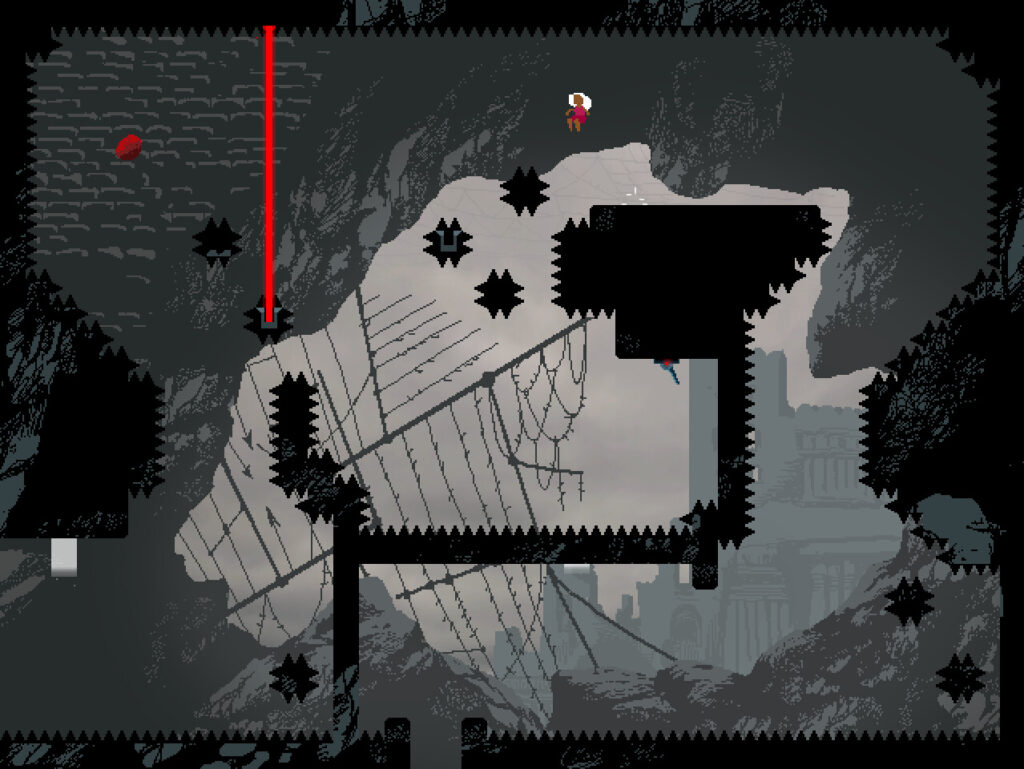
At its core, LOVE ETERNAL is an uncompromising precision platformer. Players control Maya, a child stolen from her family, navigating through over 100 meticulously designed single-screen puzzles. The environments are entirely hostile, littered with spikes, lasers, switches, and traps that require absolute perfection to bypass.
The central mechanic revolves around flipping gravity. Unlike other games where gravity shifts are tied to specific environmental pads, Maya has the agency to reverse the gravitational pull on the fly. This turns standard jumping puzzles into complex, acrobatic challenges of momentum and inertia.
Mechanically, the game feels incredible. The controls are snappy, responsive, and highly polished. For the subset of the community that enjoys digging into memory offsets with tools like Cheat Engine or ReClass.NET to dissect how indie games handle momentum and gravity logic, the physics engine here is rock-solid. Maya retains just enough inertia on her air velocity to make the gravity-flipping feel fluid rather than rigid.
When you die—and you will die hundreds of times—it almost always feels like a failure of your own reflexes rather than an unfair trick of the game’s programming. The respawns are instantaneous, keeping the frustration strictly tied to the challenge rather than the loading screens.
A Castle of Bitter Memories
Where LOVE ETERNAL truly diverges from its peers is its narrative structure. Precision platformers usually use their story as mere window dressing to justify the gameplay. Here, the story is the undeniable focal point.
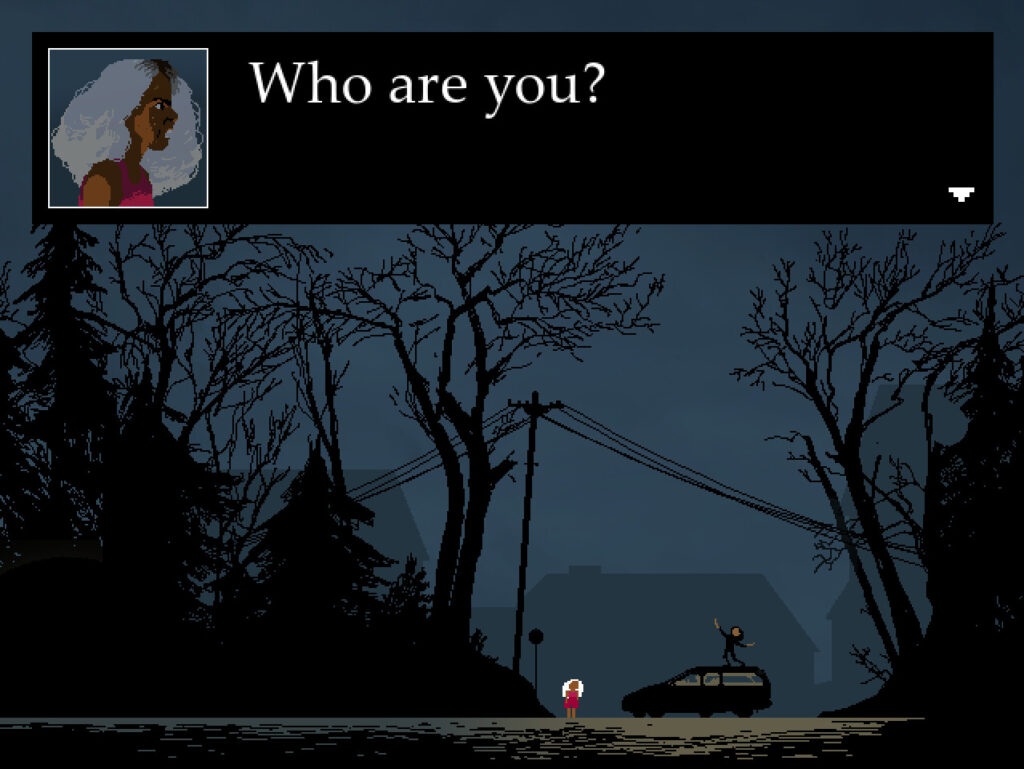
The realm Maya is trapped within is a castle built from bitter memories. As players progress, the narrative slowly spirals into something deeply surreal and unsettling. Without diving into heavy spoilers, the game makes a deliberate choice to shift tones drastically. At a certain point, it leans heavily into meta-commentary, breaking the fourth wall and contorting its own lore in ways that are deliberately difficult to comprehend.
In fact, the game features a massive mid-game section that abandons the platforming entirely in favor of pure narrative exposition. For players who booted up the game solely to jump over spikes, this jarring halt in pacing can feel incredibly disruptive. But for those willing to engage with the psychological horror elements, this experimental storytelling elevates the game from a mere mechanical challenge into a genuinely haunting experience. It operates on dream logic—mundanity masking unworldly phenomena—leaving players with a profound sense of confusion and awe by the time the credits roll.
The Constant Rain
Visually, LOVE ETERNAL is a triumph of indie art direction. The game utilizes gorgeous, hand-drawn pixel art to bring the lonely god’s realm to life. The animations are meticulously handcrafted, boasting thousands of frames that make Maya’s movements look incredibly fluid.
The atmosphere is oppressive, dark, and melancholic. One of the standout visual motifs is the rain; it rains constantly and relentlessly throughout the game, reinforcing the themes of depression, isolation, and forsaken memories.
This visual dreariness is perfectly complemented by the game’s audio design. The soundtrack is a lush, atmospheric score that oscillates between being beautifully tragic and deeply unsettling. It lacks the high-octane, adrenaline-pumping chiptunes usually associated with this genre, opting instead for a soundscape that constantly reminds you that you are trapped in a nightmare.
The Difficulty Debate
It is impossible to review LOVE ETERNAL without addressing its difficulty. The game is brutal.
While veterans of Super Meat Boy or Celeste will likely find the challenge curve entirely manageable (and perhaps even slightly forgiving in the early stages), players new to precision platforming will hit a very hard wall. The later levels demand a level of dexterity and spatial awareness that borders on punishing.
The community response to this difficulty has been polarized. Some praise the sense of mastery and acrobatic accomplishment, while others find the sheer repetition exhausting. For players who simply want to experience the surreal story without breaking their controllers, an unofficial “easy patch” has become quite popular in the community, subtly tweaking collision detection to make the journey slightly more accessible.
As many seasoned players advise: if you find yourself stuck on a specific room, step away. The gravity-bending mechanics require a specific mental flow state, and taking a break is often the best strategy for overcoming the game’s most devious trials.
Breakdown: The Good, The Bad, & The Surreal
| The Good | The Bad | The Ugly |
| Tight Controls: The gravity-flipping mechanics are fluid, snappy, and deeply rewarding to master. | Pacing Shifts: The massive mid-game narrative section brings the gameplay to a grinding halt. | Difficulty Spikes: The final chapters are brutally unforgiving, which may alienate casual players. |
| Atmosphere: Beautiful hand-drawn pixel art and an unsettling score create a phenomenal sense of dread. | Narrative Confusion: The surreal, meta-heavy story becomes incredibly difficult to follow by the end. | |
| The Price: $9.99 is a fantastic value for a highly polished, 5-hour experience. | Enemy Variety: The game relies entirely on static traps and lacks dynamic enemies to spice up the platforming. | |
| Steam Deck Verified: Plays perfectly on handhelds, offering an ideal portable platforming experience. |

Should You Buy It?
Yes, if: You love the tight mechanics of Celeste and VVVVVV, enjoy surreal, open-to-interpretation storytelling, and have a high tolerance for repeating difficult platforming sections.
No, if: You get easily frustrated by precision platformers, or if you prefer straightforward, logically grounded narratives over experimental, dream-like horror.
Recommended for fans of: Celeste, VVVVVV, Super Meat Boy, World of Horror, and Sanabi.
LOVE ETERNAL: LOVE ETERNAL is a brilliant, bizarre anomaly. It takes a genre defined by raw mechanical skill and injects it with a deeply cerebral, psychological horror narrative. The result is an experience that feels like three different games stapled together—a challenging platformer, a surreal mystery, and a meta-narrative experiment. It won't be for everyone. The sudden narrative shifts and the grueling difficulty spikes will undoubtedly turn some players away. But for those looking for a dark, atmospheric challenge that lingers in the mind long after the final jump is made, LOVE ETERNAL is an absolute triumph. – ColdMoon