
Out of the Maw, Into the Fire
When Tarsier Studios announced they were leaving the Little Nightmares franchise behind, there was a collective gasp in the horror community. They had defined a sub-genre—the “tiny child in a big, scary world” platformer. But their latest creation, REANIMAL, proves that they didn’t leave the genre because they were out of ideas; they left because they wanted to go darker, weirder, and louder than their previous IP allowed.
Released on February 13, 2026, REANIMAL is a spiritual successor that shares DNA with its predecessors but mutates it into something far more visceral. It trades the dry, creaking floorboards of the Maw for a wet, wind-battered archipelago. It trades the solitary stealth for cooperative survival. And, in a move that will shock fans of the genre, it occasionally trades running away for driving a tank.
After diving into the darkness with a co-op partner (and a bucket on my head), it is clear that Tarsier has crafted a masterpiece of atmosphere, even if it leaves you gasping for answers at the finish line.

Drenched in Dread
From the opening moments, REANIMAL establishes a suffocatingly heavy mood. You play as a brother and sister—often referred to by the community as “Buckethead” and “Susie” due to starting cosmetics—waking up in a world that feels like the end of days.
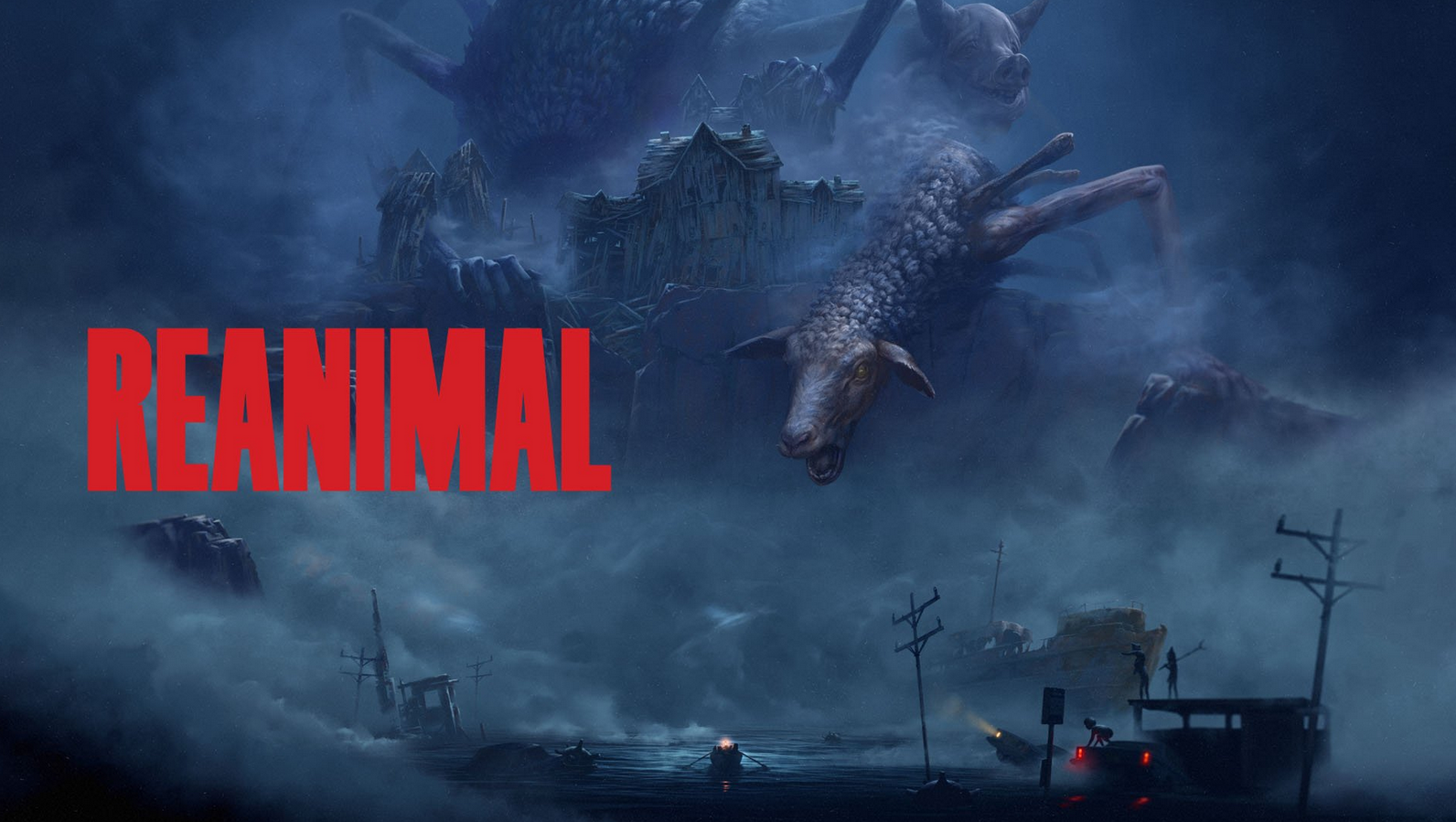
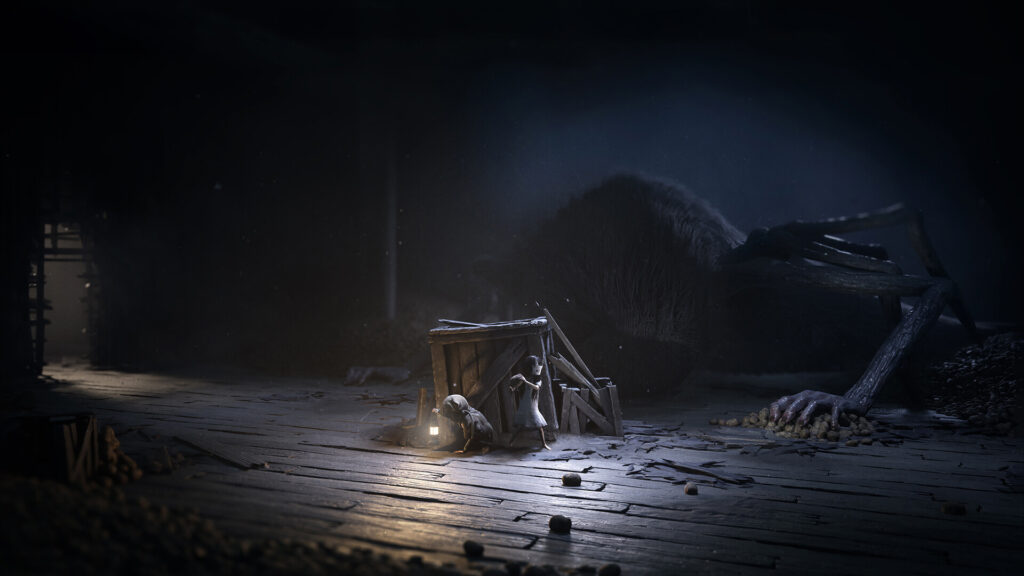
The game is wet. Viscerally so. Rain lashes against the screen, mud squelches underfoot, and the ocean heaves with terrifying realism. The transition to Unreal Engine 5 has allowed Tarsier to flex their artistic muscles in a way that makes Little Nightmares II look almost quaint. The lighting is oppressive, often relying on the players’ small lanterns to cut through the fog.
One of the game’s defining features is the boat. Unlike the linear, left-to-right progression of typical cinematic platformers, REANIMAL offers a sense of scale. You pilot a small, rickety boat between islands, navigating treacherous waters filled with sea mines and massive, submerged leviathans. These moments of travel are quiet, tense, and hauntingly beautiful, reminiscent of Inside meeting The Last of Us.
The Creatures: A Menagerie of Nightmares
Tarsier Studios has always excelled at creature design, but REANIMAL elevates it to a body-horror level that earns its Mature rating. The enemies here aren’t just “creepy adults”; they are amalgamations of animals, objects, and human suffering.
Early in the game, players encounter the “Clothing People”—writhing, snake-like entities made of shirts and pants that swarm through a dilapidated factory. Later, a chase sequence features an Ice Cream Truck driven by a hulking monstrosity that feels like it was ripped straight from a twisted version of Twisted Metal.
But the standouts are the animals. Or, what used to be animals. A giant, grotesque Pig dominates the middle chapter, leading to a stealth section that had my heart pounding. There are “headless roosters” that run blindly, and a Sheep/Goat entity that serves as a recurring, shapeshifting antagonist. The way these creatures move—twitching, heaving, and bursting with unnatural life—is a testament to the animation team.
From Stealth to Spectacle
Mechanically, REANIMAL is a co-op puzzle platformer. You can play solo (with an AI companion) or online/locally with a friend. The puzzles are satisfying, often requiring communication—one player holding a lever while the other cranks a wheel, or coordinating a simultaneous jump.
However, the game shatters expectations by introducing combat and vehicles.
In a genre defined by helplessness, REANIMAL gives you teeth. There are sequences where you man a harpoon gun on the boat to fend off giant birds. You find flares to distract enemies.
And then, there is The Tank.
In a sequence that feels more like Battlefield or Uncharted than an indie horror game, the children find themselves in a war-torn no-man’s-land, reminiscent of WWI trenches. In a moment of pure catharsis, you hijack a tank. One player drives, the other loads shells. What follows is a destructive joyride where you blast through walls, crush enemies, and topple buildings. It is a moment of pure spectacle that proves Tarsier is done playing it safe.
A Cycle of Trauma
The story is told entirely without dialogue (except for the characters calling out to each other), leaving the lore open to interpretation. The themes, however, are clear: trauma, abandonment, and the cyclic nature of violence.
The children are chased by a “Sheep” entity that seems to be born from the very earth—or perhaps from the characters themselves. The imagery is heavy on birth and rebirth (hence, REANIMAL).
However, the ending is a point of contention. Without spoiling the specific visuals, the game ends abruptly. After a climactic encounter inside a massive biological structure, the credits roll with a suddenness that left me saying, “Wait, that’s it?”
It feels like the third act was condensed. Given the grand scope of the war-torn city and the villain’s buildup, the resolution feels more like a “Part 1” finale than a complete story closure. It’s a haunting ending, but one that might leave players feeling short-changed after such a high-octane journey.
Audio and Tech
The sound design in REANIMAL is arguably 50% of the experience. The squelch of mud, the distant groans of metal, and the screeching of the creatures are mixed to perfection. The soundtrack is sparse, utilizing silence and ambient noise to build tension before exploding into industrial noise during chase sequences.
Technically, the game runs beautifully on high-end hardware, though the heavy use of volumetric fog and fluid simulation can tax older GPUs. The transition between gameplay and cutscenes is seamless, maintaining immersion throughout the 5-6 hour runtime.
Breakdown: The Good, The Bad, & The Ugly
| The Good | The Bad | The Ugly |
| Atmosphere: Unmatched. The wet, grimy world feels alive and hostile. Best-in-class visuals for the genre. | The Ending: Extremely abrupt. It feels like the game stops right as the climax is peaking. | Body Horror: The “birthing” imagery and the grotesque animal hybrids are genuinely disturbing (in a good way). |
| Variety: Boat travel, stealth, platforming, and TANK combat. The pacing never drags. | Length: A bit short (approx 5-6 hours) for the $40 price tag, though high replayability in co-op. | The “Clothing People”: Genuinely skin-crawling enemy design. |
| Co-op: The asymmetrical tasks make both players feel useful. The “Friend’s Pass” is a pro-consumer move. | AI Companion: If playing solo, the AI can occasionally be slow to react during puzzles. | |
| Spectacle: The set pieces (the dam, the war zone) are massive and cinematic. |
Should You Play It?
Yes, if you loved Little Nightmares, Inside, or Limbo. This is the peak of that genre. No, if: You need a clear, explained story with a neatly tied-up ending, or if you are sensitive to heavy body horror themes.
Recommended for fans of: Little Nightmares, Amnesia: The Bunker, Somerville, Inside.
REANIMAL: REANIMAL is a triumph. It takes the formula Tarsier perfected and injects it with adrenaline, vehicle combat, and a darker, grittier aesthetic. The cooperative mechanics are engaging, the world is terrifyingly realized, and the creature designs will fuel nightmares for weeks. While the ending feels like a sudden slap in the face, the quality of the ride leading up to it is undeniable. If you have a friend and a strong stomach, this is an essential play. Just don't trust the sheep. – Obsidian