A New Hope for Westeros
It is no secret that the Game of Thrones franchise has had a turbulent decade. From the divisiveness of the Season 8 finale to the behind-the-scenes creative struggles of House of the Dragon, fans have been desperate for a win. Enter A Knight of the Seven Kingdoms.
Based on George R.R. Martin’s beloved “Dunk and Egg” novellas, this series takes us back 100 years before the birth of Daenerys Targaryen. There are no world-ending White Walker threats (yet), and the dragons are gone. Instead, we have a muddy, rainy, intimate story about a massive man trying to pay for a meal and a small boy with a secret.
After watching the premiere episode, “The Hedge Knight,” the verdict is clear: This is the best thing to happen to the franchise in years. It is charming, funny, and surprisingly gritty. However, HBO’s release strategy threatens to undermine the momentum of what could be their next great hit.
The Hedge Knight: A Different Kind of Hero
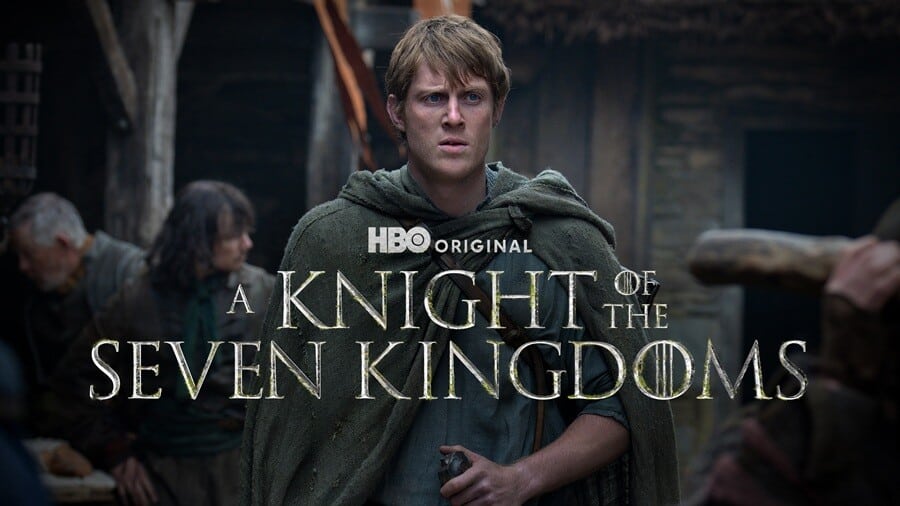
The series introduces us to Ser Duncan the Tall (Peter Claffey), a “Hedge Knight.” For the uninitiated, a hedge knight is essentially a freelance soldier who owns nothing but his horse and armor, sleeping under hedges rather than in castles.
Claffey is a revelation as Dunk. He is physically imposing—standing nearly seven feet tall—but plays the character with a gentle timidity and naivety that is instantly endearing. He isn’t the brooding Jon Snow or the political mastermind Tyrion Lannister. He is just a guy from Flea Bottom trying to fake it until he makes it.
The episode opens somberly with Dunk burying his old master in the pouring rain. It sets the atmospheric tone immediately: this is a wet, dirty, lived-in world. Dunk decides to take up his master’s sword and enter the tournament at Ashford Meadow to earn a living. Along the way, he encounters a bald, precocious stable boy named Egg (Dexter Sol Ansell).
The chemistry between Claffey and Ansell is the heartbeat of the show. Their banter—specifically Dunk’s constant, empty threats to give Egg a “clout in the ear”—feels ripped straight from the pages of the book. It is a classic “Lone Wolf and Cub” dynamic, but lighter and more humorous than The Mandalorian.
Tone and Atmosphere: The Reality of Westeros
Unlike House of the Dragon, which takes place largely in high councils and dragon pits, A Knight of the Seven Kingdoms takes place in the mud. The production design by Ira Parker and direction by Owen Harris lean heavily into the “low fantasy” aspect of the setting.
The show has sparked some internet chatter about a specific scene early in the episode, in which Dunk is seen relieving himself behind a tree. While some pearl-clutchers found it crass, it serves a distinct narrative purpose. It establishes the reality of life on the road. Knights in shining armor are a myth; real knights get dysentery, sleep in the dirt, and struggle to find clean water. It’s a callback to the gritty realism that made the early seasons of Game of Thrones so compelling.
The aesthetic feels closer to the Heath Ledger film A Knight’s Tale than it does to the main saga. It is vibrant, filled with heraldry, drunk lords, and the hustle of the tourney grounds.
A standout sequence involves Dunk stumbling into the tent of Lyonel Baratheon (Daniel Ings), known as “The Laughing Storm.” Ings is electric, portraying a Lord who is bored by sycophants and delighted by Dunk’s blunt honesty (and hunger). Their drunken dance and conversation highlight the massive class disparity in Westeros—Dunk is worried about starving, while Baratheon is worried about being bored.
The Problem: The “HBO” of It All
While the episode’s content is near-perfect, the packaging is infuriating. The premiere episode runs roughly 42 minutes. However, once you strip away the “Previously On,” the long opening credits, the end credits, and the inevitable “Inside the Episode” featurette, you are left with barely 30 minutes of actual story.
For a weekly show, this is a dangerous strategy. Just as the audience begins to settle into the rhythm of Ashford and invest in Dunk’s struggle to find a sponsor for the tournament, the screen cuts to black. It feels less like a prestige drama episode and more like a Saturday morning cartoon segment.
Given that the source material is a novella, it seems HBO is stretching the content thin to maximize subscription retention. A story this concise would have benefited from a two-episode premiere or longer individual chapters. With only six episodes in the season, there is a risk that the pacing will feel disjointed.
The Lore and The Future
Despite the runtime grievances, the show does an excellent job of world-building without exposition dumps. We hear whispers of the Blackfyre Rebellion and see the Targaryen influence on the periphery. The show respects the audience’s intelligence, dropping names like Baelor Breakspear and Maekar Targaryen without pausing to explain the entire family tree.
With George R.R. Martin confirming that writing for future seasons is underway (based on The Sworn Sword and The Mystery Knight), it is clear that HBO views this as a long-term pillar of the franchise. It serves as a perfect palate cleanser to the dour, self-serious tone of House of the Dragon.
A Knight of the Seven Kingdoms: A Knight of the Seven Kingdoms is a triumph of casting and tone. Peter Claffey and Dexter Sol Ansell are destined to become fan favorites, inhabiting their roles with a natural ease that usually takes seasons to develop. The show is funny, beautiful to look at, and rich with the history of Westeros. If you can stomach the frustration of a half-hour runtime that leaves you begging for more, this is essential viewing. It proves that you don't need dragons or White Walkers to make a great story in Westeros—you just need a tall man, a small boy, and a dream of becoming a true knight. – Asmodeus
Spoiler Breakdown & Analysis
Warning: Spoilers for Episode 1 Below
For those who have watched the episode, let’s dig into the details.
1. The “Knight” Deception The central tension of the episode is Dunk’s impostor syndrome. Is he actually a knight? The show leaves it ambiguous enough for newcomers, but book readers know the truth. Dunk’s desperation is palpable when he tries to sell his horse and armor, only to be swindled and dismissed. The scene where he attempts to enter the lists and is rejected by the steward is painful to watch, highlighting Westeros’s rigid class structure.
2. The Puppeteer Romance The introduction of Tanselle, the Dornish puppeteer, adds a layer of heart. Dunk’s fascination with her—and his defense of her art—sets up the conflict for the next episode. It establishes Dunk not just as a fighter, but as a man with a moral compass that points true north, regardless of the consequences.
3. The Targaryens are Here. While we don’t see dragons, the presence of the Targaryen princes at the tournament looms large. The show does a great job of portraying them not as distant gods, but as people. We see the arrogance of Prince Aerion “Brightflame” and the stoicism of Prince Baelor. This sets the stage for the famous “Trial of Seven,” which will likely serve as the climax of the season.
4. The Ending The episode ends on a quiet, hopeful note. Dunk and Egg under the stars, with Dunk asking if the shooting star is luck for everyone or just for them. “Just for us,” Egg replies. It’s a beautiful moment that solidifies their bond before the chaos of the tournament truly begins.
What to Expect Next: Based on the novella, expect things to get violent very quickly. Dunk’s “clout in the ear” attitude is going to get him into trouble with the wrong people (specifically the royal family), leading to one of the most famous duels in Westeros history.