



There is a very specific kind of small game that comes along every now and then — cheap, weird, made by one person, inexplicably compelling — and STICKER/BALL from solo developer Bilge and publisher Future Friends Games is exactly that. It’s a pool game. It’s a roguelike. It has spiders, poop, clowns, and frogs that hijack spaceships. It makes complete sense once you’re inside it and essentially no sense from the outside. Kotaku said they had no idea what was happening and loved it for that. They’re right on both counts.
At $5.59 during its introductory period, asking whether STICKER/BALL is worth it almost feels like a category error. The more honest question is whether its genuinely clever mechanics and chaotic energy survive long enough to justify the time you’ll lose to it. Spoiler: they do, mostly, with some rough edges that a solo developer this clearly talented should be able to sand down with patches.

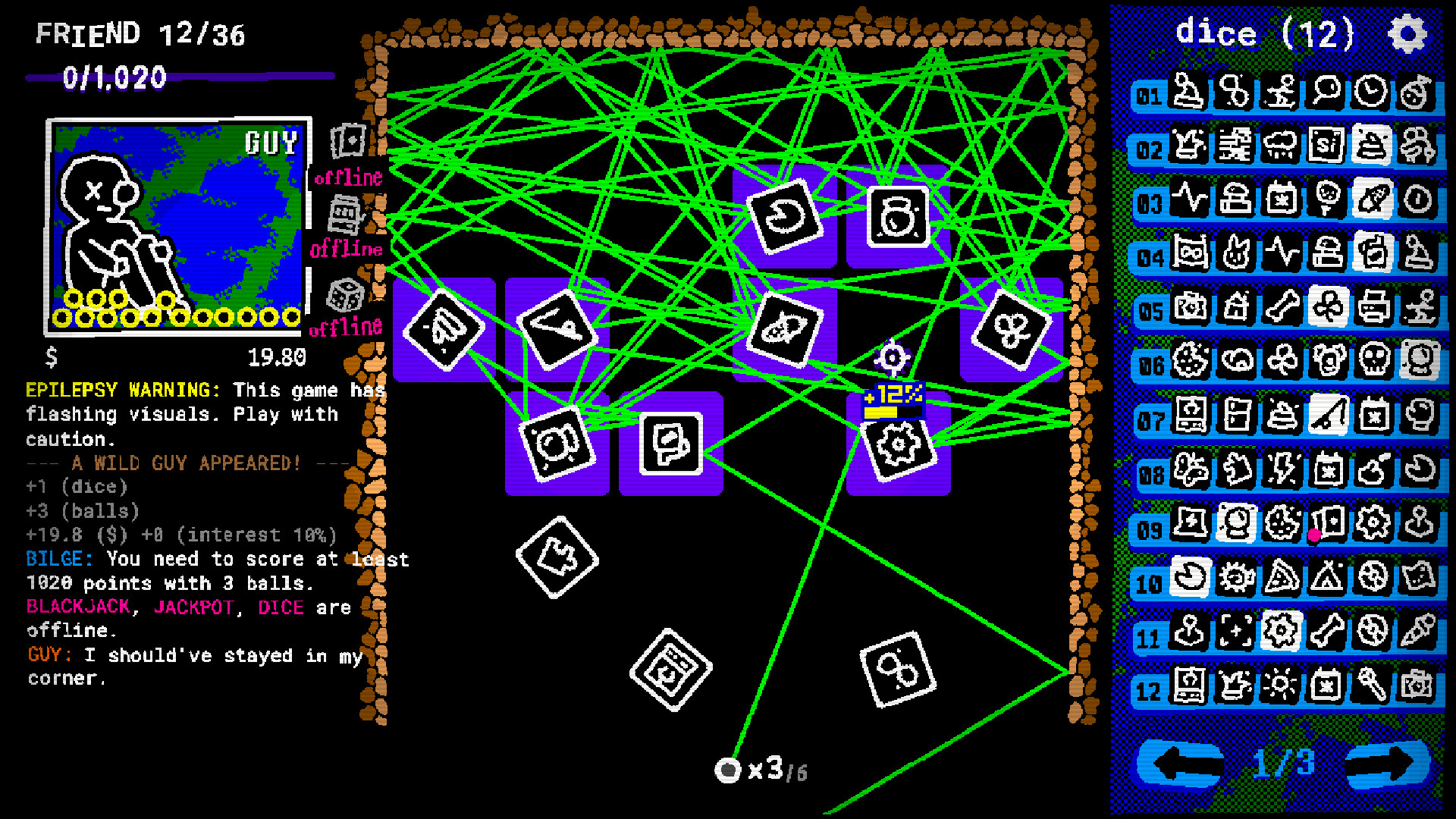
The premise is deceptively minimalist. You fire a ball across a board covered in dice. Hitting dice earns points. Ricochets earn more. After each round you unlock stickers — over 100 of them — that attach to dice and interact with each other in increasingly unhinged ways. Poop attracts flies. Spiders spin webs. Webs catch flies. More points. Stack enough of these interactions and the numbers on screen start looking less like a score and more like a phone number.
What separates STICKER/BALL from pure chaos is that the synergy system has genuine depth underneath the absurdity. Some stickers create things on the board; others consume what’s been created. Understanding which stickers feed which others — and positioning your ball shots to hit the dice where those chains are active — is the actual game, and it rewards players who engage with it seriously. The difference between a thoughtless shot and an optimised one can be thousands of points, and reaching the game’s later milestones essentially requires building with intent rather than hoping for bounces.
STICKER/BALL’s greatest trick is looking like a casual time-killer while quietly being a build optimisation puzzle. The roguelite progression layer adds a meta-game of passive unlocks that accumulate across failed runs, gradually expanding your toolkit. Each battle requires hitting a minimum point milestone to progress, and the gap between knowing what you’re doing and not knowing grows dramatic fast — which is both the game’s strength and its chief source of frustration.
When a build clicks — when the sticker synergies chain into each other and the score multiplies beyond what seems reasonable — the dopamine hit is legitimately impressive for a $6 game. The chaos feels earned rather than random, which is a difficult balance to strike in a genre where RNG can make or break runs. STICKER/BALL mostly gets it right, though some later-run variance can still feel punishing in ways that feel outside your control.
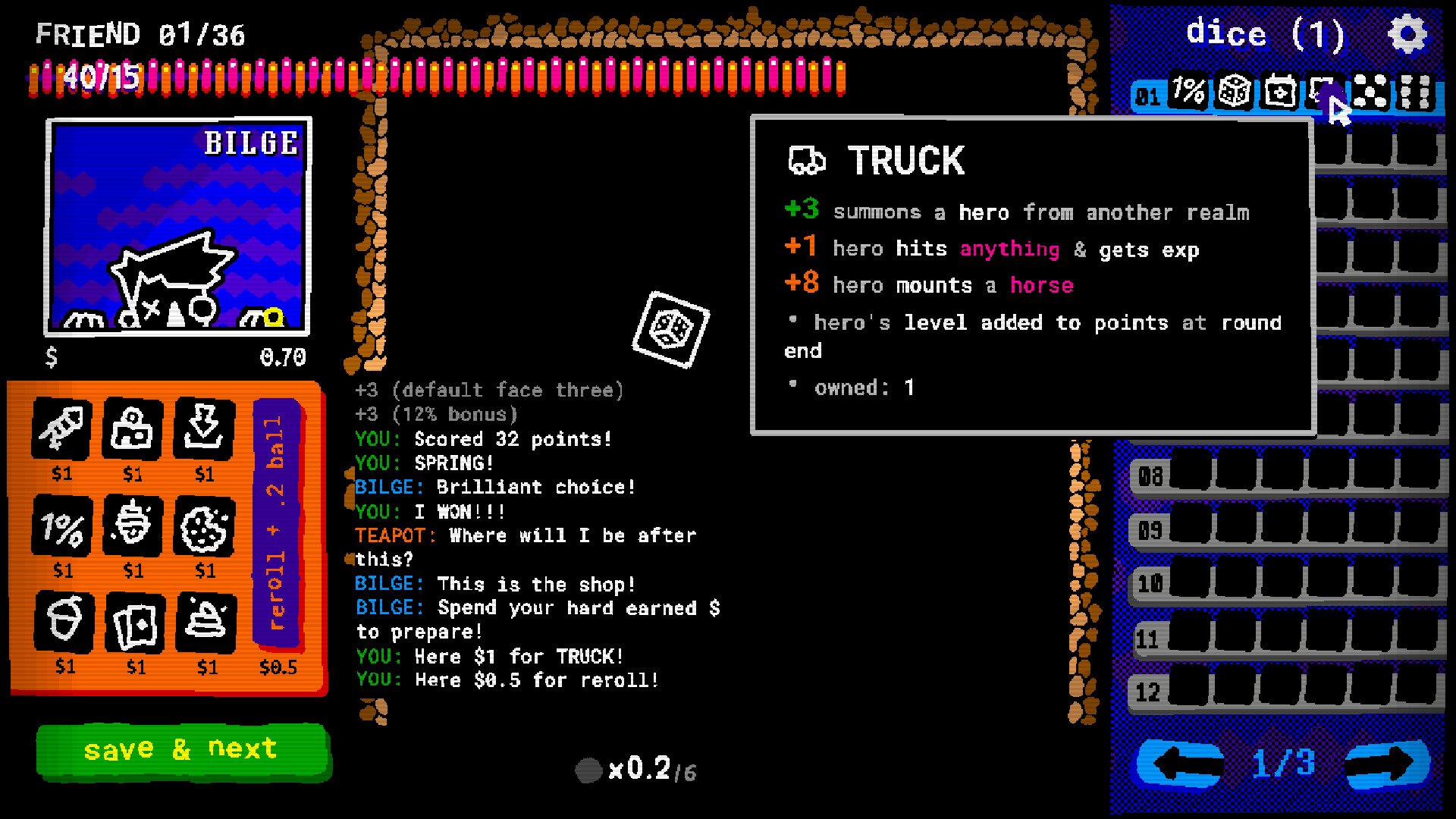
The item description problem is real and worth flagging clearly. Some stickers are deliberately vague as a joke — the bunny’s description has baffled players for hours — and the line between intentional mystery and unhelpful obscurity isn’t always clear. For a game where understanding what your stickers actually do is fundamental to winning, this creates friction that feels unnecessary rather than charming. A tooltip rework or clearer tutorial layer would do significant work here.
The full release also added so many stickers compared to the demo that the synergy density has reportedly thinned out. Players who fell in love with tight human/donut/cop chains in the demo have found that with 100+ stickers in the pool, hitting the specific follow-up stickers that complete a synergy feels less reliable. It’s a real balancing concern that Bilge appears to be actively addressing — the game has already seen multiple patches post-launch — but it’s worth knowing going in.
The permanent auto-aim assist upgrade at the end of the progression tree also undermines the endgame considerably. Aim-assist on a final shot is fine; full permanent aim-assist strips out much of what makes the game worth replaying. It’s the kind of balance call that’s easy to patch and hopefully will be.
| The Good | The Bad | The Ugly |
|---|---|---|
| Deeper Than It LooksWhat appears to be pure chaos has genuine build optimisation underneath — synergy planning and shot positioning reward players who engage seriously. | Vague Item DescriptionsSome sticker descriptions are intentionally cryptic to the point of being unhelpful. Knowing what your tools do shouldn’t be a puzzle in a roguelite. | Perma Auto-Aim UpgradeThe final progression unlock trivialises the game’s core skill expression, significantly hurting replay value for anyone who reaches it. |
| Absurdly Good ValueOver 100 stickers, 36 enemies, genuine strategic depth, and a roguelite progression loop for under $6. Difficult to argue with at this price point. | Synergy Dilution at Full ReleaseMore stickers means rarer synergy completions compared to the demo — builds feel less cohesive when the specific follow-up stickers simply don’t appear. | |
| Genuinely FunnySpider webs catching poop flies. Frogs hijacking spaceships. The sticker interactions are weird in ways that land consistently rather than just once. | No Steam Cloud SavesA small but real omission — losing run progress because you’re on a different machine is annoying for a game this easy to pick up and put down. | |
| Responsive DeveloperMultiple patches already live post-launch, with Bilge actively engaging with community feedback. The rough edges here are likely to be smoothed quickly. |
STICKER/BALL is a genuinely clever small game wearing a very silly hat, and at its price point the question isn’t whether it’s worth buying — it obviously is — but whether the current rough edges matter enough to wait for patches. For most players they won’t. The synergy depth is real, the chaos is earned, and Bilge has shown they understand exactly what makes this kind of game tick.
The description vagueness, synergy dilution, and the perma auto-aim problem are all fixable with patches, and the development pace so far suggests they will be. What’s already here is a funny, clever, surprisingly strategic roguelite that’s easy to lose an afternoon to. Your responsibilities will not thank you for buying it. Buy it anyway.