
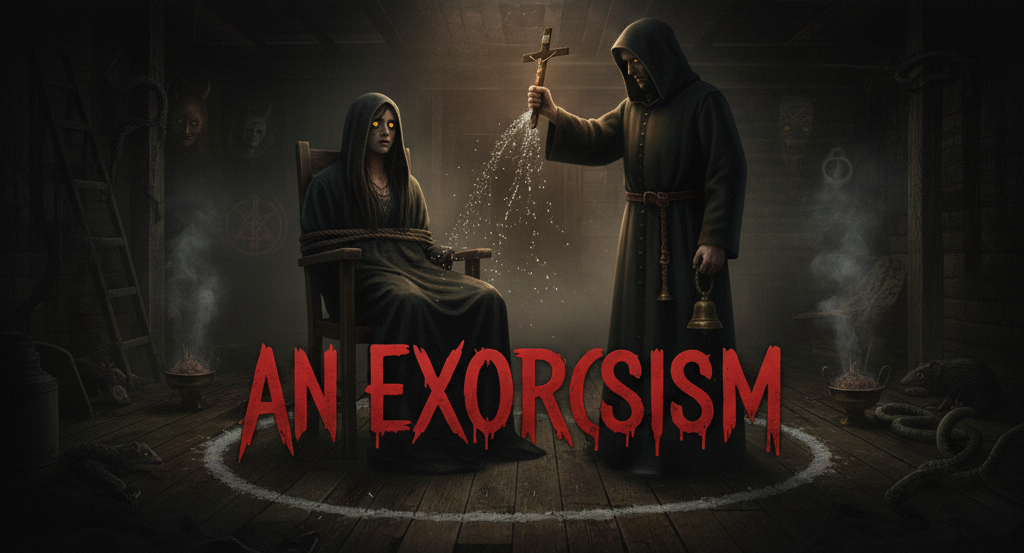
Released quietly on Christmas Day 2025—an ironic date for a game about demonic possession — An Exorcism by developer Authogin is a tightly contained, atmospheric indie horror title that punches well above its $4.99 price tag. In a genre often saturated with walking simulators and cheap jump scares, this game attempts to blend the deductive reasoning of Phasmophobia with the narrative tension of The Exorcist.
You play as a Reverend summoned to the dilapidated home of Erin Thorne. The church has sent you to perform a ritual on the bound woman, but this is not a matter of simply splashing water and shouting verses. It is a puzzle, a detective story, and a battle of wills against an entity that knows your darkest secrets.
After spending a terrifying evening locked in a basement with Erin (and whatever is inside her), here is our full review of An Exorcism.
The Setup: A Basement, A Chair, and a Book
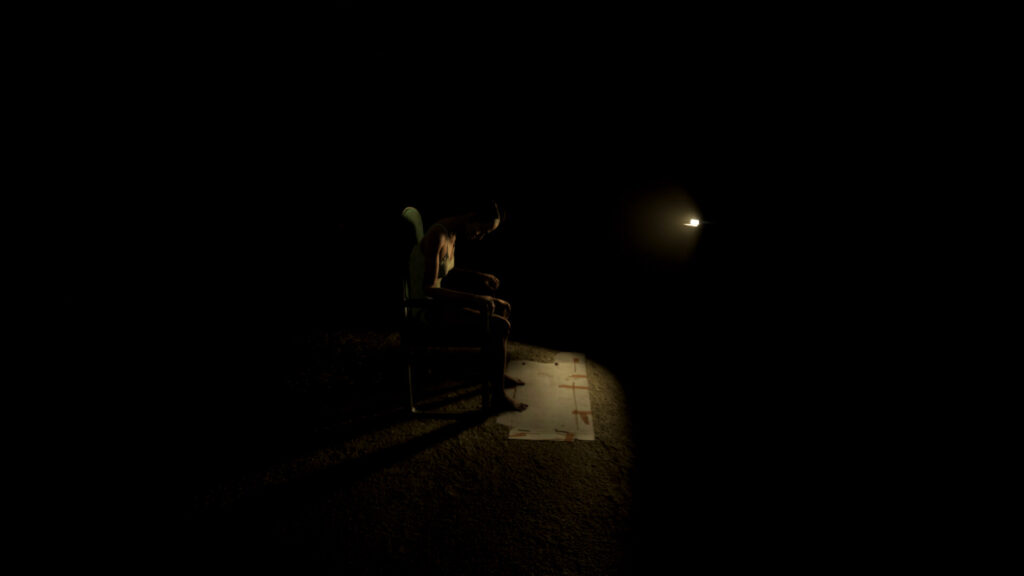
The game wastes no time. You arrive at the house, grab your suitcase of holy tools, and descend into the basement. There, you find Erin bound to a chair, contorting and speaking in tongues. The premise is simple: identify the demon, find the object tethering it to this world, destroy the object, and banish the entity.
However, the execution is surprisingly layered. The game does not hold your hand. You are given a cassette player with vague instructions from the church, warning you that the demon will lie, manipulate, and prey on your insecurities. This sets the stage for a game that is as much about listening and reading as it is about reacting to scares.
Mechanics: Part Escape Room, Part Theology
The core gameplay loop of An Exorcism revolves around investigation. You aren’t just waiting for the demon to leave; you have to force it out through logic. The basement is filled with locked doors, strange symbols, and hidden compartments.
The Decoder Puzzle
One of the primary mechanics is a “Decoder” tool. As the demon speaks or as you find scribblings on the walls, you must use a cipher to translate symbols into English. This reveals clues about the demon’s history and the specific ritual needed to bind it. It’s a satisfying, tactile puzzle mechanic that makes you feel like you are actually doing the work of a researcher rather than just a combatant.
The Tools of Faith
Your suitcase is equipped with the standard exorcist loadout:
- Holy Water: Used to burn the entity and provoke reactions.
- The Rosary & Bible: Used for prayer and defense.
- Incense: This is where the strategy comes in. You have different types of incense (Gold, Blue, Silver). Gold enrages the demon, potentially making it slip up and reveal a truth. Blue calms the entity if things get too chaotic. Silver compels the demon to betray itself, offering clues about its tether.
Managing these items is key. If you enrage the demon too much without having the proper defenses ready, the paranormal activity in the room spikes—lights burst, objects fly, and the entity’s voice becomes deafening.
The Deduction System: Name Your Enemy
The most interesting aspect of An Exorcism is the identification system. Similar to Phasmophobia, you must observe the entity’s behavior to determine its true name.
Is the demon reacting to electrical equipment? Is there the sound of rats or ravens in the walls? Is it affected by the Holy Water or the Bible? You must cross-reference these behaviors with a journal of demonology. If you guess wrong, the ritual fails.
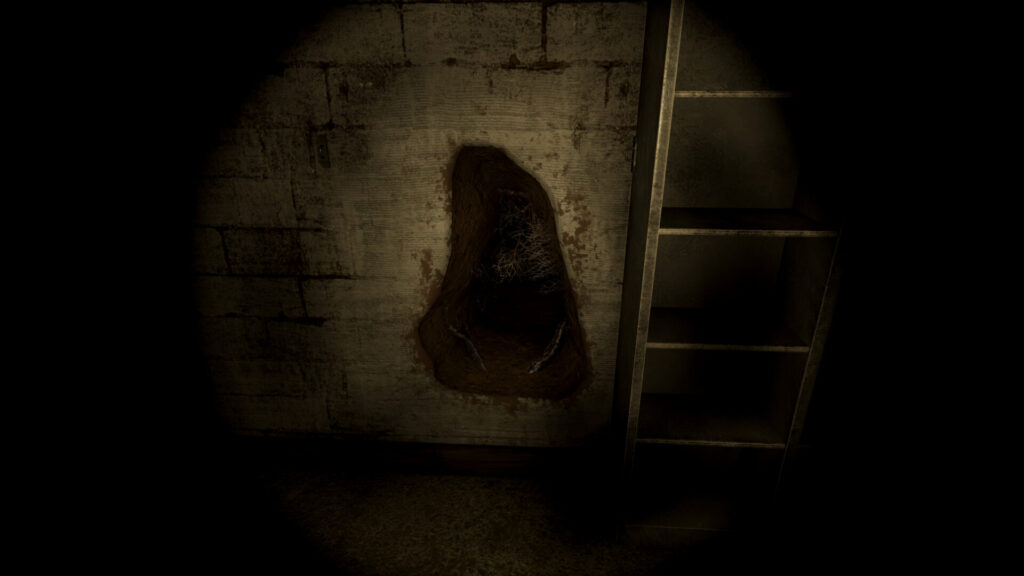
In our playthrough, we encountered a specific entity that was categorized as a “Baron” of hell. We had to deduce this by noticing specific auditory hallucinations and its resistance to certain prayers. Once identified, we had to find a cursed object hidden in the room—in our case, a skull hidden behind a wall panel revealed by a box-cutter puzzle—and burn it in the furnace.
This mechanic elevates the game from a scary experience to an engaging one. You are constantly thinking, cross-referencing, and problem-solving while being verbally abused by a demon.
Atmosphere and Tension
Visually, An Exorcism utilizes a realistic, gritty art style that fits the mood perfectly. The basement feels lived-in and claustrophobic. The lighting is dynamic; fuses blow, shadows stretch, and your flashlight (or headlamp) is your best friend.
The audio design is the star of the show. The demon’s voice acting is genuinely unsettling, shifting between Erin’s pained cries and a guttural, mocking baritone. It taunts you, calling you “Father” with dripping sarcasm, mocking your faith (“Your Christ is nothing more than a corpse rotting on a stick”), and bringing up your own failures.
The “Dynamic Horror System” ensures that scares aren’t entirely scripted. While there are set pieces, the randomized auditory hallucinations and poltergeist activity keep you on edge. You never know when a crucifix is going to fly off the wall or when the demon will break its restraints to lunge at you.
The “Jank” Factor
Despite its strong atmosphere, An Exorcism is undeniably an indie title, and it comes with the expected “jank.” Interaction hitboxes can be finicky; picking up small items like keys or fuses sometimes requires precise mouse placement, which can feel frustrating in high-tension moments.
We also encountered moments where the demon’s dialogue loop seemed to get stuck, repeating the same taunt (“You mimic power with parlor tricks”) multiple times in a row. Additionally, some puzzles, like the “wireless locking device” sequence involving USB sticks, felt a bit obscure and halted the pacing of the horror.
The game is also short. A successful run takes about 1-2 hours. While this is perfect for the price point, players looking for a long narrative campaign might be disappointed. It is designed to be a tight, intense experience rather than a sprawling adventure.
An Exorcism: A Twist of Fate
Without spoiling the specific outcome of every playthrough (as outcomes may vary based on success), the narrative conclusion is dark and impactful. It plays with the trope of the “self-sacrificing priest” in a way that feels earned. The game implies that the demon isn’t just there for Erin; it’s there for you. This psychological layer adds weight to the finale, where you must frantically recite the Roman Ritual prayers while the room literally falls apart around you.
An Exorcism is a hidden gem for horror fans who enjoy gameplay over walking simulators. It effectively gamifies the process of an exorcism, making you feel like an active participant in a spiritual war. The mixture of puzzles, deduction, and resource management creates a gameplay loop that is stressful in the best way possible.
It captures the essence of films like The Conjuring or The Exorcist but puts you in the driver’s seat. For less than the price of a fancy coffee, it offers an evening of genuine dread and satisfaction. Just make sure you bring your own rosary—you’re going to need it.
| The Good | The Bad |
| Deduction Gameplay: Identifying the demon based on traits and clues feels rewarding and smart. | Interaction Issues: Picking up items and interacting with small objects can be finicky and frustrating. |
| Atmosphere: Excellent sound design and voice acting create a genuinely oppressive basement setting. | Short Duration: The game can be beaten in under 2 hours, which may leave some wanting more. |
| Puzzle Variety: decoding ciphers, finding hidden keys, and using specific incense adds depth. | Obscure Objectives: Some puzzles (like the USB locks) lack clear direction, leading to pacing stalls. |
| Ritual Mechanics: The need to balance incense types to manage the demon’s aggression is a great tactical layer. | Repetitive Dialogue: The demon can sometimes loop the same insults too frequently. |
| Price: At $4.99, it offers incredible value for a focused horror experience. |
An Exorcism: An Exorcism is a tense, atmospheric puzzle-horror game that succeeds by making the player do the detective work. While it suffers from some indie jank and a short runtime, the core mechanic of identifying and banishing a demon through logic and ritual is executed brilliantly. It’s a terrifying escape room with high stakes. – ColdMoon