
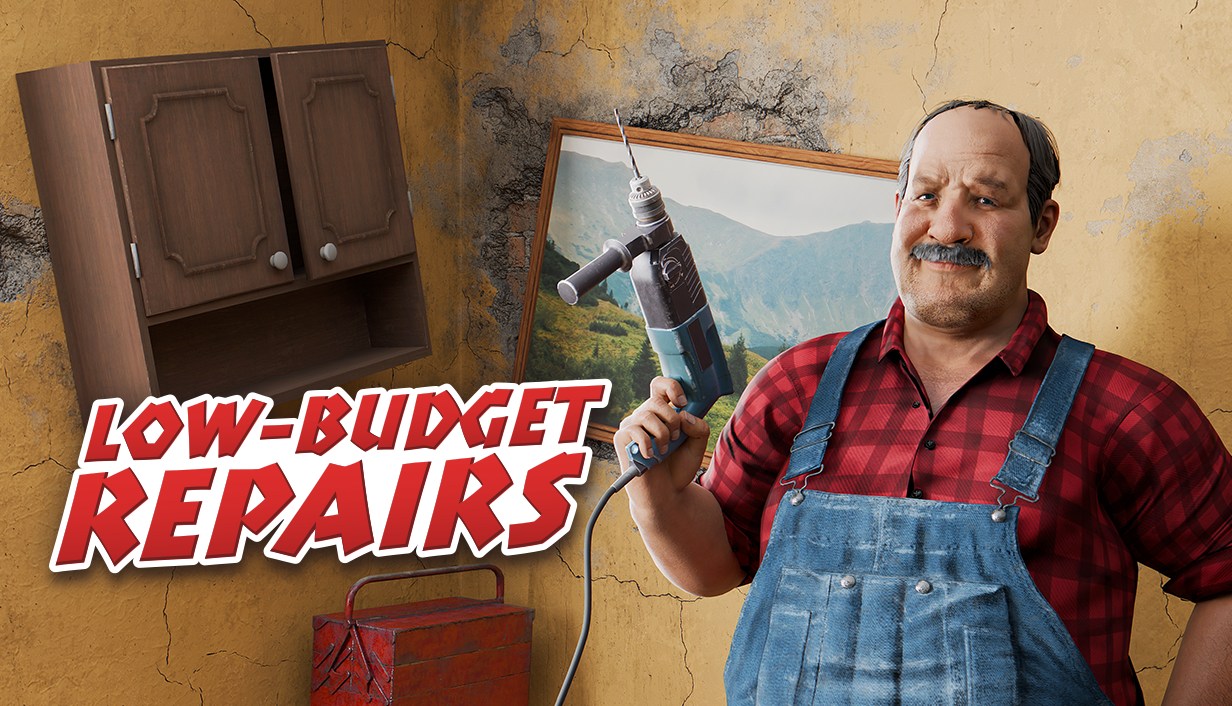
Low-Budget Repairs is a renovation sim from Gray2RGB, published by Simplicity Games and PlayWay S.A., and it sits at Mixed on Steam across more than 2,200 reviews in all languages.
Our verdict: Low-Budget Repairs is a darkly funny indie sim that nails the moral decay of cutting corners for profit. Skip it unless you enjoy guilt-ridden business decisions and watching your reputation crumble. The comedy is real. The game around it is, fittingly, held together with diluted paint.
What Actually Works
Satisfying to apply, though ceilings streak badly under lighting.
Replacing burnt wiring is one of the most-praised systems in the game.
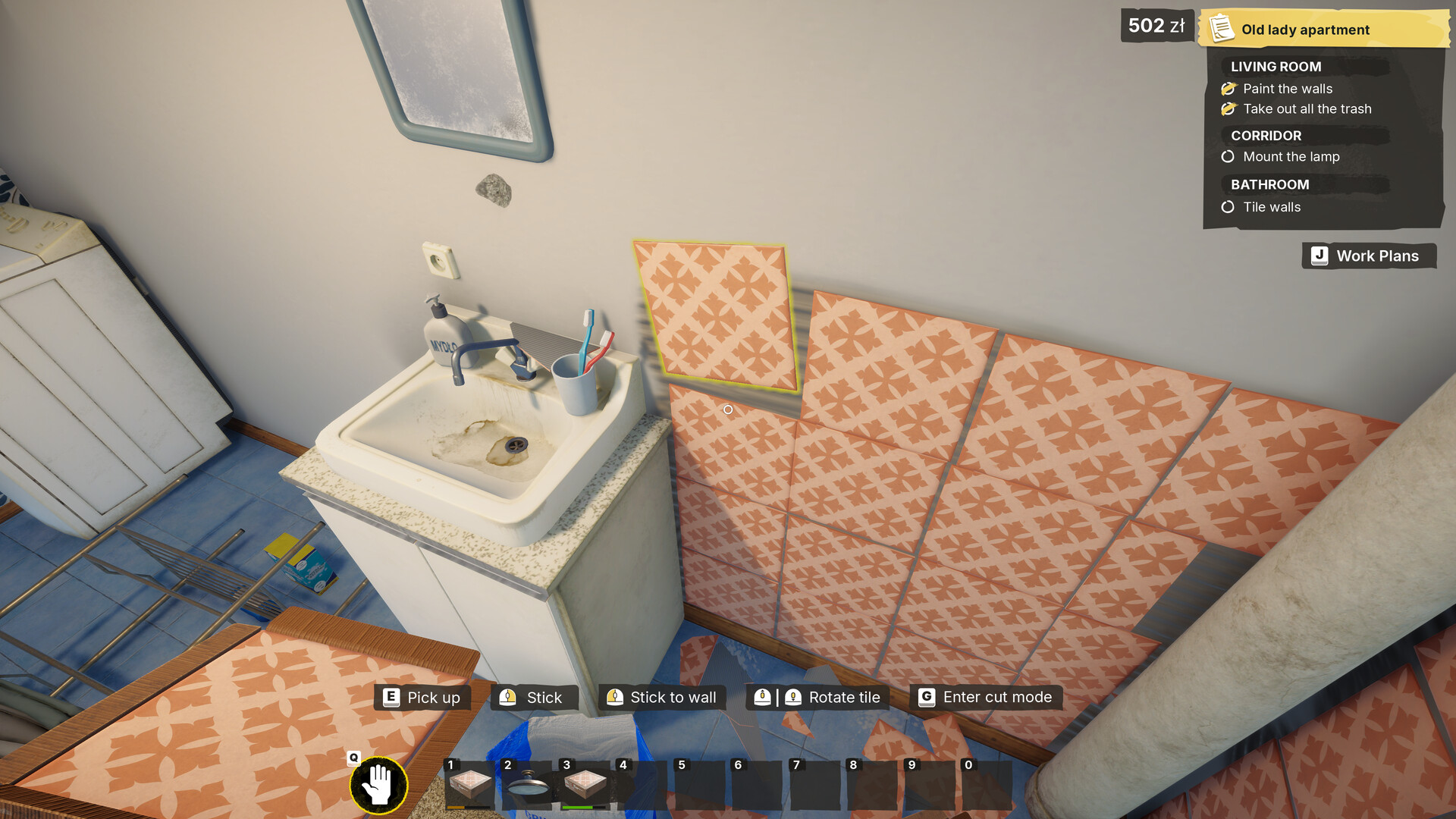
No grid snapping. Moving one tile can shatter its neighbours.
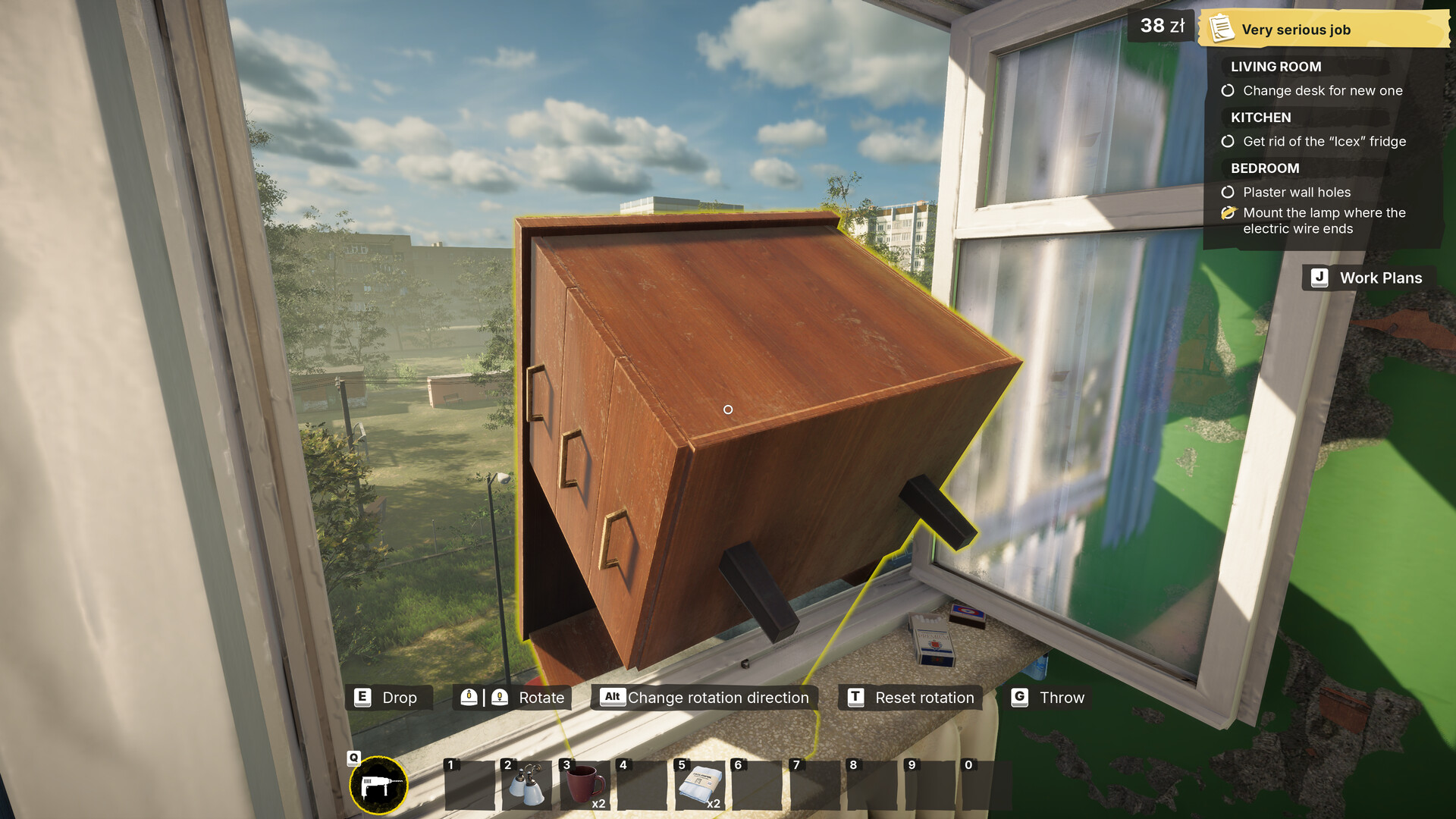
Every object handles like it weighs a ton, damaging walls as you carry it.
The Story Is the Tutorial, and Then It Stops
The Physics Are the Daily Problem
If the missing endgame is the structural issue, the physics are the one you’ll feel every session. Players describe moving items as though “you’re constantly swinging around a sledge hammer” — every object, regardless of size, handles like it weighs as much as a semi-truck, and carrying anything can cause major damage to walls and nearby items.
In a game about renovating rooms, a physics system that damages the room while you work is a fairly central problem. Tiling is the worst-affected: there’s no grid snapping of any kind, and nudging a tile can shatter the ones around it. One player noted it’s somehow harder than tiling in real life, which in a comedy game about doing a bad job is almost a compliment — except it isn’t funny while you’re doing it.

On the Localisation
This one requires care, so we’ll lay out the facts and let you draw the line.
Gray2RGB have disclosed on Steam that AI was used for some translations, alongside music and visual assets. Separately, players report that “the English translation and voice acting are, for the most part, pretty bad” — bad enough that lines sometimes make no sense at all.
We’re not going to claim a causal link we can’t prove. The disclosure covers translation; voice acting isn’t mentioned in it, and plenty of games have rough English localisation with no AI anywhere near it. Machine-assisted translation with proper human editing can be perfectly good.
What we will say is this: the disclosure and the complaint point at the same part of the game, and for a comedy title that’s a real cost. Jokes are the hardest thing in any language to translate, they depend entirely on rhythm and word choice, and this is a game whose main asset is that it’s funny. If the humour is landing at reduced strength in English, the thing you’re paying twenty dollars for is damaged in transit.
To Gray2RGB’s credit, they disclosed it rather than hoping nobody asked. That’s more than a lot of studios manage.
Things to Know Going In
The Good, The Bad, & The Ugly
| The Good | The Bad | The Ugly |
|---|---|---|
| A Genuinely Funny, Specific PremiseDiluting paint so one tin does the flat, tiling by eye, throwing furniture out the window because it won’t fit the door — and keeping the money regardless. A 1990s Polish block of flats is a setting with real texture, and most of the jokes land. | Paint Streaking and No UpgradesWalls and especially ceilings streak visibly under lighting, and there are no tool or skill upgrades at all — no wider paint coverage, no multi-tile placement. Both are asks players have made repeatedly. | Twelve Minutes of Content Outside the StoryHowLongToBeat: 10.1 hours main story, 10.3 with extras. The campaign IS the tutorial, you finish unlocking tools roughly as it ends, and three or four mission types is all that remains. There is no endgame. |
| The Repair Systems Are GoodBurnt electrical wiring, item repair and wall-mounting are the standout mechanics, and painting and plastering have the tactile satisfaction the genre needs. House Flipper crossed with Landlord Super is a fair and flattering comparison. | You Can’t Throw Things AwayOld furniture and wallpaper rolls can’t be discarded or sold. In a game about running a business on scraps, being unable to clear your own clutter is an odd oversight. | Physics That Damage the Room You’re FixingEvery object handles like it weighs a ton — one player likened it to permanently swinging a sledgehammer — and carrying things damages walls and nearby items. In a renovation sim, that’s close to a central mechanic working against the premise. |
| Five Updates in a MonthGray2RGB are patching at roughly weekly cadence since the August launch. For a Mixed-rated game with fixable problems, an actively engaged developer is the most valuable thing on this list. | No Remappable ControlsIncluding no side mouse button support. Basic, expected, and absent — and it lands alongside only four listed accessibility features. | Tiling Has No Grid SnappingNudging one tile can shatter the ones next to it. Players call it harder than real tiling, which would be funnier if it weren’t one of the game’s core activities. |
| Disclosed Its AI UseGray2RGB state plainly that AI was used for some translations, music and visual assets, and that none is generated during gameplay. Whatever you think of the practice, disclosing it up front is more than many manage. | Steam Deck UnsupportedA relaxed, low-stakes renovation sim is exactly the kind of game people want to play handheld. Not being able to is a genuine missed audience. | Rough English, in a Comedy GamePlayers report translation and voice acting bad enough that lines sometimes don’t make sense. Jokes are the hardest thing to carry across languages, and humour is this game’s single biggest asset. |
The Verdict
There’s a really good game in Low-Budget Repairs, and you can see the outline of it clearly. The premise is sharp and specific, the setting has genuine character, and the central joke — that the money’s already yours by the time anyone notices the damage — is well enough observed to carry a whole game. Painting feels good. The wiring and repair systems are smart. When it’s working, it’s the kind of thing you don’t see often enough.
But the physics fight you constantly, tiling is close to unusable, and the content stops dead the moment you’ve finished learning how to play. Twelve minutes of extras beyond a ten-hour tutorial isn’t a content shortage, it’s an absence of a game after the tutorial. And the English localisation is undercutting the comedy that’s supposed to be the whole point.
The players are, notably, kinder about this than the numbers are. Most of the reviews we’ve read recommend it while listing substantial problems — “more like a proof of concept” from someone giving it a thumbs up. That’s a community that likes the idea enough to be patient, and Gray2RGB are rewarding that patience with weekly updates.
The honest read: play the demo, and if you’re buying, buy it on sale and buy it for the ten hours. There’s a decent, funny ten hours here. Don’t buy it expecting anything after that, and don’t buy it if clunky object handling is the sort of thing that ruins a game for you, because it will.
Worth revisiting in six months. On this patch cadence, a lot of this is fixable — and if the endgame ever arrives, the score goes up.
For more game reviews, check out our full reviews section.