


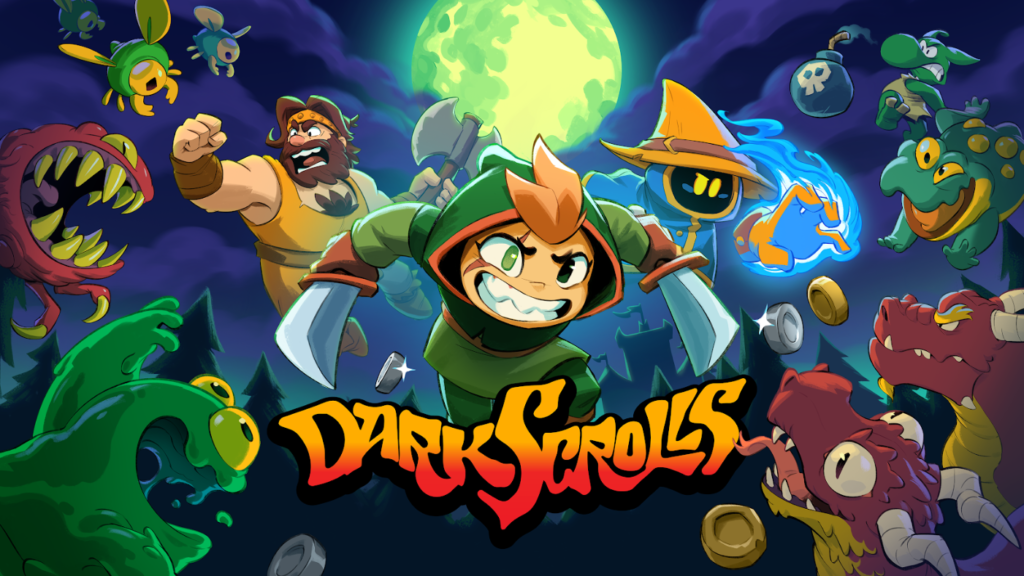
Dark Scrolls is the new game from doinksoft — the studio behind the beloved Gato Roboto — published by Devolver Digital, and it is a significantly different kind of game than anything they’ve made before. Where Gato Roboto was a tight, charming Metroidvania, Dark Scrolls is a chaotic auto-scrolling action platformer with shmup DNA, nine unlockable heroes, a star-based perk activation system, roguelite progression between runs, and local plus online co-op. It evokes arcade classics — Ghosts ‘n Goblins, Magic Sword, Wonder Boy in Monster World, SONSON — while adding modern roguelite structure and a character roster with genuinely distinct playstyles.
The Mixed Steam score is real but partially misleading. A significant portion of the negative reviews stem from two problems that are in principle fixable: the game explains almost nothing about how its systems work, and some launch bugs are run-ending. Players who push through the learning curve — or who encounter someone who explains the perk system to them — are consistently reporting that the game underneath is genuinely fun. The underlying design is good. The onboarding is not.

The Perk System — The Part Nobody Explains
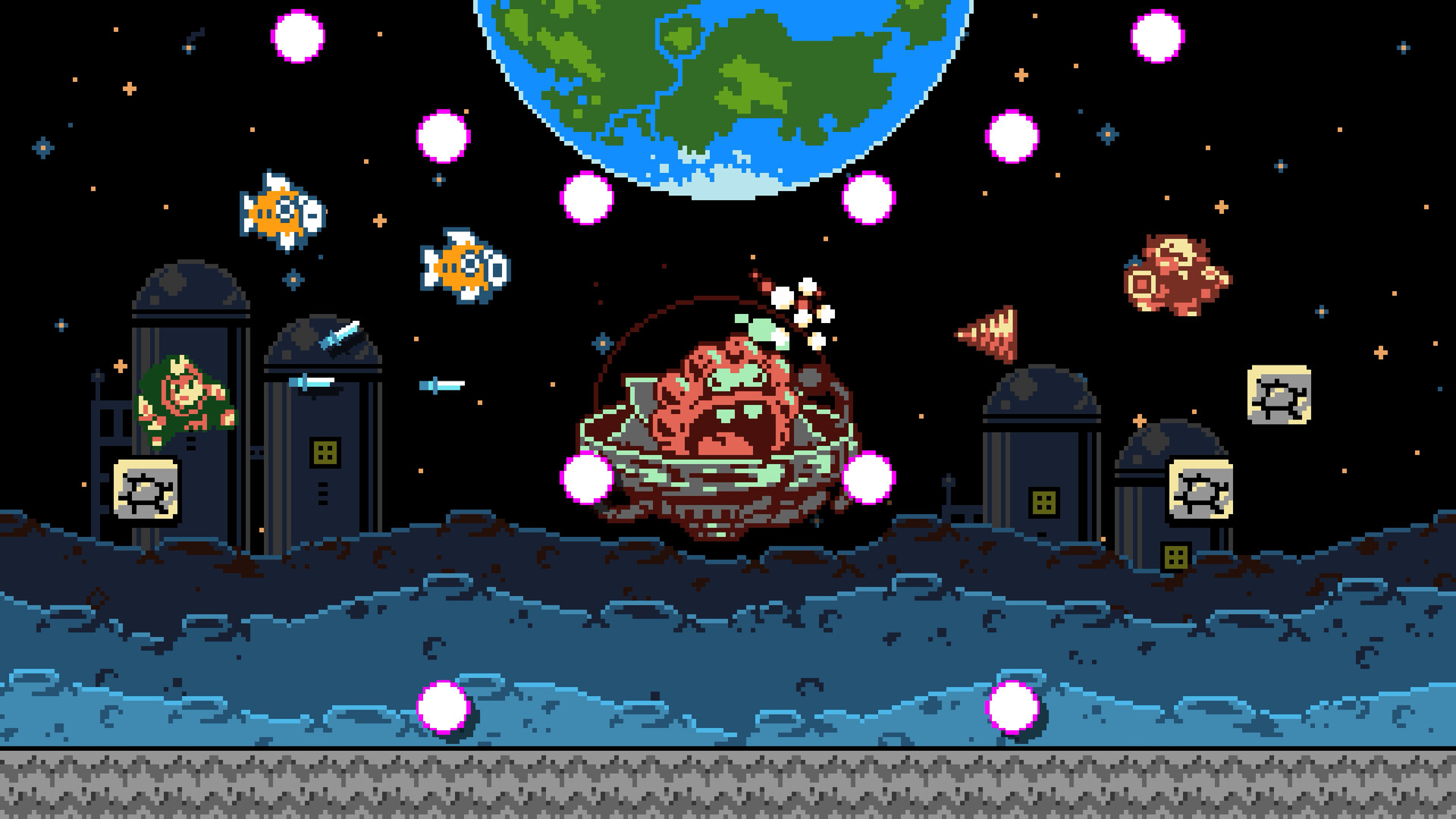
Understanding Dark Scrolls requires understanding its star system, which the game never explicitly teaches. As you attack enemies, you fill a five-star meter. Each star threshold can be assigned a perk — short but powerful timed buffs like Haste, Fire Attack, or Rapid Fire — that trigger automatically when you reach that star level. Filling all five stars allows you to unleash your character’s Ultra ability, which resets the meter and restarts the perk activation cycle. The loop is: fight to fill stars, activate perks automatically as you climb, unleash your Ultra, begin again.
This creates a deeply satisfying combo structure once it clicks. Pairing a stun perk with your Ultra on a boss allows you to lock them into a cycle. Stacking Rapid Fire and Fire Attack at the right star thresholds turns a mid-run shop into a moment of genuine build crafting. The between-run crystal progression unlocks new perks for the shop pool, giving extended play sessions a meaningful sense of development. The problem is that none of this is explained anywhere in the game — no tutorial, no UI annotation, no contextual hint. Players who don’t figure it out or don’t have a friend who knows will likely leave before they ever reach the system’s payoff.
The Character Roster
Three heroes are available from the start with six more unlockable through play, and the distinction between them is one of Dark Scrolls’ genuine strengths. Each character has a unique primary attack, a distinct double-jump ability that functions as a secondary attack or mobility tool, and a different Ultra. Grizz the barbarian lobs axes and does a ground stomp on double jump. Emerys the wizard fires bouncing magic balls and dashes on double jump. Pigeon shoots knives downward during a double jump and has invincibility frames immediately after, creating a very different risk/reward positioning rhythm than characters without that protection window. The playstyle differentiation is real and the game is significantly more interesting when you’ve played multiple characters rather than just the one you started with.
Co-op and the $7.99 Question
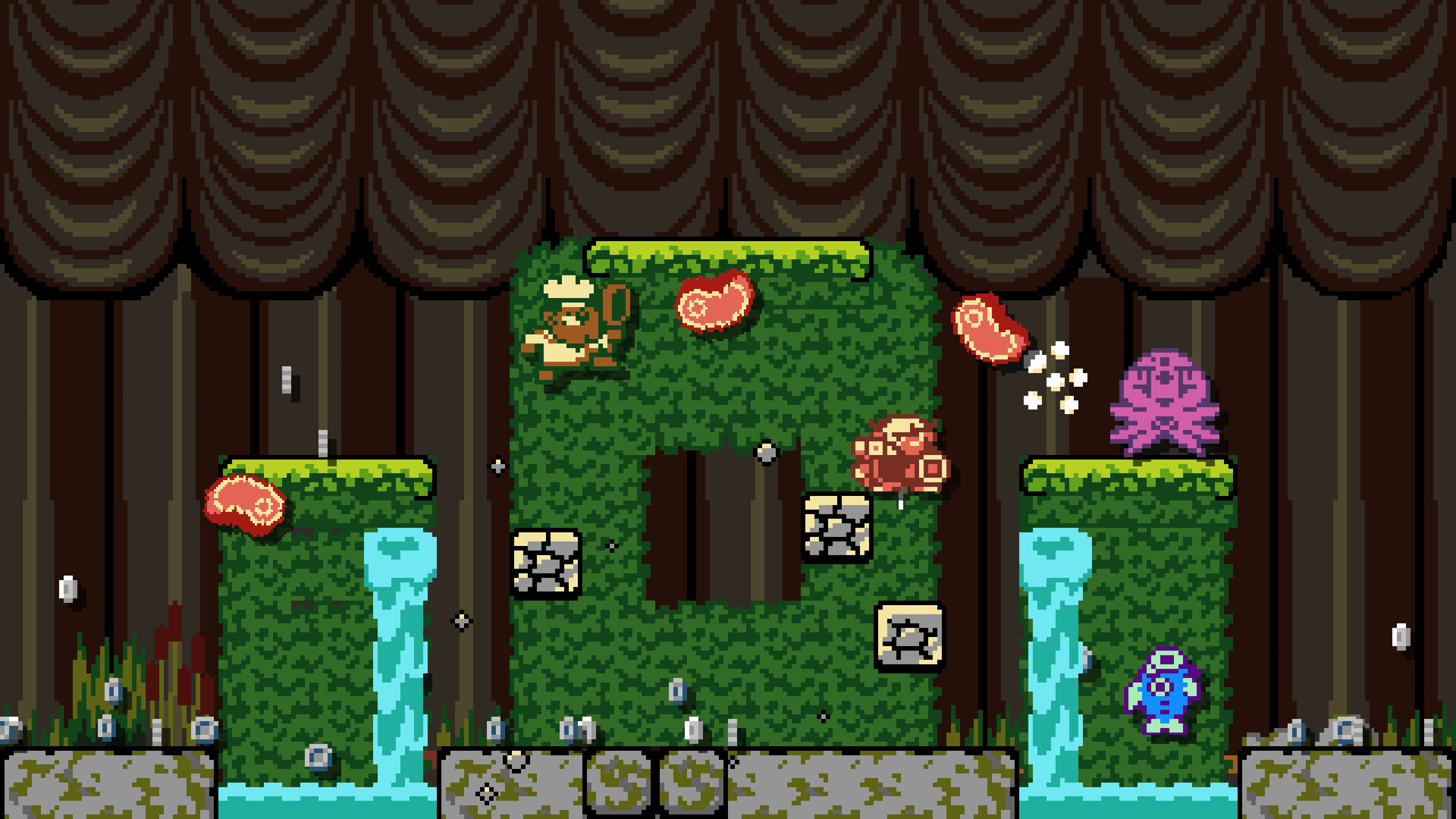
The co-op mode — local and online, with Remote Play Together support — is where the game is most consistently praised. Runs go quickly, the shared chaos is entertaining rather than frustrating when you’re playing with someone, and the pick-up-and-play quality that makes the core loop accessible works particularly well in co-op sessions. At $7.99, the ask is low enough that the “buy it for your friend” calculation is easy to make. Most players who bounced off the solo experience are reporting the co-op as where the game finds its best version of itself.
The visual clutter does become a legitimate concern in co-op. Some characters’ projectiles — the wizard’s bouncing balls in particular — can fill the screen and blend with enemy projectiles of similar colours, making it genuinely difficult to read the danger at a glance. This is flagged consistently across the community and is the kind of issue that a colour differentiation pass on enemy projectiles would address directly.


The Good, The Bad, & The Ugly
| The Good | The Bad | The Ugly |
|---|---|---|
| The Perk System Delivers Once It ClicksAssigning buffs to star thresholds and chaining them with your Ultra creates genuinely satisfying combo loops. When the system comes together — stun into Ultra, cycle restarts, Rapid Fire activates on Star 1 — it earns its dopamine. | Zero OnboardingNo tutorial, no system explanation, no contextual hints. The perk system, star meter, co-op menu access, and character distinctions are all learned through friction or community knowledge. A significant portion of negative reviews trace directly to this absence. | Visual Clutter in Co-opSome character projectiles share colours with enemy attacks. The wizard’s bouncing balls are the primary offender. In co-op especially, telling friend projectile from foe projectile requires learned attention rather than intuitive reading. |
| Genuinely Distinct CharactersNine heroes with meaningfully different primary attacks, double-jump abilities, and Ultras. The playstyle differentiation holds up — returning to a new character after mastering one feels like a fresh game, not just a palette swap. | Run-Ending Bugs at LaunchSome bugs are severe enough to end runs. The community is tracking them and doinksoft is patching, but at review time these remain present and worth knowing about before purchase. | Balance InconsistencySome characters are significantly stronger than others. The difficulty curve is uneven. Neither is fatal at $7.99, but both suggest the game shipped before balance tuning was complete. |
| Co-op Is the Sweet SpotQuick runs, shared chaos, easy to pick up mid-session. At $7.99, buying it for a friend is a low-stakes decision. The pick-up-and-play quality works best with a second player. | Limited Run Variety CurrentlyBranching paths exist but the run variety feels thinner than the genre average at this stage. More alternate bosses and route differentiation would significantly improve replayability. |
The Verdict
Dark Scrolls brilliantly blends bullet-hell intensity with platforming prowess, delivering a roguelite experience that’s genuinely challenging and packed with personality. The Mixed score at launch is honest about the problems — zero onboarding, run-ending bugs, balance inconsistency, visual clutter — but it undersells what the game is when those problems don’t get in the way. The perk combo system is original and satisfying. The character roster has real depth. Co-op is an excellent use of $7.99. doinksoft clearly has interesting ideas here, and if they address the onboarding and stability issues in post-launch patches, this could shift to a clear recommendation without caveats. Right now it’s a conditional one: buy it if you’re comfortable learning a system by doing, especially if you have someone to play with.
For more game reviews, check out our full reviews section.