
Our Eyes of the ElderWood review covers one of the more unusual horror debuts of the year — a first-person psychological horror game built on Kashubian folklore, the Slavic tradition of northern Poland. You play as Laura, wandering abandoned villages and flooded forests where old stories never quite died, drawing magic runes by hand with one hand and firing a revolver with the other. It’s an Early Access game with three levels and some genuinely rough edges, and it’s stuck with us anyway.
This Eyes of the ElderWood review is written by a team who, for the most part, knew nothing about Kashubian myth going in — and that turned out to be one of the best things about it. There’s a specific pleasure in a horror game teaching you something while it unsettles you. The question is whether the foundation underneath is worth $5.99 today. Short version: for the price, yes.
The Loop
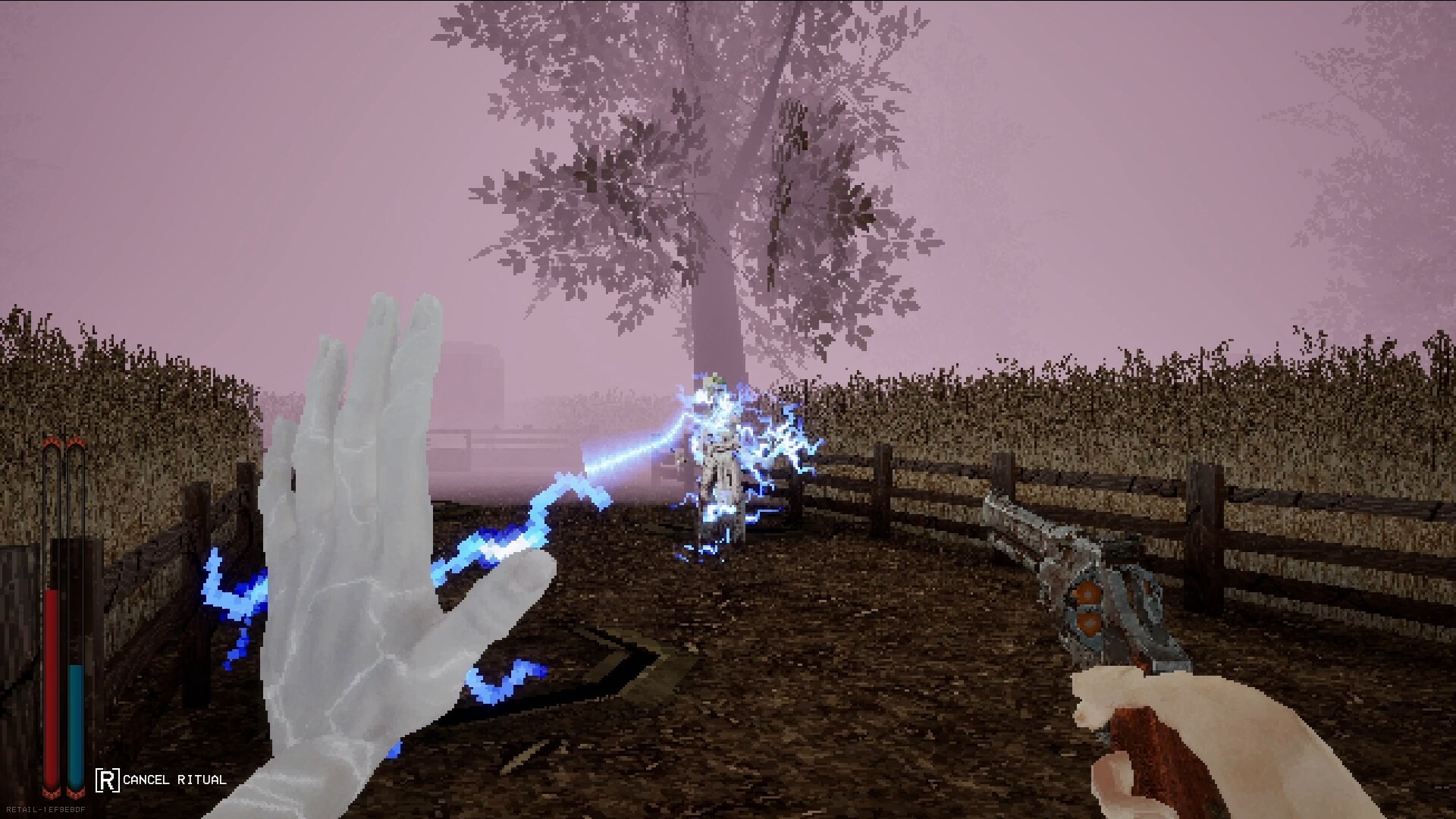
Spells are cast by drawing their rune in real time, so speed and accuracy under pressure matter. It’s got clear shades of Arx Fatalis — fast, gestural, and satisfying once it clicks.
Your other hand holds a slow, deliberate survival-horror revolver. The friction between fast magic and sluggish gun is the point — the game forces you to lean on both.
Between fights you’re exploring folklore-soaked locations and working through riddles and rituals. It’s primarily a puzzle game with combat, not the other way around.
Certain entities feed on sanity, not flesh. The sanity system distorts what you see and hear until hallucination and reality blur — and something worse waits in the deep end.
The Spell System Is the Star
The thing everyone on the team latched onto was the combat. Eyes of the ElderWood has you dual-wielding hand-drawn magic and a revolver, and the two could not feel more different on purpose. Drawing a rune under pressure while something closes in is a genuine skill test, and the revolver’s slow, deliberate weight is the perfect counterweight. It takes a moment to get used to, but once it clicks the game does a great job forcing you to use both in combat and when solving puzzles.
The best idea in here is that different demons are weak to different spells. That’s exactly the kind of system that rewards experimentation, and paired with some genuinely excellent, folklore-driven enemy design, it’s the strongest thing the game has going. We want to see it pushed much further as more demons arrive.
It’s not without friction. There’s currently no on-screen indicator for which rune you have selected, which is an easy quality-of-life win. And reloading is a recurring frustration — canceling a spell and reloading are bound awkwardly close together, so anyone who reload-spams out of habit keeps burning ammo by reflex. A rebind or a clearer layout would smooth that out immediately.
The Storm Is the Atmosphere
Visually, ElderWood commits hard to the early-2000s horror look and it pays off. Vertex lighting throws long, uneasy shadows; the audio is fractured and bitcrushed like a memory that won’t hold its shape. This is a game that earns its atmosphere through restraint rather than fidelity, and several of us flagged genuinely spooky moments. The environments — abandoned villages, flooded forests, houses that should have collapsed decades ago — each run on their own internal logic, and the deeper you push, the less stable the ground gets.
The sanity system is where that instability turns mechanical. Entities that feed on your mind rather than your body distort sight and sound until you can’t trust either, and when it works it’s unsettling in exactly the right way. Our one recurring gripe: the second level is noticeably too bright and loses a lot of the dread the first and third levels build so well. Dial the lights down and it’d be genuinely creepy.
The Roadmap
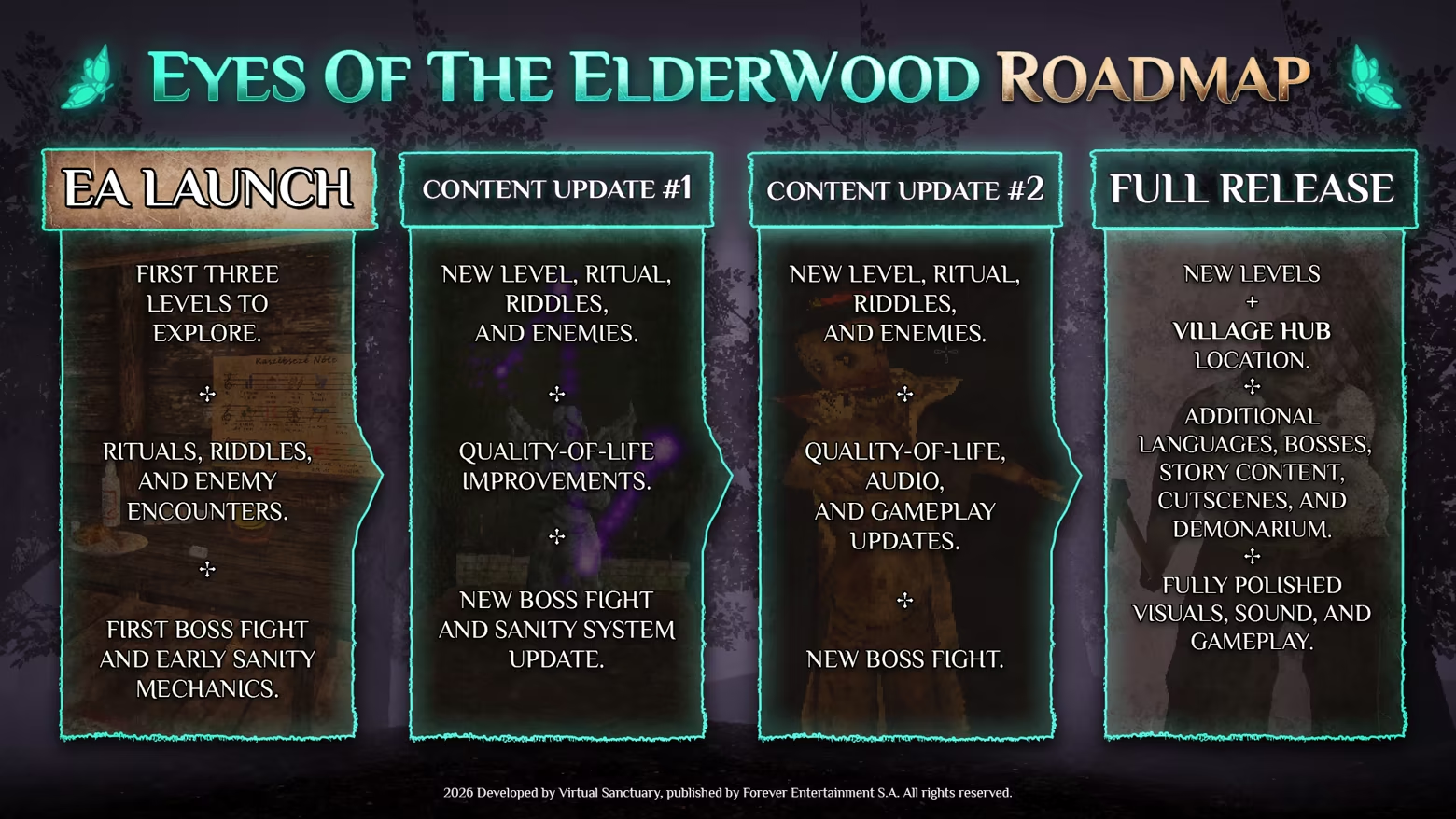
Virtual Sanctuary’s Early Access plan is staged and transparent. Each content update adds a new level, ritual, riddles, enemies, and a boss fight, alongside quality-of-life and audio passes. The full release promises a Village Hub location, additional languages, more bosses, deeper story content and cutscenes, and a “Demonarium” — a nice touch for a game whose enemy design is already a highlight.
The pricing is honest about that trajectory: $5.99 now, $9.99 at Content Update #1, $12.99 at Content Update #2, and $14.99 at full release. In other words, the current price is the floor, and buying in early is buying in cheap.
What Needs Work
Enemy AI is inconsistent. In the first level, detection feels random — enemies can spot and tag you with little you can do about it — while some stationary enemies later never attack at all, likely a detection-range issue. Across the board, most enemies are too easy to skip entirely. A bump in aggression would make the horror bite harder.
The content is thin and front-loaded. The first level is a linear tutorial, the third is short, and only the second really flexes the level design. It’s an Early Access launch, so this is expected — but it’s the main thing holding the experience back right now.
The story delivery is awkward. There’s little lead-up explaining who Laura is or what’s happening — one of our writers compared it to starting a show five episodes in. The ending simply drops you back to the menu with no send-off, which is jarring.
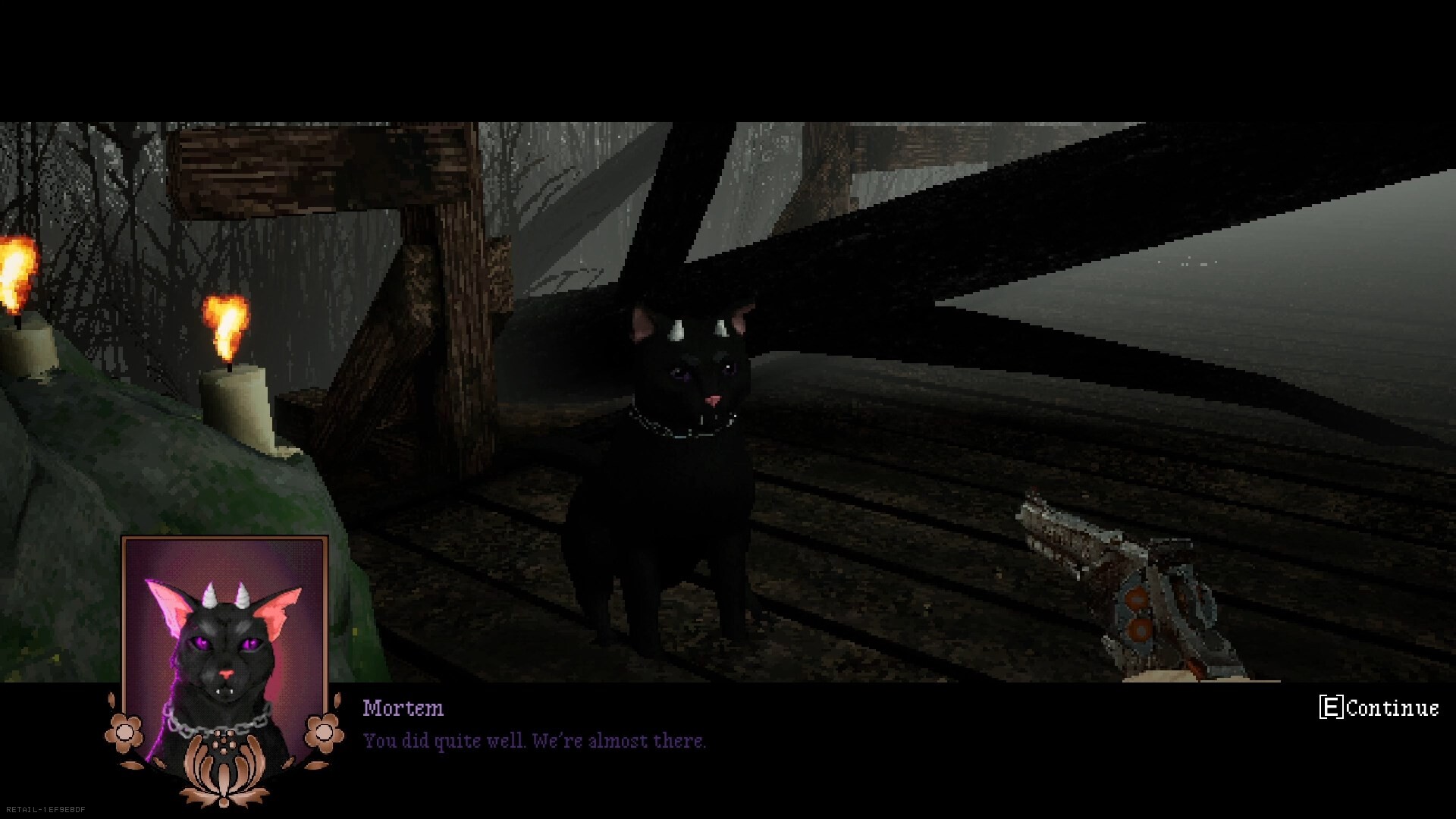
The dialogue tone is off. It skews strangely casual and comedic for the setting. Mortimer being a demon can tonally get away with a lot, but Laura herself reads far too relaxed for the horror she’s walking through.
The Level 3 boss fight can softlock you. Several of us found it slow, and worse, you can lock yourself out of finishing it if you attack a certain enemy at the wrong time. That one needs to be near the top of the fix list.
Missing quality-of-life signposting. No selected-rune indicator, awkward reload binding, and a hint cat that pops up a little too eagerly — sometimes after a puzzle is already solved. Small stuff, but it adds up.

The Good, The Bad, & The Ugly
| The Good | The Bad | The Ugly |
|---|---|---|
| The Spell SystemHand-drawing runes under pressure is a genuine skill test, and pairing fast magic with a slow revolver forces you to actually use both. The idea that different demons are weak to different spells is the kind of system that rewards experimentation — and it’s only going to get better as more demons arrive. | Thin, Front-Loaded ContentThree levels, and only the second really flexes. The first is a tutorial and the third is short. It’s an Early Access launch so it’s expected, but if you need breadth right now, this isn’t that yet. | The Level 3 Boss SoftlockThe boss capping the EA content is slow, and you can lock yourself out of finishing it by attacking a certain enemy at the wrong time. A progression-blocking bug at the literal end of the available content needs to be a top fix. |
| Folklore & Enemy DesignKashubian myth is a setting you almost never see in horror, and the demons pulled from it — each with distinct behaviour and weaknesses — are a real highlight. Learning the lore while the game unsettles you is a genuine treat. | Passive, Inconsistent AIDetection feels random in the first level and absent in parts of the later ones. Most enemies are too easy to skip, which drains tension. More aggression would make the horror land harder. | The Story Just StopsLittle setup for who Laura is or what’s happening, and an ending that dumps you back to the menu with no send-off. It reads like a show you started five episodes in and then had cut off mid-scene. |
| Atmosphere & $5.99 PriceVertex lighting and bitcrushed audio nail the early-2000s horror dread, and the sanity system sells it. At $5.99 with the price only rising through EA, this is a cheap, honest buy-in for a strong foundation. | Tonal Whiplash in DialogueThe writing skews casual and comedic in a way that undercuts the setting. Laura is weirdly chill for someone losing her mind to folklore demons, and it repeatedly pulls you out of the dread. | QoL Rough EdgesNo selected-rune indicator, an awkward reload/cancel binding that wastes ammo, and a hint cat that over-helps — including after puzzles are already solved. Individually minor, collectively noticeable. |
The Verdict
Eyes of the ElderWood merges Kashubian folklore with compelling spell-drawing mechanics that make puzzle-solving and combat genuinely engaging despite its Early Access status. That’s the TBB Curator take, and it’s accurate — this is a promising, genuinely interesting little horror game with one standout idea wrapped in a setting most players have never explored.
It’s clunky in places, the writing needs work, and the content is thin — but none of that is surprising for an Early Access launch priced at $5.99. What matters is the foundation, and the foundation here is strong: a unique combat system, excellent enemy design, and an atmosphere that lands. If the roadmap delivers on more levels, tighter AI, and a story that actually explains itself, this could grow into something special.
The honest split: if you like puzzle-horror, unusual settings, or you just want to support a promising indie early, buy it now. Six dollars, the price only goes up, and the spell system alone is worth the ticket. If you need a complete, polished story experience, wait. Check back after Content Update #1 or #2, when there’s more game to sink into and the rough edges have been sanded down.
That’s the takeaway from our Eyes of the ElderWood review — for the current asking price, it’s an easy recommendation, with the honest caveat that you’re buying potential as much as a finished product. We’ll be back for the next update.
For more game reviews, check out our full reviews section.