
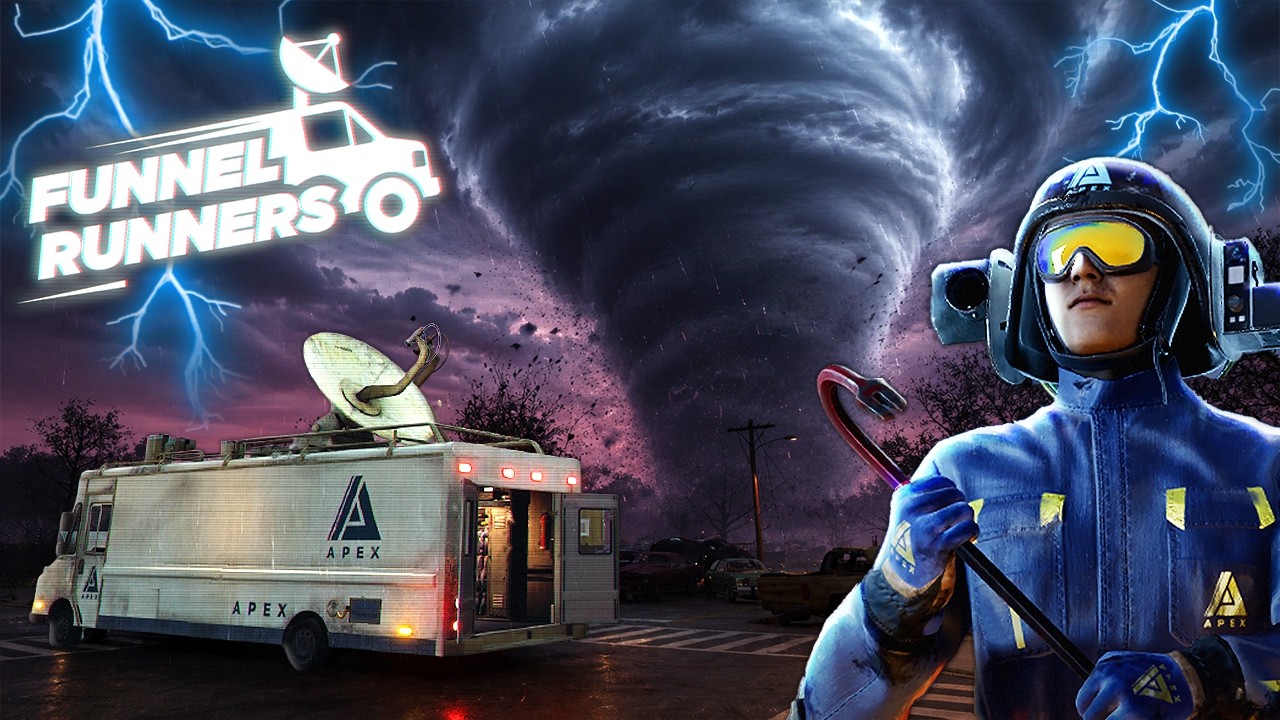
Funnel Runners puts you and up to seven friends in a doomed American suburb with a broken van, a shopping list of parts, and an F5 tornado closing in. You scavenge houses for coolant and fuel and fuses. You listen for the sirens. You watch a house you were standing in ninety seconds ago get disassembled piece by piece and carried into the sky. Then you do it again, because the tornado is still coming and you still need oil.
It’s an Early Access game with one map and one objective, and it’s one of the most immediately gripping co-op experiences of the year. The Steam rating is Very Positive. It peaked at nearly 4,700 concurrent players on launch day. It’s fifteen dollars. And the community response is genuinely unusual — people aren’t just recommending it, they’re writing detailed design proposals in their reviews because they want so badly for this thing to become what it clearly could be.
The Loop
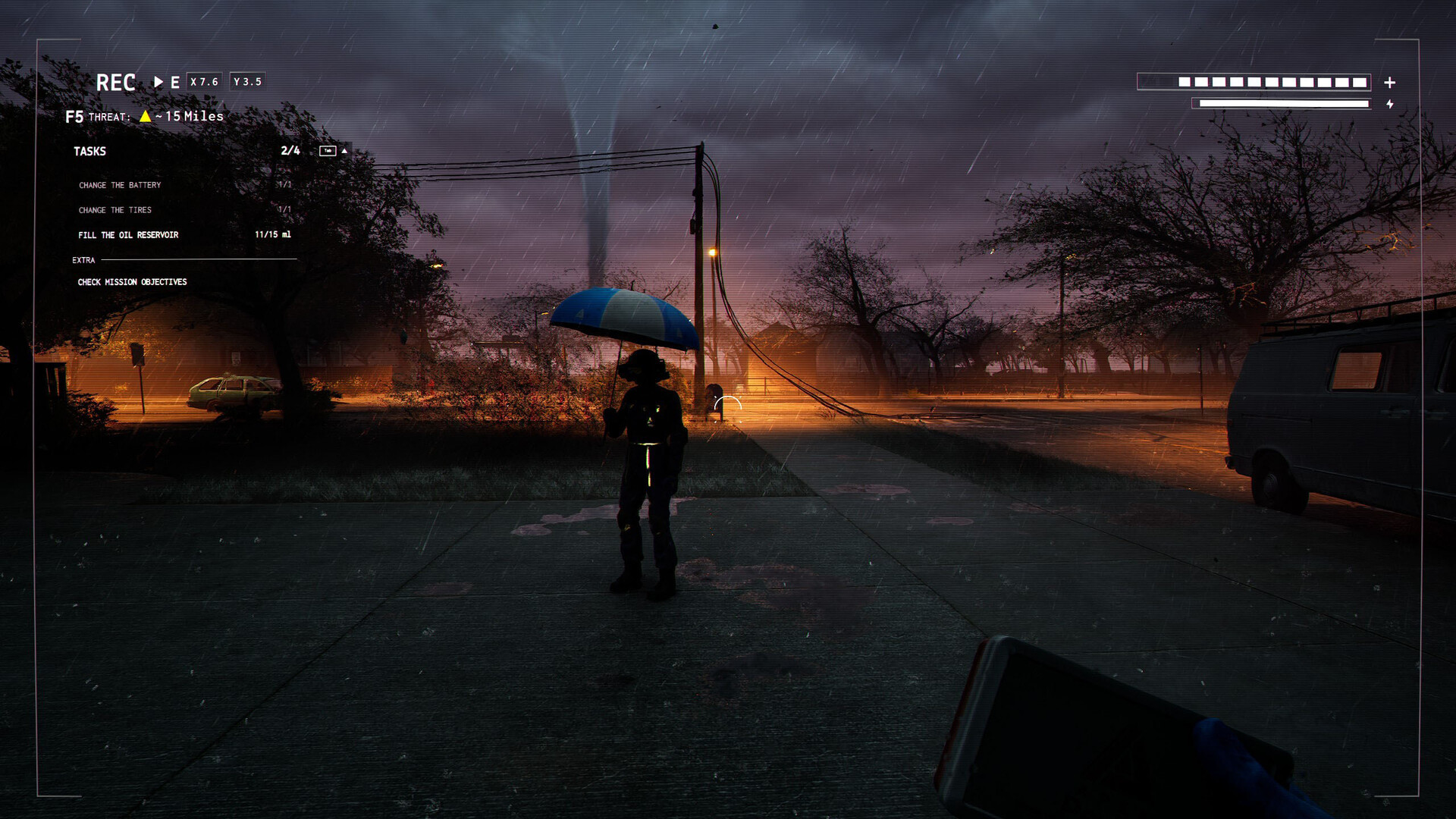
Turn the key, run the diagnostic, find out what’s missing. It’s randomised every run — coolant, oil, fuel, fuses, tyres, battery. Six possible parts, and you don’t know which until you check.
Houses, garages, the gas station. Items are randomly placed, so there’s no memorising routes. Inventory is limited and carrying heavy things slows you down — which matters a lot when you need to outrun something.
Tornadoes spawn randomly and grow stronger. Buildings collapse progressively. Destroyed areas stop yielding items. The map you’re scavenging is actively being deleted around you and you have to adapt.
The F5 tornado is the real timer. When it arrives, you’re on borrowed minutes. Everything before that is a race you didn’t know you were losing until the sirens changed.
The Storm Is the Whole Game
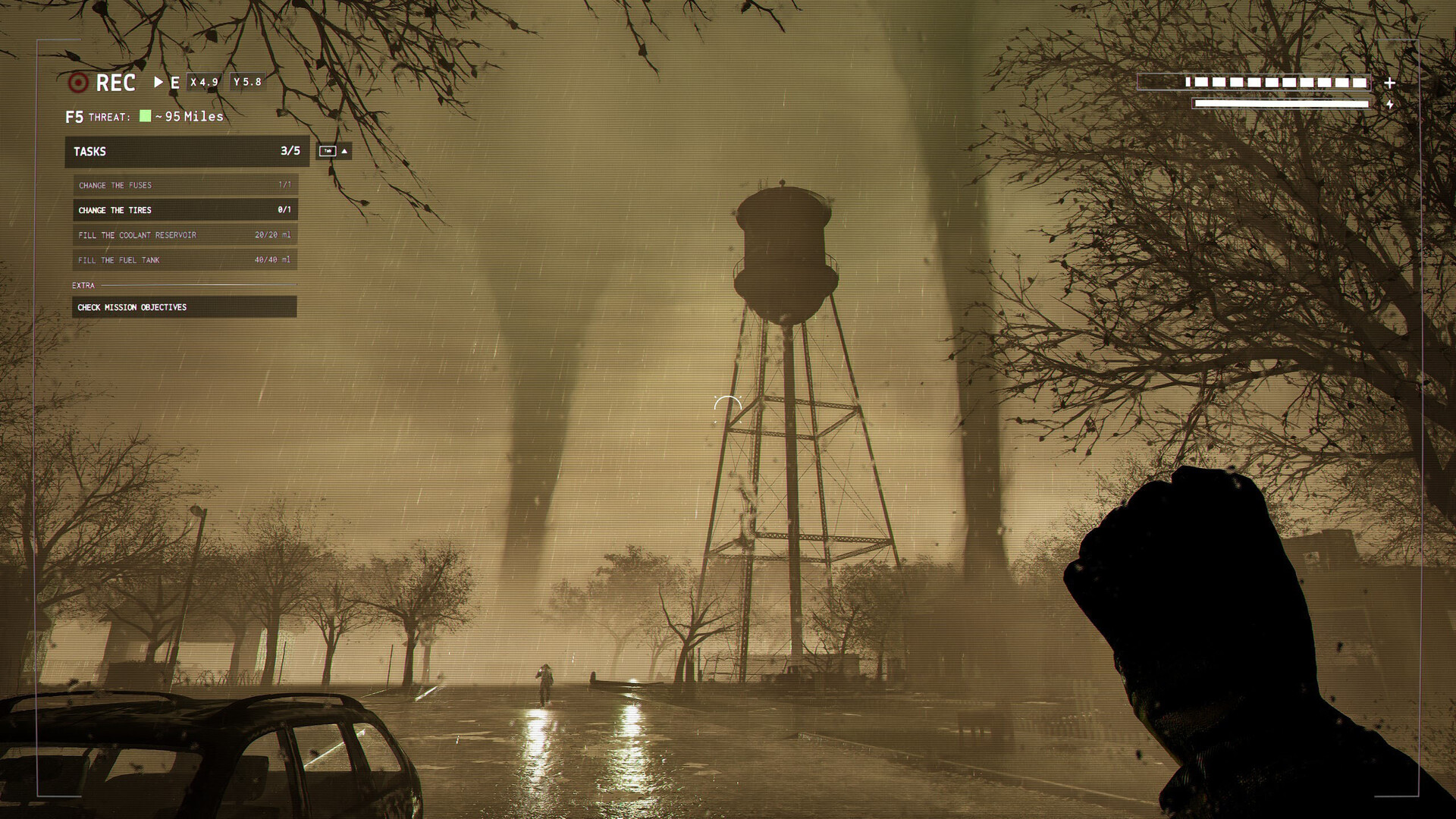
Everything Funnel Runners does well comes back to one thing: the weather is genuinely frightening. The way dust lifts before a funnel arrives. The groaning of infrastructure under load. The lights flickering. Standing inside a house feeling the walls strain against the pull. Seeing the mesocyclone rotating in the distance under the mothership and knowing exactly what that means.
Players who are actually into severe weather — the people who study this stuff, who want to storm chase for real — are the ones responding hardest to this game, and that’s the strongest possible endorsement of the simulation. It’s tagged Survival Horror and Psychological Horror and both are earned. Multiple players independently described it as “actually a horror game” with surprise in their voice, because the marketing reads as a chaotic co-op romp and the experience is closer to dread.
The destruction system is the other half of it. Buildings don’t just despawn — they come apart in pieces. Live wires spark. Debris flies. And critically, destroyed areas stop giving you items, so the storm isn’t just a threat, it’s actively shrinking your options. That’s a genuinely smart bit of design: the tornado is both the danger and the shot clock.
The Roadmap
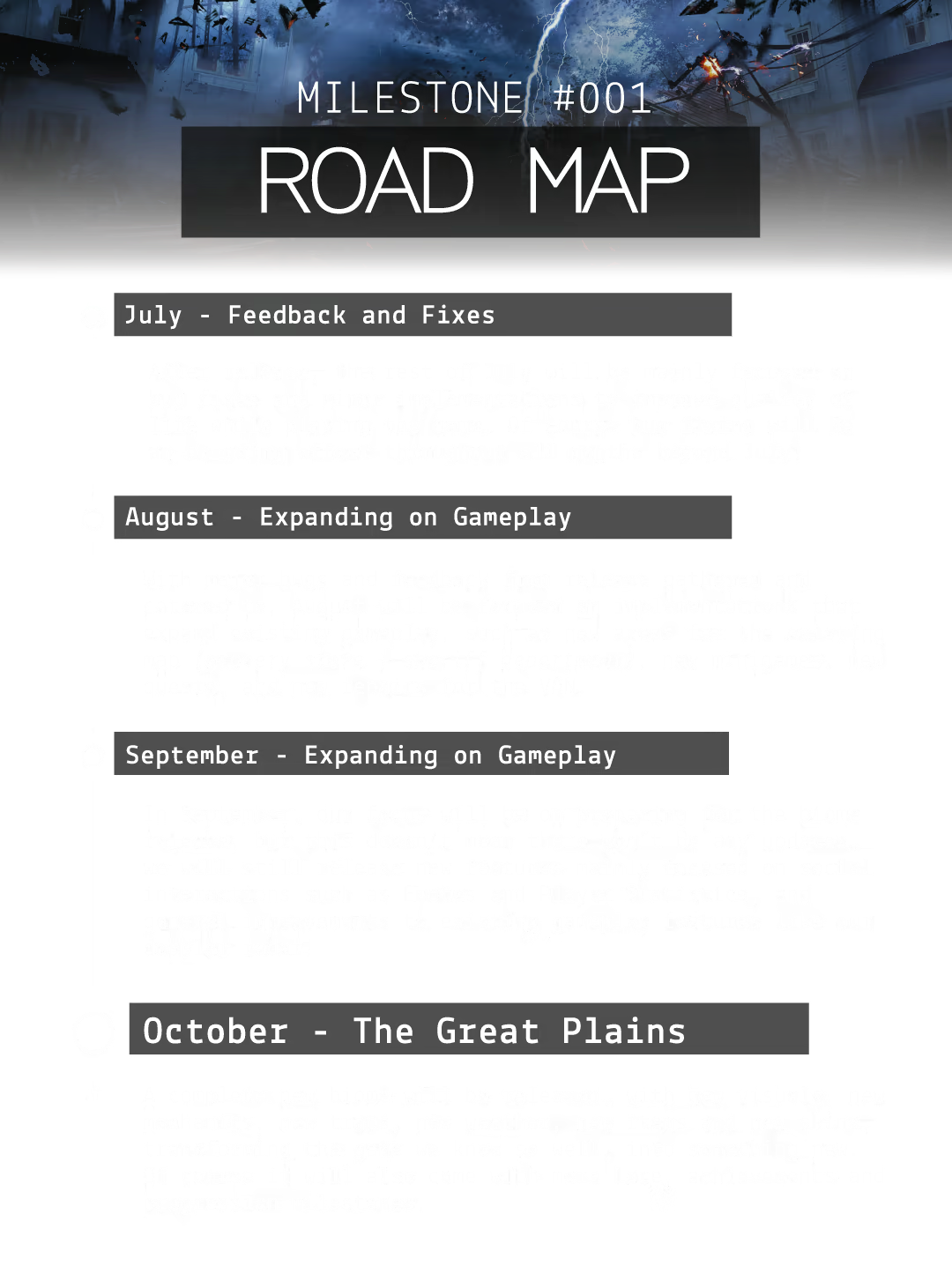
Supernova’s Early Access pitch is unusually honest: the game is done and fully playable right now, and EA is about what comes next. They cite night mode and difficulty pacing as features that exist because their beta community asked for them, and name new mission objectives and death cinematics as the top two community-requested roadmap items. Public roadmap, regular dev updates, an experimental branch for big changes. Patch notes are already landing daily.
They’ve also committed to no paid DLC during EA and stated the price will rise at 1.0 — so the $14.99 is the floor, not a temporary discount.
What Needs Work
Content variety is the big one. One map, one objective. A good group clears Normal or below fast, and the repetition sets in quickly. The community’s most consistent request is objective variety — cutting a tree blocking the road, repairing a bridge for the van to cross, anything that isn’t “press E at the right time.”
No progression. There’s a level system that gates difficulty tiers, but no meaningful progression beyond it. Nothing pulls you forward between runs.
Bugs and infrastructure. Players thrown under the map by tornadoes and made unrevivable. Crashes in the launch window (since patched). Host migration doesn’t exist — if the host leaves, the session ends for everyone. No report function, which players note is already a problem in public lobbies.
Quality-of-life gaps. The walkie-talkie takes an inventory slot and can’t be dropped, which players note is strange when it could just be a toggle. Interaction prompts don’t always appear reliably. Controller support is described as wonky even after sensitivity tweaks. No Steam Deck support.
Solo is harsh. With one shot at escape and tornadoes that steal items from your inventory when they get close, being caught away from the van as a solo player is often just over. Players are asking for basements to shelter in — not in every house, but enough that the game feels less arbitrary.
Training mode is too aggressive. Multiple players report the F5 arriving before they’ve had time to learn the mechanics. For a tutorial, that’s backwards.

The Good, The Bad, & The Ugly
| The Good | The Bad | The Ugly |
|---|---|---|
| The Storm SimulationGenuinely frightening and genuinely convincing. The dust lift, the groaning walls, the mesocyclone rotating in the distance, the progressive building collapse. Actual weather enthusiasts are the loudest fans, which is the strongest endorsement a storm game can get. This is a horror game wearing a co-op game’s clothes. | One Map, One ObjectiveEverything comes down to repair the van and escape. A competent group clears Normal fast and the repetition arrives quickly. The community’s most consistent ask is objective variety — real interactions rather than “press E at the right time.” It’s on the roadmap. It isn’t here yet. | No Host MigrationIf the host leaves, the session ends for everyone. For an 8-player co-op game built around public lobbies, that’s a structural problem rather than a rough edge — and there’s no report function either, which players note is already being exploited in public sessions. |
| Destruction With ConsequencesBuildings come apart progressively and destroyed areas stop yielding items. The storm isn’t just a threat, it’s actively deleting your options — making it both the danger and the shot clock. That’s smart design, not just spectacle. | No ProgressionDifficulty tiers unlock by level and that’s essentially it. Nothing pulls you between runs beyond the runs themselves being fun. For a game built to be played repeatedly, that’s a gap. | Under-Map DeathsTornadoes throwing players under the map and rendering them unrevivable is a bug that directly ruins co-op runs. It’s the most-reported issue and it needs to be near the top of the fix list. |
| $14.99 and an Honest EA PitchSupernova’s Early Access page is unusually straight: the game is done, EA is about what’s next, features exist because the beta community asked, and the top roadmap items came from players. No paid DLC during EA, price rises at 1.0, daily patch notes already landing. That’s how you do this. | Solo Is PunishingOne shot at escape, tornadoes that steal your inventory when they get close, and no shelter options. Caught away from the van solo is usually just over — which feels arbitrary rather than difficult. Basements would fix most of this. | Training Mode Kills YouMultiple players report the F5 arriving before they’ve learned the basics. A tutorial that doesn’t give you time to learn is a tutorial that isn’t working. |
The Verdict
Funnel Runners is a chaotic co-op blast where teamwork against escalating disasters feels genuinely tense and rewarding. That’s the TBB Curator blurb, and it’s accurate — but it undersells the thing that makes this game work, which is that the tornado is legitimately terrifying and Supernova built the entire experience around respecting that.
This is a game with one map and one objective that has people writing essays about what they want it to become. That’s not a criticism — it’s the highest form of engagement an Early Access game can generate. Nobody drafts design proposals for a game they don’t care about. The community isn’t tolerating Funnel Runners’ thin content; they’re impatient with it because the foundation underneath is so obviously good.
The honest split: if you have friends to play with and the concept excites you, buy it now. Fifteen dollars, the price only goes up, and the storm alone justifies it. The chaos of eight people splitting up across a collapsing suburb while someone screams tornado warnings over the radio is exactly what this game was built for and it delivers completely.
If you’re solo, or you need content breadth, wait. Solo is punishing in ways that feel arbitrary rather than hard, and one map runs dry fast without a group to make the chaos funny. Check back in six months when a couple of the roadmap biomes have landed.
Either way — this one deserves to make it. The concept is original, the execution of the core idea is excellent, and the developers are doing the community thing properly rather than performatively. There aren’t many storm games and there are none that feel like this.
For more game reviews, check out our full reviews section.