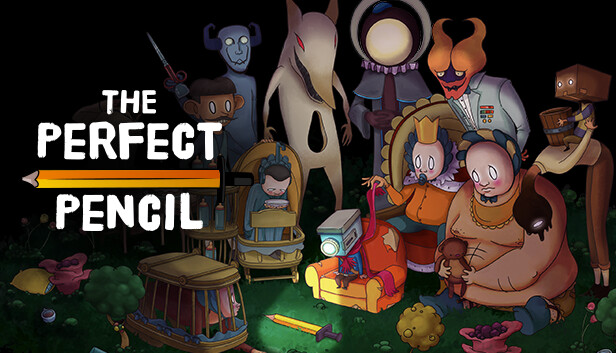
Lost in the Kingdom of the White Beast
In the indie gaming landscape, the “metaphor for depression” subgenre has become as crowded as a subway car during rush hour. It takes a lot to stand out when every other platformer wants to explore the depths of the human mind. Yet, The Perfect Pencil, released on January 29, 2026, manages to carve out a distinct identity through sheer artistic charisma and a commitment to weirdness.
Developed by Studio Cima, this hand-drawn action platformer throws players into the shoes of John, a protagonist with a camera for a head (figuratively speaking—he analyzes the world) who awakens in a bizarre, sketch-like kingdom. It is a world where fear takes physical form, and where your primary weapon is, fittingly, a pencil.
After spending a week navigating this surreal dreamscape, fighting manifestations of anxiety, and chatting with NPCs who are obsessed with tea, it is clear that The Perfect Pencil is more than just another sad game. It is a vibrant, quirky, and surprisingly humorous adventure that respects the player’s time and intelligence.
A Hand-Drawn Nightmare
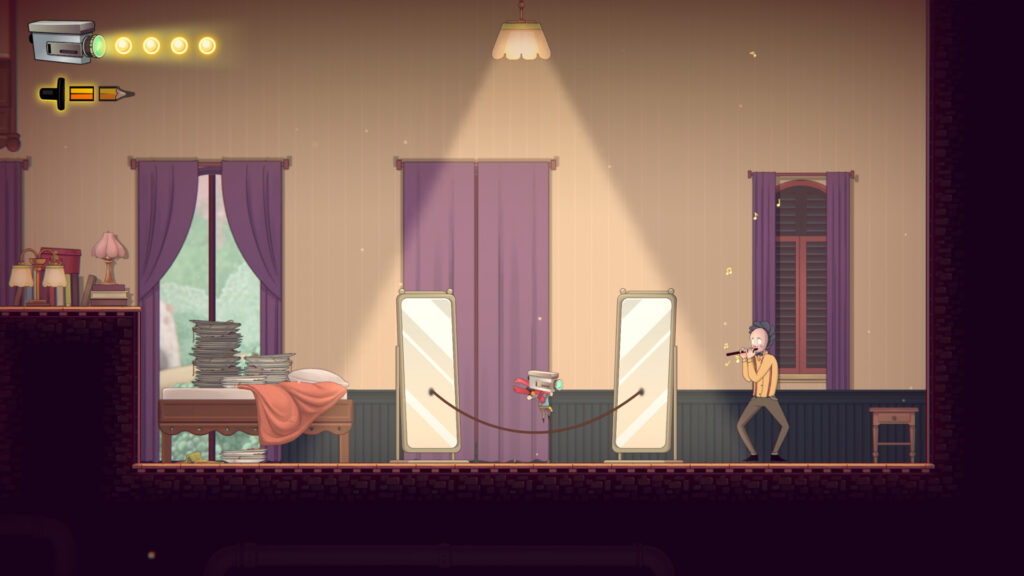
The first thing that grabs you is the art style. It is, in a word, immaculate. The game features a hand-drawn aesthetic that blends whimsical beauty with a “malaise-like melancholy”. Every character, enemy, and background element feels like it was sketched by a talented artist having a fever dream. The character designs are diverse and original, with enemies that convey contrasting emotions, sparking curiosity about their nature rather than just marking them as targets.
The atmosphere is further enhanced by a sound design that weaves somber and uplifting themes together. While some players found the soundtrack “painfully average,” likening it to a Flash game, others found it a perfect accompaniment to the surreal visuals, especially when played through good headphones. The game also features a unique UI detail: the life bar flickers when you are down to one heart, adding a subtle layer of stress to combat.
Hollow Knight with a Twist
Let’s address the elephant in the room: The Perfect Pencil is heavily inspired by Hollow Knight. From the combat rhythm to the map design, the DNA of Team Cherry’s masterpiece is undeniable. However, it differentiates itself enough to avoid being a clone.
The combat is slower and more rhythmic than the twitch-reflex action of Silksong, requiring players to “adjust to the rhythm of the game’s design” or risk feeling like the controls are unresponsive. It features a “healing strike” mechanic—a risk-reward system that encourages aggression to recover health, making encounters feel dynamic and involved.
Movement is where the game truly shines. Unique mechanics like the “Double Platform” and “Flimsy Cape” set it apart from its peers, offering creative ways to traverse the environment and approach combat. The platforming hits a sweet spot of difficulty—not a walk in the park, but not punishingly difficult for casual players.
Poems and Perspectives
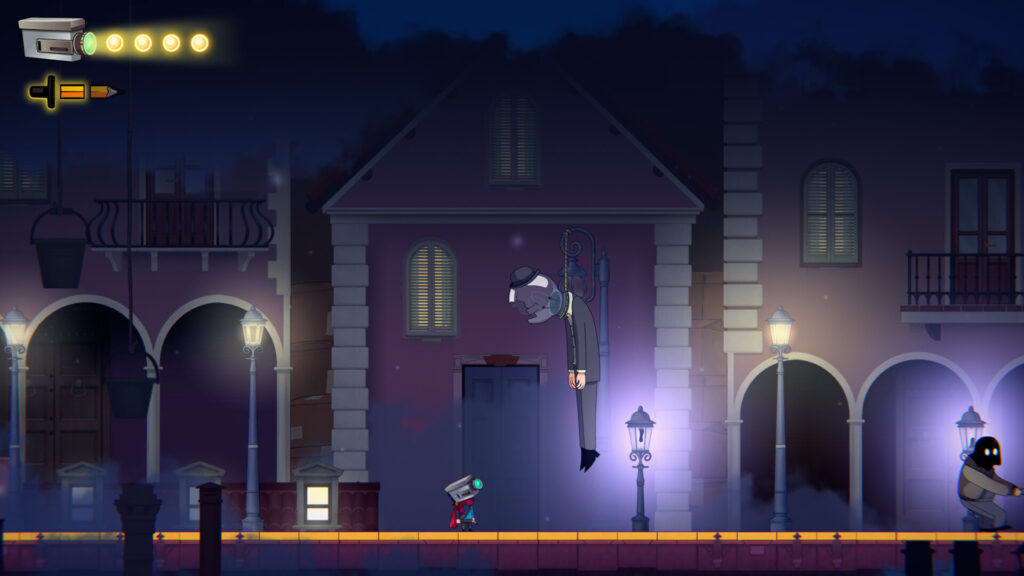
Exploration is arguably the game’s strongest suit. The world is filled with secrets, shortcuts, and “Cheshire cat rhymes” that hint at loot locations, giving players tangible goals beyond just filling out the map. John’s unique “analysis” ability allows you to uncover hidden lore about NPCs and objects, adding a detective layer to the standard Metroidvania formula.
The map design is smart, with shortcuts that respect the player’s time, making backtracking feel less tedious. Returning to old areas with new abilities is rewarding rather than oppressive, a balance that many games in this genre struggle to find.
Deep Thoughts and Deadpan Humor
While the premise is heavy—personal development and the psychology of fear—the writing is surprisingly funny. The game is sprinkled with deadpan humor and quirky dialogue options that help ease the tension of its darker themes.
The story unfolds naturally through gameplay and interaction rather than exposition dumps. You play as John, but you are also an observer, peering into a creative mind struggling with its own demons. The NPCs are standout characters, each with distinct personalities and animations that make the world feel lived-in and strange.
| The Good | The Bad |
| Art Style: A stunning hand-drawn aesthetic that is polished and full of character. | Soundtrack: Divisive quality; some find it atmospheric, others find it “Flash game” quality. |
| Exploration: Rewarding secrets, clever shortcuts, and unique “analysis” mechanics make discovery fun. | Combat Pacing: Slower than its contemporaries, which may feel sluggish to fans of faster games. |
| Narrative: A story that tackles deep themes without being preachy, balanced with great humor. | Cliches: The “depression metaphor” trope is well-trodden ground, even if executed well here. |
| Movement: Unique mechanics like the Double Platform offer fresh ways to traverse the world. | Difficulty: No accessibility options or difficulty settings at launch. |
| Steam Deck Verified: Runs perfectly on handhelds. |
The Perfect Pencil: The Perfect Pencil is a triumph of artistic vision and solid game design. It takes the familiar Metroidvania template and injects it with enough personality and heart to feel fresh. While the combat might feel slow to some and the soundtrack is divisive, the overall package is a compelling journey into the human psyche that is well worth the price of admission. It is a game for the "artsy folk that ponder deeply," but also for anyone who just wants to smash weird monsters with a giant pencil. – Obsidian