


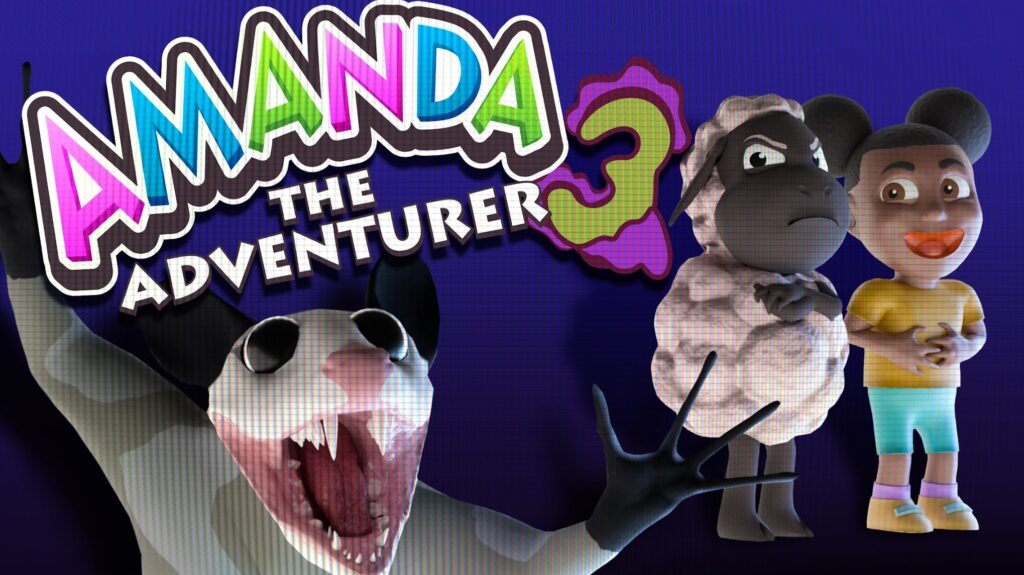
The saga of Riley Park and the cursed children’s show Amanda the Adventurer has finally reached its conclusion. After a breakout first game and a puzzle-heavy sequel that left some fans scratching their heads, Amanda the Adventurer 3 attempts to tie up loose ends, blending the creepypasta horror of the original with the expanded lore of the second.
Picking up immediately where the second game left off, Riley has survived the horrors of the Kensdale Public Library and must now venture into the belly of the beast: an abandoned Hameln facility. The stakes have never been higher, and the narrative promises to reveal the ultimate secrets behind Amanda, her sheepish sidekick Wooly, and the sinister corporation pulling the strings.
Does it stick the landing? Mostly. While it suffers from some pacing issues and a few frustrating puzzles, Amanda the Adventurer 3 delivers a satisfyingly spooky finale that rewards long-time fans with answers, even if it makes you work a little too hard for them.

A Darker, Deeper Lore
The story begins with a heavy recap, reminding players of the tragedy that has befallen Riley’s family. Aunt Kate is dead, Riley’s cousin Jordan is missing, and Amanda—the spirit of a girl named Rebecca trapped within the tapes—is growing increasingly unstable.
The narrative in Amanda 3 feels more ambitious than its predecessors. We aren’t just in an attic or a library anymore; we are exploring the corporate labs where the nightmare began. This shift in setting allows for a deeper dive into the “Hameln entertainment” lore. We learn about “Project Shepherd,” the origins of the anomaly, and the gruesome experiments conducted on children.
One of the most compelling aspects is Woolly’s evolution. For two games, fans have debated whether the anxious sheep was a victim or a villain. This game finally pulls back the curtain, revealing a character far more complex—and perhaps more tragic—than we realized. Without spoiling the twists, let’s say that the dynamic between Amanda and Wooly hits a breaking point that is both heartbreaking and terrifying.
“I’ll never be whole again. Please help me leave this place.” — Amanda
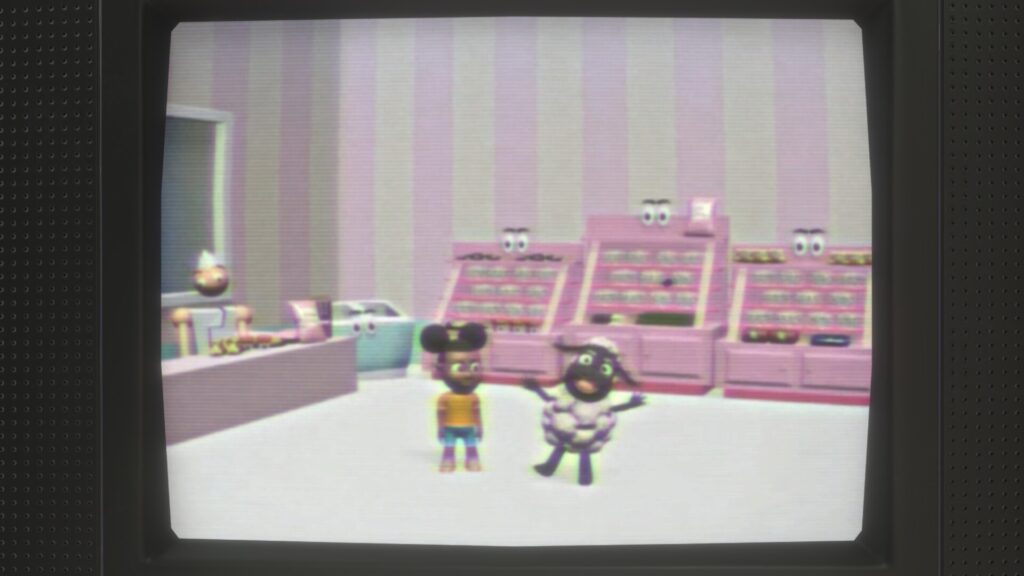
The storytelling is delivered through a mix of environmental clues, live-action tapes (which look fantastic and high-budget), and the interactive cartoons themselves. The live-action segments, in particular, deserve praise for grounding the supernatural horror in a gritty reality that recalls Stranger Things or classic 90s conspiracy thrillers.
Puzzles, Smoothies, and Frustration
The core gameplay loop remains familiar: watch a cursed tape, solve a puzzle based on clues in the video, and unlock the next tape. However, MANGLEDmaw Games has introduced new mechanics to keep things fresh.
You’ll find yourself blending smoothies to match specific color codes, organizing birthday parties for creepy dolls, and navigating a “super secret spy scavenger hunt” that bleeds into the real world. The interaction between the digital world of the tapes and the physical world of the facility is seamless and often unsettling.
However, not all puzzles are created equal. One segment involving a “food group” chart and a blender has already become infamous among players for its vague logic. As one streamer noted during a playthrough, “I literally feel like I’m in math class… I don’t even have a fraction of a clue what is happening.”
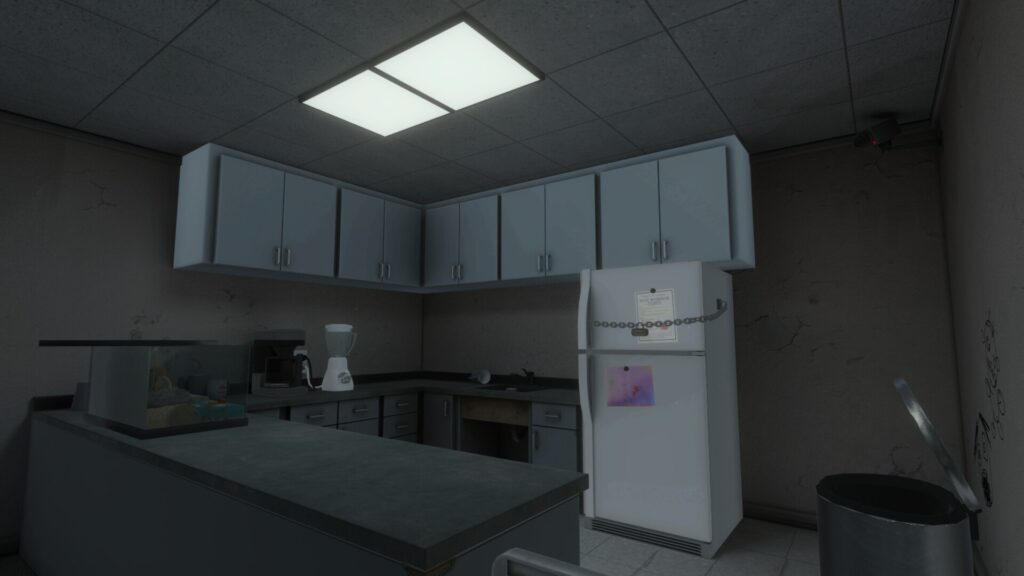
While the game provides clues, some are so obscure that they stop the pacing dead in its tracks. You might find yourself staring at a poster for twenty minutes, trying to decipher if a “pink food” means meat or strawberry ice cream, while the horror atmosphere slowly drains away into annoyance.
On the flip side, the “pause” mechanic—where you must pause the tape at specific moments to catch hidden codes or changes in the background—is utilized brilliantly. It forces you to pay attention to every frame, heightening the tension as you wait for Amanda’s face to distort or for a hidden message to flash on the screen.
Atmosphere and Horror
Visually, the game retains the low-poly, 90s CGI aesthetic for the cartoon segments, which remains as uncanny and disturbing as ever. The contrast between the show’s bright, cheerful colors and the facility’s dark, rotting reality creates a sense of unease that permeates the entire experience.
The audio design is a standout. Amanda’s voice acting remains stellar, shifting from innocent to demonic in a split second. The sound of wet footsteps, distant machinery, and VCR static all contribute to a soundscape that keeps you on edge.
That said, the game relies a bit more on jump scares than the first one. While some are earned, others feel cheap. The “monster” chases in the facility can feel clunky, breaking the immersion of what is otherwise a psychological horror game.

Amanda the Adventurer 3 Pros & Cons
| Pros | Cons |
| ✅ Satisfying Conclusion: Ties up the trilogy’s story arcs effectively. | ❌ Frustrating Puzzles: Some solutions are vague and kill the pacing. |
| ✅ Deep Lore: Expands on the Hameln corporation and Project Shepherd. | ❌ Short Runtime: Can be beaten in under 3 hours. |
| ✅ Great Production Value: Live-action tapes and voice acting are top-tier. | ❌ Clunky Stealth: Monster sections feel less polished than the puzzles. |
| ✅ Wooly’s Arc: Finally gives depth to the series’ most mysterious character. | ❌ Cheap Jump Scares: Relies a bit too much on sudden loud noises. |

Amanda the Adventurer 3: Amanda the Adventurer 3 is a worthy successor that honors the legacy of the series. It answers the big questions, gives closure to Riley and Amanda, and manages to be genuinely scary in its best moments. It is not without flaws. The short runtime (2-4 hours) and the occasionally obtuse puzzle design hold it back from perfection. But for fans who have followed the mystery since the original game jam demo, this is a must-play. It captures the tragedy of lost childhood and corporate greed, wrapping it in a colorful, cursed package. If you can survive the blender puzzle, you’ll find a story with a lot of heart—and a lot of teeth. – Obsidian