
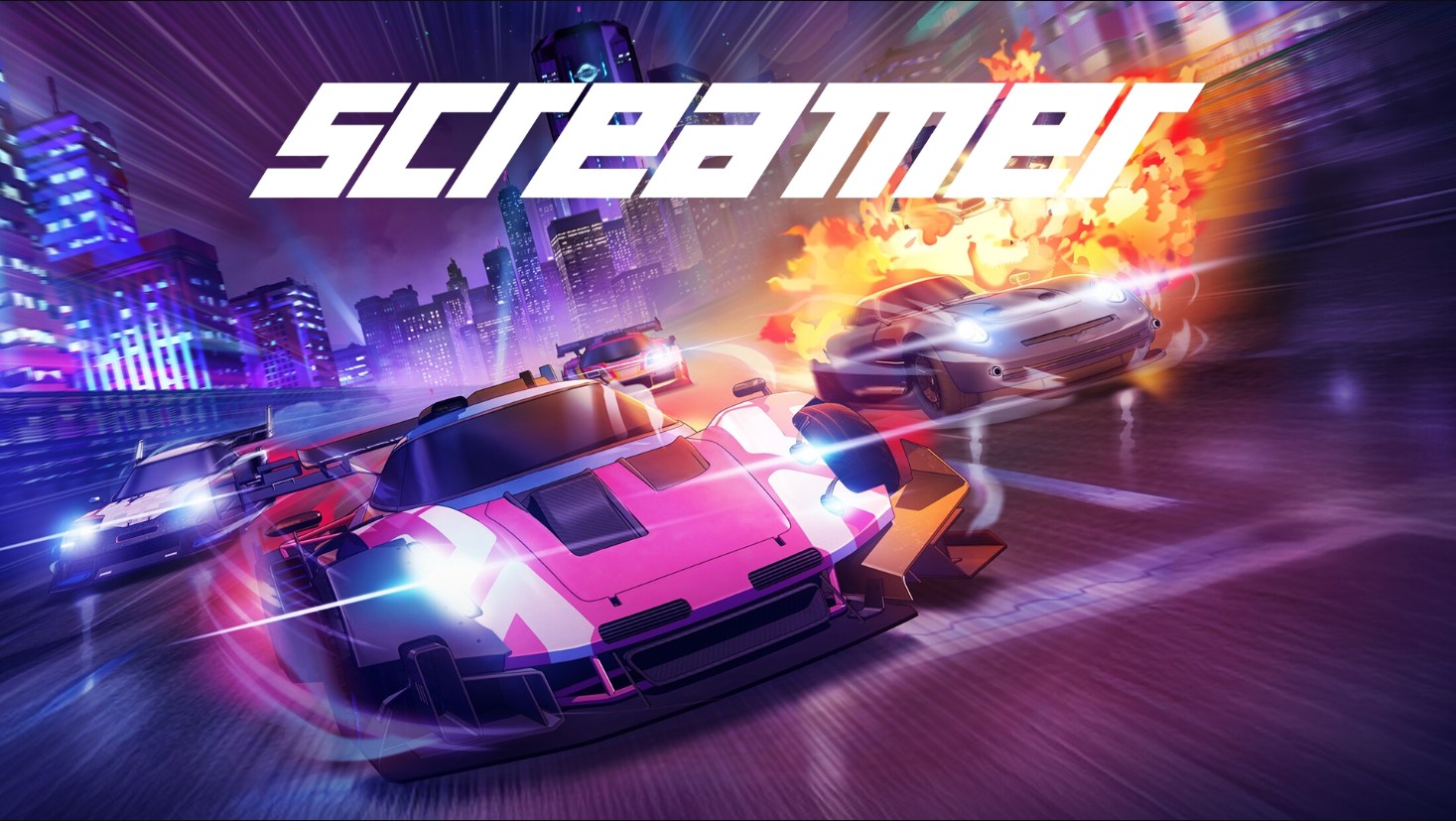
A Risk Worth Taking
In the current AAA gaming landscape, the arcade racing genre has largely been distilled down to a single, hyper-safe formula: the open-world festival. While games like Forza Horizon are undeniably gorgeous, they often lack the bite, mechanical depth, and sheer attitude of mid-2000s classics like Burnout 3: Takedown or Need for Speed: Most Wanted.
Enter Screamer.
Developed and published by Italian racing veterans Milestone S.r.l., Screamer is a game that practically defies modern market logic. It is a full-priced, $60 linear arcade racer featuring an unabashedly edgy cyberpunk-anime narrative, a brutal difficulty curve, and a completely alien twin-stick control scheme.
Currently sitting at a “Mostly Positive” rating on Steam, it is a deeply polarizing game. It asks a lot of the player up front, demanding that you unlearn decades of standard racing muscle memory. But if you are willing to put in the time, Screamer reveals itself to be one of the most mechanically satisfying, adrenaline-pumping racing games of the decade.
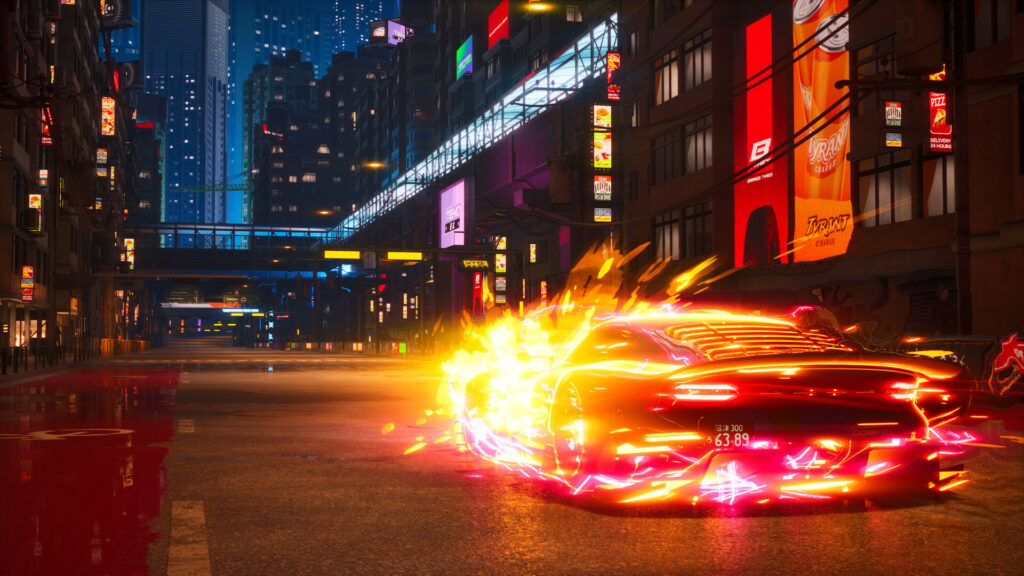
Drifting, Fighting, and the ECHO System
What truly sets Screamer apart is how it actively blurs the line between an arcade racer and a fighting game.
The cars in this neon-drenched dystopian universe are equipped with “ECHO” technology, allowing them to weaponize their momentum. During a race, you are constantly managing two distinct meters: Sync and Entropy. You build Sync by drafting, hitting perfect active gear shifts, and executing precise drifts. Sync is then burned to deploy shields or execute sudden, violent “Strikes” to ram opponents off the track. Successful Strikes build your Entropy meter, which eventually unlocks “Overdrive”—a terrifying state of invulnerability and blinding speed where you simply plow through anything in your path.
This combat system is layered on top of a highly unique twin-stick handling model. The left stick controls your standard steering, while the right stick directly controls the angle of your drift. It feels incredibly alien for the first few hours. You will spend your initial races slamming into walls, scrubbing all your speed, and wondering if the game is fundamentally broken.
But then, usually around the 4- to 5-hour mark, it clicks. You realize you actually have to feather the brakes before throwing the rear end out with the right stick. When you finally string together a perfect corner—drifting, active-shifting, and boosting out of the apex just in time to strike a rival into a barrier—the euphoria is unmatched. It is a system that heavily rewards mechanical mastery.
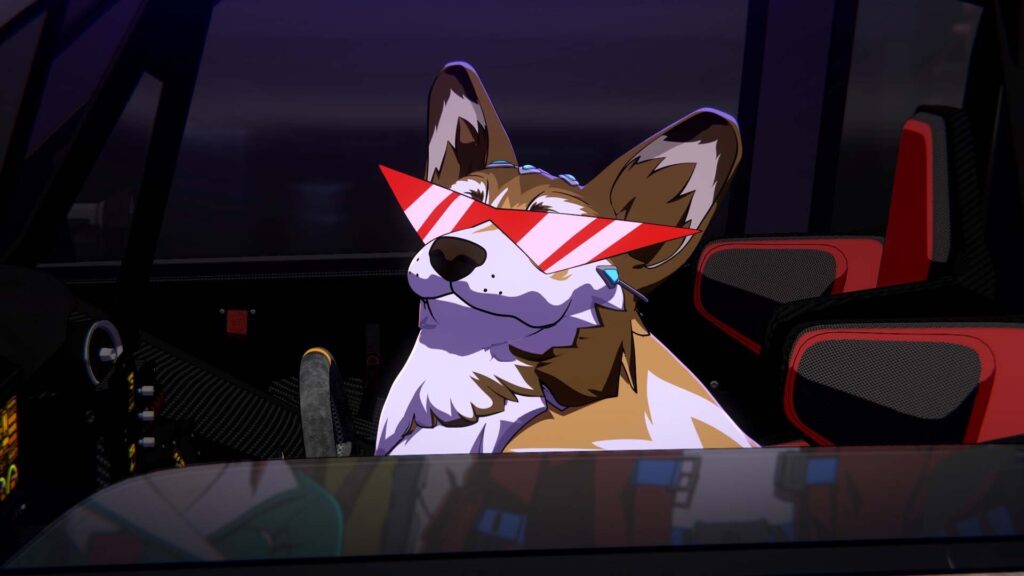
Visual Novels at 200 MPH
Screamer features a massive 15- to 20-hour campaign (Tournament Mode) structured much like an anime visual novel.
You follow five distinct teams—ranging from corporate magnates to ruthless street criminals—as they compete in the lethal Screamer tournament for their own personal glory or vengeance. The roster of drivers is excellent, with each character bringing their own unique vehicle stats and a distinct “Ability” that alters their playstyle.
The “blabber-to-racing ratio” is admittedly quite high. Between races, you will sit through lengthy, fully voice-acted cutscenes that detail the drivers’ interpersonal drama. If you aren’t a fan of over-the-top anime tropes, this might feel like a slog, though the scenes are entirely skippable. However, if you buy into the melodrama, it adds fantastic emotional weight to the races. When you line up on the grid against a rival who just spent ten minutes trash-talking your team, taking them down with a well-timed Strike feels incredibly satisfying.
A Brutal Difficulty Spike and Empty Lobbies
Screamer is not without its issues, and its uncompromising vision is a double-edged sword.
First and foremost: the AI is ruthless. Playing the campaign on Hard or Very Hard will legitimately test your sanity. Unlike Mario Kart, there is zero rubber-banding here. If you drive perfectly, you can build an insurmountable lead. But if you make a single mistake and let the AI pull away, they are gone forever. Some of the late-game time trials and boss races require absolute, pixel-perfect perfection. It is a “Souls-like” approach to racing that will absolutely demoralize casual players.
Secondly, the online multiplayer is currently struggling. Because of the steep $60 price tag and the niche appeal of the game, the online lobbies are fairly sparse outside of peak hours. Furthermore, the netcode currently has some issues handling the complex collision physics of the Strike mechanic, leading to occasional desyncs and frustrating pinball moments.
Thankfully, the game features robust offline modes to make up for this, including Time Attacks, Score Challenges, and a glorious return to 4-player local split-screen.
The Good, The Bad, & The Overdriven
| The Good | The Bad | The Ugly |
| The Mechanics: The twin-stick drifting and gauge-based combat are incredibly deep, satisfying, and wholly unique to the genre. | The Learning Curve: The first 3 to 5 hours are genuinely frustrating as you struggle to unlearn traditional racing controls. | The Price Tag: Charging $60 for a linear, niche arcade racer makes it incredibly difficult to convince friends to play with you. |
| The Campaign: A lengthy, 15+ hour story mode filled with great characters, distinct rivalries, and excellent presentation. | Online Netcode: Multiplayer collisions can occasionally feel janky and desynced when using the Strike mechanic. | |
| No Microtransactions: All cosmetics, music, and concept art are unlocked purely through gameplay and skill. | Empty Lobbies: The steep price and steep difficulty mean online matchmaking can be sparse outside of peak hours. | |
| Local Multiplayer: A flawless 4-player split-screen mode is a massive, highly appreciated inclusion. |
Should You Buy It?
Yes, if: You miss the golden era of mid-2000s arcade racers (like Burnout or F-Zero), you enjoy the aesthetic and melodrama of cyberpunk anime, and you want a racing game with a sky-high skill ceiling.
No, if: You prefer relaxing, open-world festival racers (like Forza Horizon), you get easily frustrated by brutal, unforgiving AI opponents, or you absolutely refuse to play visual novel story segments.
Recommended for fans of: F-Zero GX, Burnout 3: Takedown, Wipeout, Inertia Drift, Need for Speed: Unbound, Redline.
Screamer: In an era of safe, repetitive, live-service racing festivals, Screamer is a breath of fresh, nitrous-infused air. It is a game that demands your full attention, forcing you to master its complex twin-stick drifting and deep resource-management combat. The $60 price tag is undeniably steep for a game without an open world, which makes it a tough sell for your friends. But if you are nostalgic for the golden age of arcade racers and crave a game that actually respects your ability to learn and adapt, Screamer is a masterpiece. Milestone took a massive risk with this title, and for those willing to put in the work, it pays off in spades. – Obsidian