
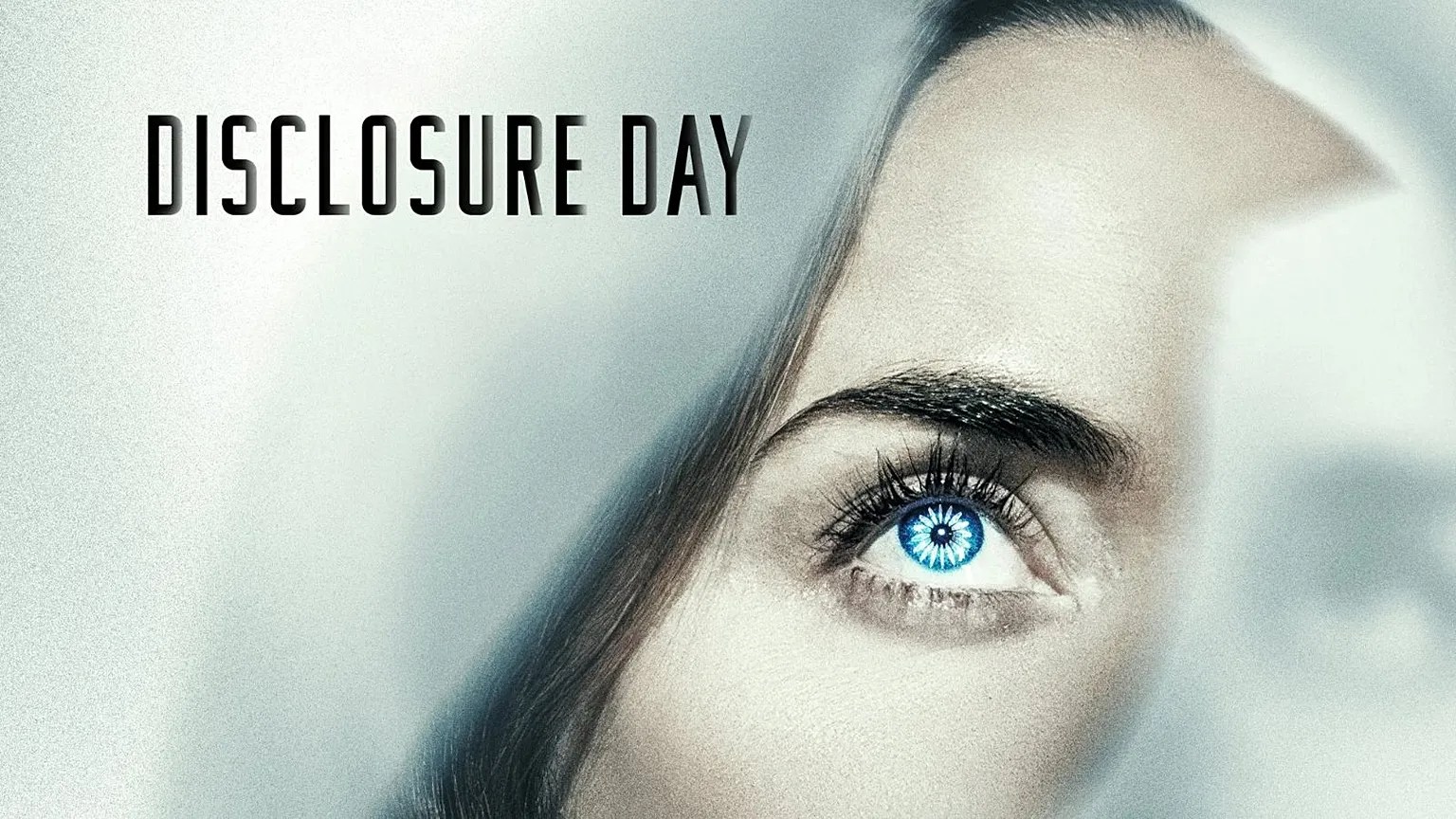
Disclosure Day arrives carrying one of the most loaded premises a modern blockbuster can have: Steven Spielberg, the director who gave us Close Encounters of the Third Kind and E.T., finally returning to the alien contact genre with the full weight of his mythology behind him. The marketing leaned into exactly that. The word-of-mouth coming out of the film, however, tells a different story — and after watching it, the gap between expectation and delivery is difficult to ignore.
The film follows Margaret Fairchild (Emily Blunt), a meteorologist who begins speaking in an alien language mid-broadcast, and Daniel Kellner (Josh O’Connor), a cybersecurity expert who turns out to be the only person on Earth capable of understanding it. Together they become targets of a shadowy organisation dedicated to suppressing extraterrestrial truth, while the film builds toward a disclosure event intended to change humanity’s understanding of its place in the universe. The bones of a compelling film are clearly here. What Disclosure Day does with those bones is where the problems start.
Emily Blunt Carries More Than Her Fair Share
The one unambiguous positive in Disclosure Day is Emily Blunt, who does considerably more with Margaret Fairchild than the screenplay gives her. Blunt brings genuine emotional weight to a character defined by a traumatic event in her past — an alien encounter as a ten-year-old that gave her extraordinary empathic abilities — and she is the only element of the film that creates real investment. The mystery of what happened to her as a child sustains the first two acts more than any of the thriller mechanics do, and when the film finally reveals it, her performance in that sequence is quietly the best single scene in the movie.
Colman Domingo as the central antagonist has the presence the role needs but is underserved by a character whose motivations blur under scrutiny. Josh O’Connor’s Daniel is designed as an understated counterweight to Blunt’s emotional intensity, but the script doesn’t give him enough room to register as anything more than a function the plot requires. Colin Firth, in an unusual supporting role using an alien device with psychic properties, has the film’s most intriguing conceptual material and the least satisfying resolution to it.
Where the Film Breaks Down
The antagonist organisation — a well-funded global conspiracy with surveillance capabilities that dwarf any real intelligence agency — operates with an incompetence so consistent it becomes the film’s most distracting problem. The tension the screenplay requires cannot be built from chase scenes where the pursuers inexplicably abandon tools they clearly possess. The film establishes these capabilities explicitly — satellites, helicopters, access to any camera feed globally — and then ignores them whenever the narrative needs the protagonists to escape. In a thriller about a government cover-up, the cover-up needs to feel formidable. This one feels like a cartoon.
The third act disclosure sequence is where Spielberg’s ambition is most clearly stated — and where the execution falls furthest short. The alien footage that forms the centrepiece of the film’s climactic broadcast, the visual evidence that is meant to change everything, doesn’t land with the weight the film has been building toward. The CGI does not hold up under scrutiny, and the aliens themselves, when revealed, lack the awe that Spielberg’s earlier alien encounters — built on restraint, suggestion, and then a carefully earned reveal — created so powerfully. The disclosure, when it arrives, says less than the journey promised.
The religious subtext is heavyhanded throughout. The film is genuinely interested in the question of how extraterrestrial reality intersects with faith, and there is a thoughtful film somewhere in those themes. What’s on screen feels more like Spielberg working through something personal than a fully realised argument, and the scenes that engage with it most directly tend to pull the film away from the tension it needs rather than deepening it.

The Good, The Bad, & The Ugly
| The Good | The Bad | The Ugly |
|---|---|---|
| Emily BluntThe best thing in the film by a significant margin. She creates real emotional investment in a character the script underserves and makes the mystery of Margaret’s past the film’s most compelling element. | The Antagonists Are IncompetentAn organisation with unlimited surveillance capability that consistently fails to surveil. The thriller mechanics require the bad guys to be a credible threat. They aren’t, and every chase scene suffers for it. | The Disclosure ItselfThe climactic alien reveal — the payoff the entire film builds toward — lands with a visual quality that undercuts the scale of the moment. The CGI doesn’t hold, and the message delivered is smaller than the film has earned. |
| The Film Holds AttentionDespite its problems, the mystery of what the disclosure will be and what happened to Margaret as a child sustain genuine curiosity for most of the runtime. Spielberg knows how to hold an audience even when the material isn’t there. | Too Long, Too SlowAt 2h 25m, the film has enough runway to fix most of its problems — and uses much of that time spinning its wheels in the middle act instead. | Powers That Appear When ConvenientThe film introduces and then selectively forgets the rules of its own central MacGuffin. Abilities manifest when the plot needs them and disappear when they would resolve the drama too quickly. It’s frustrating because it’s lazy. |
| Colman Domingo’s PresenceUnderused, but undeniable. Even in an underwritten antagonist role, he brings gravity to every scene. | The John Williams Score Doesn’t RegisterA John Williams score for a Spielberg alien film should be an event. This one leaves no impression. That alone says something about where the film’s energy went. |
The Verdict
Disclosure Day is not a bad film so much as a deeply disappointing one — and those are different problems to have. Spielberg still knows how to hold your attention across a long runtime, Emily Blunt delivers something worth watching, and the film’s core question is genuinely interesting. But the execution fails the premise at almost every critical juncture: the thriller mechanics don’t generate tension, the visual centrepiece of the climax doesn’t deliver the awe it promises, and the screenplay introduces rules it immediately stops following. The result is a film you watch hoping it will become the movie it thinks it is — and it never quite gets there.
For more film coverage, check out our full reviews section.