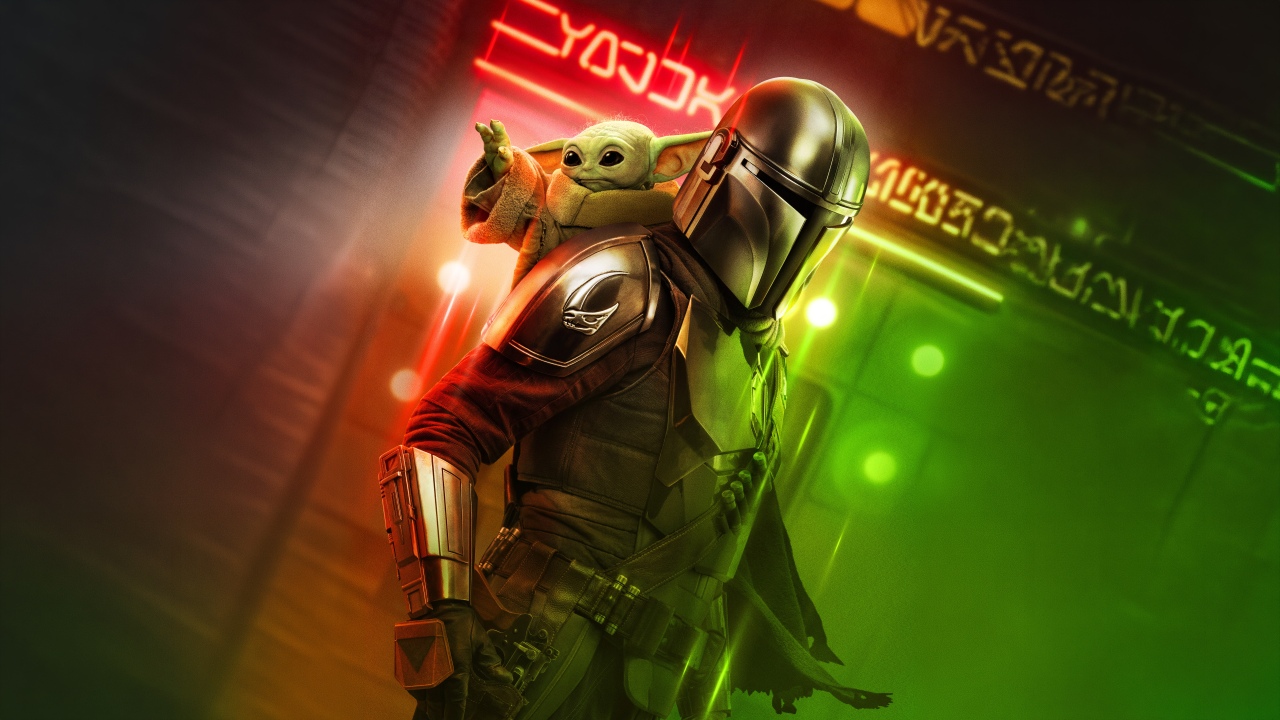
Star Wars: The Mandalorian and Grogu is a very good three-episode arc of The Mandalorian expanded to 2 hours 12 minutes, shot with a film budget, and released in theaters as the franchise’s first big-screen outing in years. Whether that’s exciting or deflating depends entirely on what you were hoping it would be. As a film, it’s polished, likeable, and inconsequential. As a Star Wars event — the kind that puts lines around the block and gives you that specific tingle in the chest — it doesn’t come close. And there’s something quietly fascinating about a movie that costs this much, gets this much attention, and ultimately dares so little.
Directed by Jon Favreau and co-written with Dave Filoni and Noah Kloor, The Mandalorian and Grogu is technically the best Star Wars theatrical release in nearly a decade — which says less about how good it is and more about how poor the competition has been. It earns its place. It just doesn’t earn a legacy.
The Mandalorian and Grogu — What’s the Plot?
Set during the New Republic era, Din Djarin (Pedro Pascal, helmeted as always and reliably excellent when given actual action beats to play) is working as a contract bounty hunter for Colonel Ward, played by Sigourney Weaver in a role that is frustratingly underused. His mission: travel to the Hutt homeworld, retrieve Jabba’s son Rotta the Hutt — voiced by Jeremy Allen White of The Bear fame — and return him safely in exchange for information the New Republic needs. Rotta has been turned into a gladiatorial fighter, and the Hutt twins controlling the planet have no intention of letting anyone walk away cleanly.
It’s a solid premise that plays out in essentially three acts: an opening sequence that’s genuinely thrilling, a bloated middle that loses momentum completely, and a climax that delivers the action spectacle the budget demands. The opening — Mando hunting down Imperial holdouts, toppling AT-ATs with efficiency and style — is the best Star Wars action since the series’ best television moments. If the rest of the film had matched that opening, we’d be writing a different review.
Where It Loses the Plot: The Safe Middle Act
The Mandalorian and Grogu’s most significant problem is structural. After an exceptional opening, the film settles into a comfortable, low-stakes adventure that never creates any genuine tension. Grogu is in “danger” at various points, but nobody watching actually believes it. The Hutt twins — the film’s primary antagonists — are never threatening enough to carry the weight of a two-hour movie, and Jeremy Allen White’s Rotta, digitally transformed into a CGI slug with his dialogue slowed to sound appropriately Hutt-ish, wastes his talent in a role that removes every quality that makes him compelling as a performer.
There’s also an extended sequence — a kind of Grogu solo adventure through an alien environment — that starts as charming fan service and continues well past the point where it should have ended. The film’s editing doesn’t serve it well in these moments. The beats that should create emotional resonance feel dutiful rather than earned. Characters end the film in essentially the same position they started it. Nothing changes. Nothing is learned. It’s the cinematic equivalent of a side quest you complete because it was there, not because it mattered.
What Works: The Budget, Favreau, and Grogu
What’s worth paying for is the film’s visual scale. This is what $160 million buys you beyond what the Disney+ series could offer — properly enormous action sequences, creature effects that dwarf the small-screen versions, and a gladiatorial arena sequence that plays like the live-action Star Wars arena scene nobody knew they wanted. There’s a sequence involving stop-motion-style animation that deliberately evokes classic Star Wars visual language, and it’s charming in a way that lands despite the film’s wider shortcomings.
The Mandalorian theme, rendered in Ludwig Göransson’s full film orchestration, remains genuinely great. The film makes excellent use of Zeb Orrelios for fans of the animated series. Babu Frik’s return is exactly the kind of cheerful fan service that works precisely because it doesn’t overstay its welcome. And Grogu — via a mix of puppetry, miniature work, and CGI — remains one of the most effective practical-meets-digital creature achievements in recent blockbuster filmmaking. The little guy still works. He always works.
Sigourney Weaver Deserved More Screen Time
The single most frustrating thing about The Mandalorian and Grogu is Sigourney Weaver’s Colonel Ward. She’s clearly been brought in to fill the “veteran female authority figure” role the franchise has needed since Carrie Fisher, and she plays it with exactly the kind of authoritative snap that the role demands. Then she disappears. The film keeps cutting away from what could be a genuinely compelling dynamic between her character and Mando to spend more time with antagonists who aren’t half as interesting. This is a casting decision that paid a marquee actor to appear for what amounts to extended cameo runtime. A sequel can and should fix this.
The Good, The Bad, & The Ugly
| The Good | The Bad | The Ugly |
|---|---|---|
| The Opening ActGenuinely thrilling — Mando hunting Imperial holdouts with efficiency and style, including an AT-AT sequence that delivers exactly what a theatrical Star Wars experience should open with. | Zero Narrative StakesNobody is ever in real danger. No character grows. No relationship changes. The film ends with everyone in essentially the same place they started. Inconsequential by design. | Sigourney Weaver Gets Maybe 10 MinutesYou hired one of cinema’s greatest genre actors to anchor a Star Wars movie and gave her extended cameo runtime. Criminal misuse of a marquee casting decision. |
| Theatrical Scale VisualsThe film budget delivers what the TV show couldn’t — properly enormous action set pieces, creature work, and a climactic battle that genuinely justifies the theatrical experience. | The Bloated Middle ActAn extended Grogu solo sequence and underdeveloped Hutt antagonists kill the momentum built by the opening and never recover it before the third act rescue. | |
| Göransson’s Score and Fan Service MomentsThe Mandalorian theme in full film orchestration remains great. Zeb Orrelios’ inclusion, the stop-motion aesthetic sequence, and Babu Frik’s return are all cheerful, well-deployed nostalgia. | Jeremy Allen White as RottaDigital processing erases every quality that makes White compelling as a performer. Great actor, wrong approach — the voice casting doesn’t serve the character or White. | |
| Grogu Is Still GroguThe practical-meets-digital creature work remains exceptional. He’s as effective and endearing as ever, which is genuinely impressive seven years into his pop culture dominance. |
The Verdict: The Best Star Wars in a Decade, Which Tells You Something
Star Wars: The Mandalorian and Grogu is a fine movie. It is competently made, visually impressive, consistently watchable, and occasionally very good. It is not a film that will be remembered. It is the safest possible use of a theatrical Star Wars release — a polished side quest dressed in a movie’s clothing, made by people who love the franchise but were asked to deliver a product rather than a vision.
If you’re a Mandalorian fan, see it in theaters — the scale and the Göransson score reward the big screen experience. If you’re casually Star Wars-curious, wait for Disney+. Nothing is spoiled by the wait. For more movie and TV coverage, check out our full reviews section.
Score Breakdown