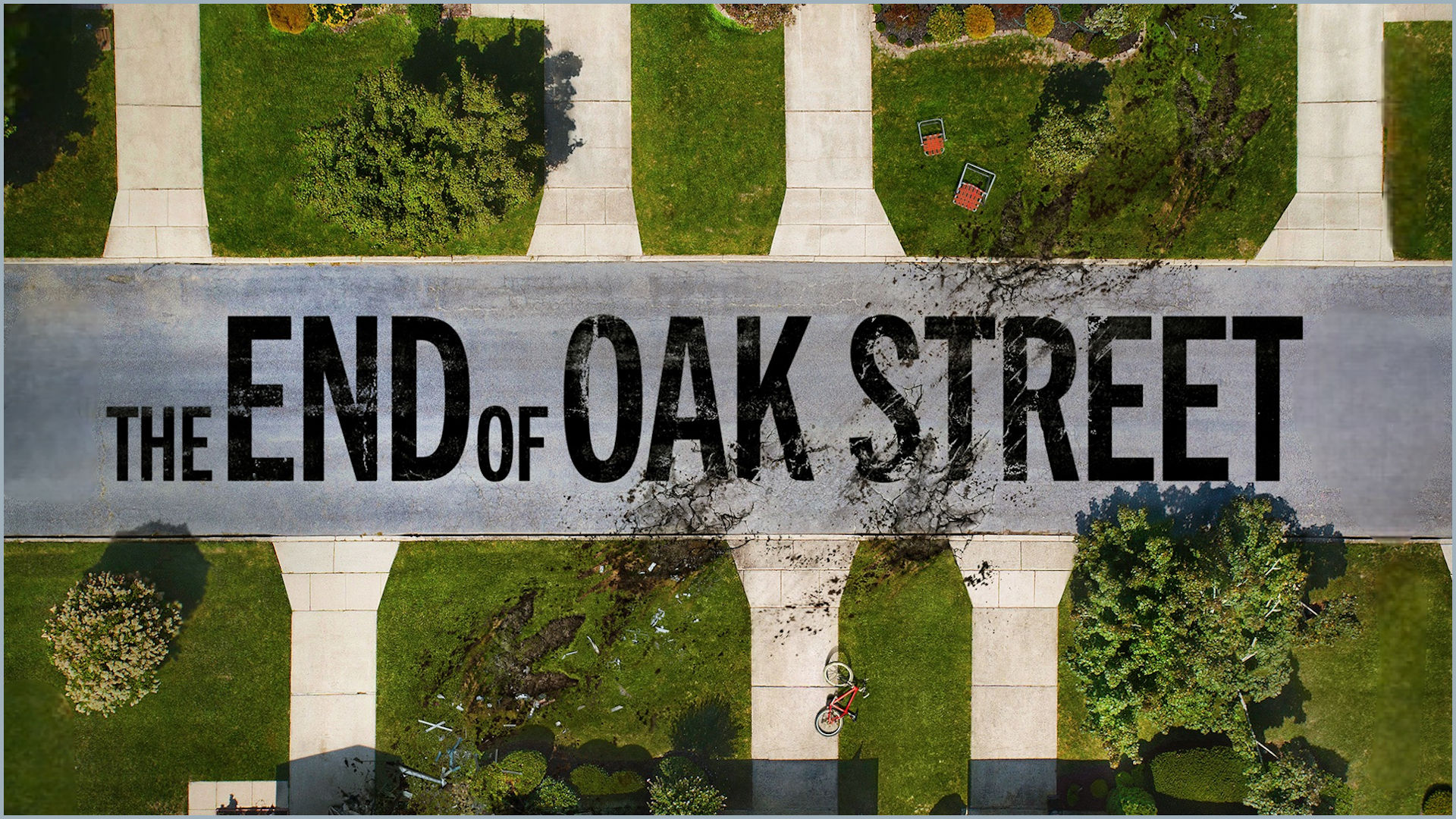
The End of Oak Street is an $85 million original-IP dinosaur movie playing in wide release in 2026, which is by itself remarkable enough to note. No franchise, no pre-existing property, no numeral in the title. Just a neighbourhood, a cosmic event, and a great many things with teeth.
David Robert Mitchell — the director of It Follows and Under the Silver Lake — is an unexpected fit for a crowd-pleasing summer creature feature, and produced by J.J. Abrams and Bad Robot, the film wears its Amblin influences openly. Suburban 1982, kids on bikes, families who were fine until they very much weren’t.
It is also the most divided our reviewers have been on anything this year.
Two Reviewers, Two Very Different Films
The gap comes down to what you want from it. As a piece of sustained dinosaur spectacle it’s genuinely excellent. As a story that holds together when you think about it afterwards, it has real problems — and how much those matter is entirely a question of how you watch films.
The Cast
Anne Hathaway is the best thing in it, and that was the one point of complete agreement between our reviewers. She’s in the middle of a genuinely strong run, and she anchors this with real conviction — playing a mother whose competence arrives under circumstances nobody could prepare for.
The Jurassic Promise It Actually Keeps
The film also does something the Jurassic movies increasingly stopped doing: it treats the dinosaurs as animals. They hunt, they kill, they defecate, they behave like creatures with their own priorities rather than horror-movie antagonists waiting for their cue. It makes the set pieces feel less staged and more genuinely dangerous.
And there are a lot of those set pieces. Near-escapes, sudden losses, and a handful of moments our reviewer flatly didn’t see coming. The film is not shy about killing people.
It Looks and Sounds Superb
Cinematographer Mike Gioulakis — a Mitchell regular, and the eye behind a run of distinctive genre work — delivers something that genuinely earns a big screen. The film was shot digitally but reads as film, to the point where our reviewer noted being unable to tell, which is a real technical achievement and worth flagging on its own.
Michael Giacchino’s score is the other standout — a proper banger, in our reviewer’s words. There’s a neat symmetry in the composer of the Jurassic World films scoring the movie that finally does what those films didn’t.
Mitchell’s presence is felt throughout. This is a crowd-pleaser, but it’s a crowd-pleaser made by someone with indie sensibilities and, as our reviewer put it, a bit of a nasty streak. Nobody would mistake this for a studio hack handed a budget.
A Surprisingly Brutal PG-13
Where It Comes Apart
The criticism is concentrated almost entirely in the back half, and the core problem is that the film introduces a complication it hasn’t fully thought through.
The most interesting thing about that list is the second item, because both reviewers arrived at it independently despite completely opposite overall verdicts. One found it a fascinating unintended wrinkle; the other found it the point where the film lost him entirely. Either way, it’s what people are going to be arguing about — and the fact that the star has since been publicly discussing an alternative, darker ending suggests the filmmakers knew it was a live question.

The Good, The Bad, & The Ugly
| The Good | The Bad | The Ugly |
|---|---|---|
| It Delivers the Suburban Dinosaur MovieThe film Jurassic World promised and never made. Dinosaurs through the front yard, an ordinary evening turned inside out, and creatures written as animals with their own priorities rather than monsters on cue. Sustained, genuinely tense spectacle. | Third-Act Logic Falls ApartThe late-stage mechanics raise questions the film never addresses, and the resolution depends on a chain of events that doesn’t survive scrutiny. One reviewer found this fatal to the whole thing. | The Ending Is Darker Than It ThinksBoth reviewers independently flagged it despite opposite verdicts — the film plays its finale as feel-good, and what it actually depicts is genuinely unsettling. It’s what everyone will be arguing about. |
| Anne HathawayThe one point of total agreement between our reviewers. She anchors the film completely, and she’s in the middle of a genuinely strong run. Comfortably the best thing on screen. | Thin CharactersHigh-concept premise, lightly sketched people. One reviewer never came to care about the family, which makes the danger land as spectacle rather than stakes. | A Vestigial Bully SubplotThe film eventually acknowledges that its school-bully thread no longer matters — which rather invites the question of why it’s there. Amblin furniture that doesn’t earn its place. |
| Superb CraftMike Gioulakis’s photography reads as film despite being shot digitally, Michael Giacchino’s score is a proper banger, and Mitchell brings real indie sensibility and a nasty streak to a studio crowd-pleaser. It earns the big screen. | Characters Act Stupidly on CueRepeated failures to react sensibly to obvious threats, plus at least one contrivance existing purely to rescue someone. It undercuts tension the direction otherwise builds well. | A Rough PG-13Substantial body count, visible dismemberment and one very bloody creature sequence. Effective gateway horror in the Jurassic Park tradition — but not what the rating leads you to expect. |
The Verdict
The End of Oak Street is an $85 million original dinosaur movie with no franchise behind it, playing in wide release, made by a genuinely interesting director and shot beautifully. Whatever else is true, that’s a thing worth having — and if you spend any time complaining about the state of theatrical releases, this is precisely the sort of film that argument is supposed to be about.
As spectacle it works. The dinosaurs are treated as animals rather than monsters, the set pieces are tense and frequently brutal, Giacchino’s score is excellent, Gioulakis’s photography is superb, and Anne Hathaway holds the whole thing together with real conviction.
The script is the problem. The characters are thin, a subplot exists that the film itself admits doesn’t matter, and the third act introduces complications it hasn’t reasoned through — landing on an ending that plays as uplifting while depicting something considerably darker. That both our reviewers noticed the same thing from opposite ends of the spectrum tells you it isn’t a matter of taste.
The honest split: if you want the suburban dinosaur invasion movie the Jurassic sequels never made, go — you’ll have a great time and probably won’t care about the rest. That’s genuinely what one of our reviewers experienced, and the 86% critics’ score suggests plenty of others did too.
If you’re the kind of viewer who picks at logic on the drive home, expect the third act to test you. The lower audience scores on IMDb and Letterboxd suggest a fair few people fell into that camp.
Worth seeing on a big screen, worth supporting as original genre filmmaking, and worth arguing about afterwards. Just don’t expect it to hold up under a second look.
For more movie and game reviews, check out our full reviews section.