

Some games try to simulate reality, meticulously recreating the physics of a race car or the historical accuracy of a war zone. Then, there is Tingus Goose. This is a game that looks at reality, laughs hysterically, and decides that what the world really needs is a simulator where you grow a massive goose neck out of a human torso, water it until it bursts through the stratosphere, and profit from the “durable fetuses” that tumble out of it like a biological Pachinko machine.
Developed by SweatyChair and born from the twisted, surreal mind of animator MasterTingus, Tingus Goose is technically labeled as a “casual idle game”. But calling it just an idle game feels like calling the Grand Canyon just a hole in the ground. It is an experience. It is a psychedelic experiment in resource management. It is, quite possibly, the weirdest six dollars you will spend on Steam this year.
The Miracle of Life (According to a Madman)
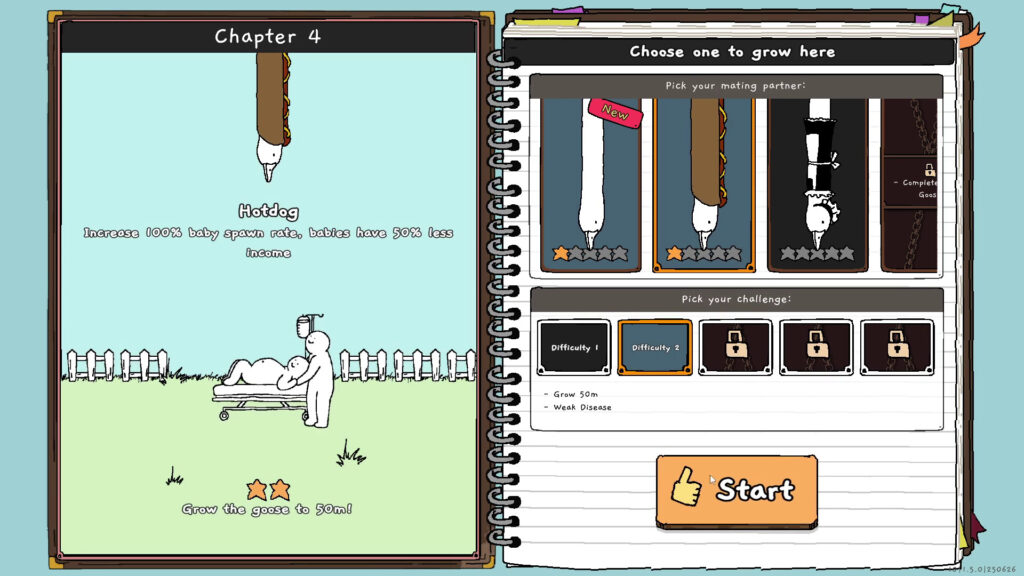
The premise of Tingus Goose is delightfully absurd. You play as… well, it’s unclear who you are, but your role is that of a caretaker for a series of patients. These patients have “conveniently empty torsos” ripe for planting. You pop a seed in, grab a watering can, and watch as a grotesque yet charming goose neck erupts from the patient, stretching endlessly upward.
Your goal? To grow your goose tall enough to reach the clouds and kiss its lover. It’s a tale as old as time: boy meets girl, boy gets planted in a human host, boy grows 500 feet tall to smooch girl.
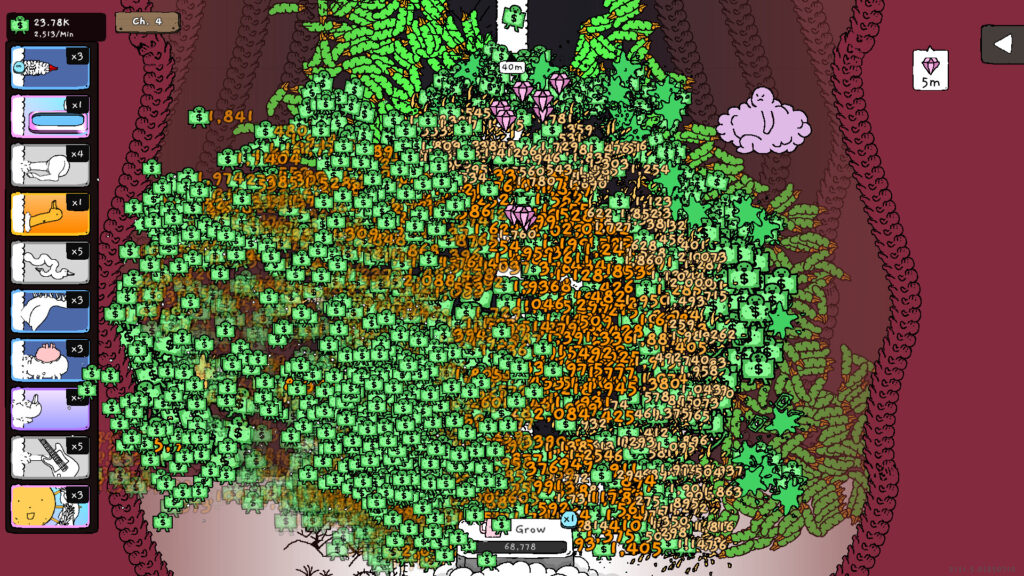
To achieve this height, you need money. And in the world of Tingus Goose, cash comes from babies. As the goose grows, it sprouts branches that release “Babies”—which the game helpfully informs us are “nature’s most renewable source of cash”. These aren’t human babies, exactly. One Steam review describes them aptly as “durable fetuses related to the geese”7. They fall from the tree, bounce off various obstacles you place, and generate currency upon impact.
It is a loop that sounds horrific on paper but is executed with such vibrant, cheerful absurdity that you can’t help but smile. The game “oozes a kind of happiness” despite the body horror, creating a weirdly wholesome vibe amidst the madness.
Gameplay: Plinko Meets Genetic Engineering
At its heart, Tingus Goose plays like a chaotic game of Plinko or The Incredible Machine. While it has idle elements—your goose will continue to grow and earn money while you’re away—the active gameplay is surprisingly strategic.
Your primary interaction involves placing “Blossoms” on the growing goose neck. These Blossoms act as bumpers for the falling babies. They come in three distinct flavors:
- Human Blossoms: Surreal body parts like teeth, eyes, or miniature humans.
- Farm Blossoms: Goose-themed bumpers that interact with the babies in avian ways.
- Object Blossoms: Utility structures like roller coasters or “Round Poop” stairs that redirect the flow of traffic.
You can’t just slap these down randomly. The game features a “Specimen” system that encourages “runaway synergies”. For example, you might slot a specimen that multiplies the value of a baby after it hits a Human Blossom, but only if it subsequently hits a Farm Blossom. This forces you to think critically about your tower’s layout. You become an architect of chaos, constantly rearranging teeth and roller coasters to maximize the “bounce efficiency” of your falling offspring.
The shop system adds another layer of depth. As you earn cash, you can buy upgrades and new Blossoms. A thoughtful “Lock” feature allows you to save items for later if you can’t afford them yet, a quality-of-life addition that dedicated min-maxers will appreciate.
A Feast for the Eyes (And Ears)
Visually, Tingus Goose is a masterpiece of pixel art body horror. The art style is “chunky” and incredibly distinct, featuring over 150 bits of unique content to unlock. As you progress through the game’s 17 chapters, the imagery gets progressively stranger. You’ll witness humans transforming into food, pregnancy bulges appearing in defyingly incorrect places, and geese merging with creatures in ways that defy biology.
Yet, it never feels scary. It feels like a fever dream you don’t want to wake up from. The animations have a “weird sort of internal logic” to them. Watching a “human centipede train baby” chug along a track made of intestines should be gross, but here, it’s just another Tuesday.
Complementing the visual insanity is a soundtrack that fits perfectly by not fitting at all. The game is scored with smooth, elevator-style jazz. One player noted it was “reminiscent of the jazz in Transport Tycoon”. This relaxing, sophisticated audio backdrop provides a hilarious contrast to the on-screen chaos. You’re watching a goose explode out of a guy’s stomach while a saxophone gently croons in the background. It’s genius.
Technical Hiccups in the Goose Engine
For all its charm, Tingus Goose isn’t without its flaws. The game relies heavily on physics simulations to handle the hundreds of babies bouncing down the screen at any given moment. In the late game, when your tower is massive and the entity count is high, the engine can struggle. Multiple reviews cite that the framerate can “slow to a crawl” or become “functionally unplayable” when there is too much happening at once.
Visual clutter is another issue. Some of the larger Blossoms, specifically the “Clicker Beam,” are opaque and massive, making it nearly impossible to see what is happening behind them. When you are trying to optimize your layout, having your view blocked by a giant flashing object can be frustrating. Players have suggested a “visibility mode” to toggle transparency when placing items, which would be a welcome addition in future patches.
Additionally, for a game that rewards optimization, the numbers can sometimes be vague. Players have noted a “lack of info” about specific stats or challenge requirements. You are often left to experiment and guess which building counts as a “support” structure versus a “production” structure.
Steam Specifics
It is worth noting that this version of Tingus Goose is the “Enhanced for Steam” 1.0 release. Unlike the mobile version, this PC port has stripped out all microtransactions. There are no ads to watch for bonuses, no premium currency packs to buy. You pay the entry fee, and you get the whole, unadulterated goose experience. It’s a refreshing change of pace in a genre often plagued by monetization.
For Steam Deck users, the game is rated as Playable. The chapter-based structure makes it ideal for short sessions, though the late-game performance dips might be more noticeable on the handheld hardware.

Pros & Cons
| Pros | Cons |
| ✅ Unmatched Originality: A genuinely unique blend of idle strategy, body horror, and comedy. | ❌ Performance Issues: Late-game physics can cause significant lag and framerate drops. |
| ✅ Deep Strategy: Blossom placement and synergies offer satisfying “puzzle-like” gameplay. | ❌ Visual Clutter: Large items can block your view, making placement difficult. |
| ✅ No Microtransactions: A fully premium experience tailored for Steam players. | ❌ Vague Mechanics: Some challenge requirements and stats lack clarity. |
| ✅ Stunning Art & Audio: MasterTingus’s surreal pixel art paired with smooth jazz is a vibe. | ❌ Short Runtime: The main story takes about 10 hours, leaving some wanting more. |
Tingus Goose: This is not a game for everyone. If you are squeamish about "unusual body transformations" or prefer your games to make logical sense, you should probably stay away. But for everyone else, Tingus Goose is a breath of fresh, weird air. It manages to be engaging, funny, and satisfyingly strategic all at once. It captures the joy of discovery—specifically, the discovery of "what horrible thing will this goose turn into next?" It’s a game that makes you ask questions like "Why is my goose girlfriend sauce-flavored?" and simply accept that there is no answer. In a sea of generic clickers and serious simulations, Tingus Goose stands tall (literally). It’s a 10-hour fever dream that proves indie games are still the best place to find true, unbridled creativity. – Obsidian