
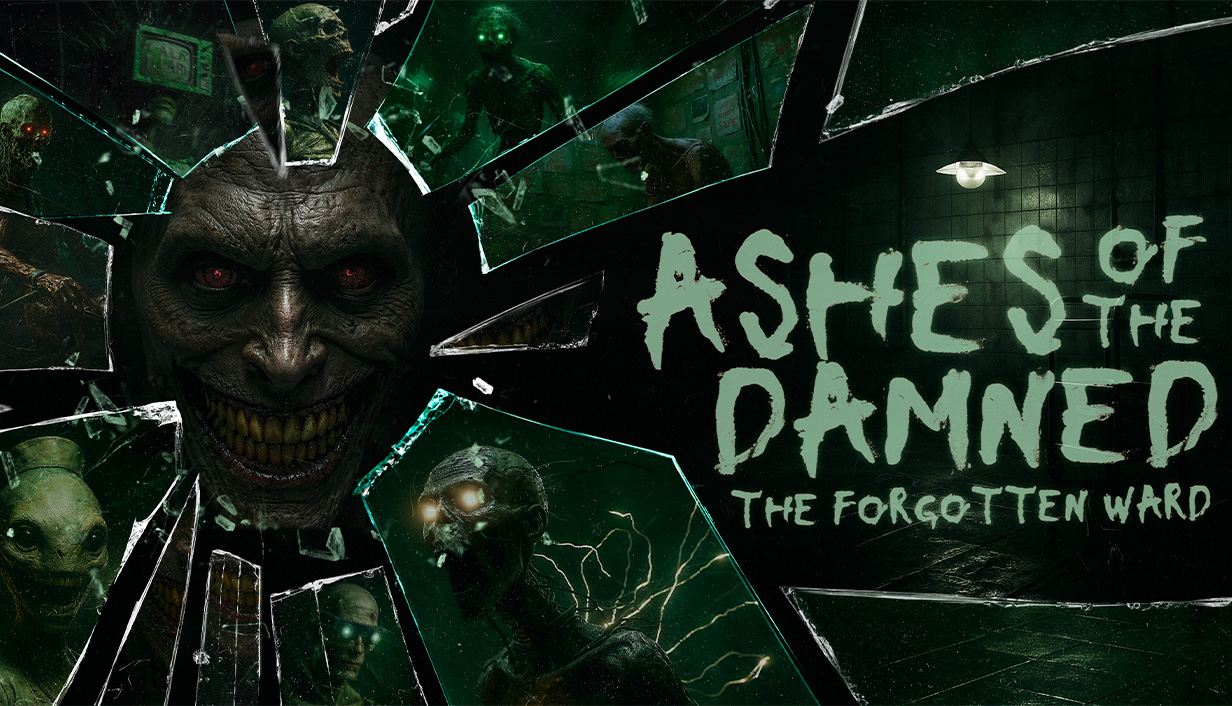
The developer flags this openly on the store page, and we’re repeating it here because it’s the sort of subject matter that lands very differently depending on who you are. If mental illness or institutional treatment is close to home for you, this is worth thinking about rather than discovering mid-playthrough.
Ashes of the Damned: The Forgotten Ward begins with the oldest setup in horror — you wake somewhere you don’t recognise with no memory of arriving — and then does something more interesting with it than most. The exits won’t open. The lights fail without warning. And the asylum you’re trapped in turns out to be somewhere you have a connection to.
It’s the work of a single developer, Jean-Pierre Delport, working under Crimson Cloud Games out of Dalian, China, built in Unreal Engine 5.5.4. That context matters for what follows, because the scope is exactly what one person can hand-build — and the parts that work, work properly.
Helplessness Is the Whole Design
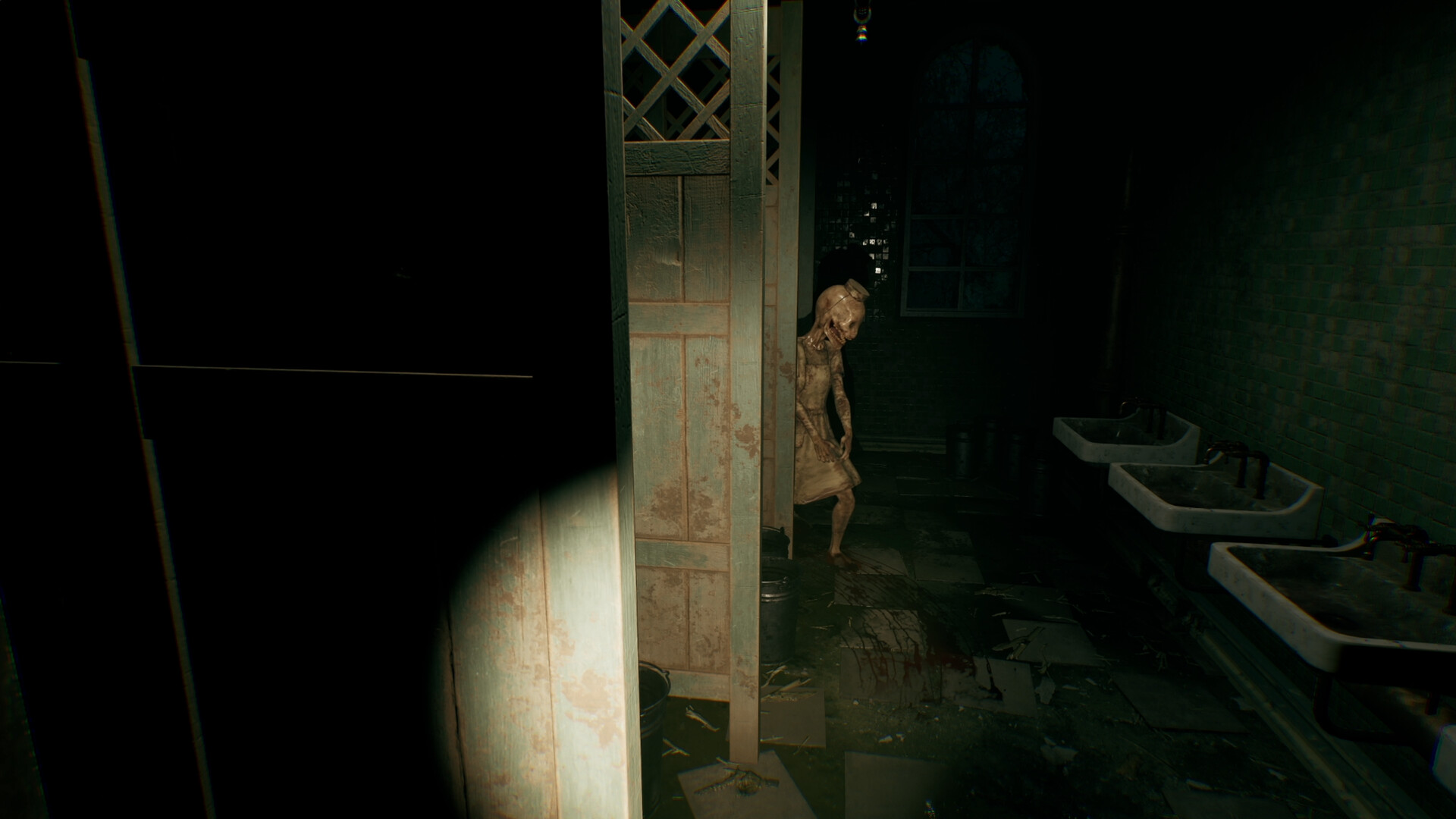
Our verdict on it: Crimson Cloud Games crafted a genuinely unsettling experience that nails psychological horror through helplessness and atmosphere. The powerlessness isn’t a limitation being worked around; it’s the actual mechanism, and it holds.
The game reinforces it in small ways too. Encounters escalate — some are brief warnings, others put you in real danger — and the game explicitly warns against assuming a room is safe just because you’ve already searched it. That single rule does a lot of work, because it means backtracking, which is normally the safest activity in a horror game, never fully relaxes.
The Loop
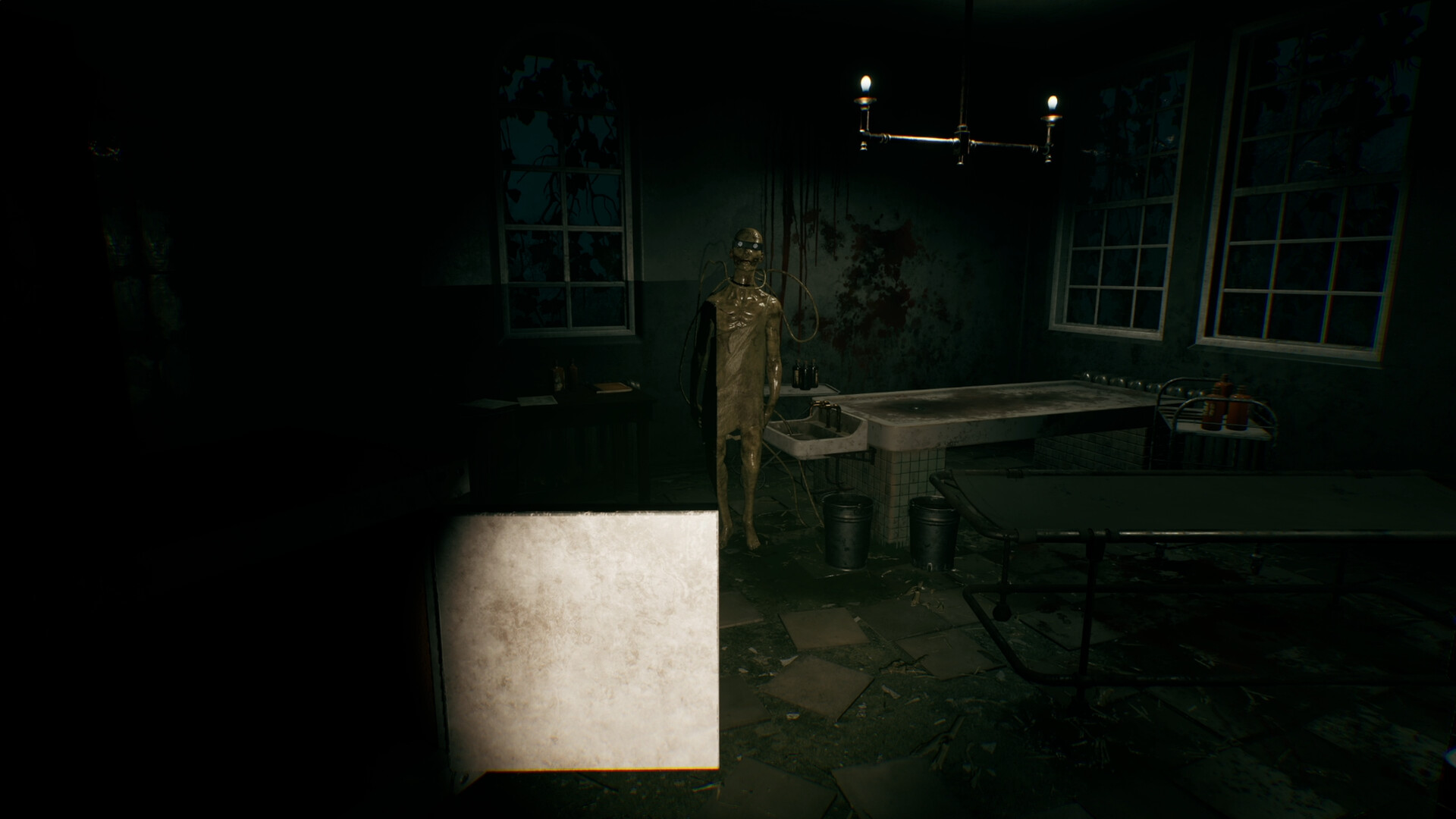
Multiple floors of a handcrafted asylum — patient rooms, treatment areas, offices, communal wards and forgotten medical spaces.
Patient files, photographs and personal belongings, each one a fragment of the ward’s history and your place in it.
A strange pair of glasses reveals hidden puzzle pieces scattered through the building.
Rebuild a damaged photograph from those pieces to find the combination to a locked safe.
The Storytelling Does the Heavy Lifting
With no combat and no inventory management to speak of, the game leans almost entirely on environmental storytelling — and it’s structured thoughtfully. Certain rooms trigger the protagonist’s own thoughts, giving you his reaction to what happened in that space rather than leaving you to interpret a bloodstain unaided.
That’s a smart middle ground. Pure environmental storytelling can leave players missing the point entirely; full narration can flatten it. Tying commentary to specific rooms means the game speaks up when it needs to and shuts up otherwise.
The Spirit Vision and photograph reconstruction give the exploration a spine. It’s not a complex puzzle by design-heavy standards, but it means searching rooms has a mechanical payoff rather than being purely optional lore-hunting — and the safe it opens keeps the investigation moving.
What One Person Built
It also runs well. We found it very well optimised on Steam Deck — worth noting since Valve hasn’t yet issued a compatibility rating, so the store page will tell you “Unknown” rather than anything useful.
Things to Know Going In

The Good, The Bad, & The Ugly
| The Good | The Bad | The Ugly |
|---|---|---|
| Helplessness That Actually WorksNo combat, no hidden power fantasy — when something finds you, you run. Removing the fallback means tension has to come from atmosphere and uncertainty alone, and it holds. Genuinely unsettling rather than merely loud. | No Power Curve by DesignIf you want horror that eventually lets you fight back, this deliberately never does. That’s the point, but it’s not what everyone wants from the genre. | Difficult Subject MatterPsychiatric abuse, restraint and electroshock are the substance of the story, not set dressing. Handled seriously rather than exploitatively, but genuinely distressing for some — and worth deciding on before you buy, not during. |
| Room-Triggered NarrationCertain spaces prompt the protagonist’s own reaction to what happened there — a smart middle ground between pure environmental storytelling that players miss and constant narration that flattens everything. | Scripted Rather Than SystemicEncounters are authored, which paces a first playthrough well but makes a second considerably less unpredictable. Limited replay value as a result. | Steam Deck Is UnratedValve hasn’t assessed it, so the store page says “Unknown.” We found it very well optimised — but you’re taking our word for it rather than a verified badge. |
| Strong Value and a Real Demo$7.99 for a focused, handcrafted single-location horror story, with a substantial free demo covering the core systems. For subject matter this specific, being able to try first genuinely matters. | Compact ScopeOne asylum, one contained mystery, and a runtime to match. Honest for a solo project at this price, but manage expectations on length. | Puzzles Are LightSpirit Vision and the photograph reconstruction give exploration a mechanical spine, but nobody’s buying this for puzzle depth. They’re structural rather than taxing. |
The Verdict
Crimson Cloud Games crafted a genuinely unsettling experience that nails psychological horror through helplessness and atmosphere. For a solo-developed game at under eight dollars, that’s a real achievement — and it comes from a design decision most horror games flinch away from.
Removing combat entirely means there’s nowhere to hide when the atmosphere fails, and the Forgotten Ward mostly doesn’t fail. The escalating encounters, the warning not to trust rooms you’ve already cleared, and the room-triggered narration all pull in the same direction: you are not in control here, and the building knows more than you do.
The limits are the honest limits of scope. It’s compact, its scares are scripted rather than systemic, and its puzzles are structural rather than demanding. None of that is a failure — it’s a solo developer building something focused instead of something overextended, which is the right call.
The honest read: if you like helpless-protagonist horror and the subject matter doesn’t put you off, this is a very easy recommendation at $7.99. Try the demo first — it’s substantial, and it’ll tell you within twenty minutes whether the atmosphere lands for you.
If depictions of psychiatric abuse are difficult for you, skip it. The game treats them seriously rather than exploitatively, but seriously is still heavy, and that’s a fair reason to sit this one out.
A focused, confident piece of horror from one person. We’d be interested to see where the anthology goes next.
For more game reviews, check out our full reviews section.