
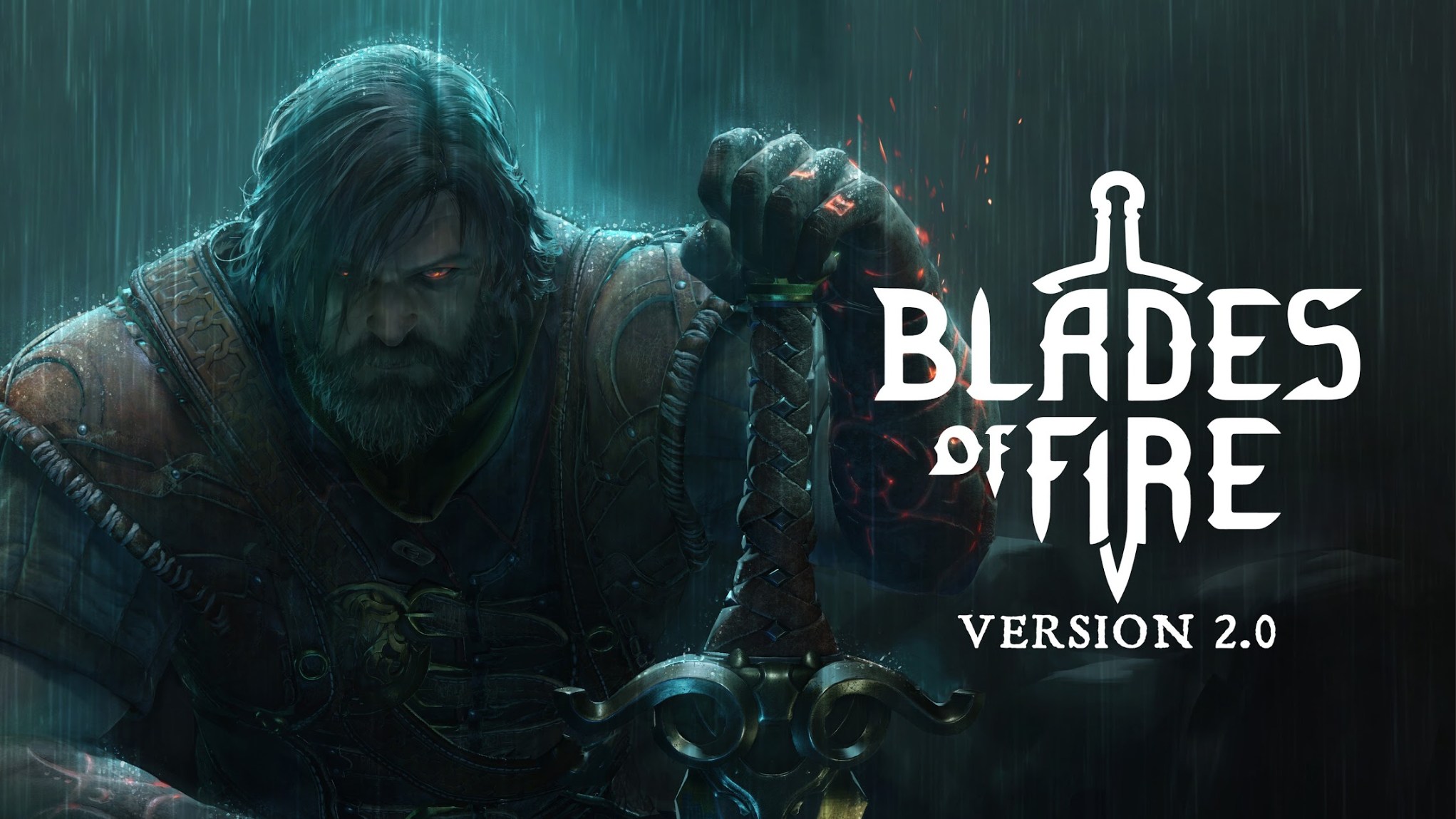
Blades of Fire is the kind of game that earns genuine admiration even when it frustrates you. Developed by MercurySteam — the studio behind Metroid Dread and the Castlevania: Lords of Shadow series — and published by 505 Games, this dark fantasy action-adventure is now available on Steam with a substantial Version 2.0 overhaul that adds New Game Plus, a new Titanium difficulty tier, Boss Revival Mode, and significantly more. The result is the most complete version of an already ambitious game, arriving at a moment when the studio needs a win more than ever.
At its best, Blades of Fire delivers something genuinely rare: a combat and crafting system built around ideas that feel original in a genre that rarely surprises. At its worst, it buries those ideas under patience-testing design choices that push players away right when the game should be pulling them in. Whether you stay depends almost entirely on your tolerance for friction.
Blades of Fire’s Steel Is Its Greatest Strength
The central concept of Blades of Fire is genuinely inspired. You are Aran de Lira, the last warrior capable of forging true steel in a world where the new Queen’s curse has turned all metal to stone. At forge points scattered across the world, you craft your weapons through a hands-on blacksmithing minigame — striking, shaping, and tempering your blade with a limited number of hammer blows. The shape you achieve determines the weapon’s durability and how many times it can be repaired before it breaks permanently. The material determines its properties against different enemy types.
This is not crafting as a menu interaction. It’s crafting as commitment. There is no endless loot loop, no gear treadmill. Every weapon you carry reflects deliberate choices: what enemies you expect to face, what style of warrior you want to be, what trade-offs you were willing to make at the anvil. When a weapon breaks after a hard-fought stretch and you return to forge its replacement, the loss and renewal carry actual weight. It’s one of the most conceptually satisfying progression systems in action gaming in years.
Combat: Deliberate, Directional, and Divisive
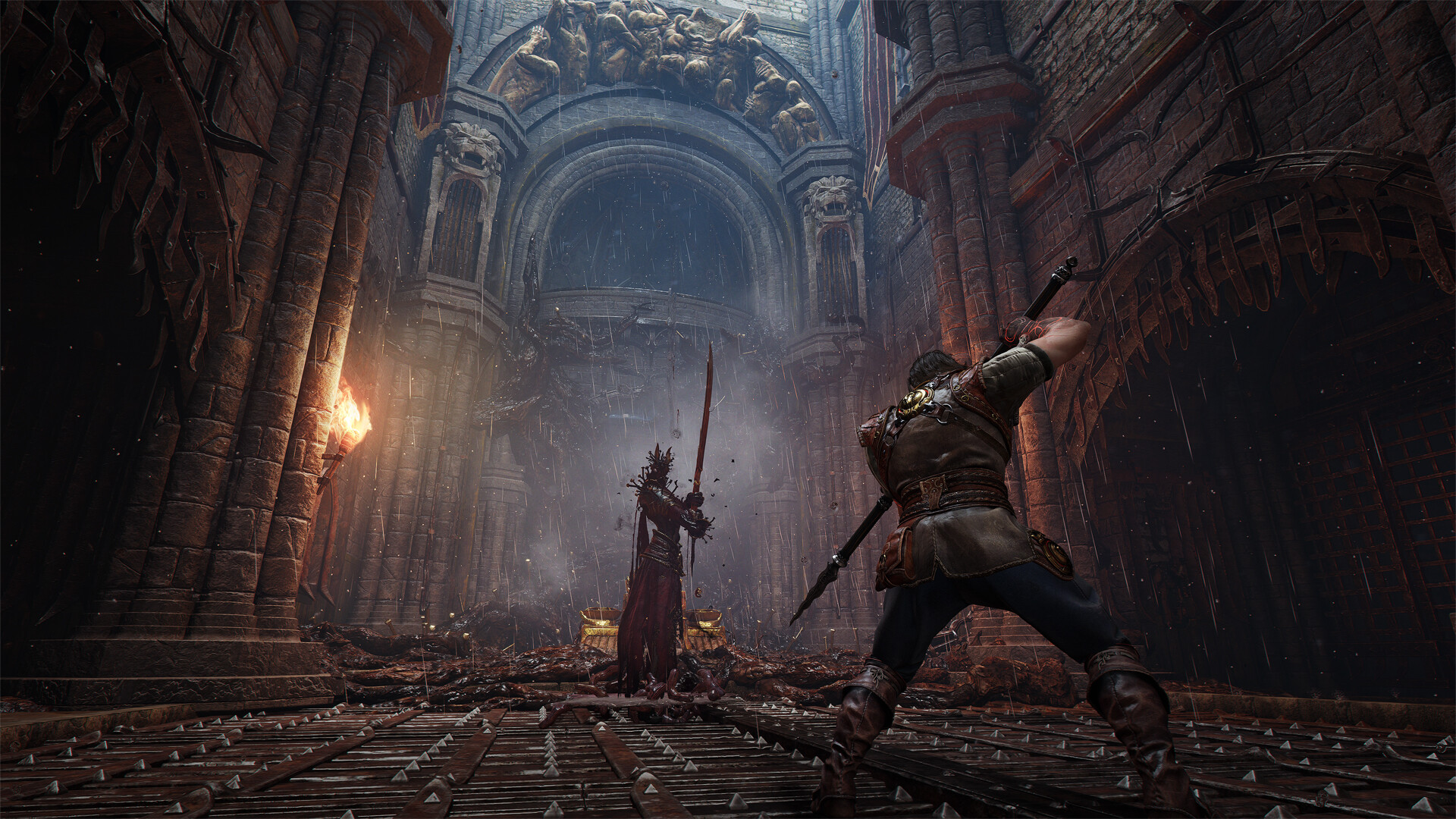
Combat in Blades of Fire is built around a directional system that maps each face button to a swing direction — overhead, left, right, undercut. Enemies have armoured and exposed zones, and attacking the right areas requires reading your target and committing to the correct swing. Holding a face button winds up a powerful heavy strike. The system rewards observation and planning over button-mashing aggression, and when it clicks — particularly against bosses with complex attack patterns — it delivers a satisfying tactical intensity that most action games can’t match.
The problems emerge against groups of standard enemies in tight environments. Weapons that clip against walls mid-swing are a consistent irritant. Enemy input-reading — where opponents retaliate almost immediately after being struck with little apparent recovery window — has frustrated a significant portion of the playerbase, particularly in the mid-game where enemy density and variety escalate sharply. The parry window is tight, and the difficulty curve feels less like a skill test and more like a tolerance test during the game’s worst stretches.
The Crimson Fort Problem
Blades of Fire’s most damaging design decision arrives around the six-hour mark, and it’s a familiar MercurySteam problem dressed in new clothes. The Crimson Fort section introduces an extended escort mission — mandatory, lengthy, and featuring two infinitely respawning stalker enemies, one of which can teleport to your location. Every time you take damage or roll to dodge, the escorted NPC must be retrieved again. It’s a section that compounds frustration on frustration with no meaningful reward density to compensate.
MercurySteam has a history of inserting disruptive mandatory sections into otherwise strong games — forced stealth in Metroid Dread, escort mechanics that undercut their open-ended combat elsewhere. The Crimson Fort is Blades of Fire’s version of that tradition, and it’s landed particularly hard with players who were fully invested up to that point. Critically, it arrives at approximately the 10% mark of the full game. Knowing what lies on the other side of that ordeal matters.
Presentation and the Version 2.0 Improvements
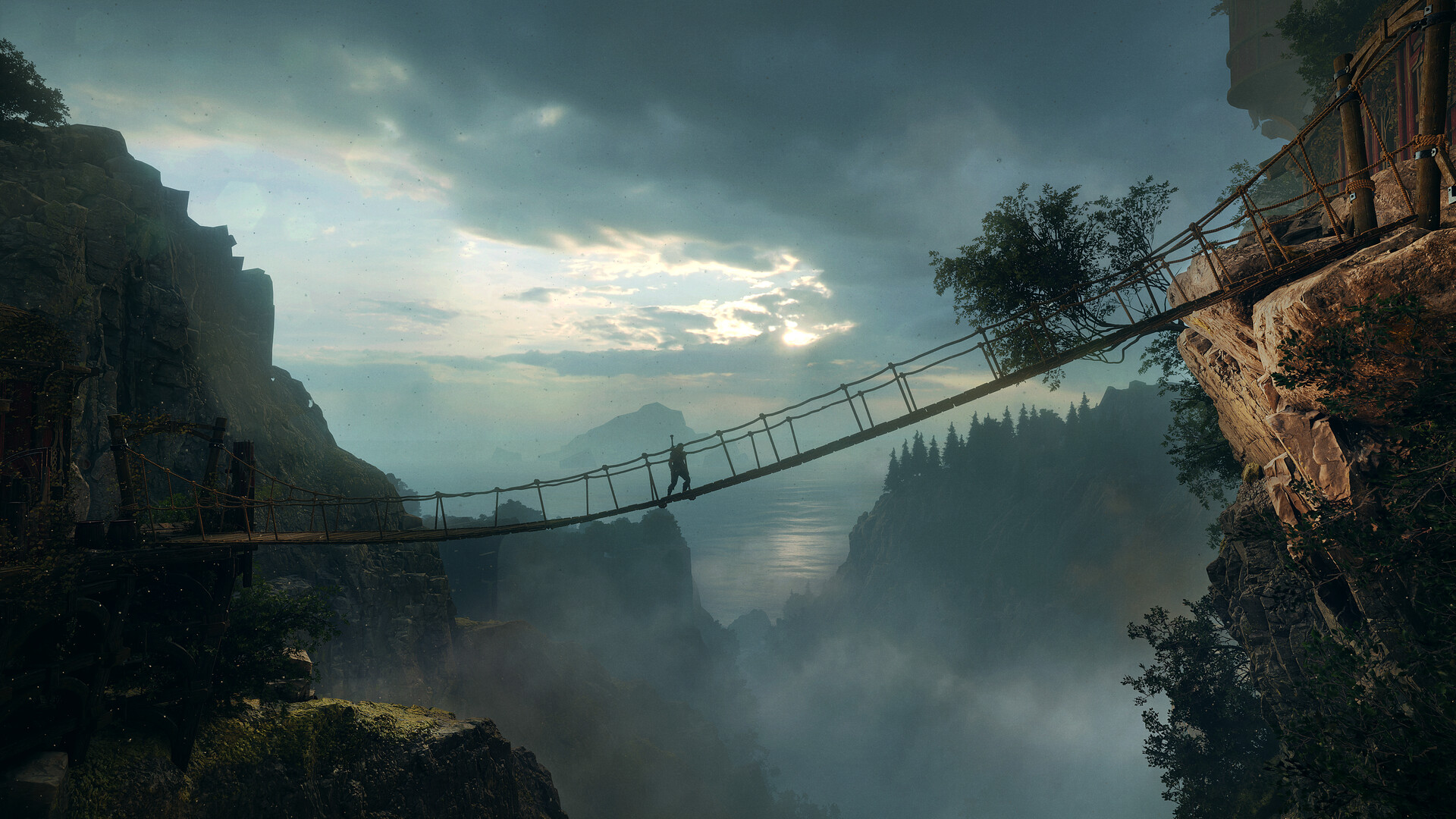
Whatever criticisms land against Blades of Fire’s design, its presentation is difficult to fault. The dark fantasy world is visually striking with strong verticality, genuine creative ambition in creature design, and some of the most contextually intelligent music in recent action gaming — players have noted the seamless transition from Lord of the Rings-style orchestration during exploration to sharp Jaws-style violin tension when enemies are nearby. The award-winning soundtrack by Óscar Araujo is included in the Steam release.
Version 2.0 represents a meaningful upgrade. New Game Plus, Titanium difficulty, Boss Revival Mode, Photo Mode, Elements Transmutation, Adso’s weapon spells, expanded death animations, full keyboard remapping, DLSS4 support, and Steam Deck compatibility all arrive with the Steam launch. Players who bounced off the Epic Games Store version a year ago are coming back to a substantially improved product, and the improvements show in the reception.
A Note on MercurySteam
It would feel dishonest to review Blades of Fire without acknowledging that MercurySteam has recently announced layoffs following the game’s commercial underperformance on Epic. The studio is making up a genuinely original, ambitious game with craft and passion visible across its presentation. However this plays out commercially on Steam, the talent behind Blades of Fire deserves to keep working. If you’re on the fence and can tolerate the game’s friction, supporting this release matters.
The Good, The Bad, & The Ugly
| The Good | The Bad | The Ugly |
|---|---|---|
| The Forging SystemOne of action gaming’s most original progression concepts — weapon crafting as genuine commitment rather than loot menu, with permanent consequences that give every blade real weight. | Enemy Input ReadingOpponents frequently retaliate mid-attack with little apparent recovery window, making the directional combat system feel punishing rather than rewarding in extended encounters. | The Crimson Fort Escort MissionA mandatory ~2-hour section with two infinitely spawning stalker enemies and retrieval mechanics that punish evasion. The single most damaging design decision in the game. |
| Directional Combat DepthFace-button swing directions mapped to enemy weak zones create genuine tactical engagement against well-designed bosses and unique enemy types. | Weapon Clipping in Tight SpacesSwords bouncing off walls mid-swing in corridors is a consistent irritant that undermines the combat system in exactly the environments the game keeps putting you in. | |
| Outstanding SoundtrackÓscar Araujo’s score features seamless tonal transitions between exploration and combat that players have compared to Lord of the Rings — genuinely exceptional contextual music design. | First Dungeon NavigationThe opening dungeon’s layout will test patience significantly — pulling up a guide is a near-universal recommendation from players who made it through. | |
| Version 2.0 is a Real UpgradeNew Game Plus, Titanium difficulty, Boss Revival Mode, DLSS4, full key remapping, Steam Deck support — this is substantially more game than the Epic launch offered. |
The Verdict
Blades of Fire is a game of exceptional ideas imperfectly executed — which is exactly what you’d expect from a studio that has spent its career taking ambitious swings. The forging system is genuinely great. The directional combat, at its best, is distinctive and rewarding. The world is beautiful and the soundtrack is outstanding. And the Version 2.0 improvements represent real value for players arriving fresh on Steam.
But the Crimson Fort escort mission, the enemy input-reading frustration, and the navigation opacity of the opening dungeon are real obstacles that drive players away right when the game needs them most. If you have tolerance for friction and an appreciation for genuine mechanical ambition, Blades of Fire has enough to offer that it’s worth the $29.99 introductory price. If you need a smooth experience from hour one, try the demo first — it’s an honest representation of the early game, but not of everything that follows. For more action-adventure coverage, check out our full reviews section.
Score Breakdown