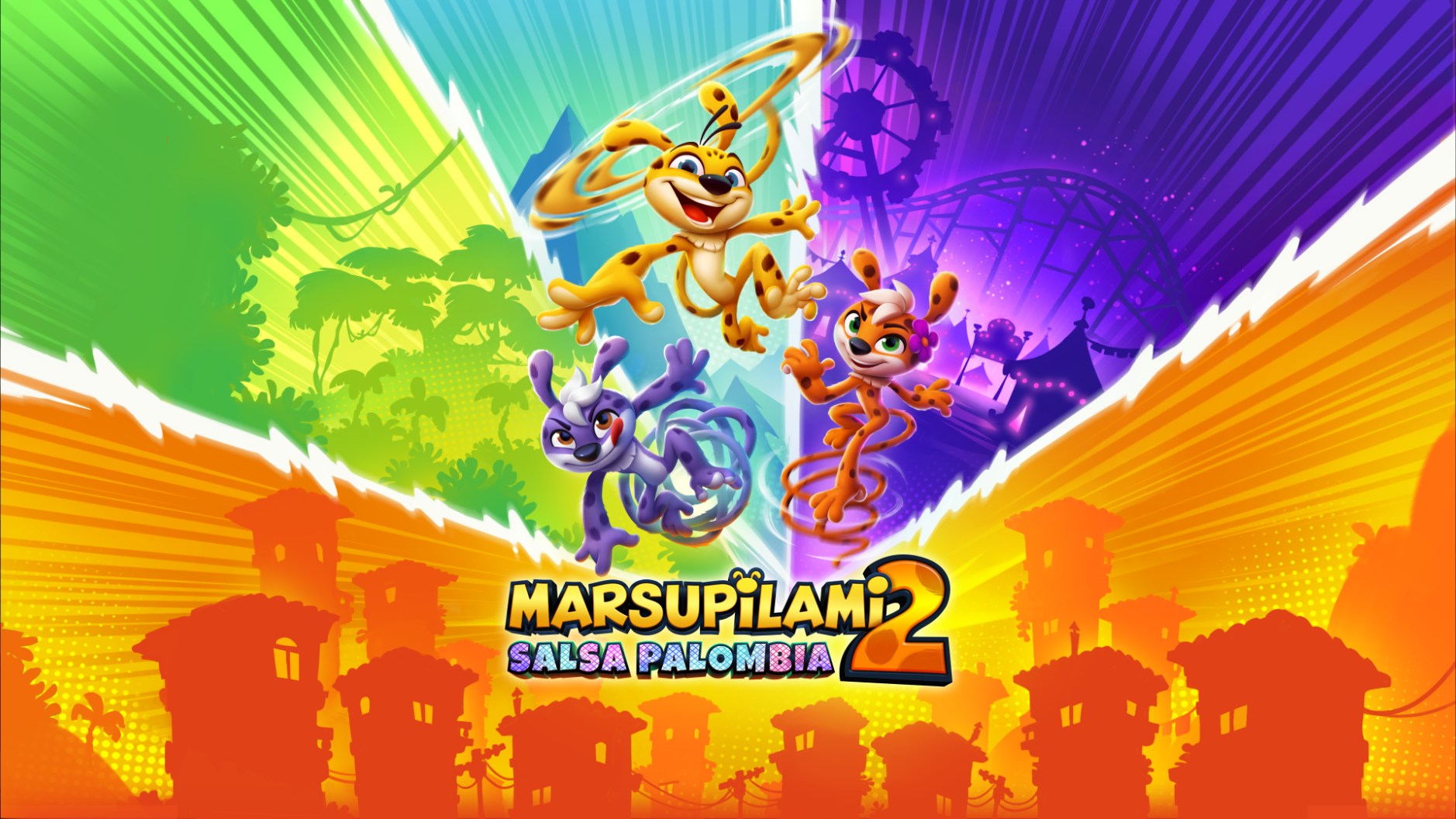
Marsupilami 2 – Salsa Palombia is a 2D action platformer from Ocellus Studio, published by Microids, and a direct sequel to 2021’s Marsupilami – Hoobadventure. Three cartoon marsupials — Hope, Punch and Twister — set out to break a musical curse and stop the Mummy Queen before her concert reaches its finale.
Our verdict: this colorful 2D platformer from Ocellus Studio delivers charming chaos as you guide the Marsupilamis through Palombia’s dancing mayhem. It does a solid job throughout and occasionally dips into genuine greatness — usually right around the point it runs out.
The Level Design Gets Better As It Goes, Then Stops
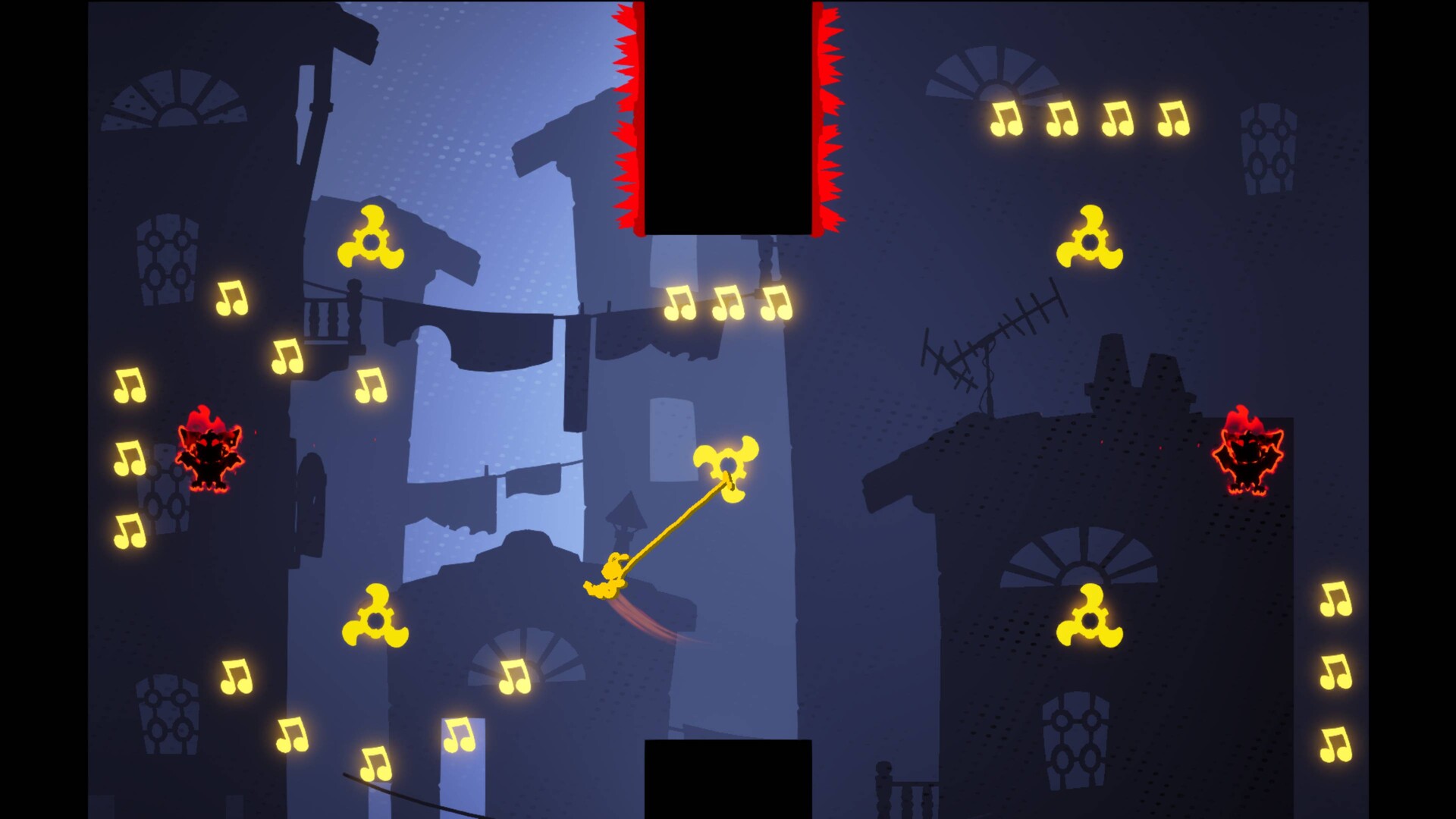
This is the frustrating shape of the whole game. The jungle opening is fine but standard — competent genre furniture you’ve seen before. The city is where it wakes up, using electricity and moving cars as obstacles in ways that feel considered.
And then the snowy peaks arrive and the game is briefly excellent. Sprinting through snow-covered villages into icy caves, then bracing against unforgiving winds while scaling the mountain — there’s a sense of scale there the earlier worlds never reach. There’s even a dinosaur that chases you at one point. It’s comfortably the high point.
The Minigames Are the Best Thing Here
There’s a smart accessibility side effect here too. The main game gets visually chaotic in two-player, to the point of inducing mild motion sickness. The versus mode solves it by blacking out level backgrounds and highlighting each character in a distinct colour — instantly legible, even at speed.
That’s a fix the campaign badly needs and doesn’t have. If Ocellus can make two players readable in versus mode, there’s no reason the same clarity couldn’t reach the main game.
What Else There Is to Do
The standard collectible sweep. Enough to justify replaying levels you’ve already cleared.
Rapid challenge tasks — destroy all the pots, collect all the notes. Also unlock minigame maps.
Per-level runs where you chain berry pickups into a streak; higher streak, higher multiplier.
Three consecutive dojo-style levels back to back. The endurance version.
Salsa mode is the pick of these. Maintaining a berry streak forces a precision and pace the main campaign never demands, and it’s a genuine change of rhythm rather than a checklist. Between that, the dojos and the cups, there’s meaningfully more here than the three-hour campaign figure suggests.
Beautiful, and Borrowing Heavily
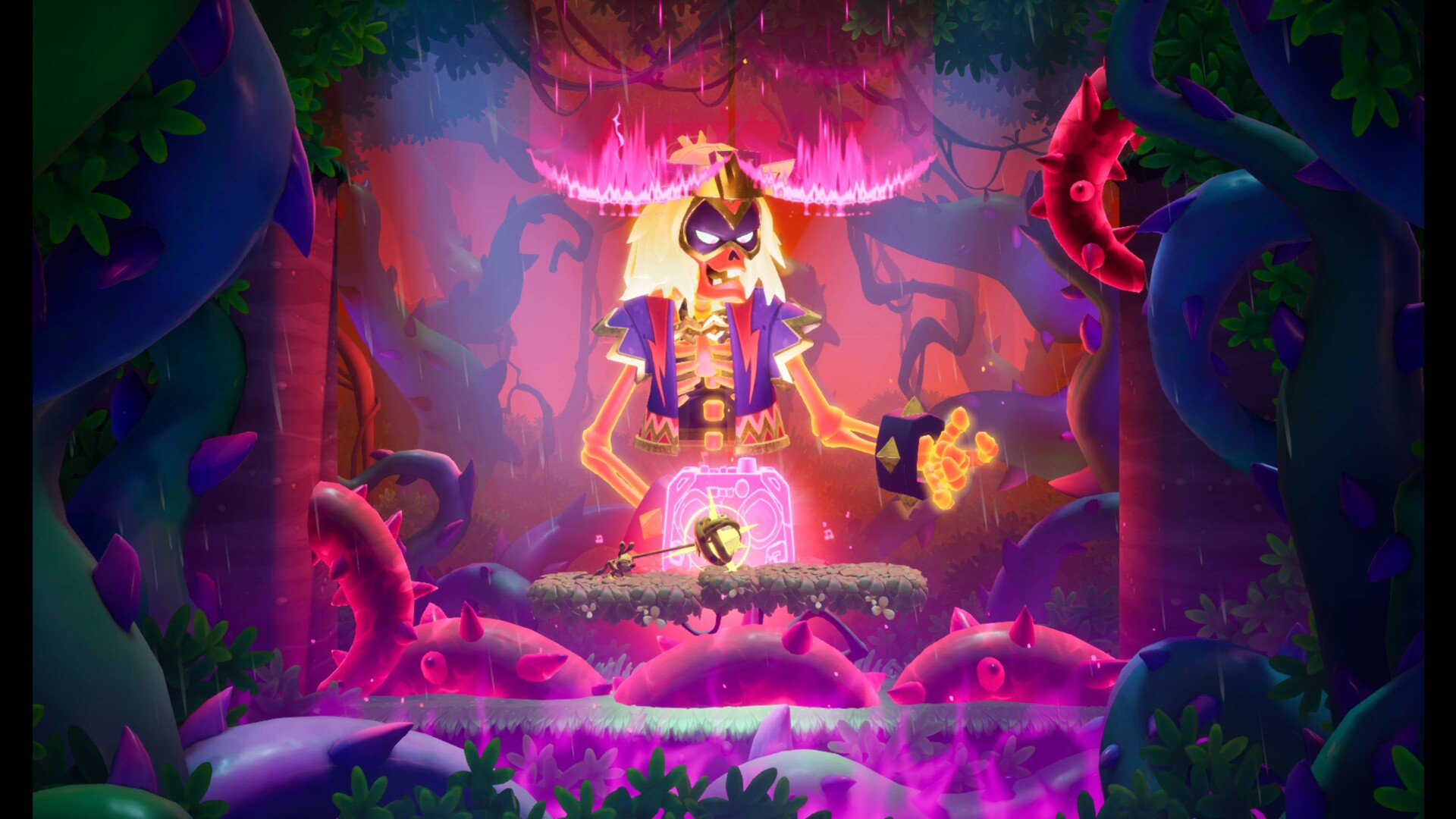
Visually this is a treat. The poppy, vibrant cartoon look is easy on the eye throughout, and the Day of the Dead aesthetic running through the city world and the final level is a genuine highlight. The music is pleasant, with a few tracks that stuck with us afterwards — nothing genre-defining, but that’s a high bar and not really the point.

The same issue runs through the story and enemies. The plot is essentially identical to the first game — a music-obsessed villain curses Palombia and its inhabitants go mad. Fine on its own; Peach gets kidnapped every time out. But the enemy roster is also identical and the bosses visually mirror the first game’s, to the point that someone jumping between the two might have to double-check which one they’d loaded.
And there just isn’t enough enemy variety. The same wild-eyed squirrels and floating bats turn up in nearly every level, with one or two new designs sprinkled through. Each world gets roughly one unique enemy — fly traps in the jungle, killer snowmen in the mountains — and some of them don’t even feel like they belong to the world they’re in. By the final stretch we were tired of looking at them.
Difficulty, and the Lack of It
The generous checkpointing is clearly a deliberate family-friendly choice and we won’t pretend that’s wrong for the audience. But there’s usually a challenge curve in these games that serves younger and older players, and this one flattens it in both directions — the easy setting removes failure entirely, and the hard setting doesn’t restore it.
The Good, The Bad, & The Ugly
| The Good | The Bad | The Ugly |
|---|---|---|
| The Versus Minigames Are SuperbFive per dojo, from Rocket League-style football to a Splatoon-ish paint battle, with more maps unlocked by finding hidden dojos. Lightning-paced and genuinely addictive — we had to force ourselves back to the campaign. | The Abilities Aren’t Really NeededHope, Punch and Twister finally play differently, but the levels rarely require you to use it. Punch’s ball form gets outclassed by Hope’s double jump and ends up serving optional basketball hoops. | A Three-Hour Campaign That Peaks at the EndWorld 3’s snowy peaks are the best thing in the main game and arrive right before the credits. Ocellus clearly have more in them and stopped just as they were proving it. |
| Characters Are Finally DistinctThe first game’s three heroes played identically. This one gives each a real traversal tool. It’s the clearest evidence the studio is building on the series rather than repeating it. | Two-Player Gets Visually ChaoticEnough on-screen noise to induce mild motion sickness in the campaign. Versus mode fixes it completely with blacked-out backgrounds and colour-coded characters — so the fix exists and just isn’t applied where it’s needed. | Barely Any Enemy VarietyThe same squirrels and floating bats across almost every level, with roughly one unique enemy per world and a couple of new designs total. Some don’t even suit the world they’re placed in. |
| Gorgeous, Especially the Snow and the SkullsA vibrant cartoon look throughout, with a Day of the Dead aesthetic in the city and finale that genuinely lands. World 3’s snow villages, ice caves and wind-battered mountain climb are the visual highlight. | Difficulty Barely ExistsSettings mostly affect bosses. Checkpoints are so frequent that losing all three lives costs almost nothing. Easy mode removes failure entirely; hard mode doesn’t put it back. | It Borrows Its PersonalityCannons that work like DK barrels, a banana munched at level’s end, and a berry pickup sound that’s uncomfortably familiar. Platformers live on distinct sensory signatures, and this one is using other people’s. |
| Real Optional ContentMusic notes, hidden dojos, cups, and Salsa mode’s berry-streak multiplier runs, which demand a precision and pace the campaign never does. There’s meaningfully more here than three hours. | Co-Op Trivialises BossesTwo players mashing attacks turned fights with some bite into one-minute affairs, and the levels aren’t designed around combining both characters’ abilities anyway. | The Same Story and the Same BossesThe plot repeats the first game almost exactly, and the bosses visually mirror it. Jumping between the two, you could genuinely lose track of which you were playing. |
The Verdict
Marsupilami 2 – Salsa Palombia is a solid platformer that keeps brushing against something better. Ocellus have fixed the biggest structural flaw of Hoobadventure — the characters are properly distinct now — and their level design climbs steadily from workmanlike jungle through an inventive city to a snowy third world that’s genuinely lovely. The art is consistently lively, the Day of the Dead flourishes are a treat, and the versus minigames are good enough to be the reason you keep the game installed.
It just keeps stopping short. Three hours of campaign, arriving at its best right as it ends. Distinct abilities the levels never really demand. A fix for two-player visual clarity that exists in one mode and not the one that needs it. And an identity built substantially out of Donkey Kong parts, on top of a story, enemy roster and boss lineup carried over near-wholesale from a five-year-old game.
None of that makes it bad. It’s a pleasant, colourful, family-friendly platformer that’s markedly better with a second player in the room, and the optional content stretches it well past the campaign’s runtime.
The honest read: get it for couch co-op, and get it for the minigames. If you’ve got someone to play with, the versus dojo alone will earn its keep. If you’re playing solo and you want a substantial platforming campaign, this isn’t quite that yet — but there’s a free demo, and the trajectory from the first game to this one is genuinely encouraging.
We’d like the next one to stop borrowing and start sounding like itself. On this evidence, they could.
For more game reviews, check out our full reviews section.