⚠️ Content Warning
Thorn Spire describe Stoneguard as containing intense violence, blood and gore, horror themes, and depictions of dead, dismembered and decapitated human and non-human bodies. Dismemberment isn’t incidental here — it’s a core mechanic, in both directions.
⚠️ This Is Early Access — and It Really Is Early
Stoneguard entered Early Access on July 30, and the score at the bottom of this page reflects what exists today, not what’s promised.
Right now that’s roughly four to five hours covering about thirteen in-game days, with two of a planned five bosses and a handful of enemy types, plus a recently-added endless mode. There are bugs. There’s jank. Thorn Spire are a team of two and say openly they need 6–12 months to finish.
It costs $6.99, and the developers have confirmed the price will rise at full release — buying now grants the finished version. That combination changes the calculation considerably, and we’ll come back to it.
Steam
Mostly Positive
Reviews
58
Price
$6.99
Current Content
~4–5 Hrs
Build by day. Prepare at dusk. Hold the Lifestone until morning.
Where else are you going to fight zombie aliens while wearing plate mail and swinging a warhammer?
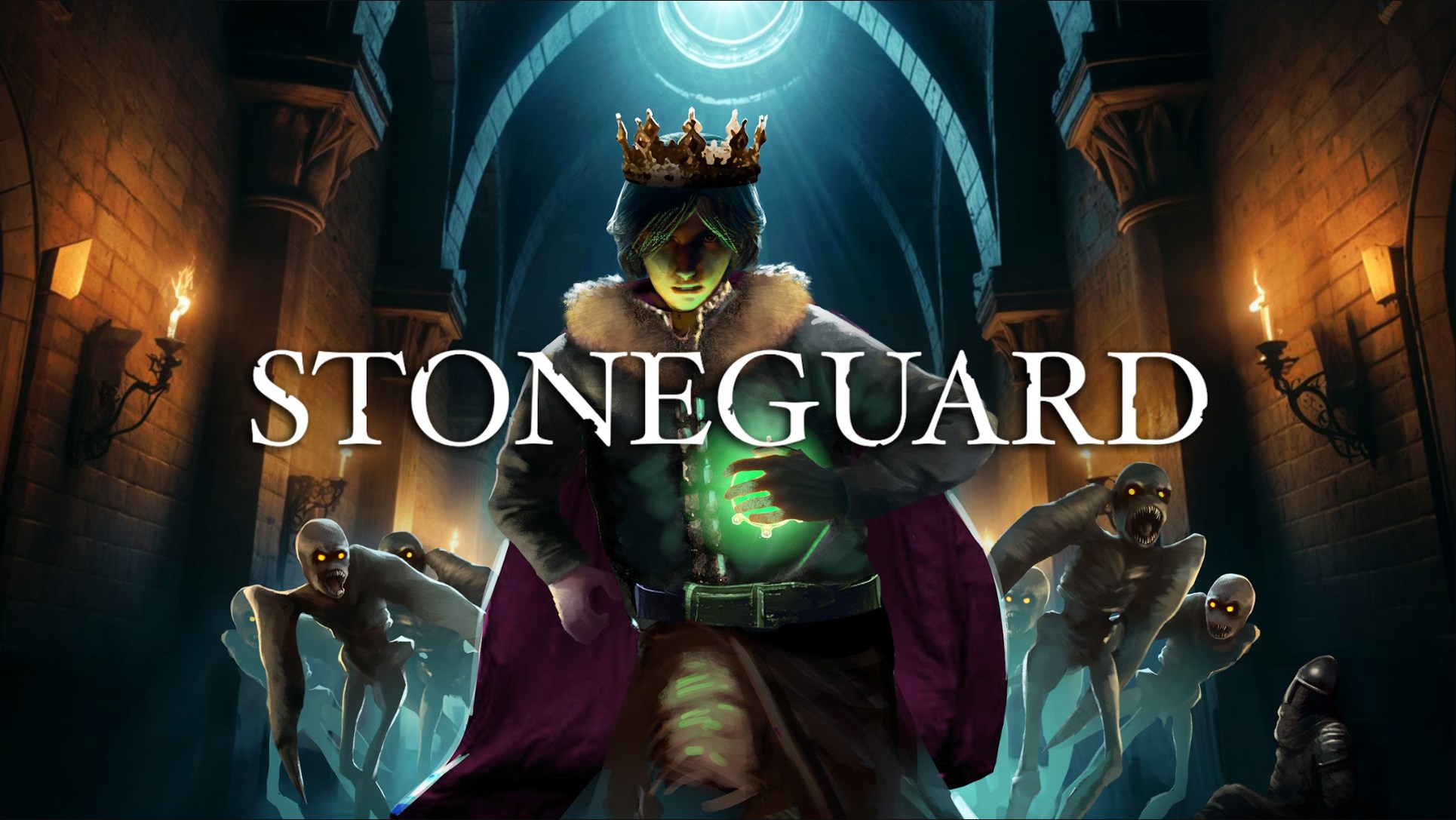
Stoneguard is a third-person survival strategy game set in a grim medieval apocalypse, in which you protect the Lifestone — humanity’s last source of magic — from waves of nocturnal monsters who would very much like to take it.
You gather resources, recruit survivors, build a settlement, fortify it, and then fight alongside your people when the sun goes down. It’s from Thorn Spire Games, a two-person studio, published by Wandering Wizard.
A Genre Fusion That Shouldn’t Be This Rare
⚔️ Survival Crafting Meets RTS, in Third Person
This is what makes Stoneguard worth attention despite its state. It’s a survival crafting base-builder where you also command a squad of survivors in real-time combat — and you’re down there fighting with them in third person rather than watching from a strategic camera.
You can customise the loadouts of your NPC troops for different threats, and the single best thing in the game right now is lining up two ranks of archers and watching them loose into an oncoming horde while you hold the line in front of them.
Plenty of survival games have a token defence phase. Very few give you an actual army with configurable equipment and then put you inside the battle. That combination genuinely doesn’t exist in many other places.
Three Phases, One Clock
☀️ Day
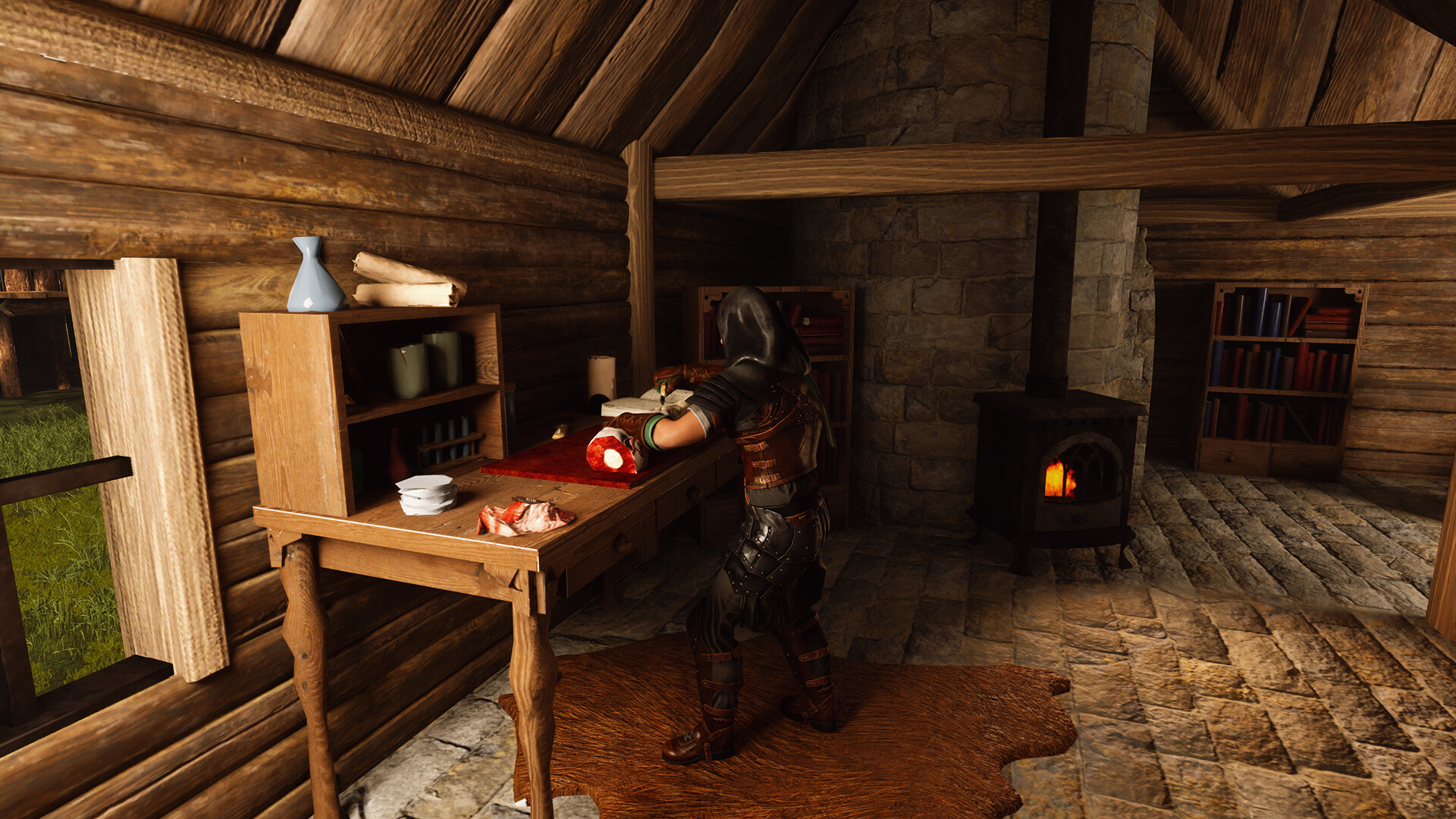
Hunt, gather, recruit survivors, expand the settlement with housing, farms and workshops.
🌆 Preparation
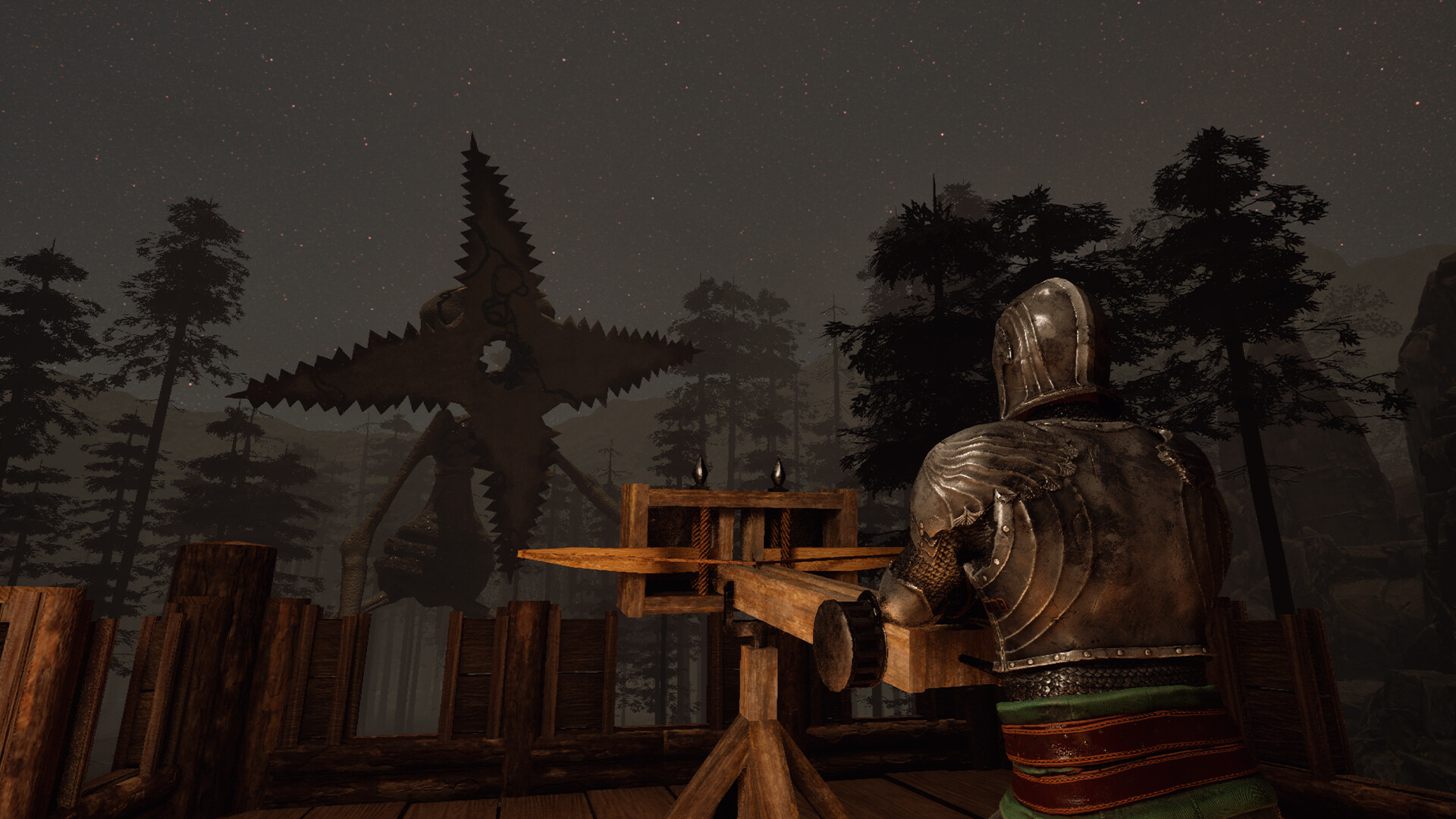
The squeeze. Craft walls, raise towers, fortify, assign loadouts and position your people.
🌙 Night
They come. Fight alongside your survivors, issue orders mid-chaos, and hold the Lifestone.
The dynamic day-night cycle mapping onto three distinct gameplay phases is a tidy structure, and the preparation phase is where it earns its keep. That window of knowing exactly how long you have and never quite having enough time produces a genuinely enjoyable beat-the-clock urgency — one of the most consistent things players praise.
The Limb System Is the Standout Idea
🦴 Accurate Weapon Tracing, in Both Directions
Stoneguard tracks which body part a hit lands on — yours and theirs. You choose what to sever on your enemies, and you have to fight in a way that protects your own vital limbs.
Crucially, losing a limb carries persistent consequences that hinder you in battle and in daily survival. It’s not a cosmetic gore system; it’s an injury system with lasting weight, healable only while the Lifestone remains protected — which quietly ties your personal survival back to the thing you’re defending.
And then you craft weapons and armour from the limbs you cut off monsters, which closes the loop neatly and is exactly the sort of grim detail this setting deserves. It’s the most distinctive system in the game and the one most worth building the rest around.
🤝 The Co-Op Design Solves a Problem Most Survival Games Ignore
There’s no traditional personal inventory. Harvested materials go straight into shared settlement stores.
In single-player that’s a convenience. In co-op it’s transformative — one player can be chopping wood while the other is building with it, with no running back to a chest in between. Straight from one person’s axe to the other’s hammer.
Anyone who has played a co-op survival game and spent half the session as a courier will understand immediately why this matters. It’s the sort of design decision that comes from actually playing these games rather than copying their feature lists.
The building system itself is reportedly moreish enough that players lose track of time arranging their settlement when they should be fortifying it — always a good sign — and the combat has enough depth to support genuine experimentation with playstyles.
Now the State of It
🔧 Bugs, Brevity and a Save-Breaker
• It’s short. Around four to five hours covering roughly thirteen in-game days, with two of a planned five bosses and about half a dozen enemy types.
• It’s currently on the easy side. Several players describe the experience as short and undemanding — and difficulty options are on the roadmap rather than in the build.
• Bugs are common. Many are cured by logging out and back in, which is a workable if inelegant answer.
• ⚠️ At least one is a progress-breaker. A player reported having to restart entirely after their medical tent stopped functioning. That’s the most serious issue here, and worth knowing before you invest hours.
• Steam Deck is listed Unsupported, so this is a desktop game for now.
🤔 One Genuine Contradiction in the Reception
Player reports on the survivor AI directly disagree, and it’s worth flagging rather than picking a side. Some describe the villagers as excellent — doing what they’re told, fighting without micromanagement, no loafing — and explicitly favourable next to comparable games. Others report them failing to go where they’re sent.
Our read is that the AI is inconsistent rather than uniformly good or bad, which fits an Early Access build. “Better AI” is on Thorn Spire’s own roadmap, which suggests they’re aware.
The Developers Are Moving Fast
Worth crediting properly. Stoneguard launched with a fixed run ending at the current final boss — and within roughly two weeks, in response to community feedback, Thorn Spire shipped an endless mode. You can now either finish at the boss and preserve that save for future content, or convert it into an endless run and see how long you last.
🗺️ What’s Promised Before 1.0
Thorn Spire target 6–12 months to full release, with regular updates covering:
• More monsters, more bosses (five planned total)
• More buildings and building upgrades
• More unique monster equipment and siege weapons
• More character customisation
• Difficulty options
• A complete story
• Better AI
• A polished tutorial
• Plus community-suggested additions
That list is notable for how directly it maps onto the current complaints. Difficulty options address the easiness, better AI addresses the survivor inconsistency, and more bosses and buildings address the brevity. It reads like a roadmap written by people who have been reading their own reviews.
The Good, The Bad, & The Ugly
The Good
The Bad
The Ugly
A Genuinely Novel FusionSurvival crafting and base building welded to real-time squad command, played in third person from inside the battle. Configurable NPC troop loadouts and two ranks of archers firing into a horde is a combination that barely exists elsewhere.
Four to Five Hours of ContentRoughly thirteen in-game days, two of five planned bosses, a handful of enemy types. The price reflects it honestly, but go in knowing this is a foundation rather than a game.
A Progress-Breaking BugAt least one player had to restart entirely when their medical tent stopped working. Most other bugs clear with a relog — this one didn’t, and it’s the risk worth weighing before committing hours.
The Limb System Has Real WeightHit tracing on specific body parts, persistent injuries that hinder both combat and daily survival, and equipment crafted from severed monster limbs. Not cosmetic gore — an actual system, and the best idea here.
Currently Too EasySeveral players finish describing it as undemanding, and difficulty options are on the roadmap rather than in the build. For a game built on siege tension, that undercuts the premise.
Inconsistent Survivor AIPlayer reports flatly contradict each other — some find the villagers reliable and low-maintenance, others can’t get them to go where they’re told. “Better AI” is on the roadmap, which tells its own story.
Shared Inventory Is Smart Co-Op DesignNo personal inventory; harvested materials go straight to settlement stores. One player gathers while the other builds, with no courier runs. A small decision that removes a large annoyance.
General Early Access JankRough edges throughout, with logging out and back in serving as the unofficial fix for a fair few of them. Workable, but it’s friction.
No Steam Deck SupportListed as Unsupported, so this is desktop-only for now — a shame for a game with such natural short-session structure.
The Verdict
Stoneguard smartly blends strategic settlement building with intense nocturnal combat, making every decision about fortifications and resource management genuinely matter. What it doesn’t yet have is enough of itself.
The ideas here are legitimately good — better, frankly, than a lot of far more expensive survival games manage. The limb-tracing injury system has real consequence, the shared-inventory co-op design solves a problem the genre has tolerated for years, and commanding configurable troops from inside a third-person melee is a combination worth building a studio around. The bones are excellent.
The flesh is four hours thick. Two bosses, a handful of monsters, a difficulty curve that doesn’t yet curve, and a bug that can cost you a save. This is a foundation, and Thorn Spire — all two of them — say so plainly rather than pretending otherwise.
Which brings it back to $6.99. At that price, four to five hours of something this novel is fair value on its own, and the price is confirmed to rise at full release. Buying now is closer to a low-stakes bet on a good idea than a purchase you might regret.
Buy it now if the survival-plus-RTS fusion appeals, you have someone to play co-op with, and you’re comfortable supporting a two-person team through the rough part. Shipping endless mode within a fortnight of launch says a lot about how they’re approaching this.
Wishlist it if you want a finished game. Come back after a couple of major updates — particularly once difficulty options and the tutorial land — and this could be considerably more than the sum of its current parts.
I'm a passionate gamer and video game enthusiast. I find immense joy in creating detailed and insightful video game reviews, diving deep into different adventures anytime I can manage. But if there's one thing that truly gets my heart racing, it's the thrill of surviving zombie-infested landscapes. Join me on my gaming journey as I explore and share my thoughts on the undead-filled worlds of gaming! 🎮🧟♂️