It’s deliberate, well-executed grindhouse horror. It is also not remotely for everyone, and no amount of low-poly abstraction softens what’s being depicted. Go in knowing.
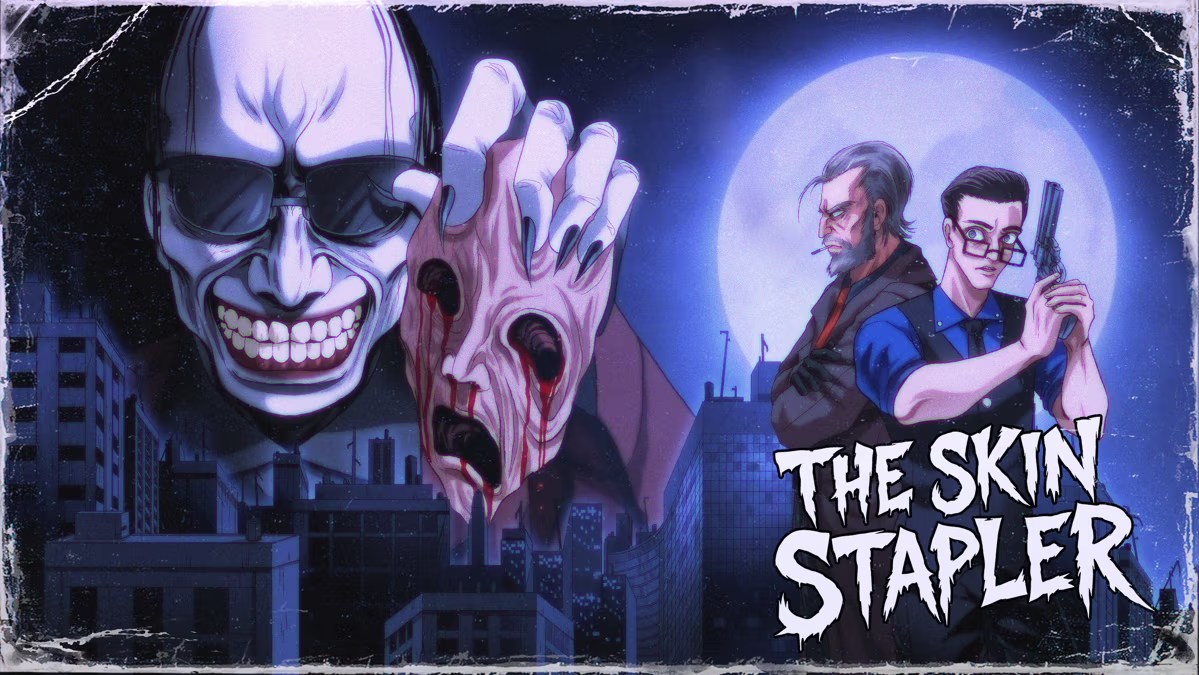
The Skin Stapler opens in February 1984 with a journal entry from a detective who has stopped expecting the city to get better. Rain on busted streetlights, vice on every corner, and now a killer working his way through the population with staples and a scalpel.
You play Detective Dick Slater — a name the game commits to entirely and mines for every joke available — saddled with an eager young transfer named Robbie Knox and told to catch something the department has no leads on. It’s PSX-era survival horror crossed with detective noir, and it’s considerably smarter than its premise lets on.
The Structure Is the Best Thing Here
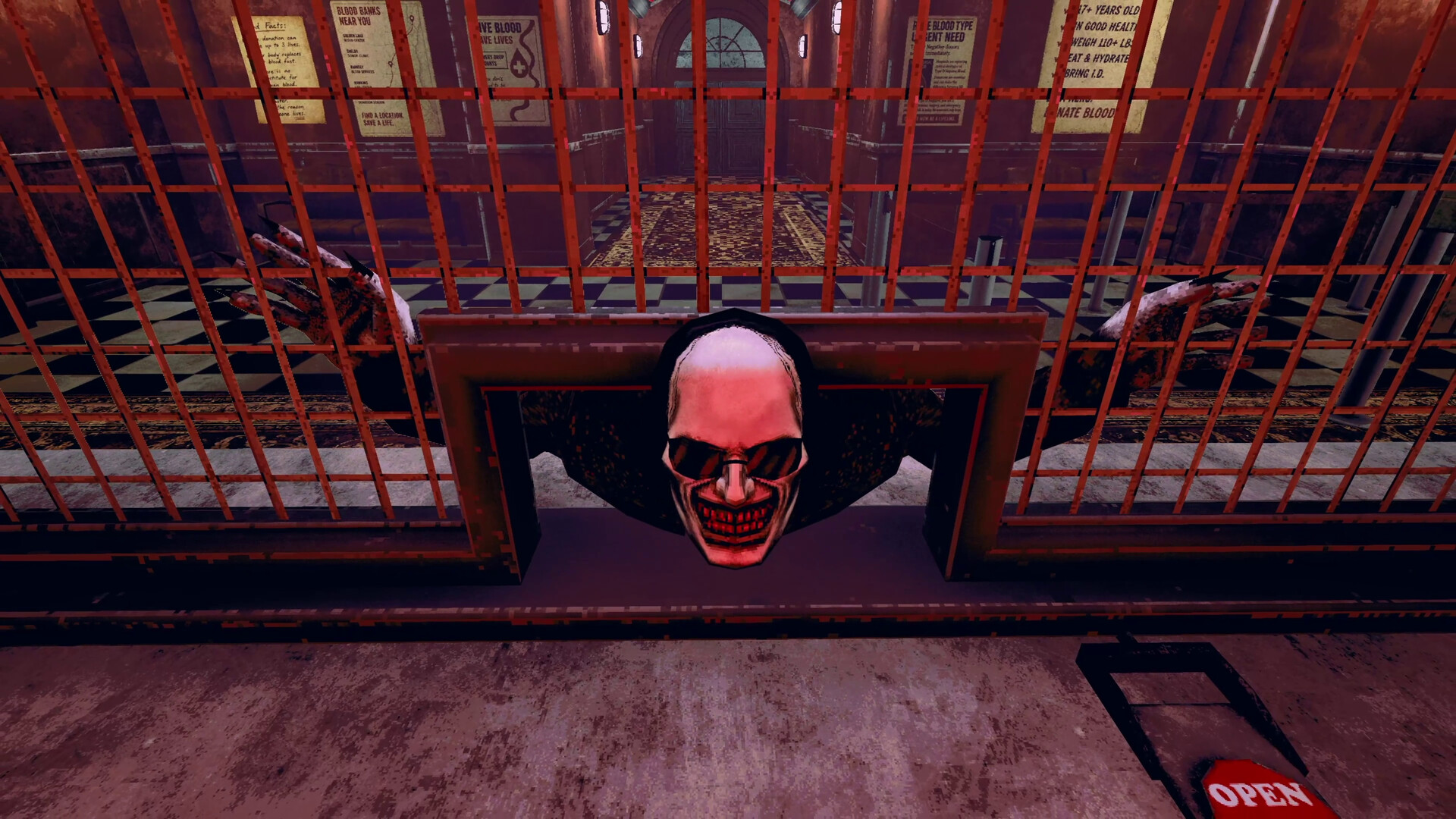
That’s dramatic irony converted into a mechanic. When Slater asks what’s missing from the room, you already know — you were standing in it. When the game asks you to photograph evidence, you’re documenting a death you couldn’t prevent while playing someone who had no idea it was coming.
It also solves horror’s oldest structural problem. Investigation sequences are usually the least tense part of a detective game because the danger has already passed. Here the danger is what you just personally experienced, and the crime scene carries that weight into what would otherwise be a quiet evidence hunt.
The Loop
Play the victim first — mundane household tasks, phone calls, a radio broadcast running in the background — until it stops being mundane.
Search for interactable evidence, inspect it for hidden clues, and photograph what matters. Blood trails, blocked doorways, things stored where they shouldn’t be.
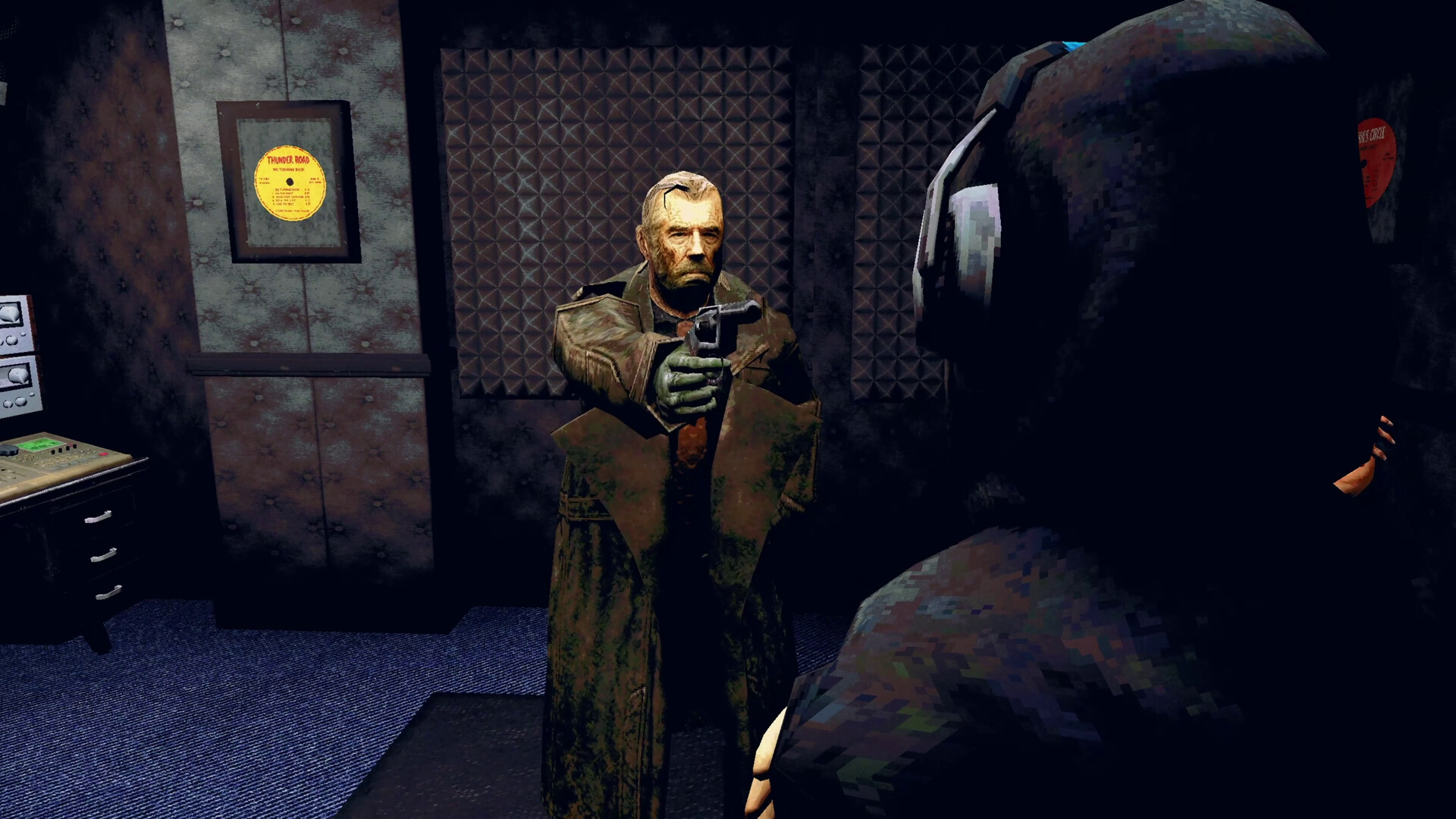
Interrogate whoever’s around, with Slater’s methods sitting somewhere well outside department policy.
Environmental puzzles, locked boxes and code work between scenes — and eventually, a sidearm and somewhere very bad to point it.
The Voice Acting Is the Standout
Slater is the other half of it — a growling, permanently exasperated noir archetype played completely straight while the game builds jokes around him. Knox works as the counterweight: earnest, competent, and clearly out of his depth in a way that makes the partnership genuinely engaging rather than a device.
It’s Also Very Funny
That contrast is doing real work. Straight-faced misery for four hours would be exhausting; alternating gallows humour with genuine horror keeps both effective. It’s the same instinct that made 80s grindhouse cinema work, and the game clearly understands the reference it’s making.
Where It Stumbles
None of these are serious, and most are the ordinary friction of a small team’s first-person adventure. The movement issue during the prologue is the one worth fixing — it lands in the most tense sequence of the game, and confusion is the wrong kind of panic.
The length is a fair trade at this price. Three and a half to four hours is a proper sitting rather than a snack, it’s deliberately paced with no filler anywhere, and it ends on a sequel hook that suggests Tainted Pact know exactly what they’d do with more room.

The Good, The Bad, & The Ugly
| The Good | The Bad | The Ugly |
|---|---|---|
| Playing the Victims FirstThe structural masterstroke. You inhabit each victim’s ordinary evening before the killer arrives, then investigate that exact scene as a detective hours later. Dramatic irony converted into a mechanic, and it solves the usual problem of investigation sequences having no tension. | Occasional Vague ObjectivesA few sequences left us unsure what the active task even was, or which object in a cluttered room was the one that mattered. Pixel-hunting is the least interesting thing this game asks of you. | Genuinely Graphic ContentFlayed and decapitated bodies, severed limbs, victims paralysed and conscious throughout. It’s deliberate, effective grindhouse horror — and it’s a hard limit for a lot of people, stylisation or not. |
| Exceptional Voice ActingFar better than a game this size warrants. The killer’s soft, delighted over-politeness is more disturbing than anything shown on screen, and Slater’s exhausted growl anchors the whole noir framing. | Movement Friction in the PrologueBeing unable to run during the opening chase — with no clear reason why — turns the tensest sequence into a fight with the controls. Worst possible place for that confusion. | Ends Just as It Gets GoingThree and a half to four hours of tight, filler-free pacing — a decent length for the price — but it still wraps right as the Slater/Knox partnership becomes genuinely compelling. The sequel hook lands, which helps. |
| The Tone Actually BalancesCrude, committed dark comedy between the horror — a corrupt station full of people who stopped caring, and a radio DJ relishing the city’s decline. It gives you somewhere to breathe, and makes the nasty parts hit harder by contrast. | Strictly LinearAn authored story you move through rather than a case you can crack differently. That’s a deliberate design choice and it suits the runtime, but don’t expect investigative freedom. | Humour Won’t Land for EveryoneThe comedy is broad and frequently juvenile — the protagonist’s name alone is a running gag. It’s committed enough to work if you’re on board, and grating if you aren’t. |
The Verdict
This gritty PSX-style detective noir nails the grindhouse aesthetic with genuinely unsettling horror and compelling character dynamics between Slater and Knox. Having played it start to finish, that holds up — but it undersells the thing that actually makes it good.
The structure is what elevates The Skin Stapler above a well-dressed gore delivery mechanism. Making you live an ordinary evening as someone who is about to die, then handing you a camera and asking you to document what happened to them, is a genuinely smart piece of design. It gives the investigation sequences a weight they’d never otherwise carry, and it means the horror isn’t just something you watch — it’s something you were in the room for.
Around that, the voice acting does heavy lifting the low-poly visuals deliberately can’t, the dark comedy earns its place by giving you room to recover, and the Slater/Knox partnership is genuinely good company. The friction is minor: some vague objectives, an awkward prologue chase, and a runtime that ends sooner than you’d like.
The honest read: if you like grindhouse horror and you have a strong stomach, this is a confident, well-made few hours and an easy recommendation. It knows exactly what it is and doesn’t waste a minute of your time.
If graphic content is a hard limit, skip it entirely. The premise isn’t a marketing angle — the game commits to it completely, and stylisation doesn’t soften what it’s showing you.
There’s a sequel hook at the end, and on this evidence Tainted Pact have earned it. We’d play it.
For more game reviews, check out our full reviews section.