
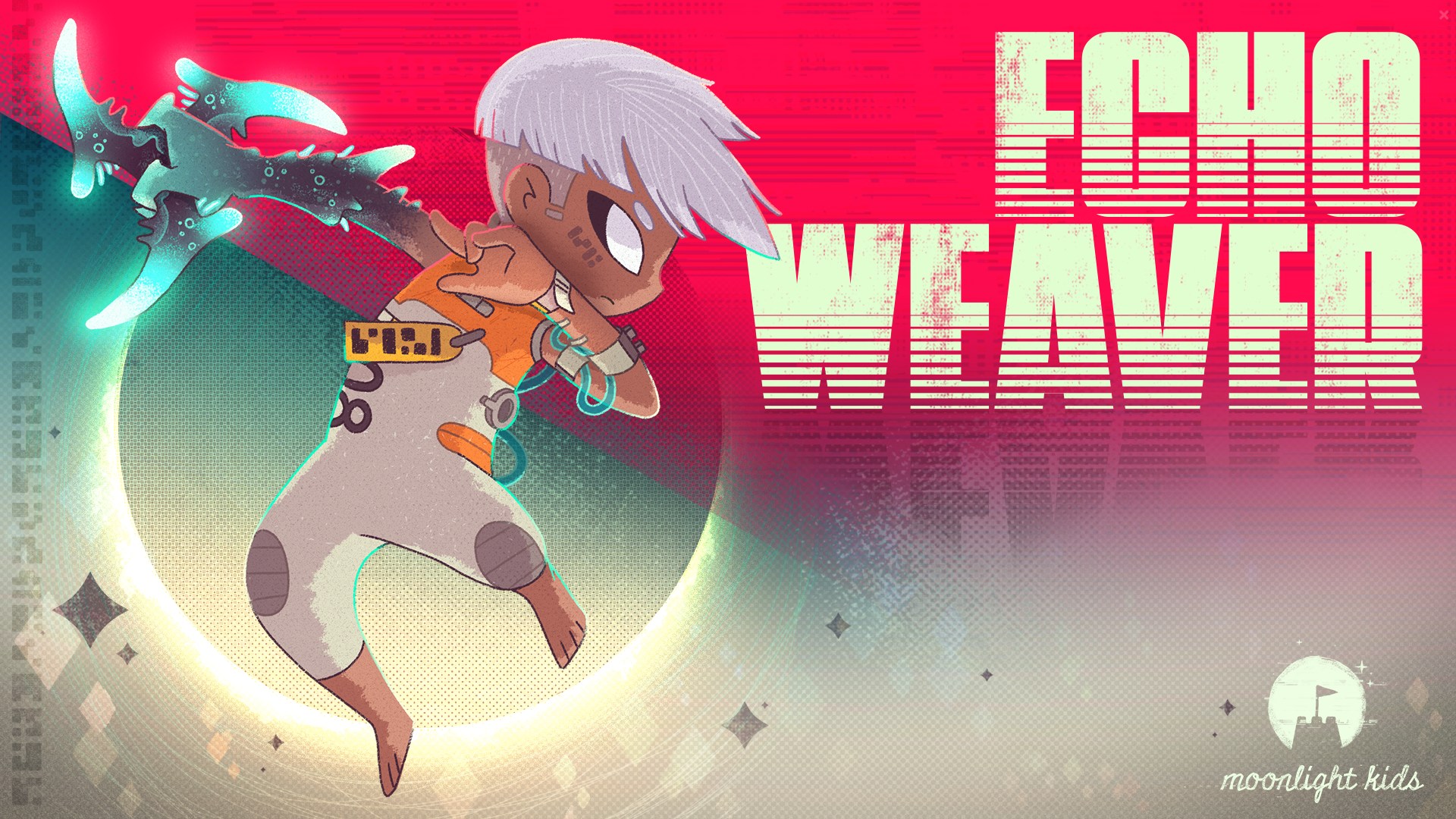
Echo Weaver is a time-loop Metroidvania from Moonlight Kids, the studio behind The Wild at Heart, published by Akupara Games. You play as the last of the Weavers, trapped in an unravelling time loop in the ruins of a collapsed utopia. Bound to you is an alien glaive with strange, reality-bending powers, and the scrappy survivors stuck in the loop alongside you include a pizza-slinging cat who acts as your guide, a cranky leader protecting refugees, and a wicked cleric preaching doom to anyone who’ll listen. Your job is to understand them, unravel the conspiracy at the heart of the world, and chart the one perfect loop that breaks the cycle.
Our verdict: Echo Weaver brilliantly merges time-loop mechanics with Metroidvania exploration, making knowledge your most valuable currency in this clever indie gem.
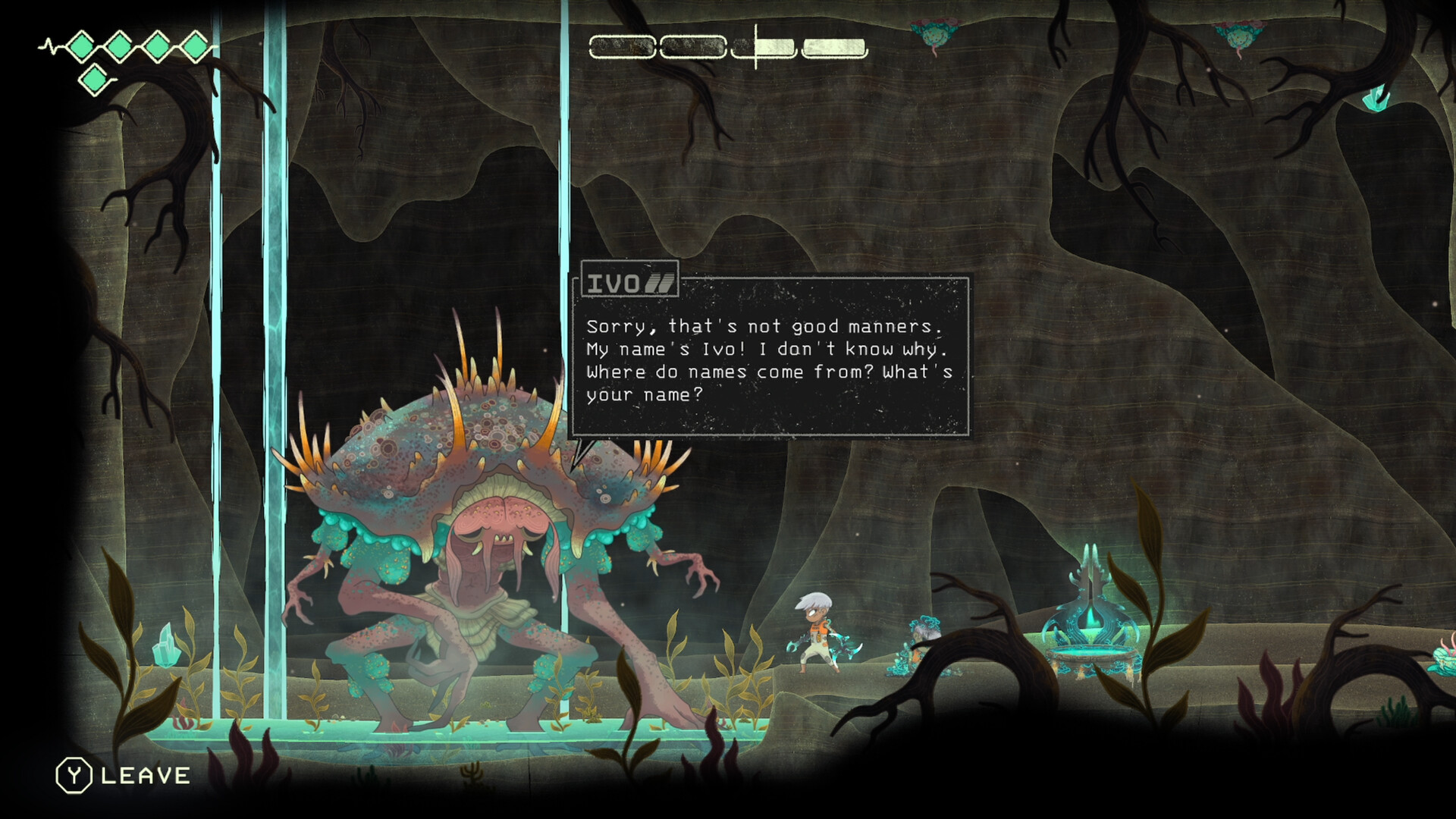
Time Is Currency
No traditional upgrades, just secrets. Every new ability is something you could have done all along.
Grab pickups to extend the loop, then spend that time to heal, trade and open new routes.
An alien weapon at the heart of nearly everything you do, for traversal as much as combat.
The loop rewards rhythm and routing over raw reflexes. Learn the hazards and find your flow.
The clever bit is that the loop itself is a consumable resource. You’re always working against a ticking clock, but you can extend it with pickups, then draw from it to heal, trade and unlock new routes. Even dying isn’t a disaster: you’re simply sent back to the start of the loop, with everything you’ve learned still in your head. As one player put it, the map on screen is no more important than the map you build in your own mind.
A Metroidbrainia That Earns the Name
This is where Echo Weaver really shines. Each new “upgrade” feels like a revelation that changes how you see the world, rather than a simple “now I can climb walls” power-up. Players say the abilities are genuinely novel, and one calls some of them mind-blowing. And there’s a special kind of joy in returning to an obstacle that took you several loops to get past, and simply strolling through it with a new piece of knowledge. One player says that happened many times and never got old.
A couple of players even figured out early abilities through experimentation before the game revealed them, which is when it feels most like a true puzzle game. Not everyone is fully sold, though. One player felt the knowledge-gating is a bit of a party trick: in practice, it often works like a normal Metroidvania, except you get a tutorial instead of an item, and it works best if you wait for the game to tell you things rather than trying to solve ahead.
⚠️ Mild structure spoilers: tap to reveal
• Every loop starts in the same place, but the starting area is littered with secret exits to other parts of the map, so it never feels stale.
• The only traditional pickups are optional health and power upgrades, rewards for finding secret areas and solving puzzles rather than requirements.
• Learning things changes conversations. Your character can get new dialogue options in future loops, and a few mechanics carry over into the very next loop, which opens up some interesting skips.
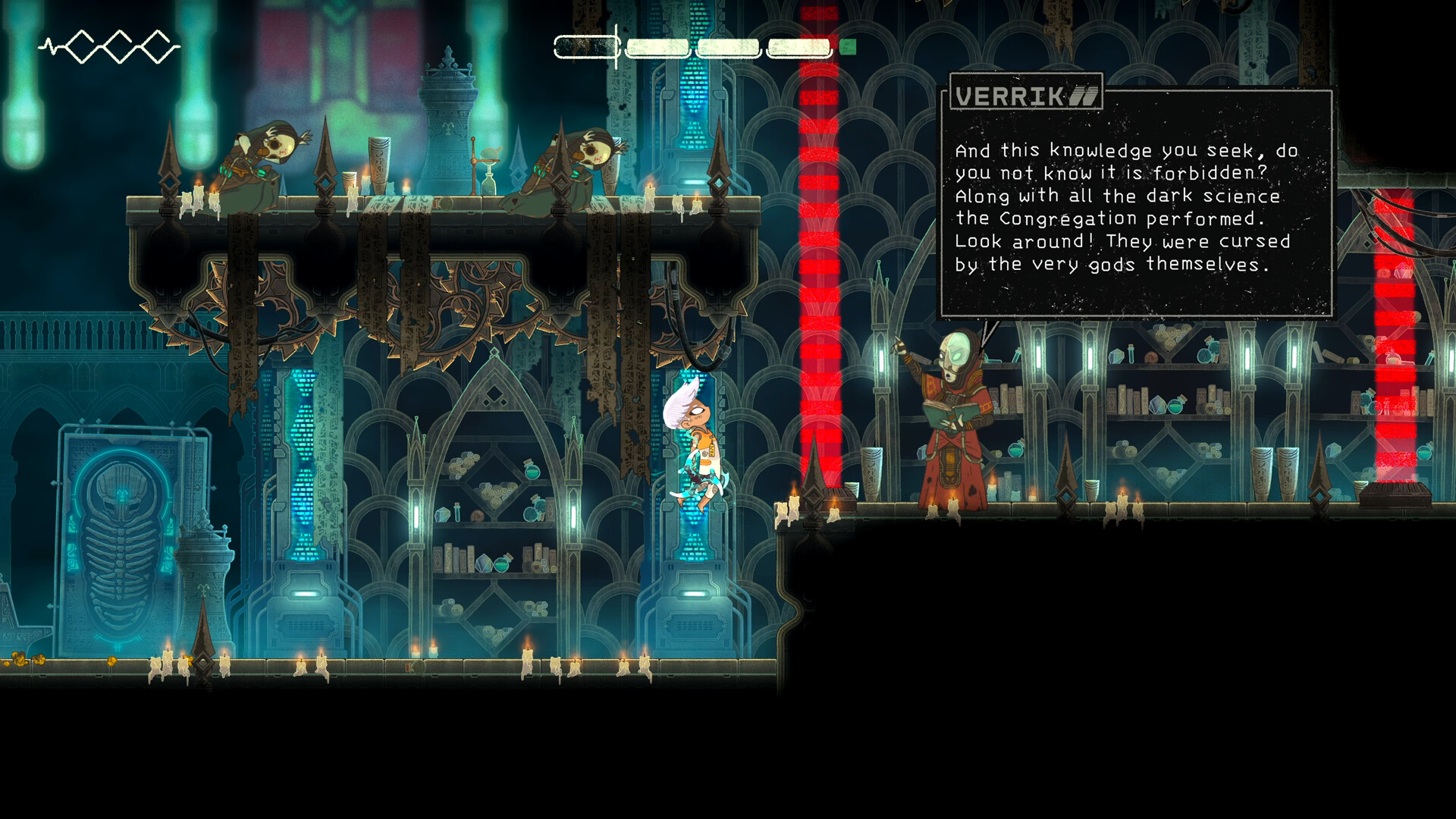
It’s gorgeous to look at, too. The hand-drawn 2D art gives every area its own distinct science-fantasy mood, from slimy industrial zones and a clockwork cathedral to an overgrown dam. One player noted that it’s clean enough to clearly show what you can interact with, while being just busy enough to hide things you won’t realise you can use until later.

Where It Stumbles
Things to Know
The Good, The Bad, & The Ugly
| The Good | The Bad | The Ugly |
|---|---|---|
| Knowledge as ProgressionEvery ability is a revelation, not just another power-up. | Launch BugsStuck terrain, out-of-bounds falls and dropped inputs. | Loop SoftlocksA few spots can trap you for the rest of a loop. |
| A Brilliant Time LoopTime as a resource you spend to heal, trade and unlock routes. | Trite WritingThe dialogue doesn’t live up to the design. | Inconsistent HazardsBoxes kill instantly when similar obstacles don’t. |
| Great MovementSimple to pick up, deep to master, and forgiving. | Basic CombatSimple, and rarely the focus. | — |
| Gorgeous Hand-Drawn ArtEvery area has its own distinct mood. | — | — |
| Responsive DevsBug fixes landing within days of launch. | — | — |
The Verdict
Echo Weaver does something genuinely rare: it finds a fresh idea in the Metroidvania genre. By making every ability available from the start and turning knowledge into the only real upgrade, it captures the feeling of discovery that made Outer Wilds so special, and pairs it with a time loop that turns every reset into another chance to optimise. Add great movement, gorgeous hand-drawn art and some of the cleverest world design around, and you have a game that keeps surprising you.
It isn’t flawless. There are rough edges and launch bugs, the writing is the weakest link, and the combat is basic. But Moonlight Kids is already patching fast, and none of it gets in the way of what makes the game special.
The honest read: if you loved Outer Wilds, Tunic or Animal Well, Echo Weaver is an easy recommendation, and if it’s on your Game Pass, there’s no excuse not to try it. Just do yourself a favour and go in blind.
For more game reviews, check out our full reviews section.