
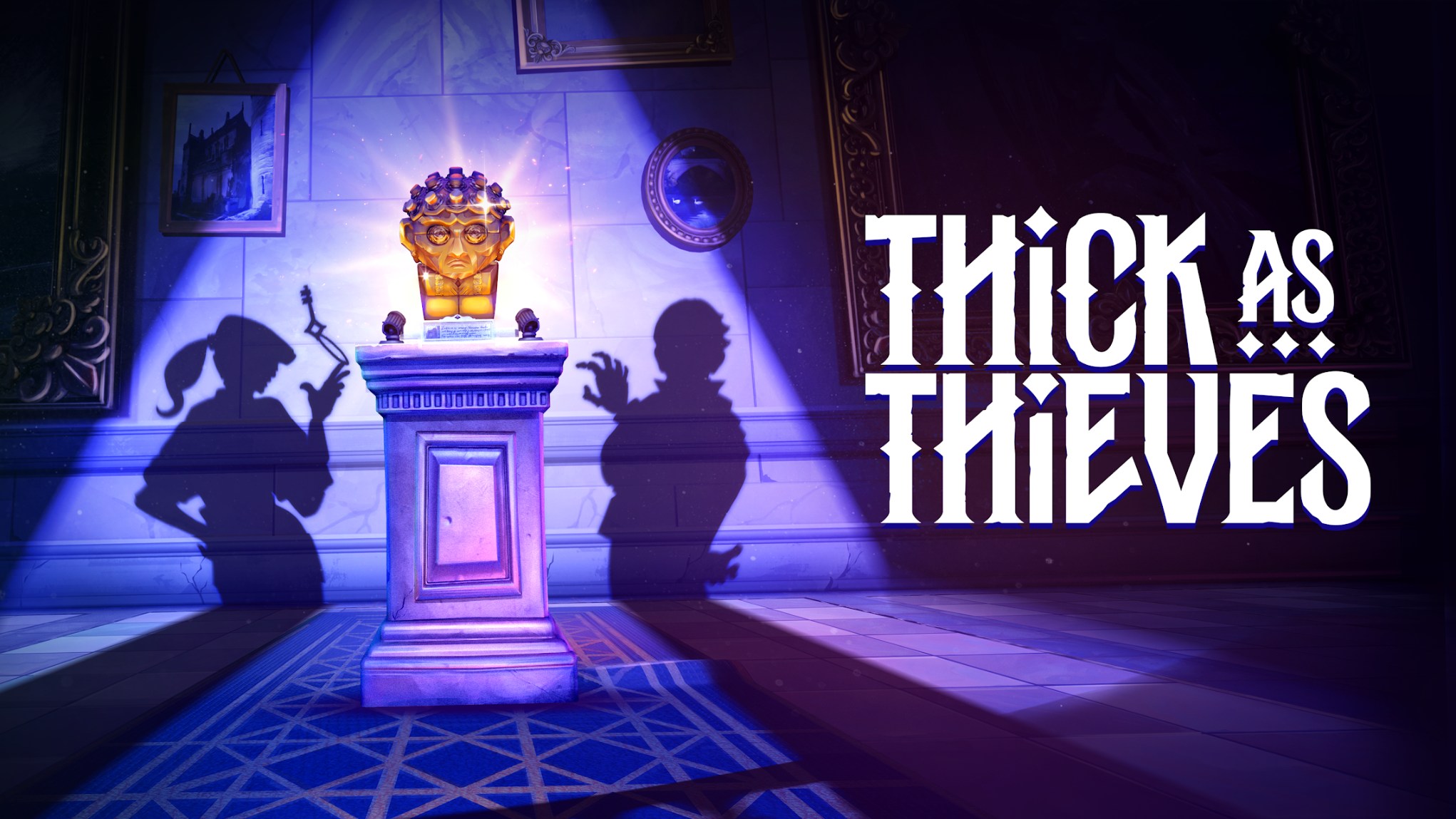
Thick As Thieves is a stealth heist game from OtherSide Entertainment — the studio headed by Warren Spector (Deus Ex, Thief: Deadly Shadows) and Paul Neurath (Thief: The Dark Project) — that launched on May 20, 2026 for $4.99. That price point is almost everything you need to know before making a purchase decision. At $5, the game is an easy recommendation despite its very real limitations. At $30, it would be a disappointment. The gap between those two truths explains almost every review you’ll read about it.
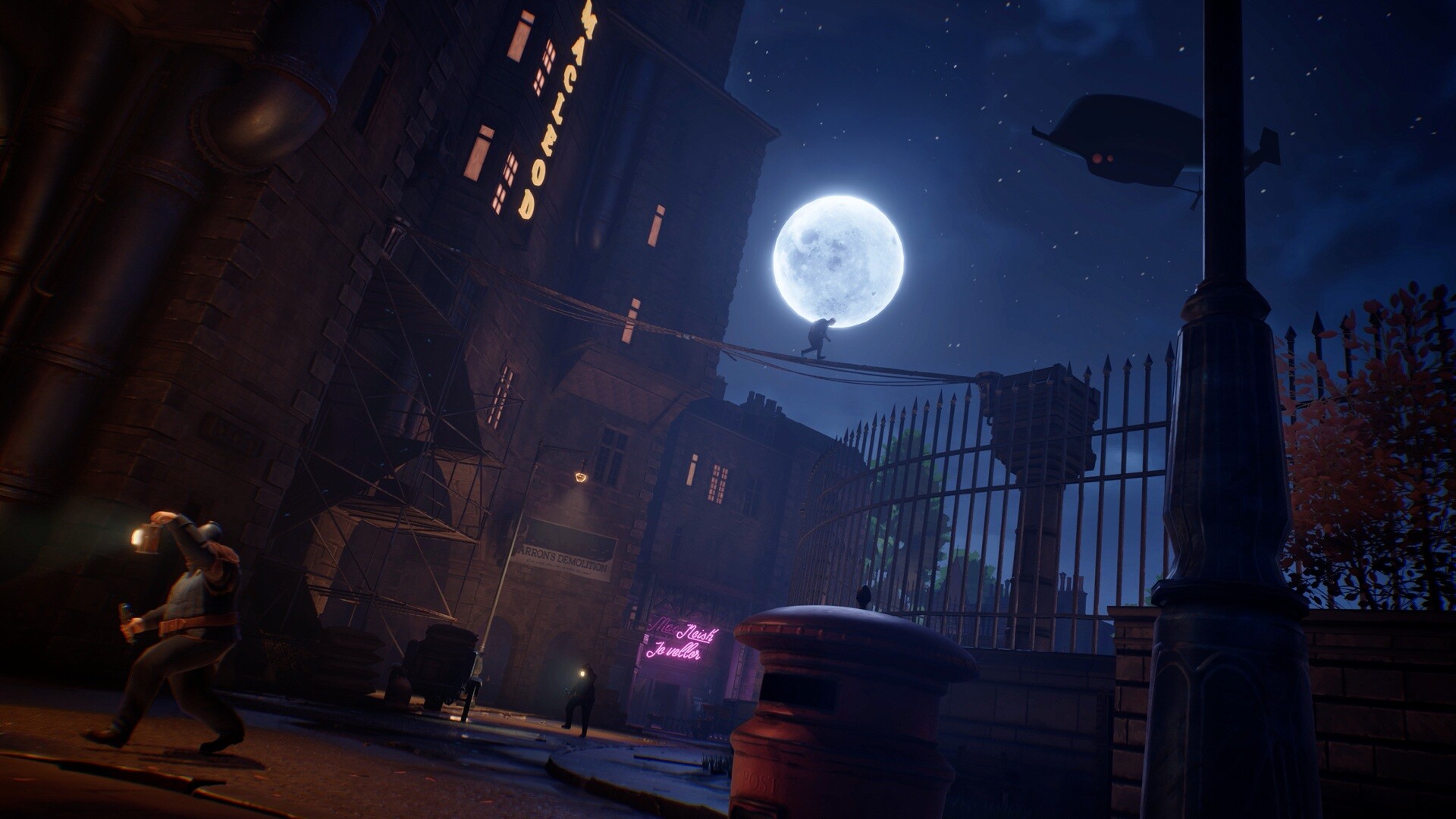
Set in the shadow-draped 1910s Scottish city of Kilcairn — where magic and early technology are beginning to collide — Thick As Thieves is a co-op stealth game about pulling off heists across two maps using gadgets, cunning, and creative improvisation. It’s short, rough around the edges, unambiguously unfinished, and fun. Genuinely, surprisingly fun in co-op, and worthwhile even solo. That it exists at all feels like a story about a studio that had bigger plans, hit obstacles, and decided to ship what they had rather than let it disappear entirely.
Thick As Thieves — What’s Actually Here
The game offers two maps — the Guildhall and Elway Manor — across 16 contracts and a four-hour campaign. You play as either The Spider (grappling hook, high mobility) or The Chameleon (disguise abilities, better for close proximity guard manipulation). Three difficulty levels and shifting guard/security layouts on each playthrough create genuine replayability beyond that initial runtime — veteran players have reported 10+ hours finding efficient routes and mastering the Master Thief difficulty, which strips save-scumming and demands tight moment-to-moment decision-making.
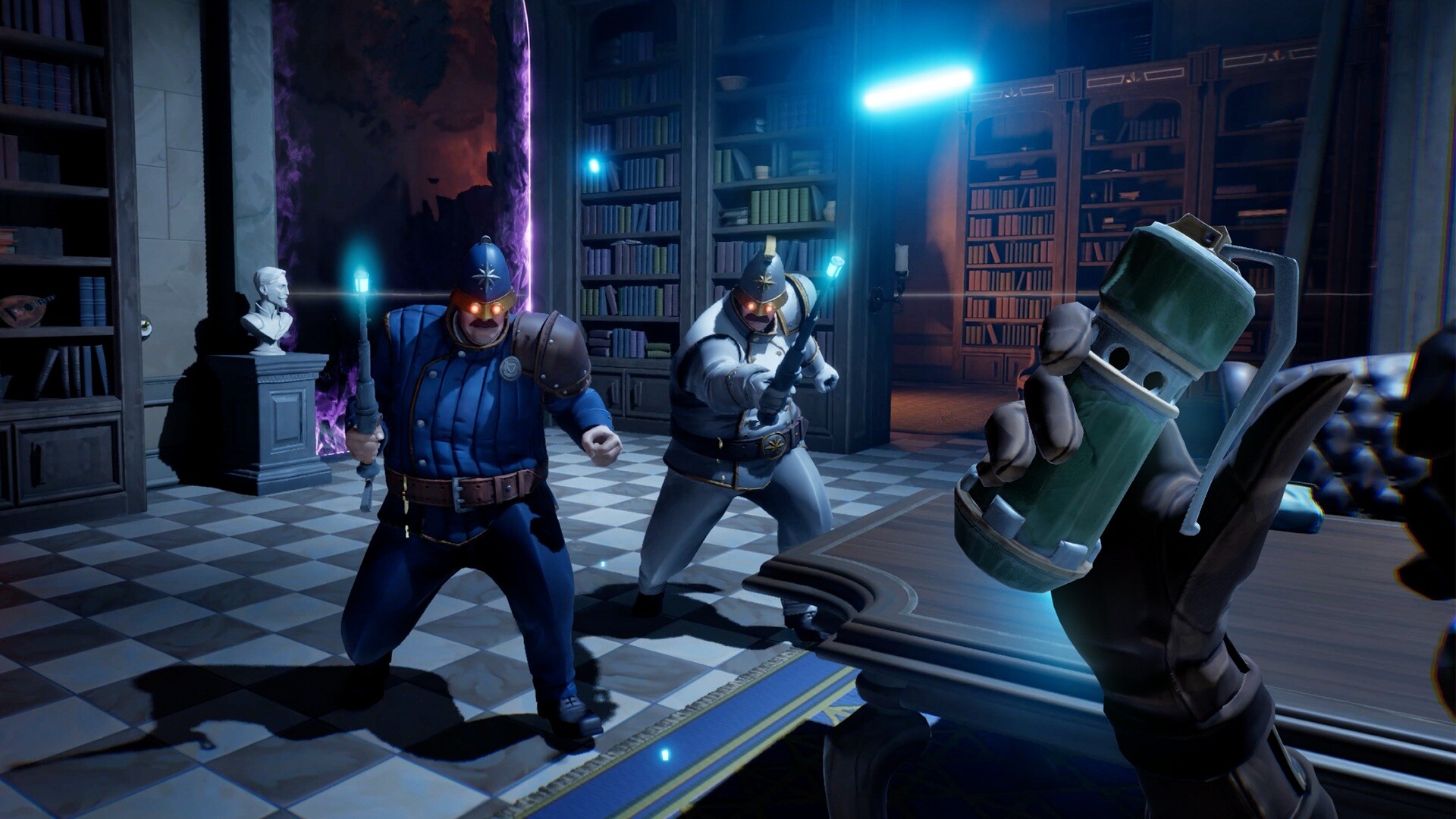
The core stealth feel is right. Crouching through shadows, using gadgets like the Slithersap to short-circuit security lights, lobbing Smoke Bombs to break line of sight, sending the Pickpocket Fairy to trigger remote switches — these interactions have the improvisational spirit of the Thief series that Spector and Neurath helped define. When a heist unfolds exactly the way you planned, or more often exactly the opposite of how you planned and you adapt on the fly, there are genuine moments of “yes, that’s the thing” that the genre’s best games produce.
The PvPvE Archaeology Problem
The most discussed issue with Thick As Thieves isn’t what it is — it’s what it was. The game clearly started life as a PvPvE experience, and the skeleton of that original design is visible throughout the current product. You can relock doors and cabinets you’ve opened, but there’s no reason to — there are no other player thieves to block. A footprint trail follows you as you move, a cool visual that serves no gameplay purpose when there’s no human hunter reading your path. The Chameleon’s disguise ability — brilliant in a PvP context where fooling human players into thinking you’re an NPC is genuinely tense — feels underpowered against AI guards who see through it quickly and aren’t fooled by it at all when cameras are present.
OtherSide acknowledged this history directly in their launch statement, describing the path through “multiple approaches, competitive and co-operative” before arriving at the current design. That transparency is appreciated and explains a lot. The resulting game isn’t broken by its heritage — but it does feel like a late pivot, and experienced players will spot the seams.
Launch Issues and the Developer Response
We participated in the pre-launch playtest for Thick As Thieves and flagged several concerns to OtherSide ahead of release: missing keybind remapping, mouse sensitivity presets rather than a slider, no FOV adjustment, no DLSS/FSR support, absent brightness settings, and a 2-player co-op cap that the community had flagged they wanted expanded. These were baseline quality-of-life gaps that would have been significant problems at any price point.
The developer response post-launch has been genuinely impressive. Game Director Jeff Hickman committed publicly to reading every review personally. Update 1 launched within days of release, adding an FOV slider, motion blur toggle, camera bounce reduction, mouse sensitivity sliders, and an FPS limiter. Key rebinding — a more complex undertaking — was confirmed as the priority for Update 2, expected within two weeks. This is exactly how a small studio should respond to launch feedback, and it goes a long way toward forgiving the gaps that shipped.
Should it have shipped in Early Access? Almost certainly yes — the game’s content volume, feature set, and the acknowledged roadmap of further updates all fit the Early Access model more naturally than a full release. The developer’s stated framing of this as an “introductory taste” and “appetizer” for a more robust world makes sense creatively, but creates a mismatch with Steam’s release category that has driven some justified frustration in the reviews.
Co-op and Replayability
Playing Thick As Thieves with a friend is meaningfully better than playing it alone. The game’s improvisational design — one player using the Spider’s mobility to reach high positions while the other coordinates as the Chameleon below — creates genuine tactical communication that solo play can’t replicate. The short session structure (30-45 minutes per contract) suits co-op gaming in a way that fits real schedules, and the lack of games in this specific Thief-style-heist-co-op niche is genuinely notable.
The maps are well designed for what the game is trying to do, and the two-map constraint is less limiting than it sounds given how differently each contract plays out with shifting objectives, security layouts, and gadget loadouts. Veteran players have found real depth in the Master Thief difficulty’s no-safety-net approach. The foundation is legitimately there.
The Good, The Bad, & The Ugly
| The Good | The Bad | The Ugly |
|---|---|---|
| Genuine Stealth Feel at $5The improvisational, gadget-driven stealth DNA of Thief and Dishonored is present and working. Creative heist moments justify the price alone. | PvPvE Skeleton ShowingRelockable doors with no hunters to block, footprint trails no one follows — the original PvP design creates confusion and wasted potential in the co-op product. | Should Have Been Early AccessThe feature gaps at launch, the developer’s “introductory chapter” framing, and the announced update roadmap all describe an Early Access product released as a full game. |
| Excellent Developer ResponseFOV, sensitivity sliders, motion blur toggle and more within days of launch. Jeff Hickman reading every review personally and committing publicly is exactly right. | Chameleon Is UnderpoweredThe disguise character designed for human-player deception is outclassed by the Spider in almost every AI scenario. Balance pass needed before it’s a genuine choice. | |
| Co-op Is Genuinely FunShort sessions, meaningful tactical co-ordination, and a niche nobody else is filling — playing Thick As Thieves with a partner is a distinct and enjoyable experience. | Two MapsContent is thin. Both maps are well designed, but 16 contracts across two locations across a 4-hour campaign is light even at $5. | |
| Atmosphere and Art DirectionKilcairn’s alternate-history 1910s Scotland with magical technology is a compelling setting. The aesthetic is distinctive and the soundtrack is genuinely good. | Story Goes NowhereFive narrative threads started and abandoned mid-campaign. The game just ends. At 4 hours that’s not enough time to develop anything meaningful. |
The Verdict
Thick As Thieves is a promising, unfinished, remarkably fun $5 game that filled an obvious gap in the co-op stealth market. The pedigree behind it is real, the core design is right, and the developer’s post-launch responsiveness suggests this has a genuine future if the sales numbers support continued development. It should have been Early Access. It wasn’t. Buy it for what it is — an excellent afternoon of co-op heisting and a proof of concept for something that could be great — not for the hypothetical product it might eventually become.
For more stealth and indie game coverage, check out our full reviews section.
Score Breakdown