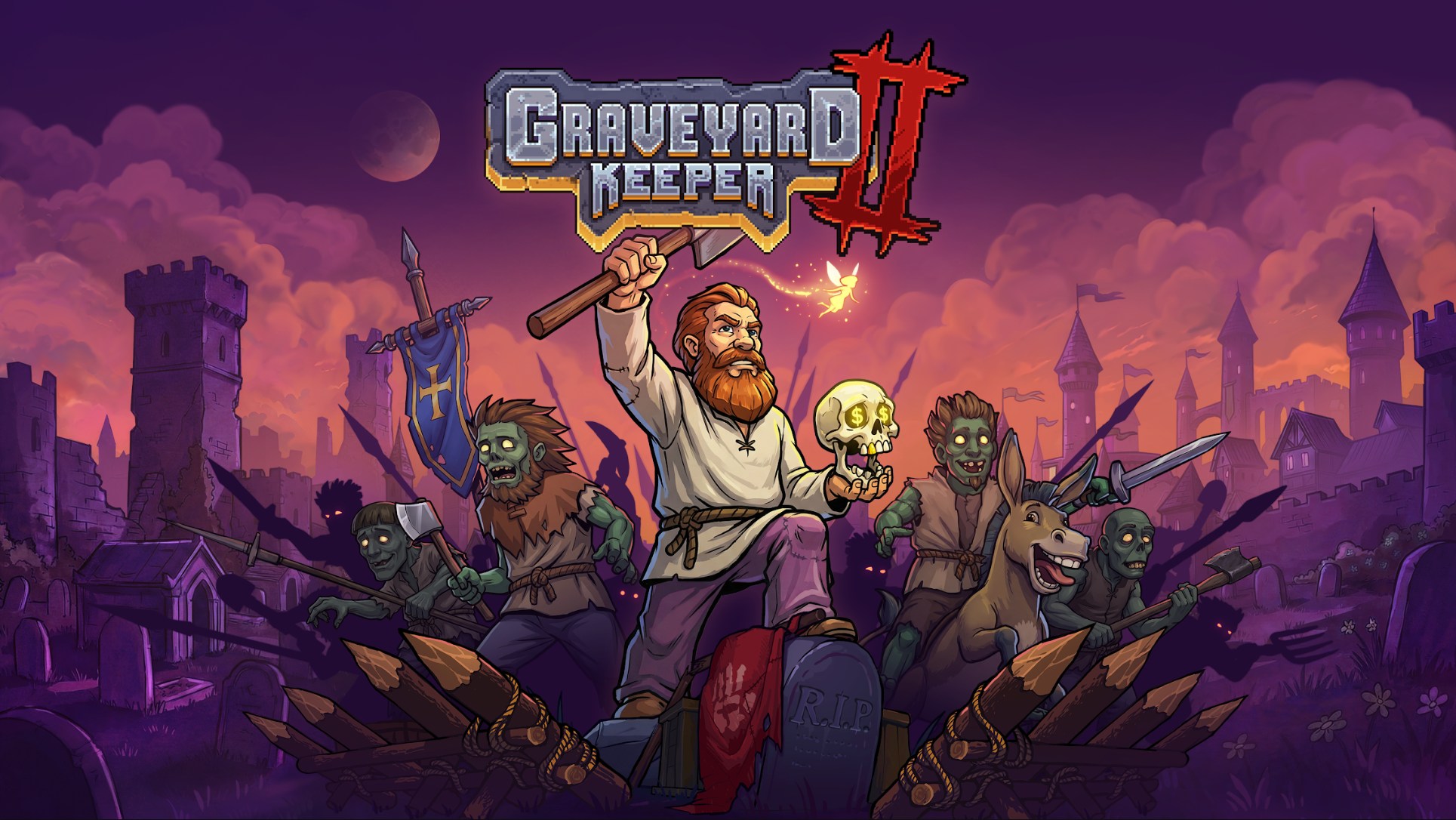
Game: Graveyard Keeper 2
Developer: Lazy Bear Games
Publisher: tinyBuild
Genre: Graveyard Sim / Automation / Tower Defense
Releases: September 22, 2026
Platforms: PC · PS5 · PS4 · Xbox · Switch 2 · Switch
Price: $24.99 · 20% off pre-purchase
Engine: Unreal Engine 5 — rebuilt in 3D
Steam Deck: Unknown
Demo: Free, ~3–4 hours, progress carries over
📋 What We Played, and What We Didn’t
We were given early access to the full release build ahead of the September 22 launch — not the public demo. That build carried a defined stopping point from the publisher, so while everything below is from the real game rather than a preview slice, we have not seen the late game.
Two systems are therefore under-assessed: large-scale zombie automation with underground factories, and the full scope of the combat layer. Both are flagged where relevant. This is a launch-window verdict, and we’ll revisit once we’ve taken a save deep.
$24.99Price
8Years Later
5Platforms
5Months Reveal to Launch
11Languages
⚰️ Know this first: the apocalypse is your fault. Graveyard Keeper 2 opens with you imprisoned, accused of destroying the world over the eight years since the first game — and the zombie plague is a direct consequence of the undead automation you built in Graveyard Keeper 1. It’s rare for a management sim to treat its own player’s optimal strategy as original sin.
⚖️ Your Best Playthrough Was the Crime
This is the narrative gamble, and it’s the cleverest thing in the game.
In the original, mass-resurrecting corpses for free labour wasn’t a dark option — it was the correct strategy. Everyone did it. It was how you made the graveyard profitable.
Graveyard Keeper 2 charges you for it. You wake in an Inquisitor dungeon eight years on, chained, told by a fairy that “it took you 8 years to ruin this world”, and then released into the ruins of a kingdom overrun by the exact workforce you built.
And then — the joke lands perfectly — you’re made Grand Inquisitor and told to fix it. Using zombies. Because who fights zombies better than better-equipped zombies?
It’s a sequel that understood what players actually did in the first game and built the entire premise out of the consequence. Very few management sims are willing to make your optimisation the villain.
Deeper than six feet
“I’ve spent the last few hours burying bodies for a living and somehow this is the most relaxed I’ve felt all week.”
Graveyard Keeper 2 arrives on September 22 from Lazy Bear Games and tinyBuild — a direct sequel to the 2018 original, rebuilt from scratch in Unreal Engine 5, and launching simultaneously on PC, PlayStation 5, PS4, Xbox, Switch 2 and Switch.
Our verdict: This grotesque sim sequel brilliantly blends graveyard management with undead army battles in a hilariously unhinged medieval setting that’s both deeper and funnier than the original. On what we’ve played, it’s a substantial step up — with two genuine question marks we couldn’t resolve.
The 3D Rebuild Was an Engineering Decision
🏗️ Same Camera, Completely New Foundation
The original was stylised 2D pixel art. The sequel is full 3D in Unreal Engine 5 — while deliberately keeping the same fixed top-down camera angle so it still reads instantly as Graveyard Keeper.
The justification is the interesting part, and Lazy Bear were unusually honest about it: the original’s tech tree was limited by the restrictions of 2D. They moved to 3D not to look prettier but to unlock systems the old pipeline simply couldn’t support.
That’s re-engineering disguised as continuity — and it’s a far better reason than “it looks nicer.” The payoff is everywhere:
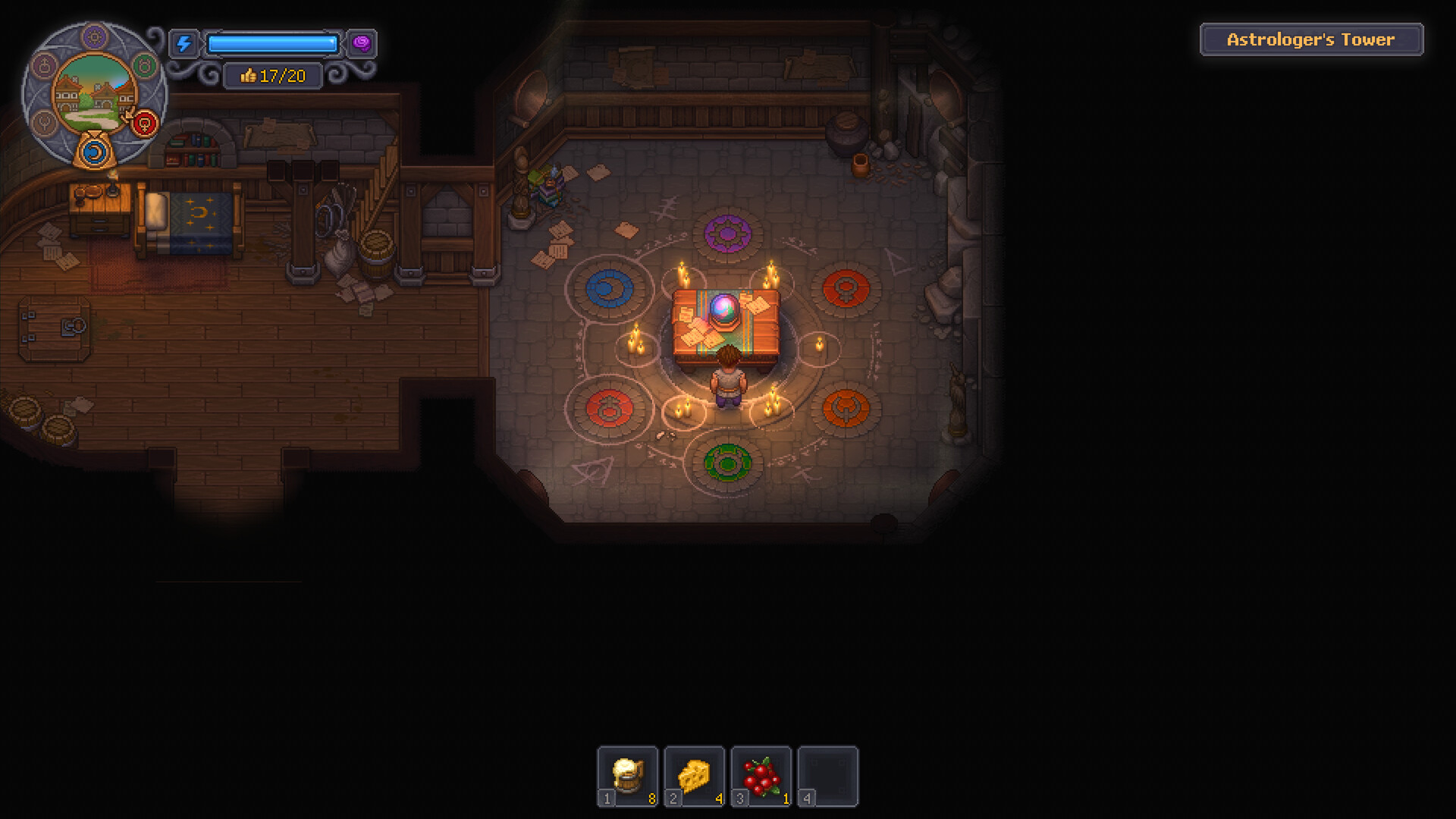
• The sun actually moves, and every object casts a shadow coherent with its position. Lazy Bear joke that in their world the sun orbits the Earth, as the best medieval thinkers imagined, and that pine tree shadows are precise enough to use as a clock
• Night is dynamic shading, not a flat colour filter dropped over everything
• Vegetation reacts to wind, and the reaction changes with the weather
• There’s a custom shader built specifically for mountain ponds
The small stuff is where it really shows. Water ripples properly and the light sitting on it changes with time of day. Clumps of flowers drift in the breeze slightly out of time with each other, so nothing reads as one animation looping. Walk through grass and it bends out of your way, then settles once you’ve passed.
And at night, lanterns come on with actual little bugs circling the light. As one of our writers put it: nobody would have complained if that wasn’t in the game. Somebody decided it should be anyway. It gives the place weather rather than wallpaper — and it is, frankly, way prettier than a corpse management sim needs to be.
Your Zombies Are People Now
🧟 Individual Workers
Each zombie has its own skill progression and specialisation — quarry, farm, alchemy, workbenches.
🏭 Underground Factories
Semi-automatic machines and conveyor belt lines producing complex items at scale.
😈 Sinners Work Best
Worker quality depends on the corruption of the source corpse. The worse the person, the better the employee.
🏷️ Ten Years’ Service
A zombie that sticks around long enough earns a name.
⚙️ A Factory Game Hiding Inside a Graveyard Sim
In the first game, undead workers arrived late and were fairly rigid. Here you get them much earlier, which completely changes the pace of progression — and they go far beyond “zombie stands at station.”
The smartest design call is treating each zombie as an individual rather than an interchangeable unit. They specialise. They progress. Swapping out a veteran wastes everything they’ve accumulated, so you think twice before reshuffling your team — which turns your workforce into something you’re actually invested in.
And the quality gradient is pure Graveyard Keeper: worker quality depends on how corrupt the source corpse was, so sinners make the best employees. The morality of the original’s grave-quality system, pointed straight at your labour pool.
Later on it opens into underground factories with conveyor belts and mass production. One of our writers called it a factory game embedded inside a graveyard sim, and was more excited by that combination than they expected to be.
Everything Feeds Everything Else
The structural achievement is how tightly the new systems interlock. City restoration isn’t decoration. Each rebuilt building brings residents back, and those residents become a recurring income source, a garrison that fights alongside your undead troops, and a site for fortifications.
So: graveyard management feeds the economy, the economy feeds automation, automation arms the army, the army reconquers the city, and the city generates more economy. For a sequel that piled this many new layers onto an already-dense formula, that loop is what stops it feeling like four games bolted together.
It also delivers on the original’s biggest unfulfilled promise. Graveyard Keeper 1 had a city behind heavily guarded gates you could never cross. It’s here now — abandoned, ruined, and rebuilding it is the backbone of the whole game.
Two Things We Couldn’t Settle
⚔️ Combat Might Be Seasoning Rather Than a Main Course
Battles work as tower defense: you lead squads of mercenaries or zombies, build barricades and archer towers, and capture control points to liberate city districts.
As a concept it’s perfect for this series — the joke of fighting a zombie apocalypse with better-equipped zombies is exactly the register Graveyard Keeper works in.
In practice, across what we played, it felt deliberately simple. It works as seasoning rather than the main dish, and we’re genuinely unsure whether that restraint is a virtue — keeping the focus on management — or a limitation that’ll wear thin across a full campaign.
⚠️ This is the system our stopping point cut us off from most. Lazy Bear published a “Let’s talk Combat” devlog days before launch, which suggests there’s more to it than the opening hours show. We’d rather say we don’t know than guess.
📉 Performance at Scale Is the Real Question Mark
The technical base is noticeably better than the original. Frame rates held steady during ordinary tasks, and loading between the graveyard, interiors and the village is close to instant — a considerable leap over the first game’s stumbles and freezes.
But: with several zombies working automation simultaneously, we noticed small fluctuations in frame pacing. Not graphical strain — the weight is clearly in the simulation calculations, with multiple characters running parallel routes.
Lazy Bear say they’ve rebuilt the routing system to handle dozens of simultaneous tasks. But if minor drops appear with half a dozen active workers, what happens in a late save with underground factories running? We couldn’t find out, and it’s the single biggest unknown here.
The demo is on every platform and progress carries into the full game. If you’re on modest hardware — or waiting on the Switch versions — test it first. That’s free, and it answers exactly this question for your machine.
The Launch Itself Is Worth Praising
📅 Five Months From Reveal to Release
Worth noting, because it runs directly against how this industry usually works.
Graveyard Keeper 2 was revealed on April 9, 2026 at the Triple-i Initiative showcase, dated at Gamescom’s Future Games Show in August, and ships September 22. Five months, no hype purgatory, no years of silence.
• No Early Access. The full scope — city reconstruction, automation, undead army, Grand Inquisitor — was announced as the finished product
• A steady devlog cadence between reveal and launch
• The original went free on Steam at reveal, putting the base game into new hands weeks before the sequel’s marketing ramped
• A demo on every platform, roughly 3–4 hours, with progress that carries into the full game
• A deliberate spoiler boundary — they revealed premise and structure, and preserved the ending
For a mid-size studio — Lazy Bear have been going since 2010, with Punch Club, the original Graveyard Keeper and Punch Club 2 behind them — that’s pipeline discipline larger studios routinely fail at. They didn’t show more than they delivered.
The one reservation on that front: a simultaneous five-platform launch is a serious logistical ask, and this genre has a long history of stalling specifically on Switch. The universal demo mitigates it — you can test performance before paying — but it’s the variable we’d watch.
Things to Know Going In
📋 Setting Expectations
• $24.99, currently 20% off at $19.99 on pre-purchase — that promotion ends at launch
• It’s a direct sequel and it assumes you know the first game’s shape, though the opening re-establishes enough that newcomers won’t drown
• There’s voice acting now — and you can turn it off if you preferred the original’s mumbling. A genuinely thoughtful option
• The new companion skull is Larry, not Jerry. A brave call given how beloved Jerry was, and Larry earns his place fast
• Zoom is handled through resolution scaling rather than a zoom control — unusual, and it works better than it sounds
• Autopsy returns and matters: extracting and replacing organs shifts white and red skulls, which raise and lower a grave’s maximum quality
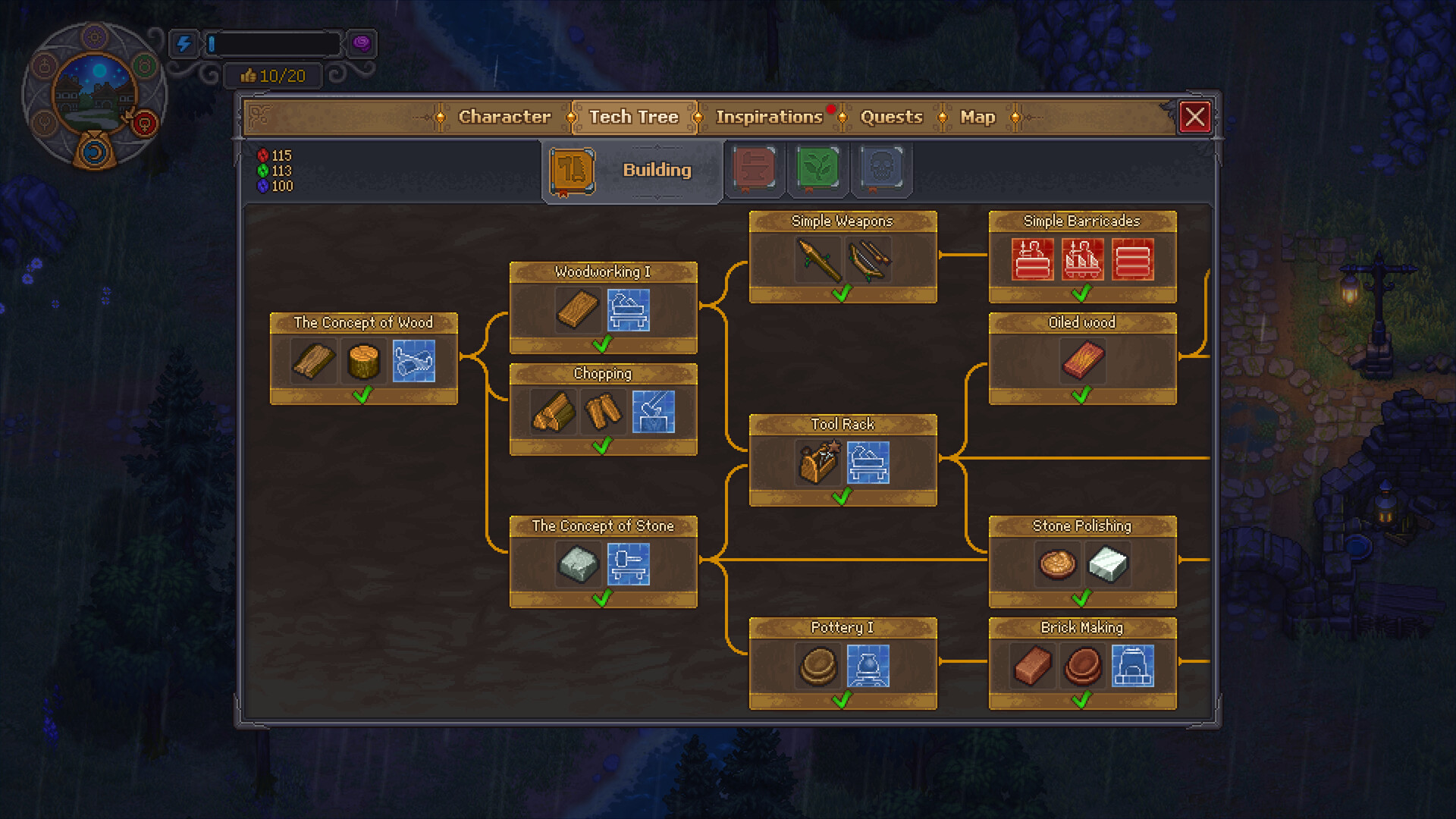
• The tech tree runs on blue, red and green gems, with some skills hidden behind reputation with specific characters
• Movement is quicker and more refined than the original, which makes the moment-to-moment feel far less like a chore — a direct answer to the most common complaint about GK1
• It’s still deliberately slow. Meticulous steps, careful stamina planning, repetitive manual labour until automation lines start running. That’s the genre, not a flaw
• ⚠️ Only three accessibility features listed, which is thin for a game this systems-heavy
• ⚠️ Steam Deck compatibility is Unknown — untested by Valve at the time of writing
• Pre-order bonuses include an exclusive outfit and a sauna, which is very much in the spirit of the thing
The Good, The Bad, & The Ugly
| The Good |
The Bad |
The Ugly |
| Your Own Optimal Strategy Is the Original SinThe apocalypse is a direct consequence of the zombie automation every player built in the first game — and now you’re Grand Inquisitor, cleaning it up with more zombies. Almost no management sequel is willing to make your best playthrough the crime. |
It’s Still Deliberately SlowMeticulous multi-step tasks, careful stamina planning, and a lot of manual labour before automation carries you. Lazy Bear shortened unnecessary travel, but if you want fast rewards this isn’t it. |
Performance With Many Workers ActiveSmall frame pacing fluctuations appeared with only half a dozen zombies running automation — simulation load rather than graphical. What that becomes in a late save with underground factories is the biggest thing we couldn’t test. |
| Zombies as Individuals, Not UnitsEach has its own progression, specialisation and role, earns a name after a decade of service, and its quality depends on how corrupt the source corpse was. Swapping a veteran wastes real investment — which makes you care about your undead payroll. |
Only Three Accessibility FeaturesThin for a game this dense with systems, menus and small text. The voice-acting toggle is a nice touch, but the options list is short. |
Combat May Be Too SimpleTower defense with mercenaries, zombies, barricades and archer towers — a great concept for this series, but across what we played it felt like seasoning rather than a main course. It’s also the system our build cut us off from earliest. |
| A Rebuild With a Real Reason Behind ItFull 3D in Unreal Engine 5 while keeping the original’s fixed camera, because the old 2D pipeline capped what the tech tree could do. Moving sun, coherent shadows, wind-reactive vegetation, and lanterns with bugs circling them at night. |
Five Platforms on Day OnePC, PS5, PS4, Xbox, Switch 2 and Switch simultaneously is a serious ask for a studio this size, and this genre has a history of stalling on Switch specifically. The universal demo helps; the risk is real. |
Steam Deck Status UnknownUnrated by Valve at the time of writing, on a game with fiddly menus and dense information. Try the demo on Deck before committing if that’s your platform. |
| A Loop Where Everything Feeds EverythingGraveyard funds economy, economy funds automation, automation arms the army, army reclaims the city, city grows the economy. And the city behind the gates that GK1 never let you enter is finally the whole point. |
You’ll Want a Second PlaythroughNobody plays their first run efficiently, and the game is built to reward understanding it. Fine if you enjoy that. Frustrating if you want to get it right first time. |
—Everything else we saw was polish rather than problem. Loading times, movement and general responsiveness are all markedly better than the original. |
The Verdict
Graveyard Keeper 2 is the rare sequel that identified exactly what its predecessor got wrong and fixed it structurally rather than cosmetically. The original was beloved and genuinely tedious — long walks, rigid late-arriving automation, a city dangled behind gates you could never open. All three are addressed here, and the engine rebuild exists specifically to make that possible.
The zombie workforce is the standout. Turning your undead from interchangeable furniture into individuals with careers, specialisations and accumulated value transforms automation from a convenience into something you’re invested in — and tying worker quality to how sinful the corpse was is the exact grotesque logic this series runs on.
And the narrative premise is genuinely excellent. Making the player’s own optimal strategy from the first game into the apocalypse of the second is a trick that only works because Lazy Bear paid attention to what people actually did, and it gives the whole thing a thematic weight the original only gestured at.
Two things we can’t yet answer. Combat looked thin across what we played — and it’s the system we saw least of, with a combat devlog landing days before launch suggesting more depth than the opening shows. And performance held up until several zombies were working at once, which raises an obvious question about a late save with factories running. Neither is a red flag. Both are honest unknowns.
The honest read: play the demo, then buy it. The demo is free, runs on every platform, takes 3–4 hours, and — crucially — your progress carries into the full game, so it costs you nothing but time. It also answers the performance question for your specific hardware, which is the one thing we genuinely can’t answer for you.
If it runs well on your machine and the first few hours land, this is shaping up to be one of the best sim sequels of the year. We’ll revisit once we’ve taken a save properly deep.
For more game reviews, check out our full reviews section.
Score Breakdown
Visual Rebuild & Environmental Detail9.5/10
Zombie Automation Design9.5/10
Development Transparency9.5/10
Quality of Life vs the Original9.0/10
Loading & Transitions9.0/10
Voice Acting (and the Toggle)8.5/10
Performance at Scale6.0/10
Accessibility Options4.0/10
Final Score — Pre-Release Build
8.5/10
Graveyard Keeper 2 — Lazy Bear Games
A sequel that made your best playthrough the crime
Related