


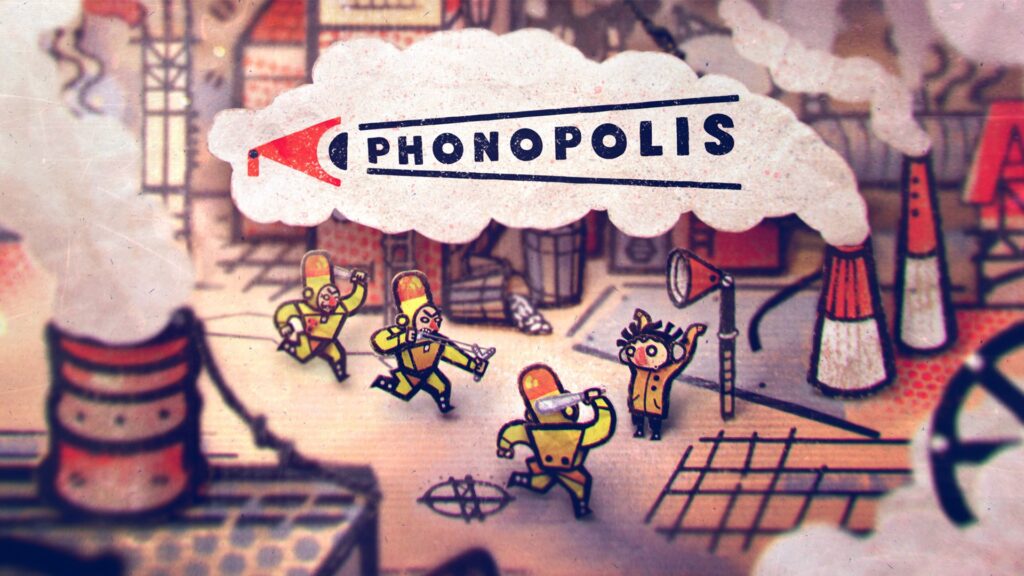
Phonopolis is the latest puzzle adventure from Amanita Design — the Czech indie collective behind Machinarium, Samorost, Creaks, and a catalog of games that consistently prioritise handcrafted artistry over scale — and it may be the most technically ambitious thing they have ever made. Every building, every character, every frame of smoke and flame in Phonopolis was first built or painted on actual cardboard and paper, then digitised and assembled into a hand-animated 3D world that runs at a deliberate 12 frames per second to preserve the look of classic stop-motion film. The result is something that genuinely cannot be described by screenshots and barely by video. You have to move through it to understand what you’re looking at.
The story follows Felix, a young dustman in the dystopian city of Phonopolis who becomes the only citizen immune to the omnipresent loudspeakers that dictate his society’s every action. The authoritarian Leader is preparing to broadcast the Absolute Tone — a frequency that will permanently strip every citizen of their will and individuality — and Felix, by accident or fate, is the only one who can stop it. Loosely inspired by Karel Čapek and George Orwell, the narrative explores social manipulation and individualism while keeping the overall tone playful enough that it never becomes oppressive. Metropolis built from cardboard, threaded with dry humour and quiet warmth.

Phonopolis — The Art and What It Actually Achieves
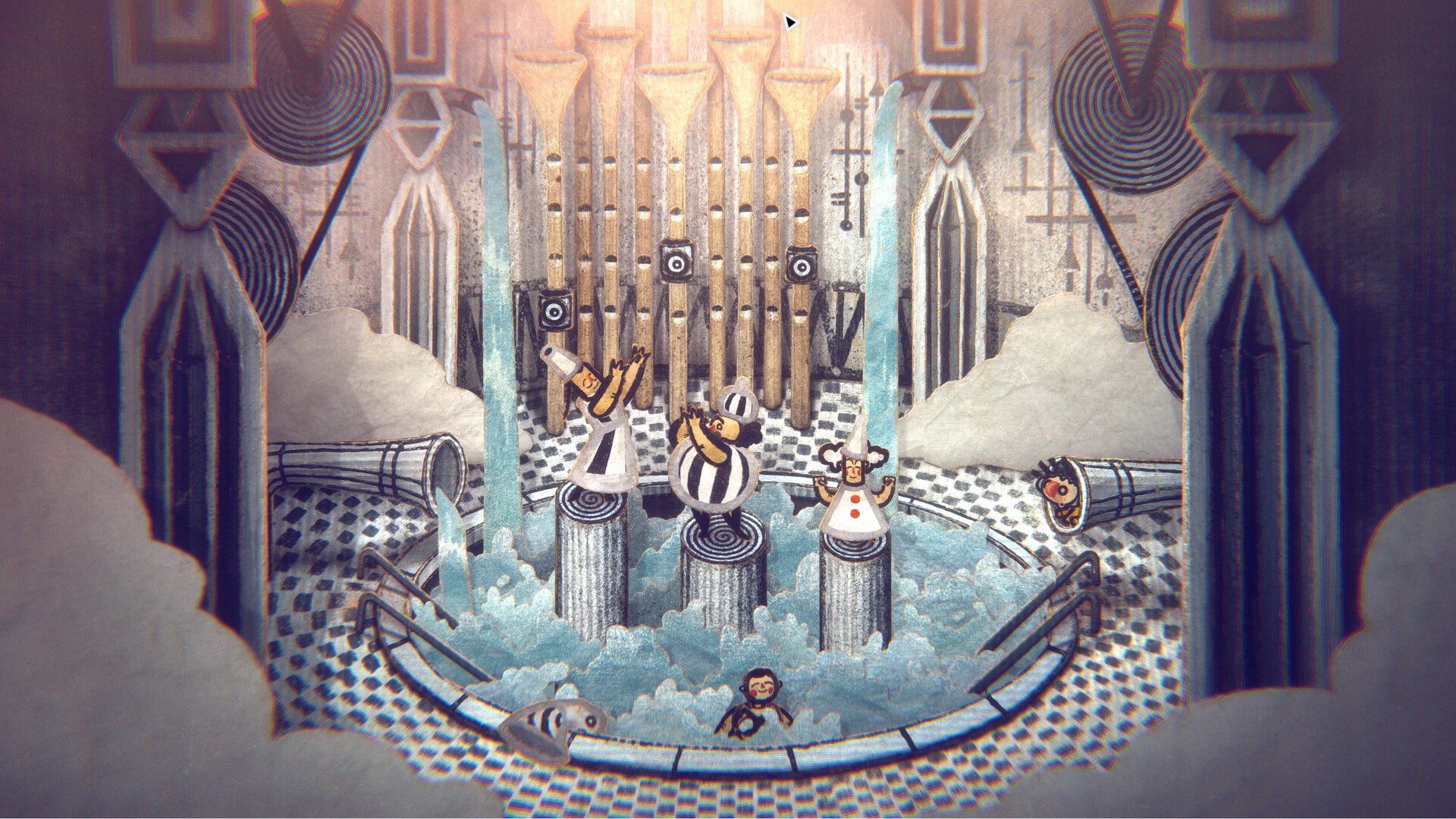
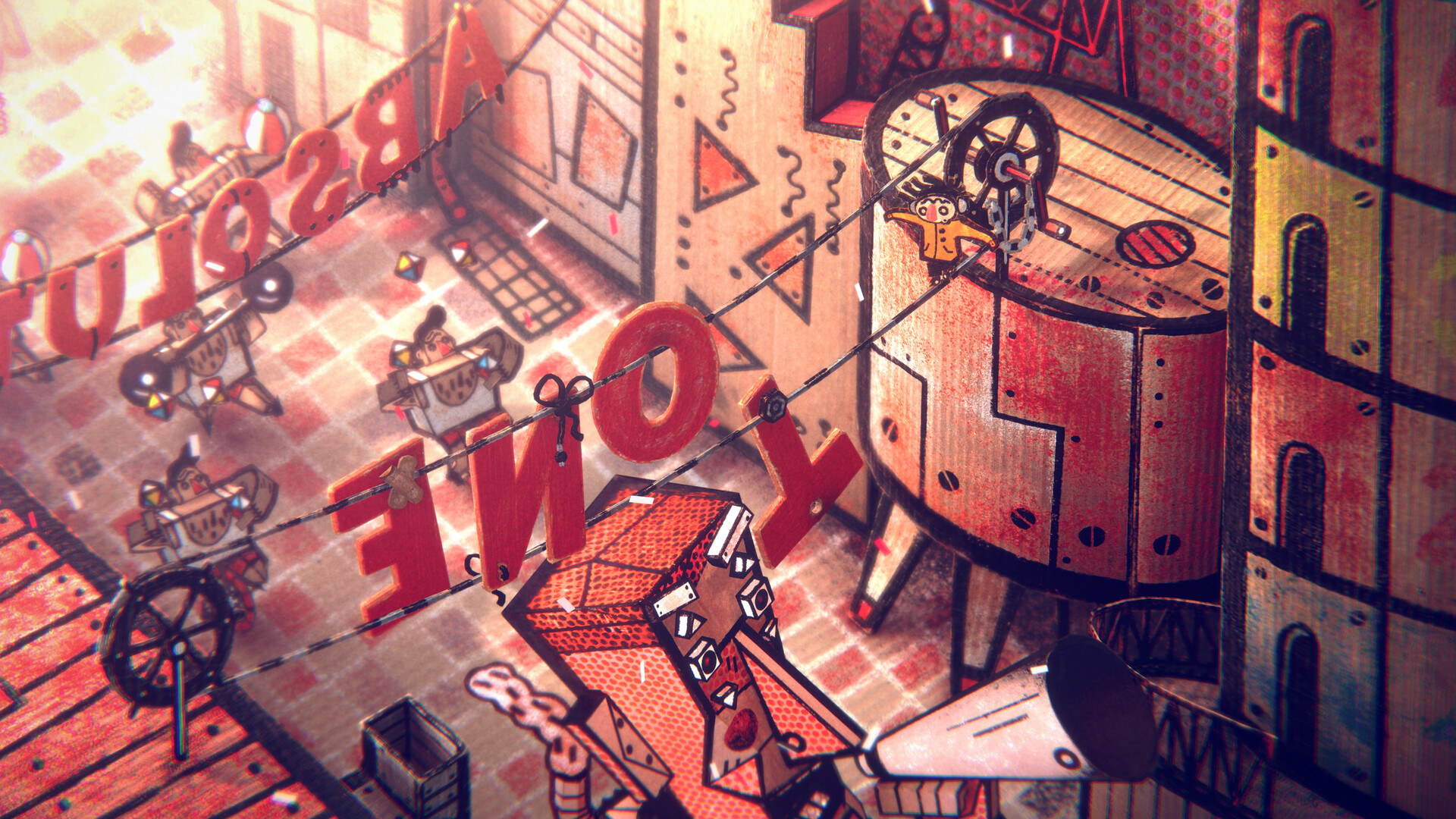
The art direction is Phonopolis’s most extraordinary quality and it’s worth dwelling on before discussing anything else. The visual style draws from the interwar avant-garde — constructivism, futurism, suprematism — movements that Amanita point to explicitly as both aesthetic and thematic influence, since these were artistic languages weaponised as propaganda in the same totalitarian contexts the game explores. A city that looks like a Rodchenko poster built from papier-mâché is simultaneously beautiful and legible as a statement about how authoritarianism aestheticises itself.
The tilt mechanic — where you can grab the screen and rotate the perspective slightly to view the cardboard world as a physical diorama — is one of those interface decisions that sounds like a novelty but delivers genuine wonder. Players who discovered it consistently describe stopping to just look at things for minutes at a time. In an era where AI-generated imagery has made visual art feel cheap and abundant, Phonopolis is a deliberate counter-argument: the human touch is in every frame, and you can feel it.
The Puzzle Design — What Works and What Divides Players
Amanita’s design philosophy with Phonopolis is “puzzle-boxes” — each challenge is a self-contained interactive system embedded in the world, where the joy is in tinkering with the pieces and discovering how they respond rather than in constructing logical solutions from first principles. Walls turn, floors shuffle, machinery engages, paper curtains tear. The puzzles are world-integrated rather than inventory-adjacent, and the result is a game where almost everything you touch does something delightful and unexpected.
This approach creates a specific player divide. Those who come to Phonopolis to play with a beautifully constructed toy — to poke things and discover reactions — will find it endlessly rewarding. The adaptive hint system, which activates automatically and surfaces information about missed interactions, keeps the experience moving without frustrating stops. Players who want to build rigorous mental models of systems and solve them by logic may find the occasional opacity of puzzle goals more frustrating — a late-game pipe puzzle that responds to interaction rather than legible physical rules is the most-cited friction point. One or two puzzles lean on moon logic that neither careful observation nor the hints fully resolves.
Floex, the Narrator, and What People Are Arguing About
The soundtrack by Tomáš Dvořák — Floex, who also composed for Machinarium and Samorost 3 — is exactly what it should be: eclectic, melodic, atmospheric, and calibrated to the world’s mix of warmth and unease. It’s one of the best game soundtracks of 2026 and it’s available separately, which it should be.
The narrator is more contested. Amanita’s previous games largely communicated without words, letting world and character do the work. Phonopolis introduces a narrator who voices every character and provides context throughout. The majority of players find this a welcome and charming addition — the storybook energy created by a single voice populating an entire city works. A minority feel strongly that the non-verbal storytelling Amanita does better than almost anyone was diluted by the narration, and there’s a genuine case there. The narrator doesn’t replace the environmental storytelling so much as layer on top of it, but for players who fell in love with Machinarium’s silence, the addition is a legitimate tonal shift.
The Short Length and Whether It Matters
At 4-6 hours for main story completion, Phonopolis is short. At $24.99 this will be a sticking point for some, and it’s worth being honest about: the content doesn’t fill the price point in terms of runtime. What it does fill is time-versus-craftsmanship — every hour of Phonopolis represents an extraordinary quantity of physical work. Every frame was made by hand. Asking how long it took to scan and paint a world of this density shifts the value conversation from runtime to labour, and the game earns its price on those terms. That said, players who evaluate games primarily by hours-per-dollar will find better value elsewhere.
The Good, The Bad, & The Ugly
| The Good | The Bad | The Ugly |
|---|---|---|
| The Cardboard WorldEvery piece hand-built, hand-painted, digitised, and animated at 12 FPS. The tilt mechanic makes the diorama quality physical and tangible. One of the most distinctive visual achievements in games in years. | Short Runtime vs. Price4-6 hours for $24.99 is the dominant criticism and it’s legitimate for players who weight value by runtime. The craftsmanship justifies it; the hours alone don’t. | Late-Game Puzzle OpacityOne or two puzzles in the final third respond to interaction rather than legible logic, and the hint system doesn’t fully resolve them. Moon logic in a game this thoughtful is more disappointing than it would be elsewhere. |
| Floex SoundtrackAmong the best game soundtracks of 2026. Eclectic, warm, unsettling in exactly the right places, and fully coherent with the world’s interwar aesthetic. | Narrator Divides Amanita FansLong-term fans of the studio’s non-verbal storytelling feel the narration dilutes the game’s strongest quality. Others find it delightful. Your mileage will vary based on which Amanita games you came from. | |
| Puzzle-Box DesignWorld-integrated challenges that reward tinkering and curiosity over rigid logic. The adaptive hint system modernises the genre without removing the satisfaction of discovery. | ||
| Felix Is Instantly IconicSilent-film physical comedy, genuine expressiveness, and a storybook charm that earns the label “endearing” without trying too hard. A great protagonist for a short game. |
The Verdict
Phonopolis is Amanita Design at their most technically ambitious and one of the most visually singular games released in 2026. In an age where AI-generated imagery is making handcrafted art feel like a deliberate protest statement, this cardboard dystopia built frame by painted frame has real weight as an artistic object. The puzzle design rewards tinkerers over logicians, the runtime is short, and the narrator will divide fans of the studio’s earlier wordless work. None of that changes what Phonopolis is: a beautiful, human, thoroughly considered piece of work from a studio that has been making these consistently for decades.
Play the free demo first if the price is a concern. You’ll know within twenty minutes whether this is worth $22 of your time. It probably is. For more indie and adventure game coverage, check out our full reviews section.