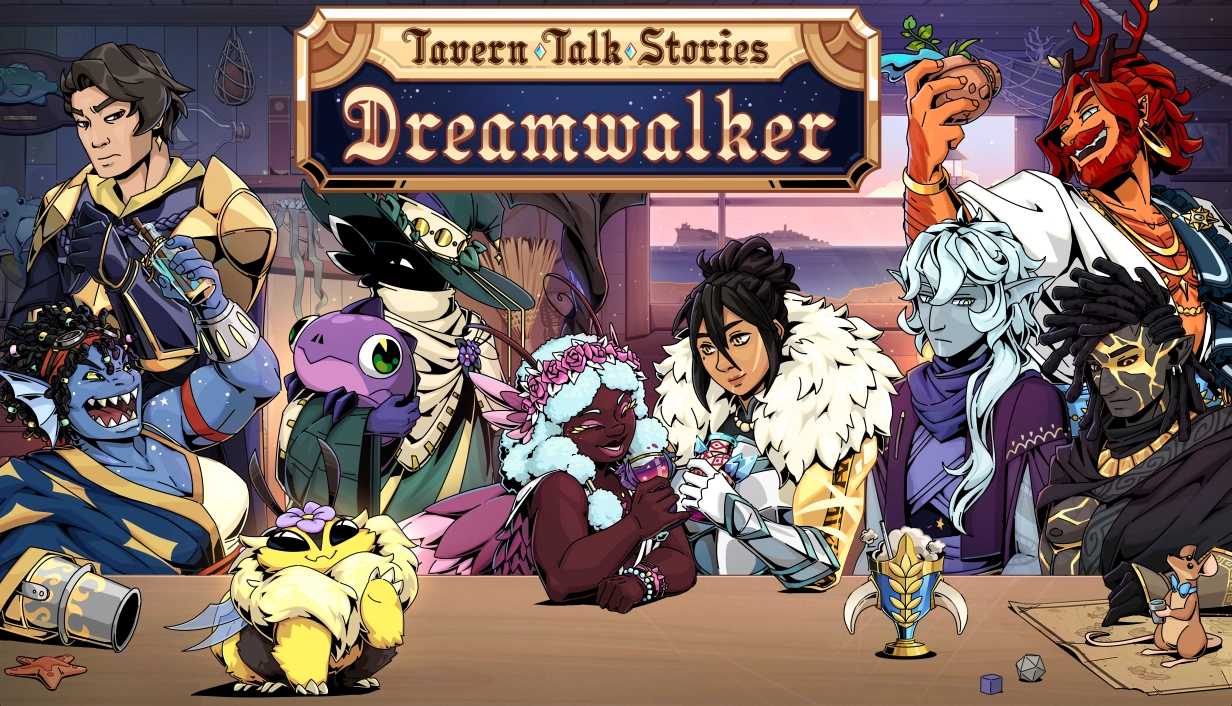
Tavern Talk Stories: Dreamwalker is the prequel to Gentle Troll Entertainment’s original cozy visual novel, set 36 years before the first game in a portside town on the coast of Borkam. You are the Tavernkeep of The Drowsy Dragon, a quayside bar with a special gift: the ability to mix magical drinks that alter the fate of the adventurers, sailors, and mercenaries who pass through your door. What those fate-altering drinks will do, and to whom, is the question the game asks you to sit with over 12-plus hours of beautifully written, character-driven storytelling.
This is a visual novel, not a management sim. The drink-mixing and quest-building mechanics exist to shape narrative rather than to challenge reflexes, and the game is upfront about that from the start. What it offers in exchange for that narrower mechanical scope is a story dense with emotional intelligence — one where the characters wrestling with grief, fear, responsibility, and regret are written with a maturity that most games at any price point never attempt.
The Drink-Mixing Mechanic — More Than Decoration
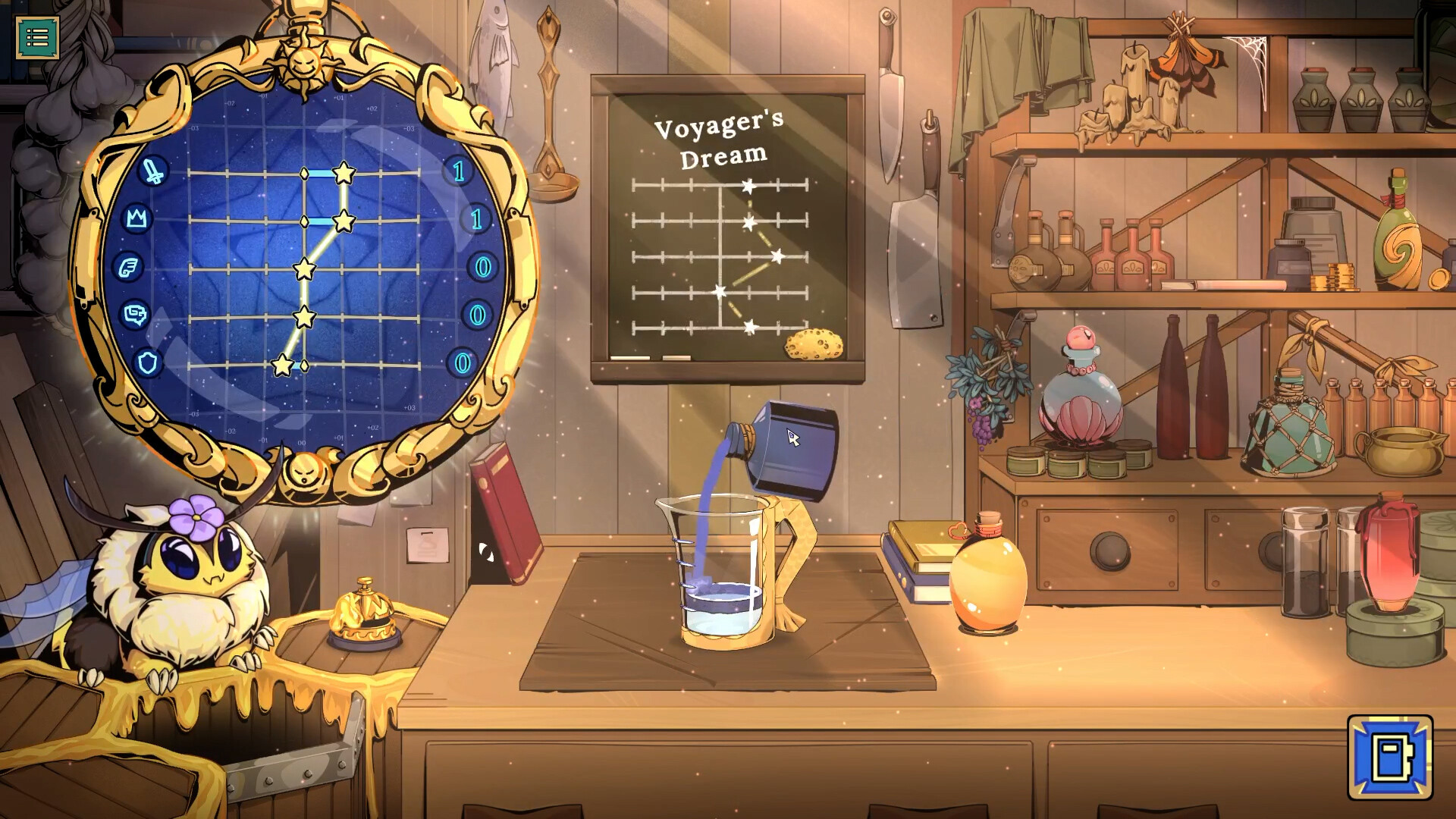
The central mechanical hook of Dreamwalker is the drink-mixing system, which is more demanding than it initially appears. Guests arrive with needs they may not state directly — vague hints and overheard rumours must be cross-referenced with the available ingredients and the desired outcome before the correct potion combination emerges. Multiple solutions exist for each guest encounter, and the “correct” drink is rarely the obvious one. This creates a puzzle layer that rewards attention rather than pattern memorisation, and the expanded complexity over the original Tavern Talk is immediately noticeable for returning players.
The quest-building mechanic — pinning rumours to a board and separating genuine leads from sailor’s yarns — adds a further layer of deliberate engagement that keeps the player active rather than passive during what would otherwise be a reading-only experience. These mechanics work not just as gameplay but as worldbuilding: the rumours you sort and the quests you send adventurers on shape the world outside the tavern in ways that feed back into the story.
The Writing and Characters
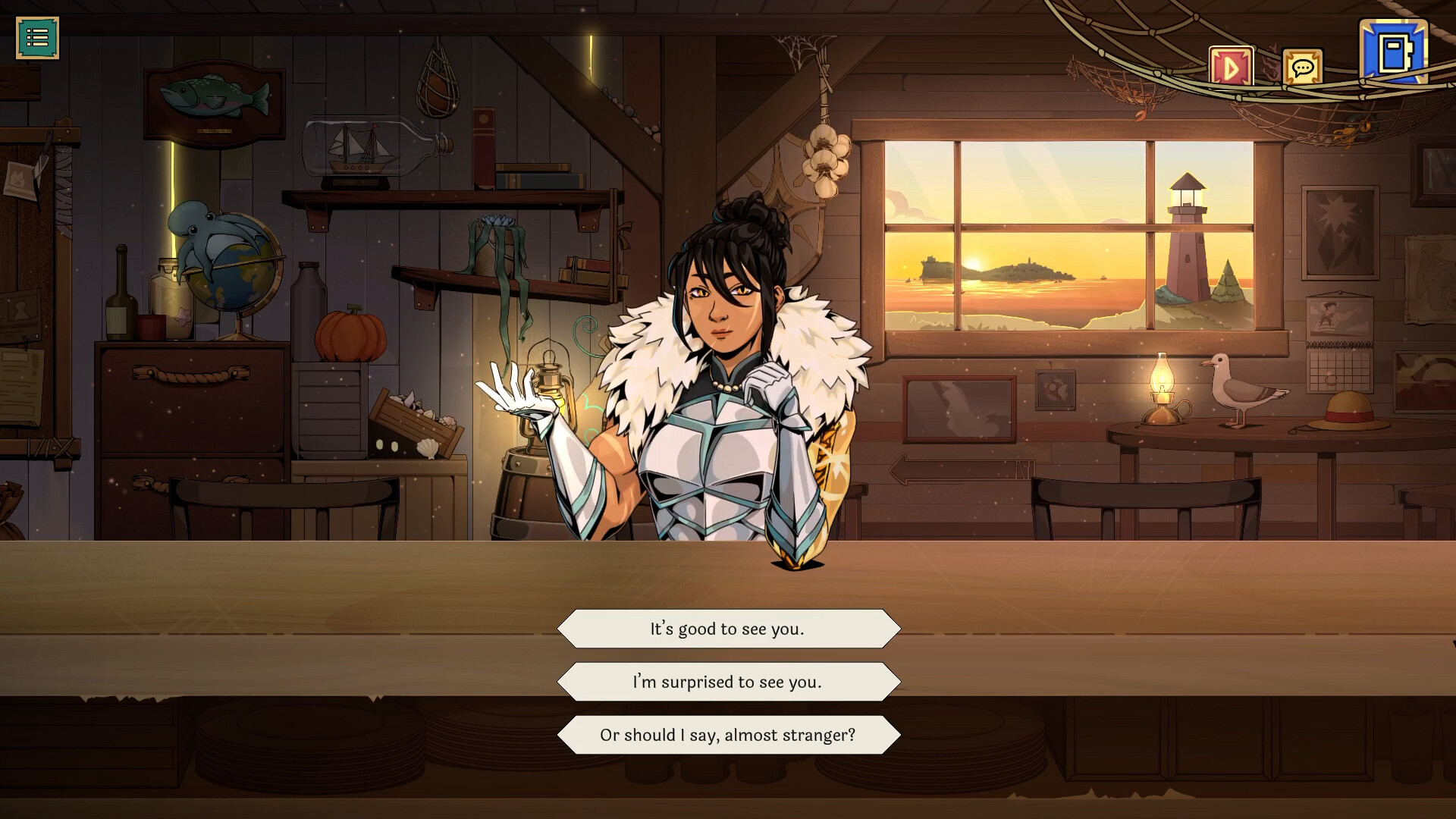
Eight characters pass through The Drowsy Dragon across the game’s runtime, each carrying storylines that intersect in ways that aren’t always immediately visible. The writing handles its subject matter — grief, regret, responsibility, identity — with consistent care and without the kind of heavy-handed delivery that makes games with mature themes exhausting. There are moments in the back half of Dreamwalker that hit hard precisely because the game has taken its time building to them, and several players have reported genuinely weeping at the story’s conclusion. That’s not an exaggeration from a review — it’s the consistent experience reported across the Steam community.
Returning players from the original Tavern Talk will find characters whose origins are meaningfully expanded here, and the dramatic irony of knowing where certain storylines eventually lead gives those arcs an additional weight. New players lose that layer, but the story works as a standalone — the completionist runtime of 13 hours is generous enough to build genuine attachment to the cast before the emotional climax arrives.
Where It Falls Short
The honest weaknesses are worth naming. Player choices feel less consequential here than in the original Tavern Talk — in the first game, the impact of your decisions on the final confrontation was visible and direct. Dreamwalker softens that relationship between choice and consequence, and players who came for meaningful agency will find the experience leans further toward curated story than player-driven narrative. The ending, while emotionally effective, moves quickly and leaves a couple of character arcs without the resolution they earned. Two significant characters exit the final chapters without a proper closing conversation, and their story threads simply conclude off-screen.
There are also bugged achievements — some chapter and story arc completions do not fire correctly, which is a minor irritation for completion hunters but has no impact on the core experience. Gentle Troll has been responsive to feedback historically and this is the kind of post-launch issue that typically gets patched.

The Good, The Bad, & The Ugly
| The Good | The Bad | The Ugly |
|---|---|---|
| Emotionally Intelligent WritingCharacters wrestling with grief, fear, responsibility, and regret are written with consistent maturity. The back half of Dreamwalker earns its emotional payoffs because of the care taken in building to them. | Choices Feel Less ConsequentialThe connection between player decisions and story outcomes is softer than the original Tavern Talk. Players seeking meaningful agency will find the experience leans more toward curated narrative than branching consequence. | Bugged AchievementsSeveral chapter and story arc completion achievements do not fire correctly. A minor issue for most players, but significant for completion hunters. Patchable — hasn’t been fixed at review time. |
| Expanded Drink-Mixing ComplexityThe potion system is more demanding than the original, with multiple valid solutions per guest encounter and hints that require genuine interpretation. A satisfying puzzle layer for a genre that rarely asks anything mechanical of its players. | The Ending RushesTwo significant characters exit without proper resolution. Their story arcs simply conclude off-screen, which is a meaningful disappointment in a game that invests deeply in character attachment. | |
| The SoundtrackDescribed by players as “mesmerising” — the lo-fi humming and lyrical beats capture the specific feeling of a TTRPG campaign in a way that few game soundtracks manage. Worth wishlisting the OST separately. |
The Verdict
Tavern Talk Stories: Dreamwalker charms with its cozy D&D-inspired setting and engaging drink-mixing mechanic that actually impacts the narrative. As a prequel and as a standalone visual novel, it is a confident, emotionally generous piece of work that treats its characters with uncommon care and asks its players to do the same. The weaknesses — softened player agency, a rushed ending, bugged achievements — are real but they are not the experience. The experience is 13 hours in a warm seaside tavern with eight people whose stories are worth knowing, wrapped in a soundtrack that players are wishlisting before the credits roll. That is what this game does, and it does it very well.
For more game reviews, check out our full reviews section.