
From Legacy to Legend
Identity is a tricky thing in the gaming industry. Last year, this game was known as Legacy: Steel & Sorcery, a hardcore PvPvE extraction game that punished players mercilessly. Today, it has re-emerged as Eldegarde, a rebranded, refocused, and fully released title that aims to bridge the gap between the high-stakes tension of Escape from Tarkov and the cozy progression of a classic MMORPG.
Released fully on January 21, 2026, Eldegarde arrives with a “Mixed” recent review score on Steam, a badge of honor for any game that dares to mix PvP and PvE communities. But dig deeper into those reviews, and you find a “Mostly Positive” core of players who have embraced this game for what it truly is: a “Dad MMO.”
It’s a game where you can hop on for twenty minutes, smash some goblins with a hammer, craft a better pair of boots, and log off without feeling like you’ve fallen behind the curve. It’s Dark and Darker with the lights turned on and a safety net installed.
Choose Your Violence
The genius of Eldegarde—and the primary reason for its rebrand success—is the separation of church and state. Or rather, the separation of PvE and PvP.
In the original iteration, you were constantly looking over your shoulder. In Eldegarde, you choose your anxiety level.
- PvE Expeditions: You can explore the game’s five unique zones, hunt monsters, and complete quests without the threat of another player stabbing you in the back. This is the “MMO-lite” experience. You keep your loot, you level up, and you relax.
- PvPvE Extraction: The classic mode. High risk, high reward. If you die here, your loot is forfeit to the victor.
- Arena: Pure, skill-based combat. No gear loss, just a test of your class mechanics against other players.
This flexibility allows the game to cater to two wildly different audiences simultaneously. As one Steam reviewer noted, “The game itself is awesome… PvP combat feels strategic and satisfying, reminiscent of classic MMOs. PvE is challenging with dungeon crawling that is surprisingly deep and fun.”
The Holy Trinity Returns
Eldegarde doesn’t try to reinvent the wheel with its classes; it just makes the wheel roll very smoothly. You have your classic fantasy archetypes: Warrior, Rogue, Hunter, Priest, Wizard, and Paladin.
The combat feels like a third-person action version of World of Warcraft arena combat. It is tab-targeting, adjacent, but relies on physics, hitboxes, and active dodges. A Warrior feels heavy and impactful; a Rogue feels twitchy and dangerous.
However, the AI can be a mixed bag. The “mobs” (monsters) can sometimes feel like “bullet sponges,” soaking up damage to artificially extend the difficulty. Additionally, the stagger mechanics can be inconsistent. Sometimes a heavy swing stops a goblin in its tracks; other times, they swing right through your attack, leading to some frustrating trade-offs.
Despite these hiccups, the “fantasy” of the combat holds up. It scratches that itch for dungeon crawling without requiring you to coordinate with 24 other people for a raid. You can run solo, or grab two friends (the party size is capped at 3) and form a classic “Tank, Healer, DPS” triangle to dominate the map.
Stonehaven and The Lodge
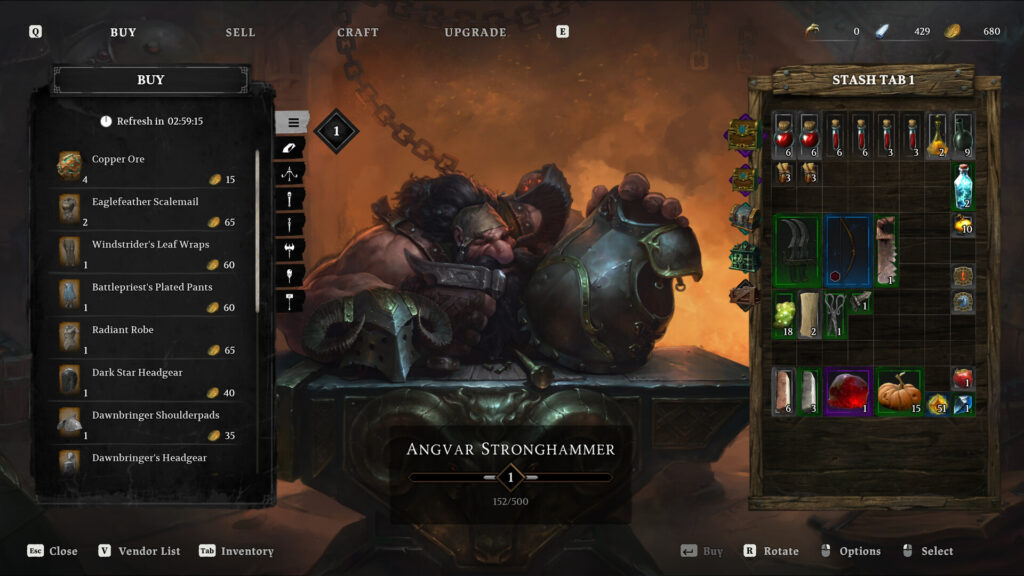
When you aren’t fighting, you are building. The hub world, Stonehaven, is where you spend your hard-earned gold and resources. The game features a robust crafting system that relies on vendor reputation.
Here lies the game’s biggest controversy: The Grind.
To unlock the best gear recipes, you need to gain reputation with vendors. One player reported being 15 hours in and only reaching Reputation Level 3… out of 100. This Korean-MMO-style progression cliff can be daunting. It extends the game’s life, sure, but it can feel like paddling upstream with a spoon.
On the flip side, the Lodge system is a brilliant addition. It’s your personal housing instance where you can build functional stations. You can have a Forge to process ore, a Bed to earn rested XP, and even a “Critter Habitat” where you raise Goldgrubs to spin golden thread for passive income. It gives you a reason to log in daily, even if just to check on your worms.
Visuals and Atmosphere
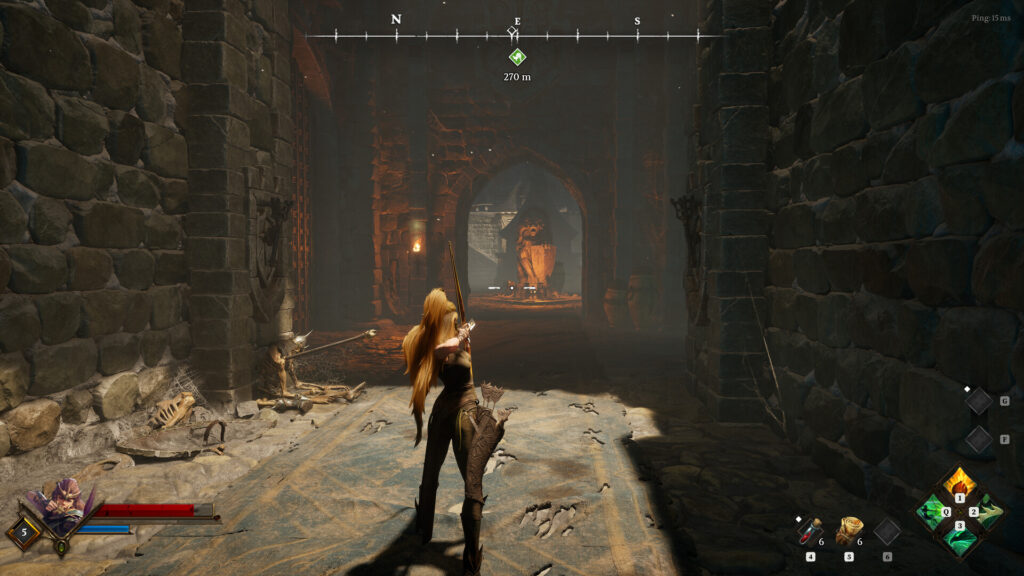
Built on a modern engine, Eldegarde looks fantastic. It steps away from the grim-dark, muddy aesthetics of many extraction shooters and embraces a vibrant, high-fantasy art style. The lighting is warm, the armor textures are detailed, and the spell effects pop off the screen.
However, optimization is still a work in progress. While the game lists reasonable system requirements (GTX 1660 Super for minimum), maintaining a solid 60 FPS in busy zones can be tricky. There have also been reports of game crashes resulting in gear loss, which is the cardinal sin of any extraction game. Without a “gear retrieval system” for crashes, a technical blip feels like a gameplay punishment.
The Elephant in the Room: Monetization
Eldegarde costs $24.99. It is not free-to-play, despite some confusing tags on the Steam store. However, it feels like a free-to-play game in its economy.
The inclusion of microtransactions in a paid Early Access title (before the 1.0 launch) rubbed many players the wrong way. While you can earn gear in-game, the existence of a cash shop in a buy-to-play title is always a friction point. The developers argue this supports ongoing server costs and seasonal updates, but for a player who just dropped $25, seeing a “buy currency” button can leave a sour taste.
Breakdown: The Good, The Bad, & The Grind
| The Good | The Bad | The Ugly |
| Flexibility: The ability to choose between PvE, PvPvE, and Arena is a game-changer for the genre. | The Grind: Vendor reputation grinds are tuned too high, requiring hundreds of hours for max rank. | Crash Penalties: If the game crashes, your character “dies” and you lose your gear. In 2026, this is unacceptable. |
| Combat: Satisfying, weighty class-based combat that feels like a modernized WoW. | AI Sponges: Enemies often have too much health and inconsistent stagger mechanics. | Microtransactions: A cash shop in a paid title ($24.99) always feels predatory, even if cosmetic. |
| The Lodge: Building up your base for passive income and crafting bonuses is addictive. | UI Changes: Long-time players dislike the new city UI, finding it less streamlined than the old version. | |
| Visuals: Vibrant, distinct zones and great armor design make the world fun to explore. |
Should You Play It?
Yes, if you miss the combat of MMORPGs but don’t have the time to raid, or if you like the idea of extraction shooters but hate the stress of PvP.
No, if you are looking for a purely single-player narrative RPG (the story is thin), or if you are intolerant of grindy progression systems.
Recommended for fans of: World of Warcraft, Dark and Darker, V Rising, Albion Online.
Eldegarde: Eldegarde is a game of second chances. By rebranding and pivoting to include a robust PvE experience, Notorious Studios has saved a game that might have otherwise died in the niche corner of "hardcore extraction." It is a game that respects the fact that its players have jobs, families, and finite patience. It allows you to engage with its systems on your own terms. If you want to sweat in the Arena, you can. If you want to mindlessly farm ore and build your lodge while listening to a podcast, you can do that too. It is rough, it is grindy, and the AI needs a brain transplant. But beneath the jank lies a genuinely fun fantasy adventure that captures the magic of an MMO without the massive time commitment. – Flare