Back at GDC, we met Noemi and her game Ratacombs — a social deduction game starring a lobby of cultist rodents — and wrote it up as one of our favourite discoveries of the show. At the time she was looking for help with the next steps: a team, a publisher, a plan.
Since then she’s built a small team, taken the game to Gamescom to meet publishers, and pushed it firmly into production — nearing Alpha and almost pitch-ready, with the current build put together in roughly six months. She recently sent us an updated packet of screenshots, animations, music and design documents. Here’s how far it’s come.
The Rites
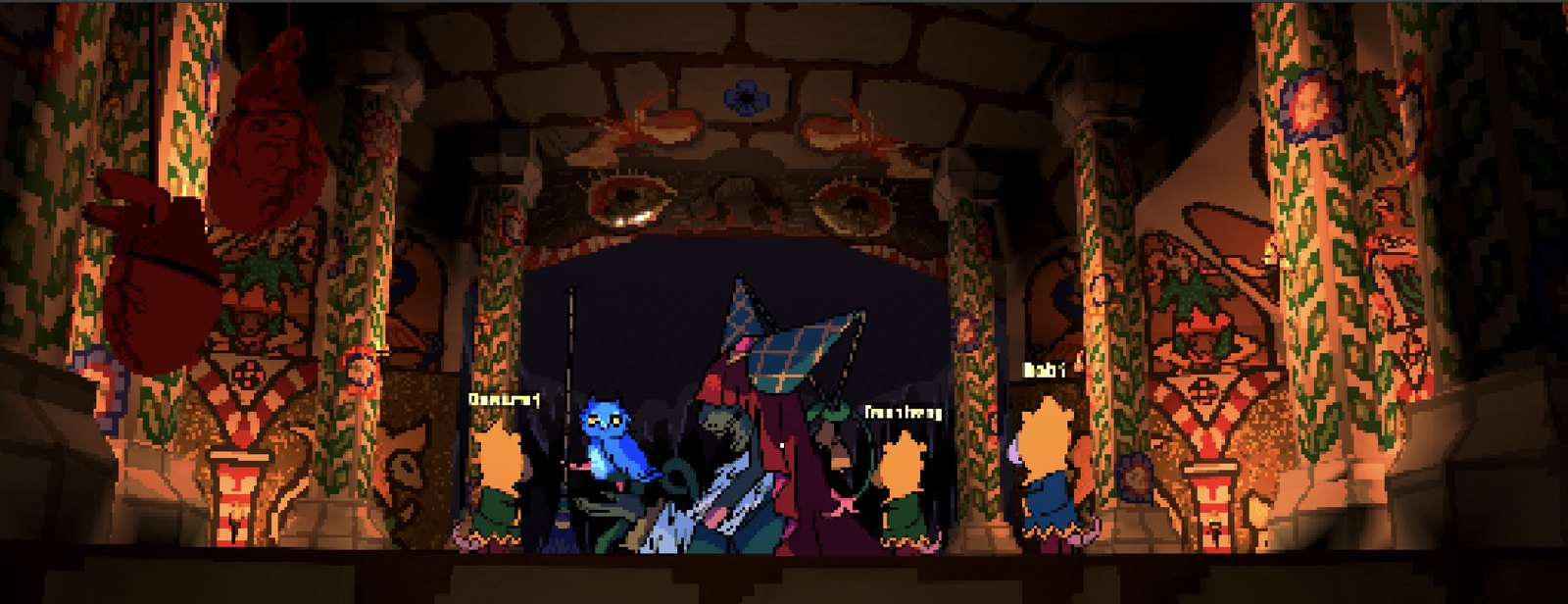
The biggest change is that the sacrificial preparations are now actual designed activities — and they’re gloriously silly. The game is built around four pillars: Appease, Deceive, Sacrifice or Awaken.
Prove your fealty to the goddess with improvised karaoke — in front of everyone.
Wrap the Vessel in invisible red thread without them realising what you’re doing.
Complete a drawing while keeping perfectly still — harder than it sounds under suspicion.
Bait the Vessel into saying specific words that you yourself aren’t allowed to say.
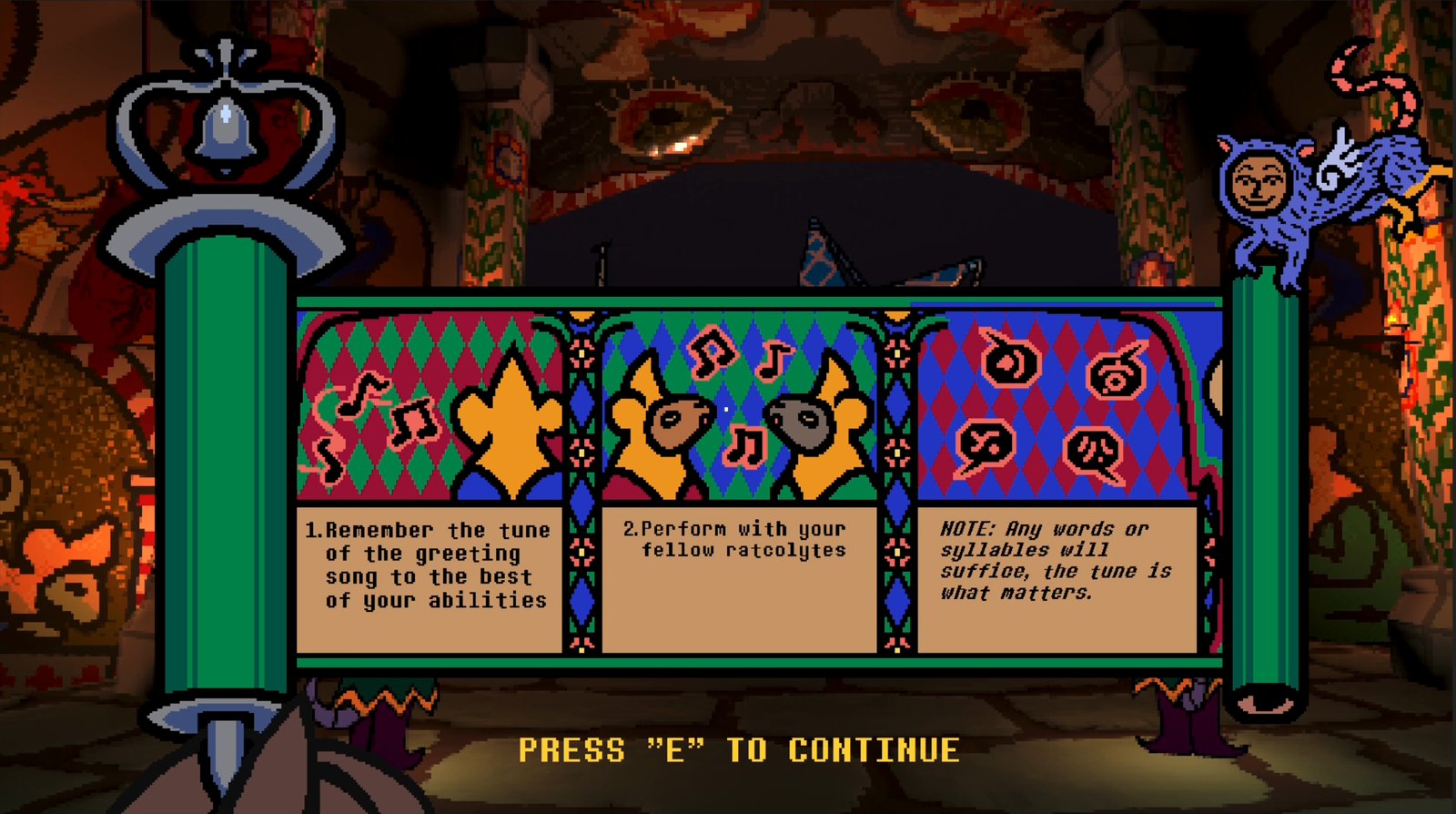
There’s also a colour-call deduction layer — players declare what colour they believe the Vessel to be, and some of those calls are lies. And the sacrifice itself has a gathering stage: collect the right ingredients, then physically restrain the Vessel and bring them before the altar. The grabbing and rope-release are already implemented in-engine.

What Happens When the Vessel Awakens?

Meet the Madame

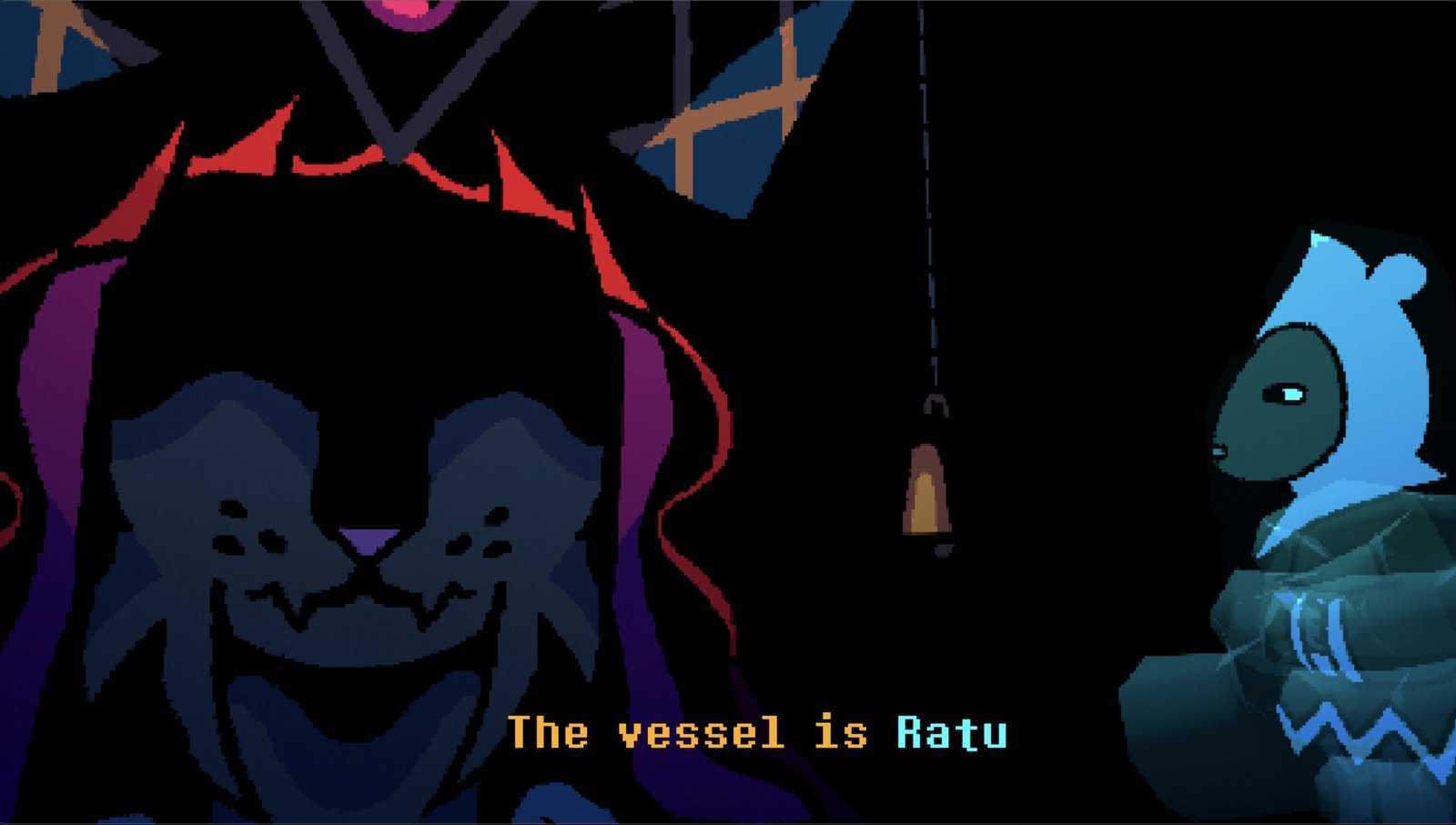
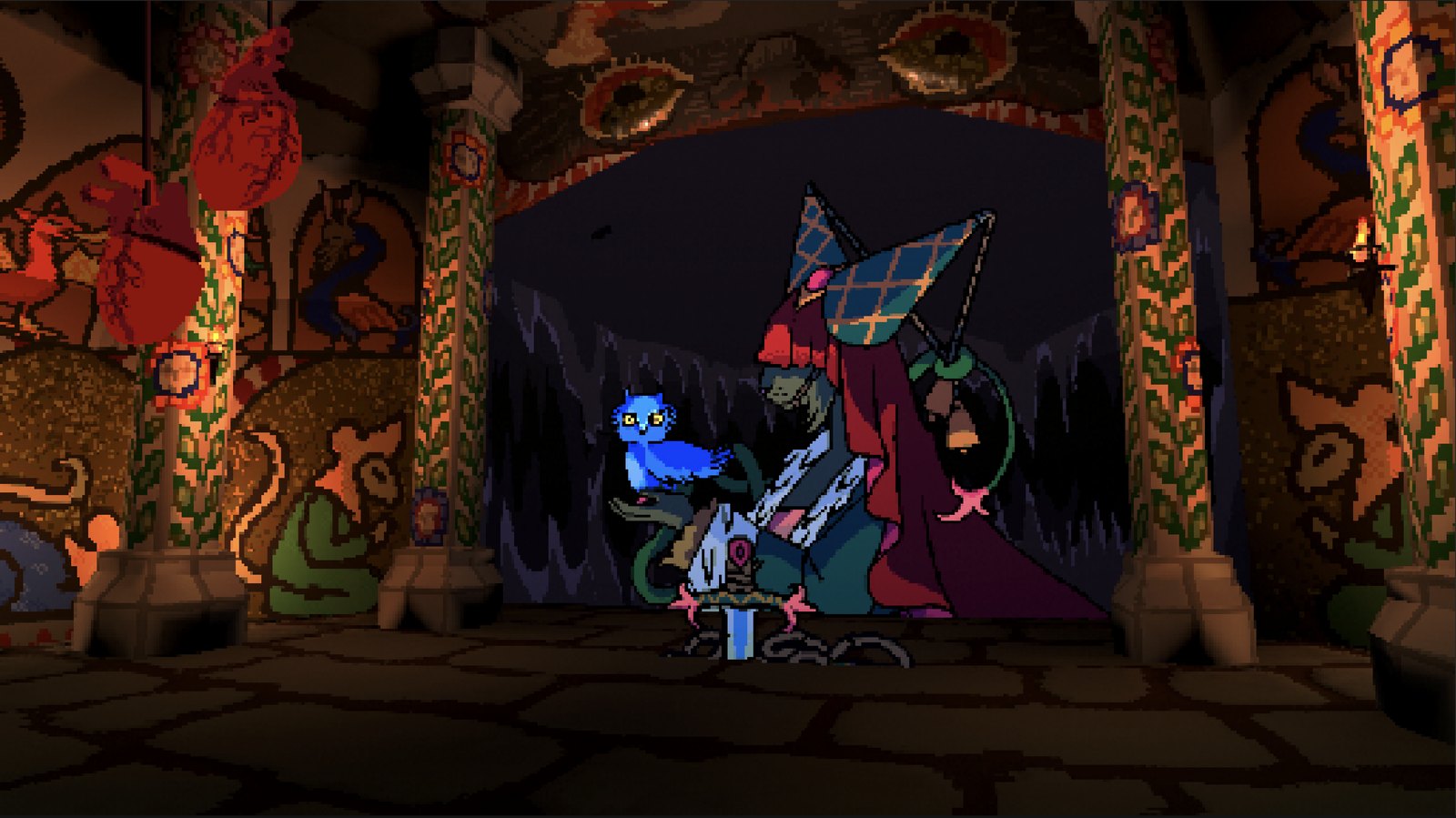
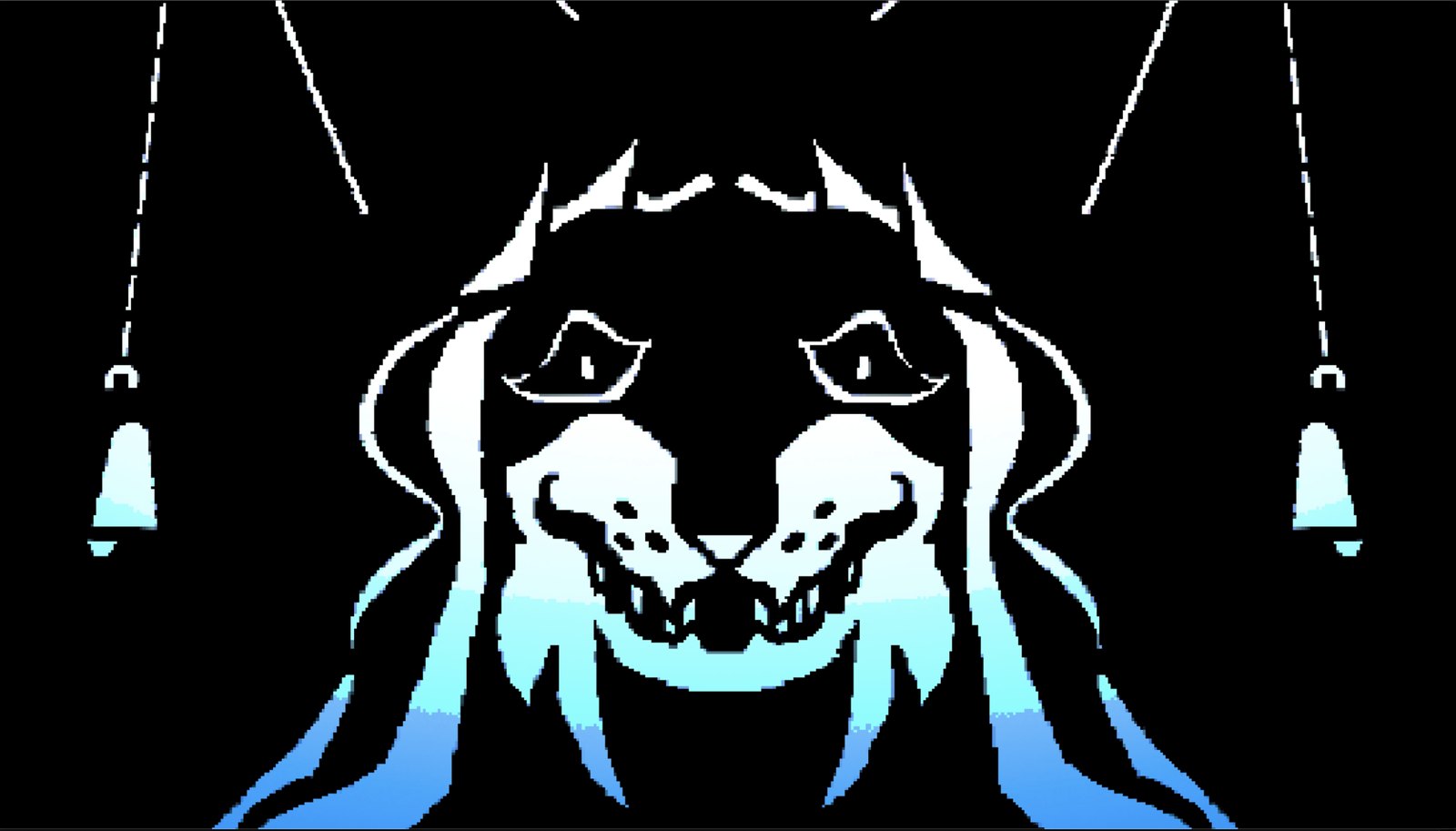
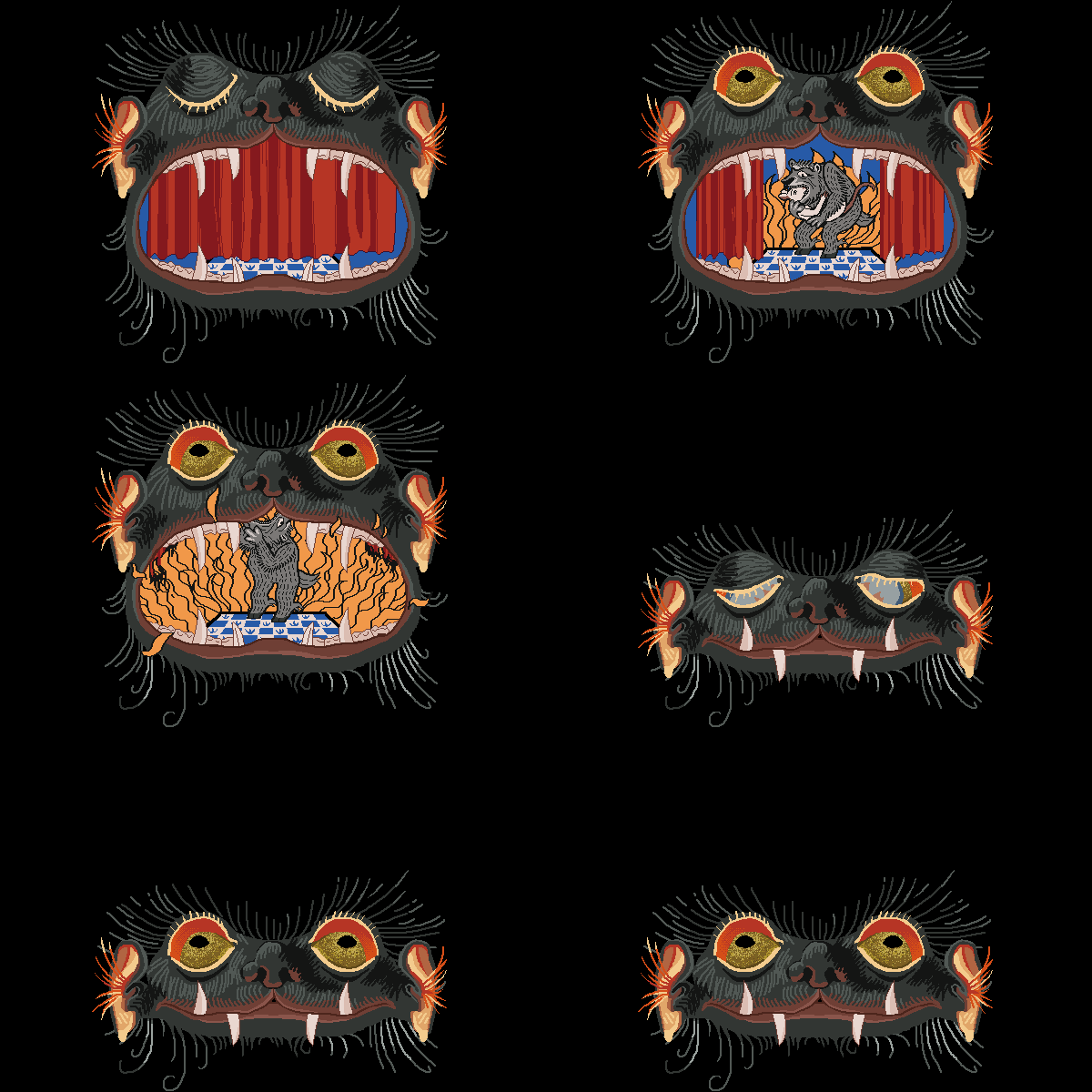
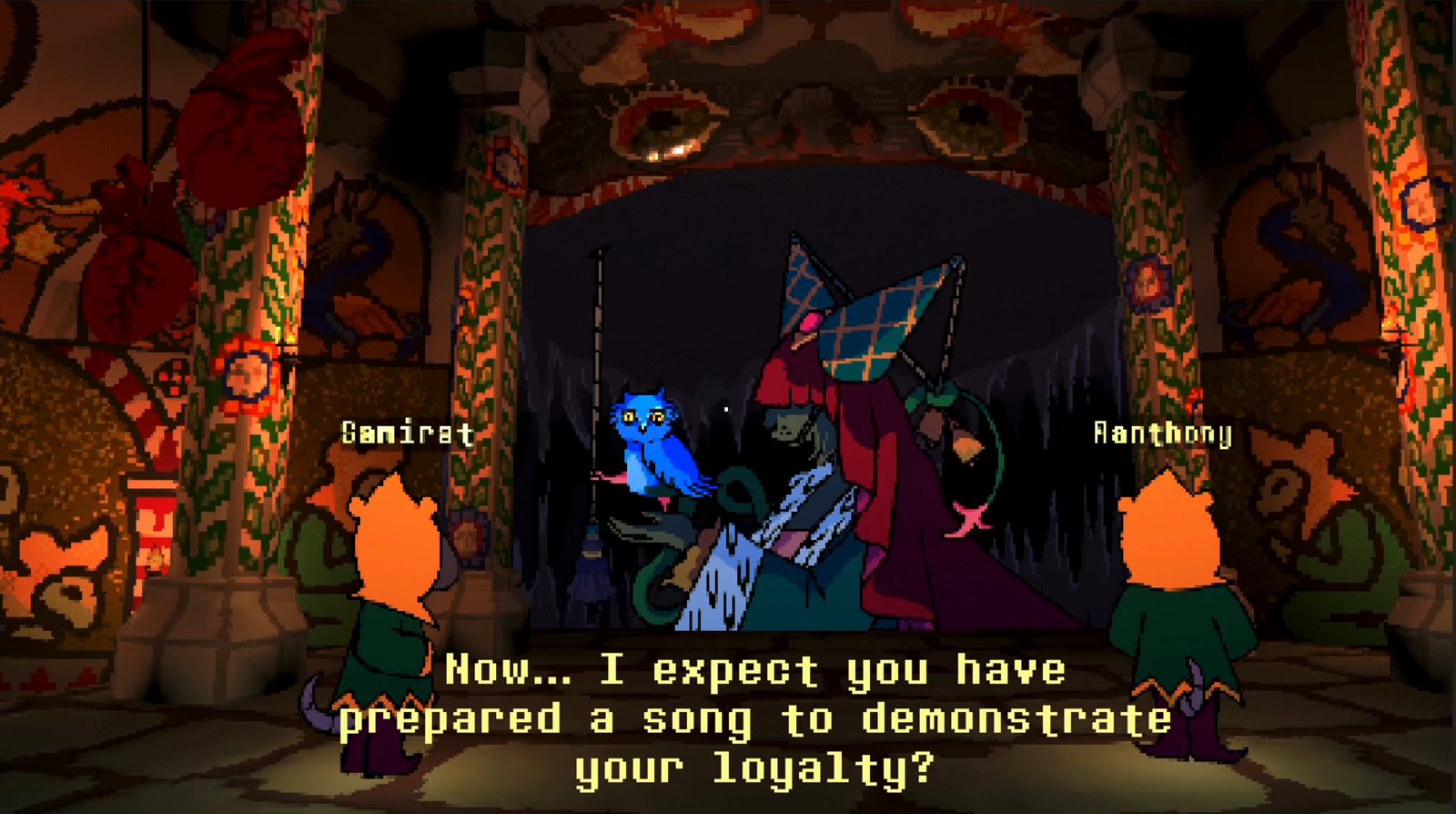
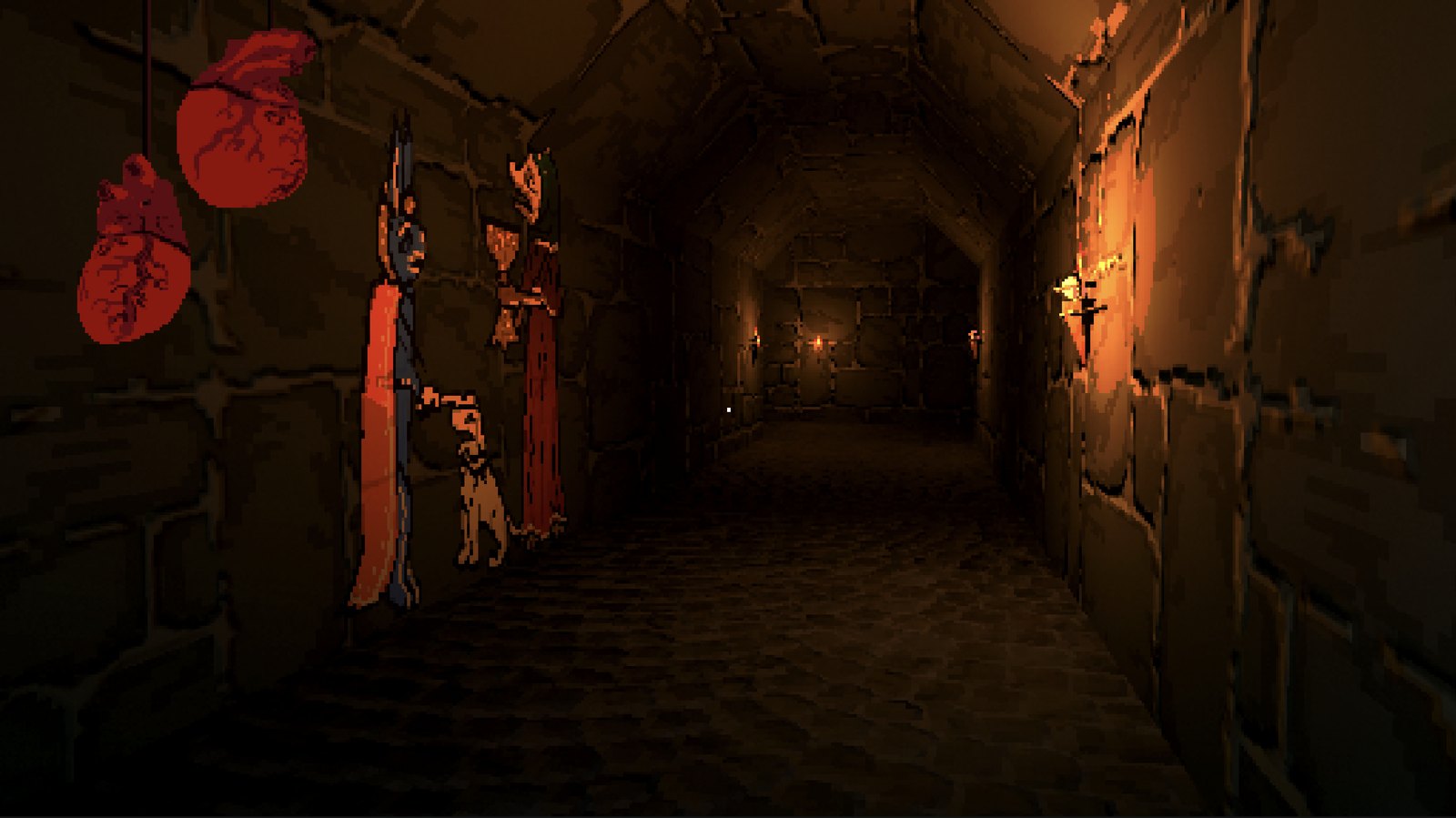
Our first piece mentioned a Reaper God and a giant cat. The cast has grown considerably. The standout new figure is the Madame — a robed, skull-faced feline figure with a blue owl familiar and a set of bells, who presides over the sacrificial chamber and receives the Vessel. The enormous cat maw from the original pitch is still there, too, in the end sequence.
There’s also Kukari, a horned shadow figure with a jumpscare that earns the “light horror” label, and a wider bestiary beyond rats: a bat guide, a tree person and a snail, with rabbit and cat designs in concept.

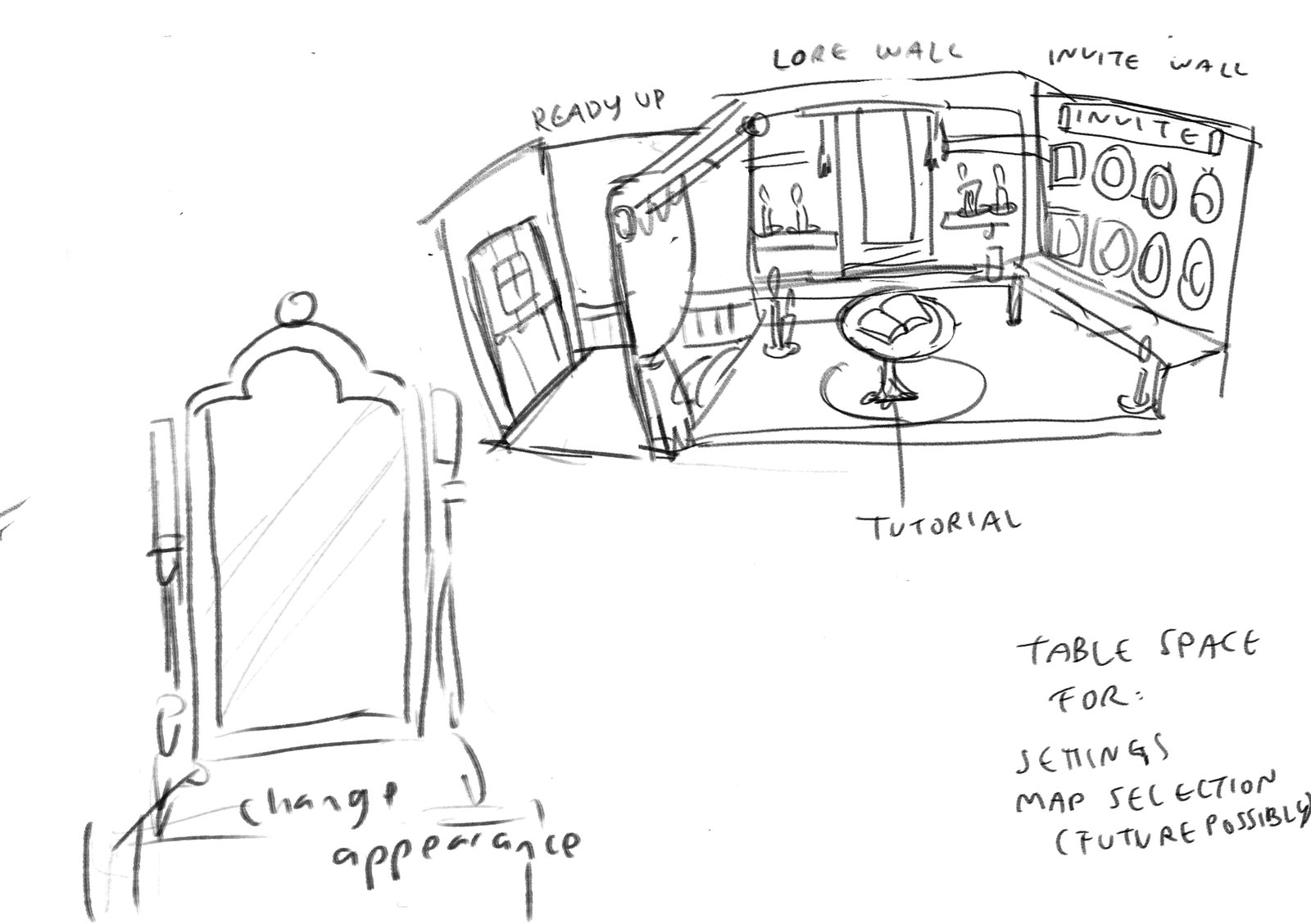
The game now has a proper lobby hub, too: a ready-up door, a lore wall, an invite wall, a tutorial book, a mirror for changing your appearance, and table space set aside for settings — plus a spot for map selection, which hints that more than one map may be on the cards down the line. A dialogue and subtitle system and an opening ceremony song sequence are already running in-engine.
A Grief Song for a Menu Screen
Then and Now
| What We Wrote at GDC | Where It Stands Now |
|---|---|
| A cult trying to influence and manipulate the Vessel, with hidden agendas. | The Vessel is designated for sacrifice and doesn’t know it’s them. Everyone else prepares around them without being noticed. |
| The game ends immediately if the Vessel works it out. | Broadly still true: the Vessel can AWAKEN, winning the round. What the Awakening truly does is deliberately never revealed. |
| Pixel-art rats in a gothic, stained-glass mansion. | Doom-style 2.5D — 3D environments with 2D character panels and pixel-art texturing. It always was; our first description was just a little loose. |
| A Reaper God and a giant cat. | The Madame, Kukari, a bat guide, a tree person, a snail — and the giant cat maw is still there. |
| Compared to Content Warning and Lethal Company. | Self-described as “friendslop”, light horror and silly, aimed at fans of R.E.P.O. and Among Us. |
| Early stages of development. | In production, nearing Alpha, almost pitch-ready — current build made in about six months. |
The Team
Ratacombs is now built by a three-person team split between the US and Finland, working in Unity.
The game’s creator, who pitched it to us at GDC and is steering it toward a publisher.
Behind the game’s look and interface — and the vocalist on its main theme.
Composer and producer of the menu theme, and the game’s sound design.
The Moment That Mattered at Gamescom
Noemi took Ratacombs to Gamescom in August, and her printed pamphlet caught people’s attention again, just as it had at GDC. But the moment she remembers most came almost by accident.
Deep into a two-hour conversation with one publisher, she mentioned in passing that the team works with that medieval history professor to source manuscripts for its art. The publisher’s reaction surprised her. As she recalls it, he was smiling the whole time, and told her you could tell from everything the team does how much they love this game — that it’s rarer in the industry than you’d think, and exactly what publishers are looking for.
When she relayed the conversation to the team, none of them could quite understand why anyone would work in games without that kind of love for what they make. Looking back, though, she thinks he was right about what publishers want: “Publishers, especially the really cool ones, got more excited the more excited I was when I was talking.”
What’s Next
The next steps are clear: build an audience, finish the pitch, and launch a Steam page. Most of the publishers Noemi spoke to wanted to play a representative build before signing, and that’s what the team is working toward. She’d rather sign first and launch the Steam page alongside a polished trailer — she’s hoping for around February, though that will depend on the partner.
She’s looking for a marketing partner — whether a publisher, a paid arrangement or revenue share — as well as funding, consultancy and media interest.
The team is targeting a release in late 2027 or 2028, with 2028 the more realistic call once marketing timelines are factored in. There’s no Steam page to wishlist yet — we’ll cover it again when there is.
For more gaming news and reviews, check out our reviews section.