Game: Theos: Cities of Myth
Developer: Triskell Interactive
Publisher: Dotemu
Genre: City Builder · Management
Release: Later this year
Platform: PC (Steam)
Gods: Seven Olympians
Modes: Adventures + sandbox
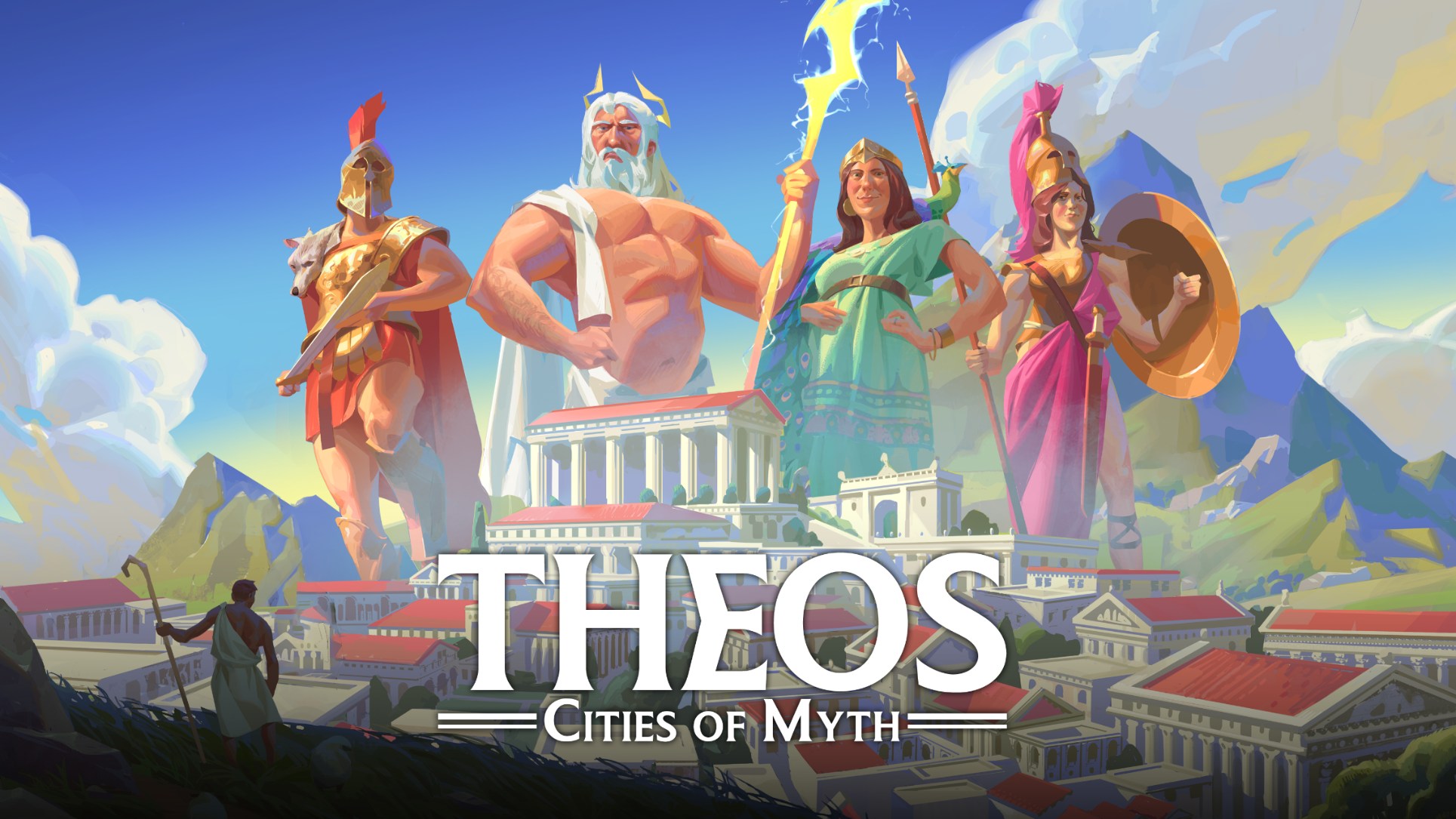
🏛️ Dotemu and Triskell Interactive have released an in-depth gameplay overview for Theos: Cities of Myth, a city builder set in ancient Greece where every settlement is dedicated to one of seven Olympian gods. It launches later this year on PC.
Build a city for a god. Keep them happy, or watch it all come apart.
Divine wrath can turn the tides of even the most promising utopia.
Theos: Cities of Myth is a city building and management game pitched explicitly as a modern homage to the great city builders of the 2000s. Every city begins with The Sanctuary — your god’s seat of power and the hub your settlement grows around — and everything after that flows from which Olympian you’ve chosen to serve.
You’ll handle the full spread of city management: supply and distribution chains, appeasing residents to improve structures, and the rest of the disciplines the genre demands. What’s different is that you’re also running a second economy entirely — divine favour.
The Detail Genre Veterans Should Read Twice
🚶 Unprecedented Control Over Walkers
Buried in the middle of the announcement is the line that matters most to anyone who has played this style of city builder: Theos grants “unprecedented control over guiding the walking units patrolling and aiding your city.”
If you’ve ever built a beautiful, perfectly supplied ancient city only to watch a water carrier wander off in exactly the wrong direction and let an entire district decay, you’ll understand why this is the headline. Walker pathing is the single most notorious pain point in the genre, and Triskell are explicitly claiming to have solved it.
That’s a bolder promise than it might look. In the classic Impressions-style city builders, service walkers wandering semi-randomly from their buildings was the defining frustration — it turned city layout into an exercise in constraining routes rather than designing pleasant places. Fixing it without losing the systemic depth that made those games compelling is genuinely difficult, and it’s the thing we’d want to see proven in a hands-on.
Triskell frame these refinements as resolving traditional pain points while making the genre approachable to newcomers and veterans alike — which is the right ambition, if they can land it.
Serving Gods and Citizens at the Same Time
⚡ Two Masters, Competing Demands
Fulfil the desires of gods like Ares or Athena to earn blessings, boons, or to draw renowned figures to your city — including philosophers such as Socrates and Aristotle.
But you’re tending to divine whims while meeting your citizens’ earthly needs for food, housing, culture and entertainment. Those two demands won’t always align, and neglecting the former can undo everything you’ve built.
That tension is the smartest structural idea here. City builders traditionally give you one optimisation target — keep the population happy and growing. Adding a second stakeholder with different priorities, and real destructive power if ignored, turns the whole thing into a balancing act rather than a straight efficiency puzzle.
🏛️ The Sanctuary
Every city begins with your god’s seat of power, the central hub the entire settlement grows outward from.
🛠️ Pharaoh’s Building Tools
The acclaimed suite from Pharaoh: A New Era returns, letting newcomers design everything from majestic temples to individual walking paths.
🎓 Renowned Figures
Please your god and draw famous philosophers and legendary heroes to your city, each granting their own bonuses.
🗺️ Adventures & Sandbox
Dozens of hours across structured adventures and a richly malleable sandbox mode.
What’s Genuinely New
⚔️ Beyond the Classic Formula
• Real-time battles — amass an army to defend against neighbouring rivals, or conquer them outright
• Trading empires — grow a quaint town into a far-reaching commercial power brimming with resources
• Legendary heroes — a well-designed city and an appeased god will attract heroes who reinforce your empire
• Modern presentation — intuitive UI, dynamic lighting, and design sensibilities aimed at current-day players
The real-time combat is the biggest departure. Classic city builders in this lineage handled military matters at arm’s length; putting conquest directly in the player’s hands is a meaningful expansion of scope, and it gives the god you’ve chosen more relevance — a city built for Ares presumably plays very differently from one built for Athena.
📜 The Pedigree Is Right
Triskell Interactive made Pharaoh: A New Era, the acclaimed 2023 remake of one of the most beloved city builders ever released, and self-published the steampunk city building series Lethis. If you were going to hand anyone a Greek mythology city builder in this tradition, they’d be near the top of the list.
🏗️ City Builder
📊 Management
🏛️ Ancient Greece
⚡ Mythology
⚔️ Real-Time Battles
🎯 Single-Player
Who’s Making It
🏺 Triskell Interactive
A French studio founded in 2014, born out of its creators’ time as hobbyist developers. They earned global acclaim with Pharaoh: A New Era in 2023 and self-published the Lethis steampunk city building series. Triskell specialise in revitalising the genre through refinements to classic gameplay and detailed art styles.
🎮 Dotemu
The French publisher behind Teenage Mutant Ninja Turtles: Shredder’s Revenge, Streets of Rage 4, NINJA GAIDEN: Ragebound and the breakout original IP Absolum — plus publishing support on Metal Slug Tactics, Windjammers 1 and 2, Pharaoh: A New Era and more. They’re also currently working on Warhammer Age of Sigmar: Deathmaster.
Dotemu’s whole identity is built on modernising the classic fun of all-time favourites without losing what made them work — which makes them a natural fit for a project explicitly positioned as an homage to a specific era of city building.
Theos: Cities of Myth launches later this year on PC, and is available to wishlist on Steam now.
Hi there! I’m Marie, also known as CtrlQueen. I’m passionate about keeping up with the latest in gaming news and sharing my insights. RPGs steal my heart with their rich narratives and immersive worlds, but I also love unwinding with fun, casual games. Whether you’re here for deep dives into game mechanics or just to chat about your favorite casual game, you’ve found the right place! Let’s game and explore together.