
Our Boba Cafe Simulator review starts with the best game premise we’ve read in a while: you’re reborn back at the start of your startup journey, because in your last life poor management got your shop crushed by competitors. This time, “the sweet scent of condensed milk runs through your veins,” and you’re out to turn Sugarville into a bubble tea empire. It’s a genuinely funny hook for what turns out to be a surprisingly deep, cozy business sim.
This Boba Cafe Simulator review is based on the free pre-launch demo, which we sank an hour and a half into without meaning to. That’s the headline, really: we sat down for a quick look at a milk tea sim and looked up ninety minutes later still happily slicing lemons and reorganizing our counter. For a cozy management game, that pull is the whole ballgame — and this one has it.
The Loop
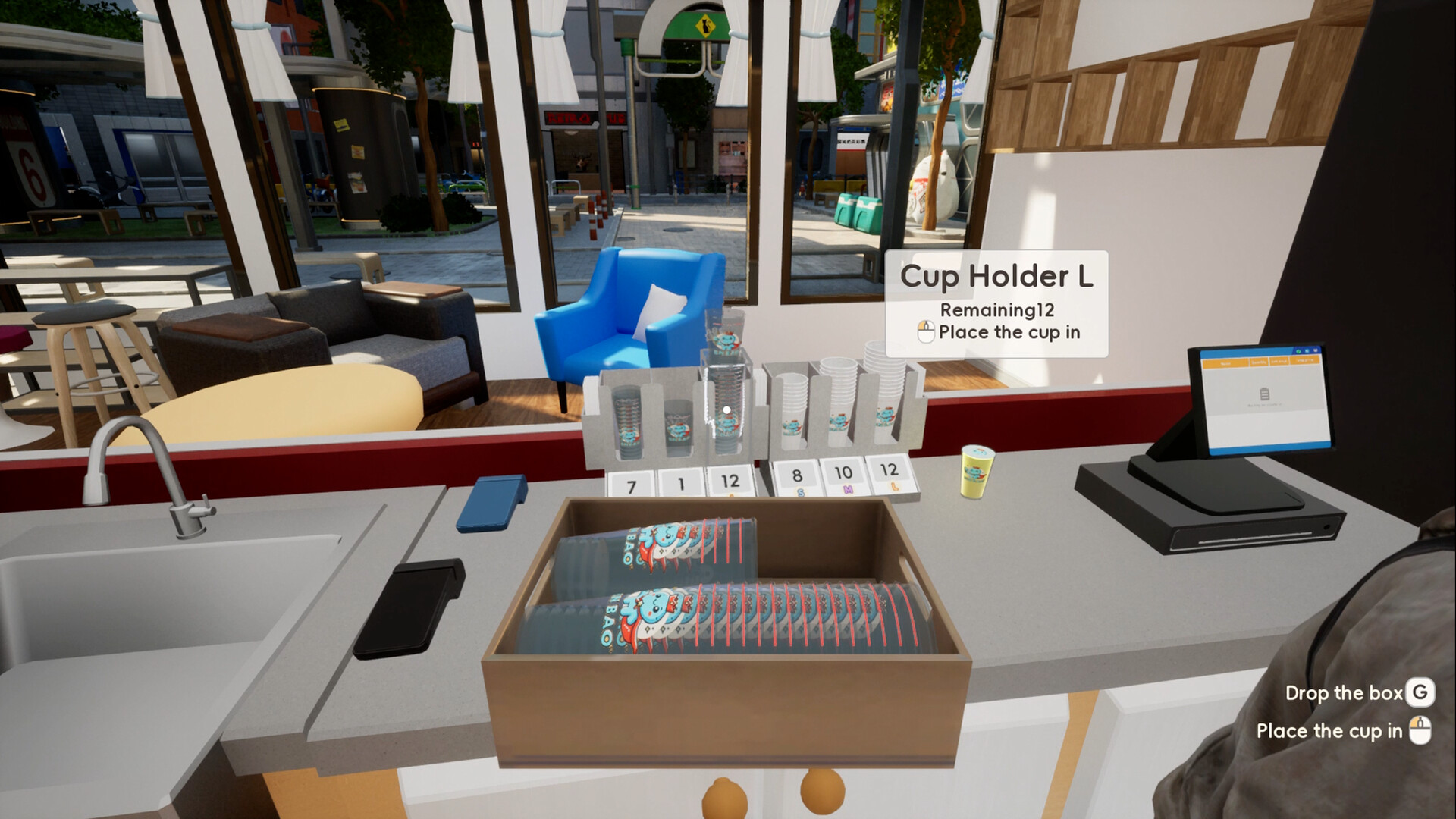
Nothing is automated. Slice the lemons, boil the tapioca pearls, brew the tea, grind the beans, add sugar and ice to the exact level the customer wants. Every drink is hands-on, and matching the order precisely is where the score comes from.
The real game is the morning. Cut fruit, boil pearls, grind coffee, restock cups, and lay your stations out before the doors open — because once customers arrive, there’s no time to catch up.
Run out of milk, sugar, or beans mid-rush and you’re sunk. You buy ingredients and equipment from Mr. Wong across the street (no delivery fee in person) or order in for a small fee. Watching your stock is half the strategy.
Set your own menu prices, unlock new recipes, expand your layout, and level up your shop’s popularity. The market reacts to your pricing, and every day is a small puzzle of margins versus volume.
The Prep Is the Whole Game
Everything Boba Cafe Simulator does well comes back to one thing: the satisfying, hands-on rhythm of actually making the drinks. You don’t click a button and watch a bar fill. You pick up the cup, attach the sticker, slice three lemon wedges, drop them in, fill from the sink, click the sugar three times because the icon shows three candies, add the exact ice level, and set it on the counter. It’s fiddly in the best way — genuinely tactile, and weirdly meditative once it clicks.
The depth sneaks up on you. Early on it’s just lemonade. Then you’re buying a grinder and a coffee machine and learning to brew Americanos. Then it’s tapioca pearls that have to be boiled, green tea that has to be steeped, milk that spoils in two days, and liquid containers so you can prep a batch of tea ahead of the rush. By the second in-game day we were laying out dedicated lemonade, coffee, and boba stations to cut down on walking — and that self-directed optimization, the game quietly handing you a logistics puzzle, is exactly what the best cozy sims do.
It’s also genuinely charming. The anime art style is lovely, the shop is cozy and warm, and there’s real personality in the details — customers with bunny ears and headsets, a supplier who talks about keeping your operation “smooth like tapioca,” and a reincarnation framing the game commits to with a straight face. It’s the kind of game where you name your shop, take a screenshot of it, and mean it.
The Roadmap
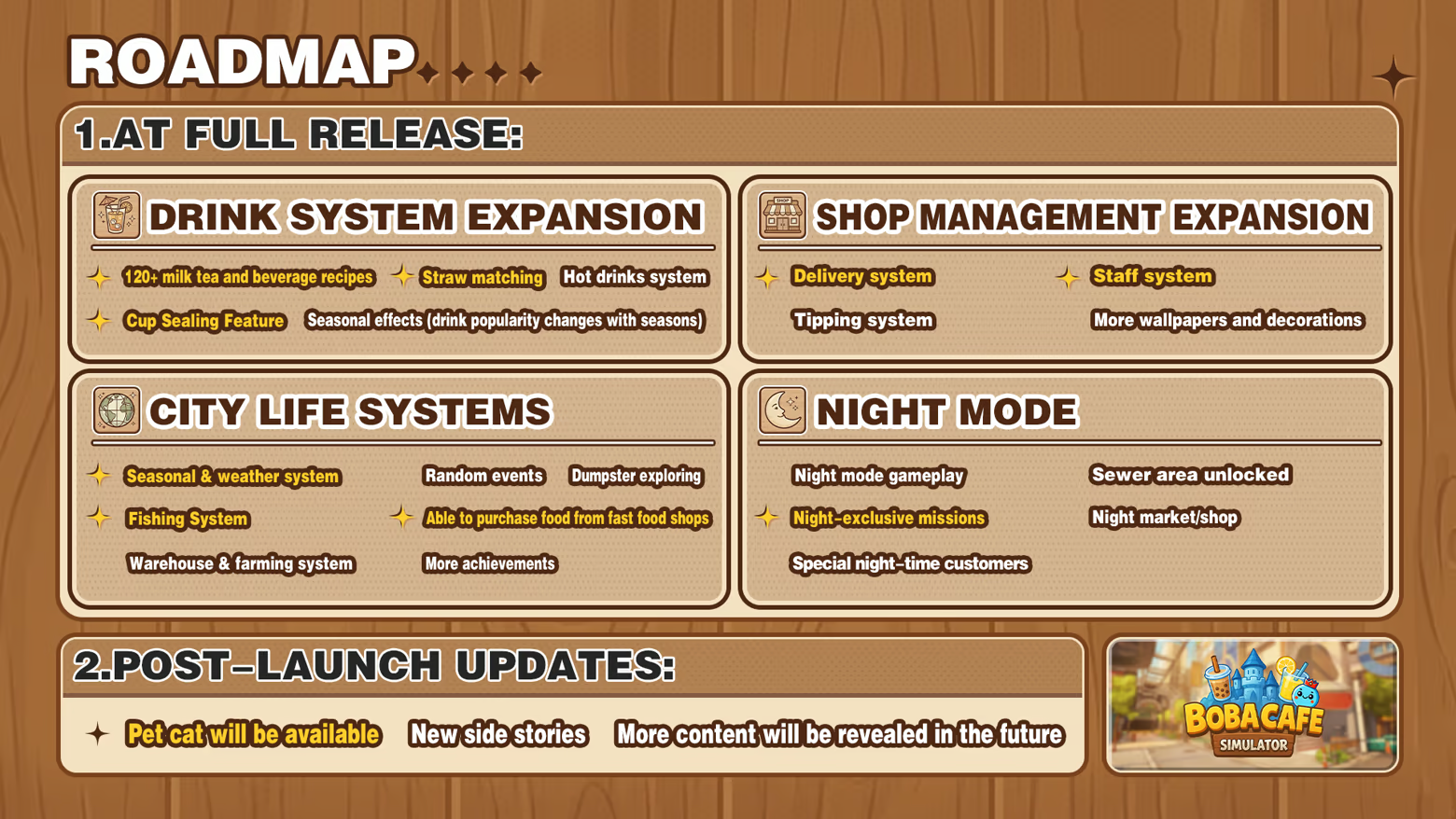
Caikemi has laid out an ambitious roadmap. The full release is slated to expand across four pillars: a Drink System (120+ recipes, straw matching, cup sealing, hot drinks, seasonal effects), Shop Management (delivery, staff, tipping, more decorations), City Life Systems (seasonal and weather effects, random events, fishing, farming, dumpster exploring, buying food from fast-food shops), and a full Night Mode (night-exclusive missions, a sewer area, a night market, and special night-time customers).
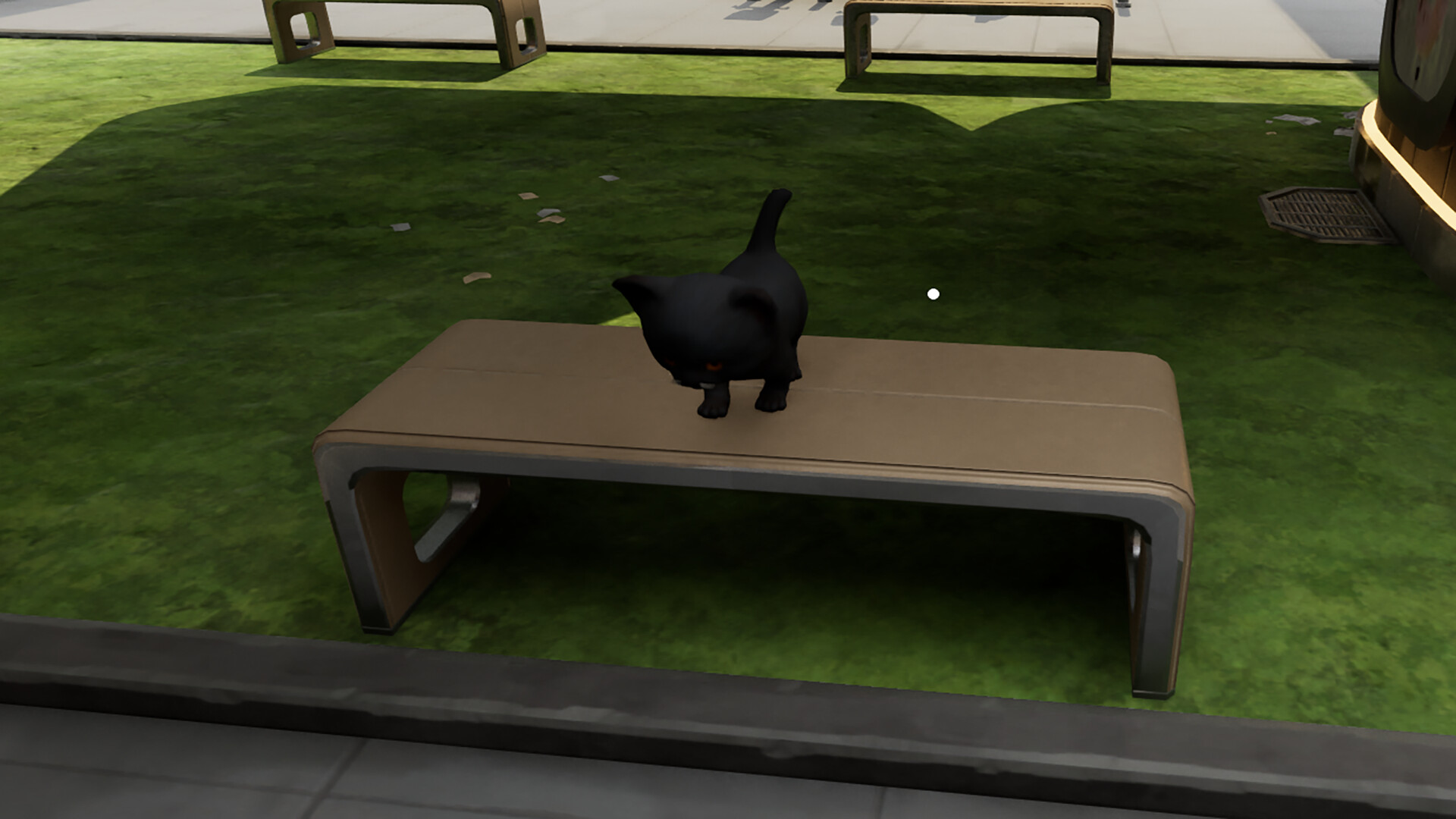
Post-launch, they’ve teased a pet cat companion, new side stories, and more to come. It’s a lot — arguably more than the demo hints at — but the foundation on display suggests they can build on it. If even half of that lands well, this grows into a serious cozy-sim contender.
What Needs Work
The tutorial loses the thread. The early hand-holding is clear, but it stops guiding you right when new systems (bubble tea, coffee brewing) get more involved — leaving you to figure out multi-step recipes with no on-screen prompt mid-rush. A persistent recipe reference during service would help enormously.
Readability gaps in the drinks. There’s no easy way to tell when tea is “half full,” how much is left in a liquid container, or how many servings of pearls are in the pot. You end up eyeballing it, which occasionally costs you a perfect order for reasons you can’t see.
Fiddly object handling. Placing cups, merging boxes, and moving stations mostly works, but it can be fussy — and picking up an entire grinder just to pour grounds into the brewer feels like a step too many. Minor friction that adds up over a long session.
Prep-ahead limitations. You can’t always pre-make finished drinks or refill a liquid container without swapping it out, and some quality-of-life shortcuts a veteran sim player expects (batch prep, quick-slicing without an unlockable slicer) aren’t there by default. The systems reward prep but don’t always let you prep as much as you’d like.
Small economy quirks. Early days it’s easy to spend more on equipment and stock than you make, and a few oddities stand out — the same three lemon slices whether it’s a small or large cup, oranges that cost far more than lemons, and a change-making minigame with $2 bills and no $1 bills that can trip you up at the register.
Demo caveats apply. The developer is upfront that the demo doesn’t represent final quality, so some of the above may already be addressed at launch. We’ll revisit with the full release to see how much has changed.

The Good, The Bad, & The Ugly
| The Good | The Bad | The Ugly |
|---|---|---|
| The Hands-On Drink LoopEvery cup is crafted by hand, and it’s genuinely satisfying — slice, brew, boil, sweeten, ice, serve. Matching orders precisely is a real skill, and the tactile rhythm is so absorbing we lost ninety minutes to a demo without noticing. | The Tutorial Drops YouHand-holding is clear early but vanishes right as recipes get complex. Learning multi-step bubble tea and coffee brewing mid-rush with no on-screen prompt is more stressful than it needs to be. A persistent recipe reference would fix it. | Invisible QuantitiesNo clear read on “half full” tea, how much is left in a container, or how many pearls are in the pot. You lose the occasional perfect order to information the game simply doesn’t show you — frustrating in a game built on precision. |
| Surprising Strategic DepthThe prep-before-open logistics, station layout optimization, stock management, and pricing all sneak up on you. It looks cozy and casual, but there’s a real management sim underneath that rewards planning. | Fussy Object HandlingPlacing, rotating, and merging items mostly works but can be fiddly, and some interactions — like hauling the whole grinder to pour grounds — feel needlessly clunky over a long shift. | Register & Economy QuirksMaking change with $2 bills and no $1 bills is oddly confusing, early margins are punishing, and details like identical lemon counts across cup sizes stand out. Small, but they nibble at the immersion. |
| Charm, Art & That PremiseThe anime style is lovely, the shop is genuinely cozy, and the reincarnation-into-boba-mogul framing is delightful. It’s full of small personality touches, and the 8-player co-op promises the chaos this loop is clearly built for. | Prep-Ahead GapsThe game rewards prep but limits it — no pre-making finished drinks, no refilling containers without swapping, and quality-of-life shortcuts locked behind unlocks. It wants you to plan but doesn’t fully let you. | Demo, Not FinalThe developer says outright the demo isn’t final quality, so scoring is provisional. Some rough edges may already be gone at launch — but they’re what we experienced, so they’re noted. |
The Verdict
A charming second-chance tale that nails the cozy business sim formula with genuine depth and strategic management gameplay. That’s our TBB Curator take, and after a ninety-minute demo session we didn’t want to end, it holds up. Boba Cafe Simulator looks like a casual milk-tea game and quietly turns into a satisfying logistics puzzle wrapped in one of the most charming premises we’ve seen this year.
The rough edges are real — the tutorial abandons you, some quantities are invisible, and the object handling can be fussy — but they’re the kind of friction that patches address, and the developer has already flagged the demo as pre-final. What’s underneath is a loop with genuine pull and a roadmap ambitious enough to keep it growing well past launch.
The honest split: if you love cozy management sims, or you’ve got friends for the 8-player co-op, this is an easy one to grab at launch — especially with 35% off the first week bringing it well under eleven dollars. The chaos of a full crew splitting drink-making, deliveries, and the register is exactly what this game is built for.
If you’re on the fence, the demo is free right now — play it. Ninety minutes in and we were still going, which tells you everything about whether the loop clicks. It’s the best possible way to find out before July 24.
Either way, this is a genuinely promising launch. The premise is a delight, the core loop is more absorbing than it has any right to be, and the roadmap suggests Caikemi is just getting started. We’ll be back for a full-release verdict once the empire’s fully built.
For more game reviews, check out our full reviews section.