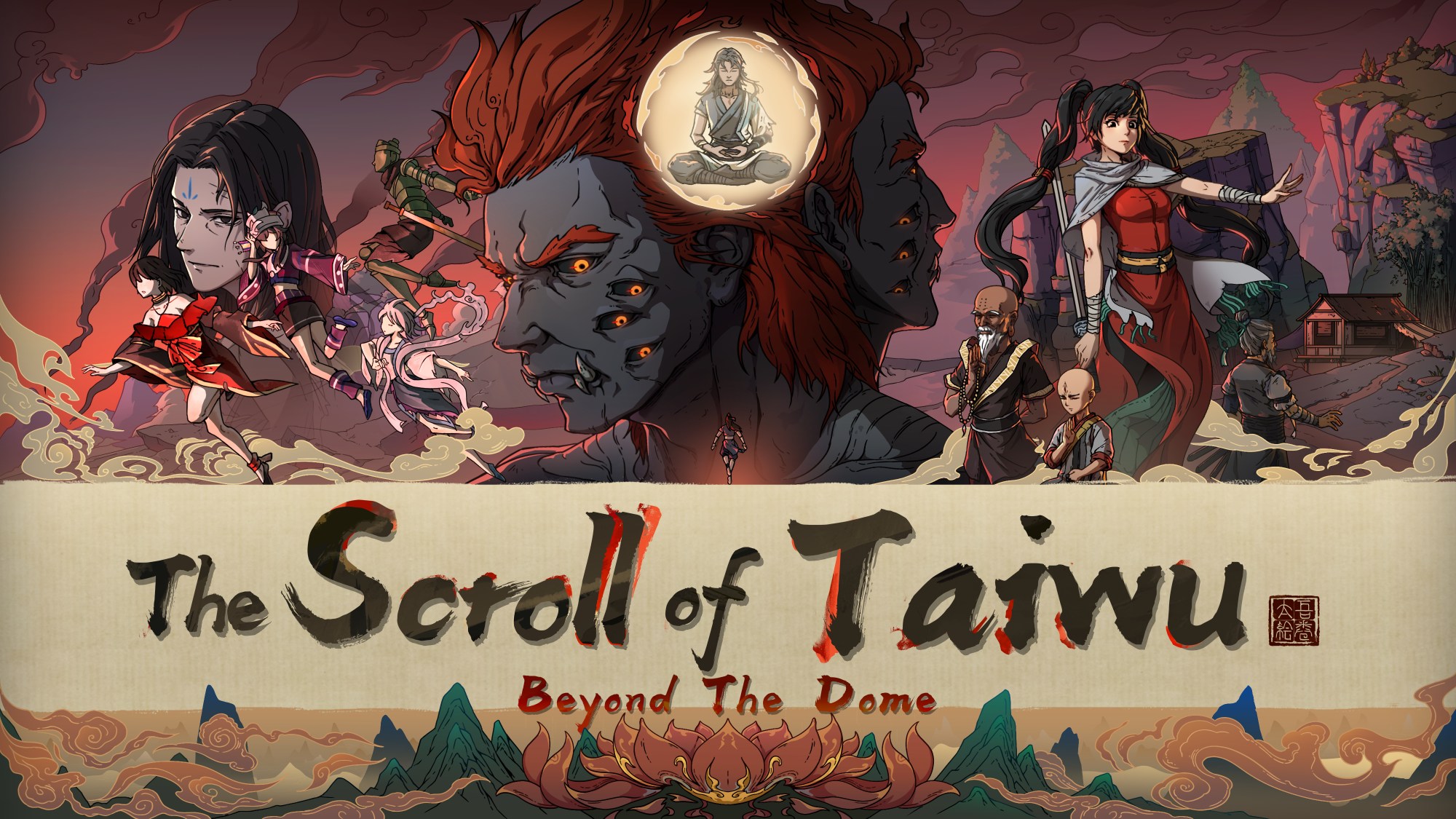
The Scroll of Taiwu: Beyond The Dome is one of the most genuinely interesting games you can play right now — and also one of the most legitimately frustrating. After roughly eight years of development, ConchShip Games delivered a 1.0 release of their Wuxia/Xianxia sandbox RPG to a community that had been waiting long enough to have real opinions, and the release landed with community review bombing, hotpatch scrambles, and localization problems that would take weeks to sort out. Beneath all of that is a game that absolutely delivers for the right player and absolutely does not for many others — and honestly knowing which category you fall into before you spend money is the most useful thing this review can do for you.
The concept sells itself effortlessly: a living world of Chinese mythology and Wuxia society where you manage a martial arts lineage across multiple generations, learning ancient combat techniques, navigating interpersonal NPC politics deeper than Crusader Kings, and building a legacy rather than guiding a single protagonist. If that sentence made you sit forward, keep reading. If it made you uncertain, there’s an important practical split in how this game actually delivers on that concept.
What This Game Actually Is
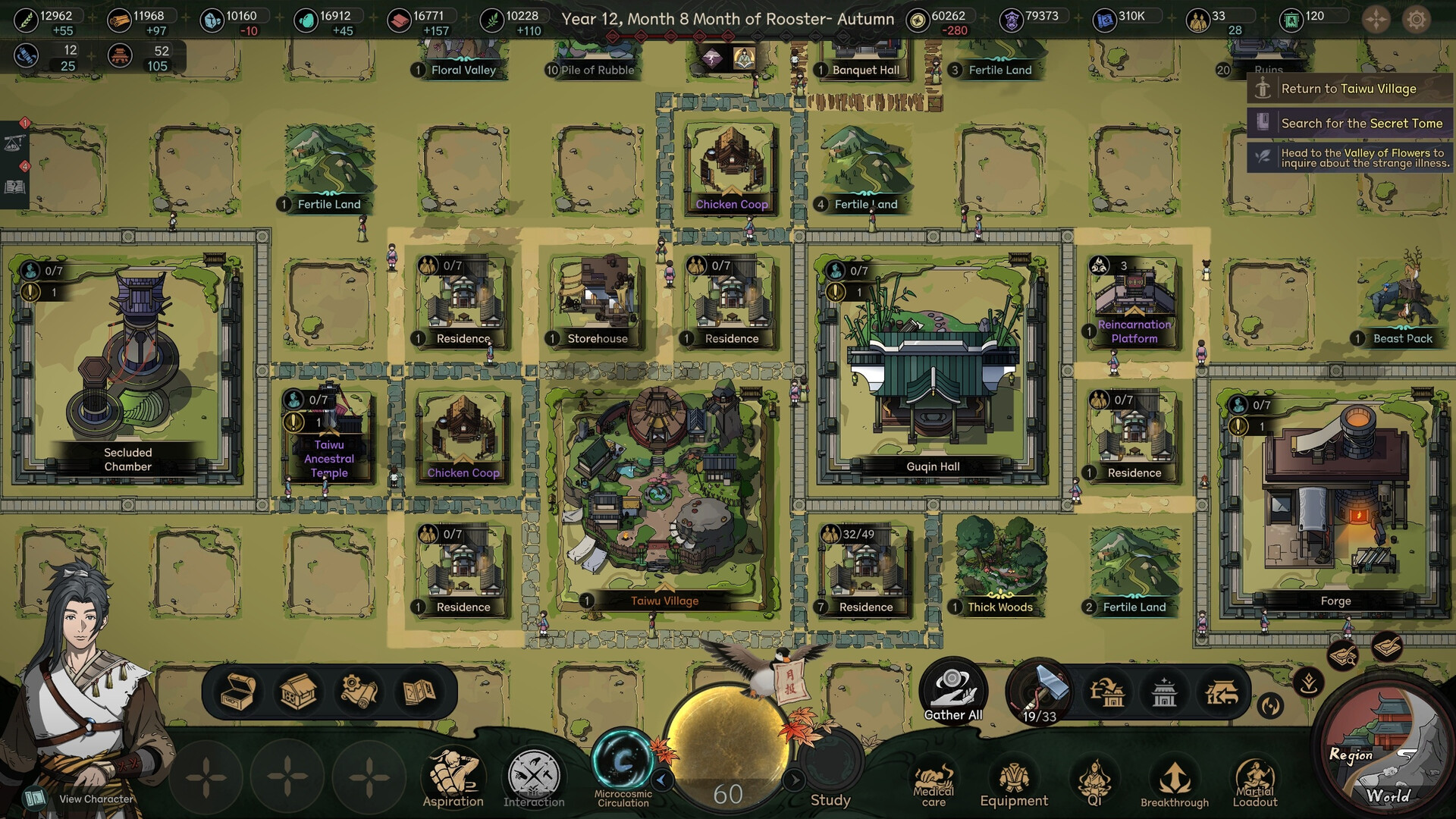
The most important clarification for newcomers is that Scroll of Taiwu is not a main-character RPG. Your starting character is not the protagonist in any traditional sense — they’re the first generation of a lineage, a clan, a sect that you’re building toward a purpose. The monthly save system that frustrates new players makes total sense once you understand that the game is built around continuation across generations rather than protecting one perfect run. Dying is not failure — it’s the end of a chapter.
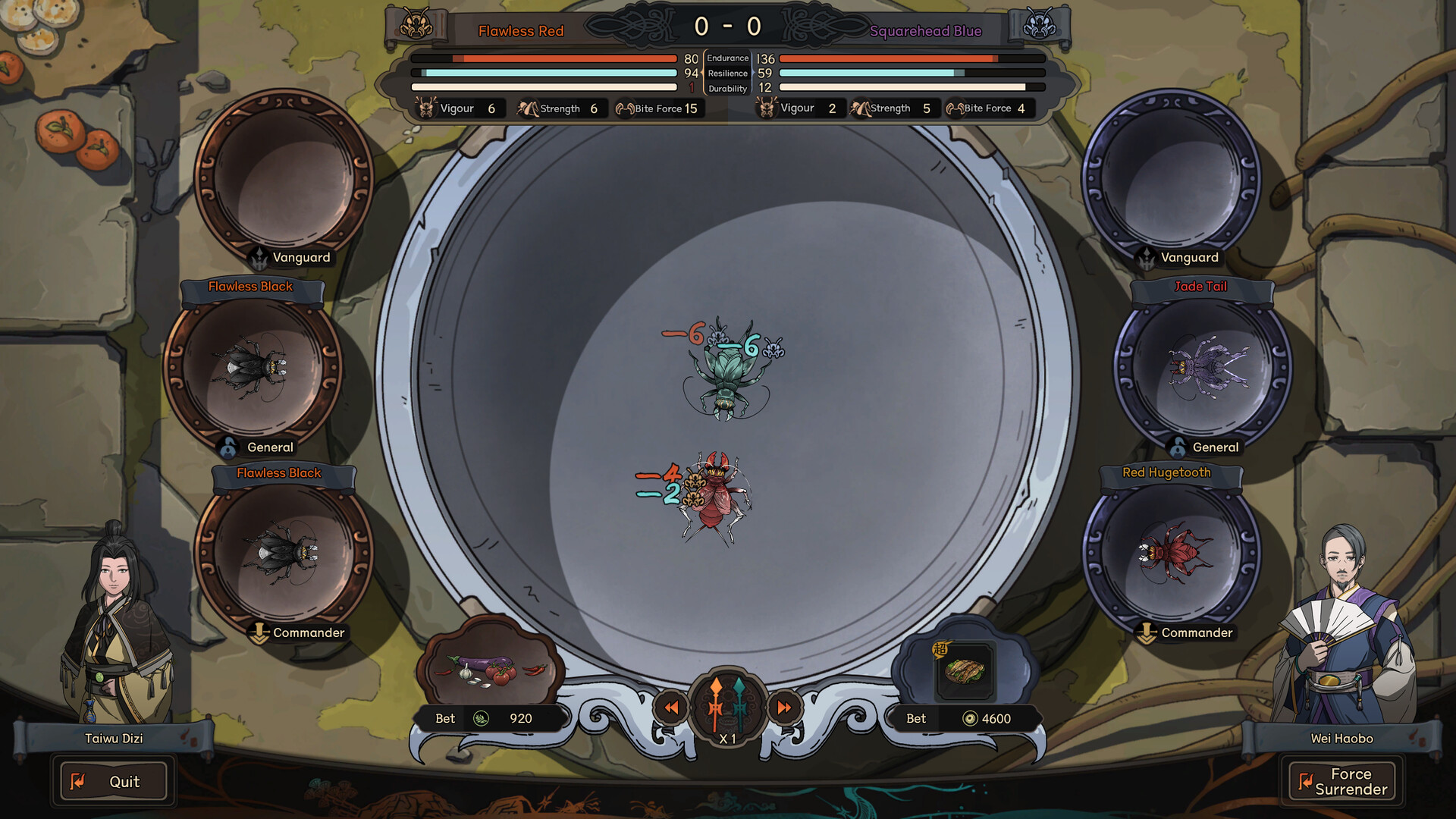
A useful frame: imagine Kenshi’s dynamic open world but entirely turn-based, filtered through a Wuxia aesthetic with cricket fights, poetry tournaments, ancient martial arts manuals, rivalries and romances and duels to the death. The systems are numerous and deeply interconnected. You will need to treat the in-game wiki and community guides the same way you’d approach Crusader Kings or Dwarf Fortress for the first time — as external resources that are part of the experience, not signs that something’s wrong with the game.
The Honest Split
The community data on this game is more clearly divided than most, and both camps have legitimate positions rather than one being obviously wrong.
The enthusiast case: Scroll of Taiwu is one of very few Wuxia/Xianxia sandbox RPGs accessible to English-speaking audiences. The systems are deep, the martial arts variety is genuinely impressive, the NPC world generates emergent stories even if you have to look for them, and the genre itself is culturally rich and underrepresented in Western gaming. Players who have put dozens or hundreds of hours in are not being deceived — there is something real here for people who find the concept compelling enough to engage seriously with the learning curve.
The critical case: Most of the game’s advertised systems are significantly shallower than they appear. The living world doesn’t really live — NPCs interact, but they exist largely outside the main game loop rather than meaningfully affecting it. Martial arts acquisition is deterministic rather than exploratory once you know where abilities are located. Town management is a resource printer, not a strategic layer. Combat — the ultimate destination of the entire progression system — is unexciting compared to contemporaries like Tale of Immortal, and outcomes are largely pre-decided by build quality before a single animation plays. The experience narrows considerably once you understand the optimal path.
Both of these things are simultaneously true about the same game.
The 1.0 Release Context
The 1.0 release came with the English translation, which was the right call for expanding the audience. It also came with simultaneous reworks of multiple major systems — the encounter system, the resource gathering system, the debate system, and the UI — which is exactly what you don’t do in a final release. The Chinese player community review-bombed the game partially over these changes (particularly the encounter system overhaul and UI redesign, both of which had defenders and detractors), and the English localization suffered additional damage from a subsequent hotpatch that broke text already in progress. As of the time of writing this review, mods exist to address several of the issues and active patching continues — but buyers should be aware this is very much a living game in ongoing development rather than a polished definitive edition.
Getting Started — Practical Tips

The Good, The Bad, & The Ugly
| The Good | The Bad | The Ugly |
|---|---|---|
| Unique Cultural SpaceThere is genuinely very little like this accessible to English-speaking audiences. Wuxia/Xianxia sandbox RPGs with working English translations are rare enough that Scroll of Taiwu occupies a category largely by itself, regardless of its execution quality. | Systems Shallower Than AdvertisedThe NPC living world, dynasty management, and social systems are largely disconnected from the main progression loop. Once you understand the optimal path — boss → build to counter → fight — much of the rest feels like optional flavour that consumes time without proportional reward. | The 1.0 Launch StateReworking multiple major systems simultaneously at 1.0 release, followed by hotpatches that broke the English localization, is not acceptable for a game after eight years of development. The community mod response was impressive, but the fact that mods are required to fix name generation and text gaps is a QA failure. |
| Martial Arts DepthThe breadth of combat techniques, schools, and martial arts manuals is genuinely impressive and delivers on the genre fantasy of becoming a legendary practitioner through study and mastery. For players who engage seriously with build-crafting, this is where the game earns its hours. | Combat UnderwhelmsGiven that combat is the primary destination of the entire progression system, it’s disappointing that fight outcomes are largely pre-decided by build quality. Compared to Tale of Immortal, combat lacks the excitement the culmination of 30+ hours of preparation should deliver. | UI Overhaul Divided CommunityThe 1.0 UI redesign replaced a stylized interface with one described as “mobile-looking” by critics and “more information-friendly” by defenders. The Equip UI being split across multiple pages is specifically called out as a regression. Some of the new UI is better; much of it is worse. |
| The Taiwu CodexThe in-game wiki is detailed, terrifyingly detailed according to one community reviewer, and is genuinely the best part of the 1.0 update. A complex simulation this dense needs exactly this kind of integrated reference tool and the Codex delivers it well. | Cultural Onboarding GapEnglish speakers will encounter a cultural barrier beyond the translation — the concepts, social structures, and assumptions of Wuxia/Xianxia fiction aren’t explained for audiences new to the genre. This is navigable with community resources but it’s a real friction point. |
The Verdict
This ambitious indie title blends Chinese mythology with strategic depth, offering a uniquely compelling experience that rewards patient players. That’s the TBB Curator blurb, and it’s accurate — but the “patient” qualifier is doing significant work. Scroll of Taiwu requires patience with its learning curve, patience with its localization gaps, patience with its ongoing post-1.0 patch cycle, and patience with the realisation that many of its most impressive-sounding systems are shallower than they first appear.
The honest recommendation is audience-specific. If you’ve read about Wuxia/Xianxia fiction, found it compelling, and want an RPG that puts you inside that world across multiple generations — this is it, and there’s genuinely nothing else quite like it in the Western gaming market. Go in with community guides, the Codex, and realistic expectations about the depth of individual systems. The lineage and legacy structure delivers something real that few games attempt.
If you’re looking for a satisfying combat-driven RPG with deep systems that all pay off meaningfully, or a true living-world simulation where NPCs matter to the main loop — this probably isn’t it at current state, and Tale of Immortal or other cultivation games may serve you better.
For more game reviews, check out our full reviews section.
Score Breakdown