
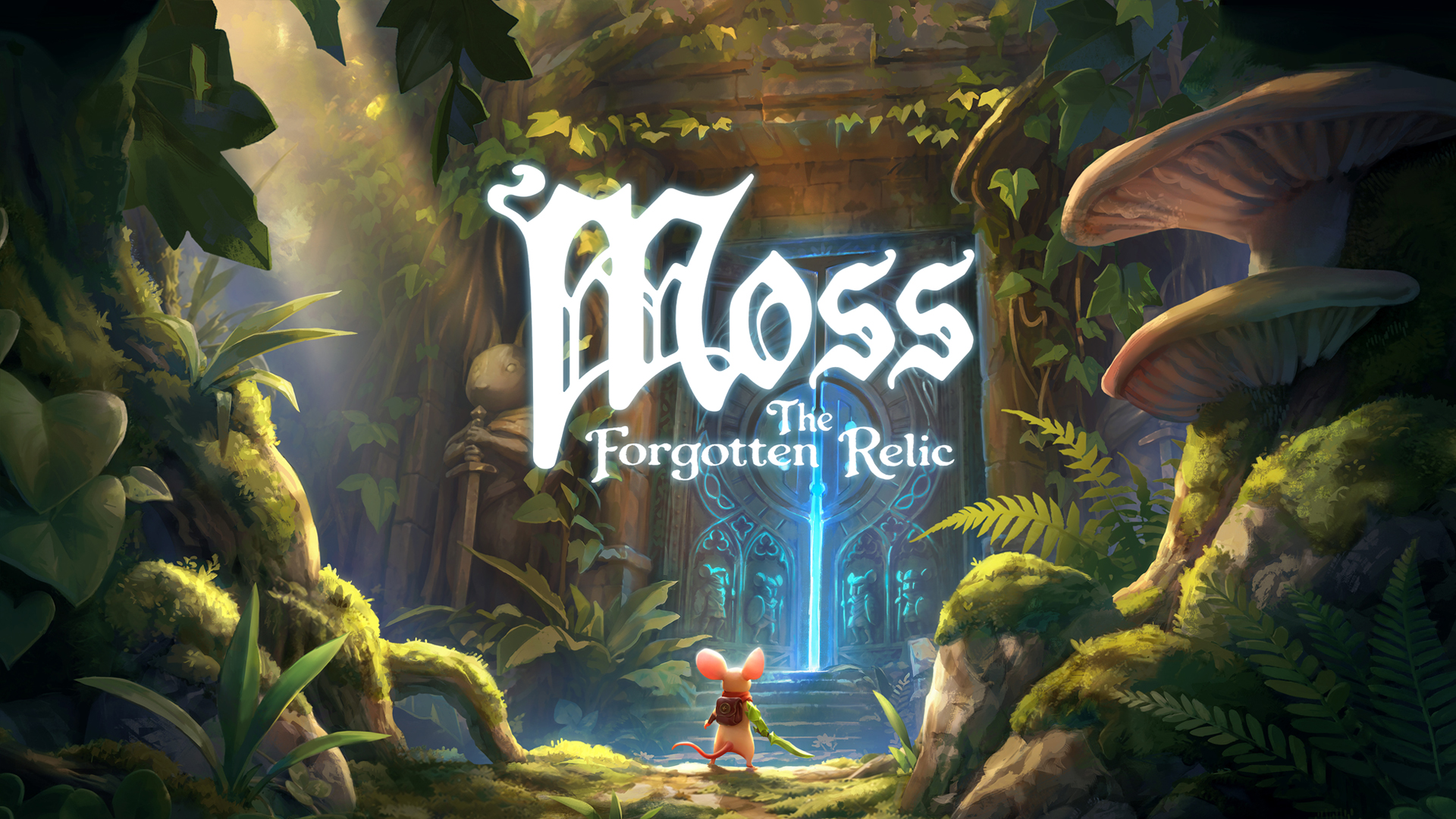
Moss: The Forgotten Relic is the answer to a question a lot of people have been asking for years: how do I play Moss without a VR headset? Polyarc has combined Moss and Moss: Book II — plus all the Twilight Garden DLC — into a single reimagined package for PC, with enhanced visuals, new handcrafted cutscenes, a smart follow camera, and a “skip combat” accessibility option. For $19.99, that’s two critically acclaimed games with 160+ awards between them, and Quill is finally available to people who don’t own a headset.
The question this review has to answer is whether Moss without VR is still Moss. The community is split on that, and both sides are right.
Quill
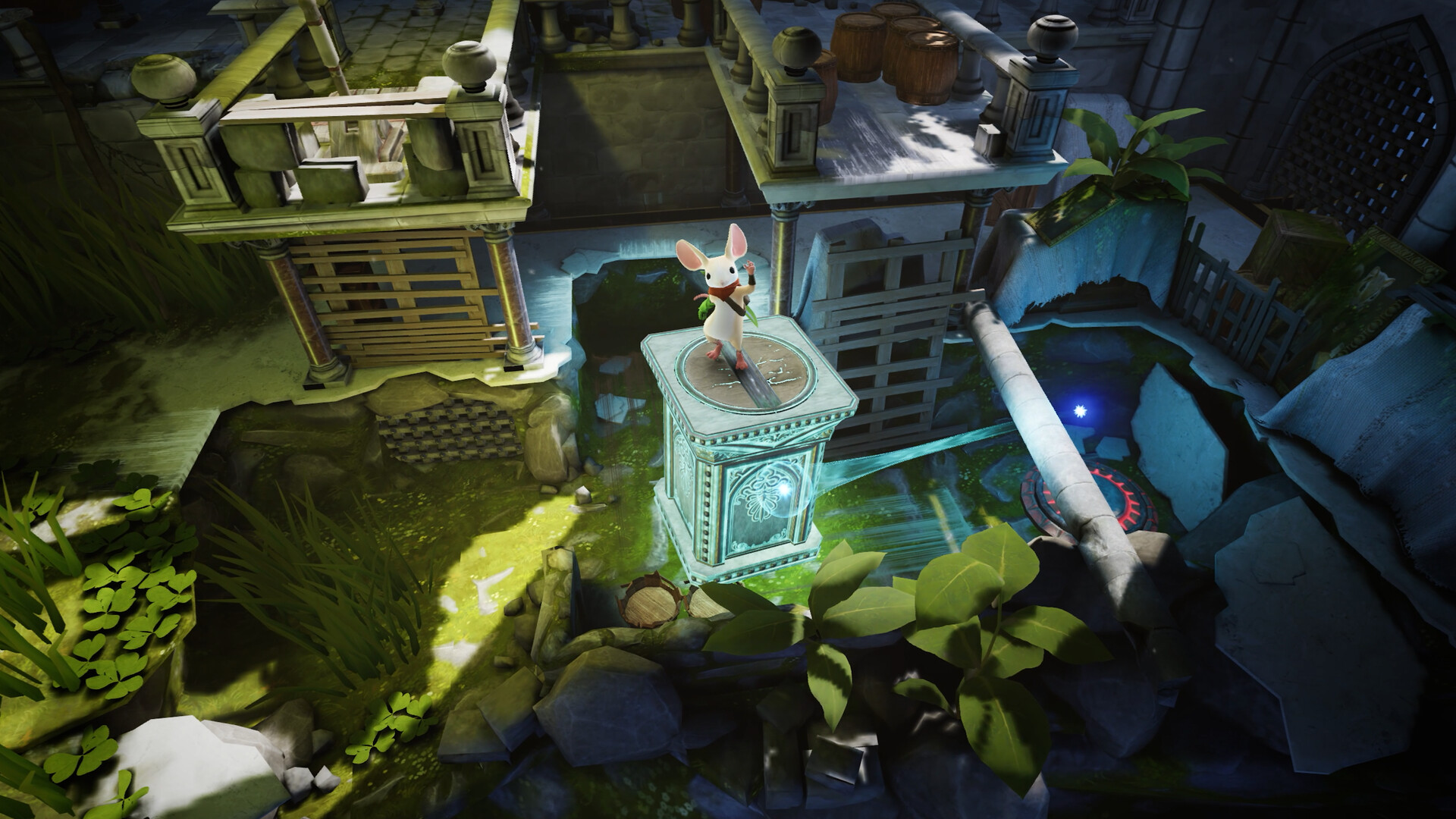
Let’s start with what nobody disagrees about. Quill — the tiny, courageous mouse you guide through a fallen kingdom — is one of the most convincingly animated characters in games. Not most technically impressive. Most convincing. She reacts. She gets frustrated when you send her somewhere she shouldn’t go. She uses American Sign Language to communicate with you, which is both a beautiful design choice and one that’s been done with real care. She looks to you for guidance, and the game builds an actual relationship out of that dynamic rather than just asserting one.
The community response to Quill is genuinely unusual. “Not to be dramatic, but I would die for Quill” is a sentiment multiple people have independently written. She is a comfort character for a lot of players. The game earns that, and the flatscreen version preserves it — the scripted versions of the VR-only interactions are still in here, and they still land.
You can also pet her. Multiple reviewers describe this as mandatory. They’re correct.
The VR Question
This is the review’s central issue and it deserves an honest answer. Moss was designed for VR, and its core magic was that you weren’t watching a mouse on a screen — you were sitting in a forest, at diorama scale, with a mouse in front of you. You’d lean in to see detail. You’d peer down a dark hallway. You were physically present as The Reader, a character in the story with a role to play, and Quill would look up at you.
Players who experienced that version are consistent: the flatscreen adaptation loses something real. Locking the camera to Quill instead of letting you look around removes the sense of inhabiting the space. The Reader’s touch interactions — seamless and intuitive in VR because touching things is what motion controls are for — become an analog stick or a mouse cursor, and neither is as natural. One reviewer with extensive VR time called it “a bit neutered,” and that’s a fair assessment of what’s lost.
But — and this matters — players coming to Moss fresh on PC are having a wonderful time. The new smart follow camera is well-implemented, with a sway and shake that gives it a natural feel. Multiple returning players actually prefer the right-stick bubble control to the PS4’s motion controls, which they found clunky. The visual craft, the storybook framing, the narration, the puzzles, the emotional payoff — all of it survives the transition intact.
The honest summary: if you have VR and haven’t played Moss, play it in VR. If you don’t, this is a genuinely good way to experience one of the most charming adventures of the last decade, and you won’t miss what you never had.
What Makes Moss Special
You’re reading a living fable. The narration is done the way a parent tells a story — funny voices for the characters and all — and it’s one of the most consistently praised elements. It gives the whole game a warmth that mechanics alone couldn’t produce.
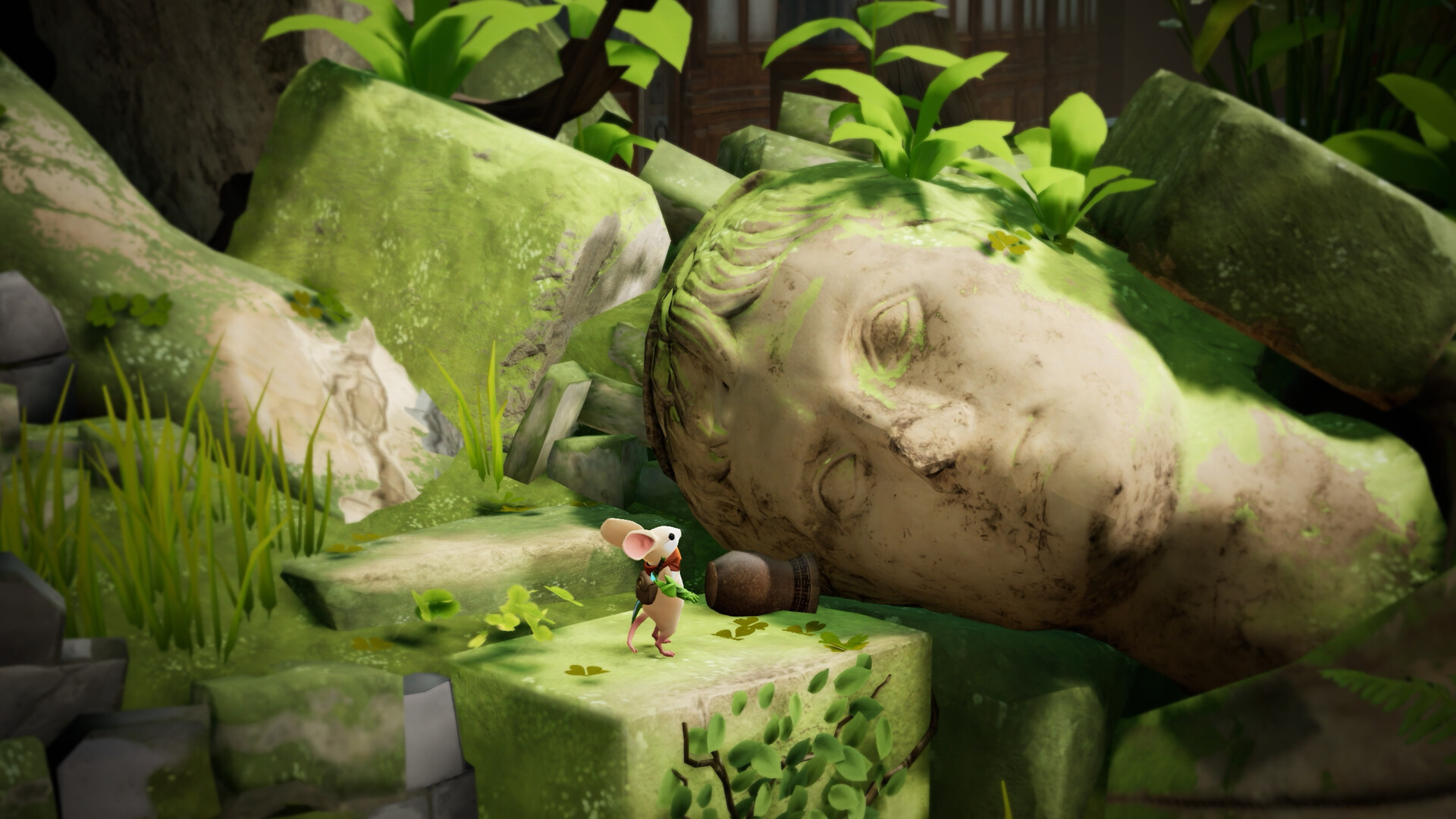
Each area is a handcrafted diorama you look into rather than a level you move through. Even on flatscreen, players describe stopping just to take an area in. The environmental puzzles are woven into these spaces rather than placed on top of them.
The orchestral soundtrack is good enough that one reviewer said it’s the only game soundtrack they’ve ever considered buying. It’s a significant part of why the emotional beats land as hard as they do.
A new accessibility option that lets players bypass combat entirely. For a game that’s fundamentally about story, atmosphere, and relationship, giving people a route past the fighting is exactly the right call.

The Good, The Bad, & The Ugly
| The Good | The Bad | The Ugly |
|---|---|---|
| QuillOne of the most convincingly animated characters in games. She reacts, she gets frustrated, she signs in ASL, and she builds a genuine relationship with you across two books. Players independently describing themselves as willing to die for a fictional mouse is not a normal review outcome. | It’s Not VRThe flatscreen adaptation loses the thing that made Moss extraordinary — being physically present in the diorama, looking around, existing as The Reader in the space. The locked camera is the right compromise but it’s still a compromise. If you have a headset, use it. | The Options MenuYou can’t adjust resolution or framerate from inside the game. You can’t exit the game from inside the game. On Steam Deck OLED it targets 90fps and can’t hold it, with no option to lower the cap. These are small things that add up to a rough first impression on a package that’s otherwise this polished. |
| The Complete Package at $19.99Both books plus all Twilight Garden DLC, unified, enhanced, with new cutscenes and a new camera. 160+ awards between the two games. Jason Graves’ orchestral score. This is an extremely easy value recommendation regardless of the VR conversation. | Keyboard Play Is Genuinely BadThe developers recommend a controller and they mean it. Keyboard makes the platforming actively frustrating — missed jumps, repeated deaths. The dual-input problem (stick for Quill, pointer for The Reader) has no clean solution outside VR, and the game is honest about that without solving it. | Per-Room LoadingEvery room loads separately — an artefact of the VR architecture that was never going to be removed in adaptation. The loads are brief and most players don’t mind, but PC players used to seamless traversal will notice. |
| Storybook CraftThe narration, the diorama environments, the way puzzles live inside the world rather than sitting on top of it, the sense of reading a living fable. Moss’s presentation is its own thing and nothing else quite does it. The flatscreen version preserves all of it. | Not Very ChallengingBoth books are light on difficulty — puzzles are gentle, combat is undemanding, bosses aren’t taxing. That’s by design for a story-focused game, but if you want mechanical challenge this isn’t offering it. |
The Verdict
Moss: The Forgotten Relic weaves enchanting storytelling with satisfying action, creating an indie gem that genuinely tugs at your heartstrings. That’s the TBB Curator blurb and it holds — but the more precise framing is this: Moss was a VR masterpiece, and The Forgotten Relic is a very good flatscreen adaptation of a VR masterpiece. Those are different things, and which one you’re getting depends entirely on what you’re bringing to it.
If you’ve never played Moss and don’t own VR: buy this. Two acclaimed games, all the DLC, twenty dollars, a mouse you will absolutely become emotionally attached to, and one of the most distinctive presentations in the medium. Use a controller. Pet the mouse.
If you’ve never played Moss and do own VR: play it in VR. This version is good and that version is extraordinary.
If you’ve played Moss in VR and are considering this: you’ll enjoy revisiting it, the bubble controls on the right stick are a genuine improvement over motion controls, and Book II being bundled in is worth it on its own. Just know going in that you’re returning to a world you used to be able to sit inside.
For more game reviews, check out our full reviews section.