The game does scale to smaller lobbies, and a less-full raid is still beatable. But if the appeal for you is the spectacle of 33 people storming a boss together, understand that this is not guaranteed in 2026 the way it was at launch. The official Discord is very active for finding groups, and that’s currently the most reliable route to a good experience.
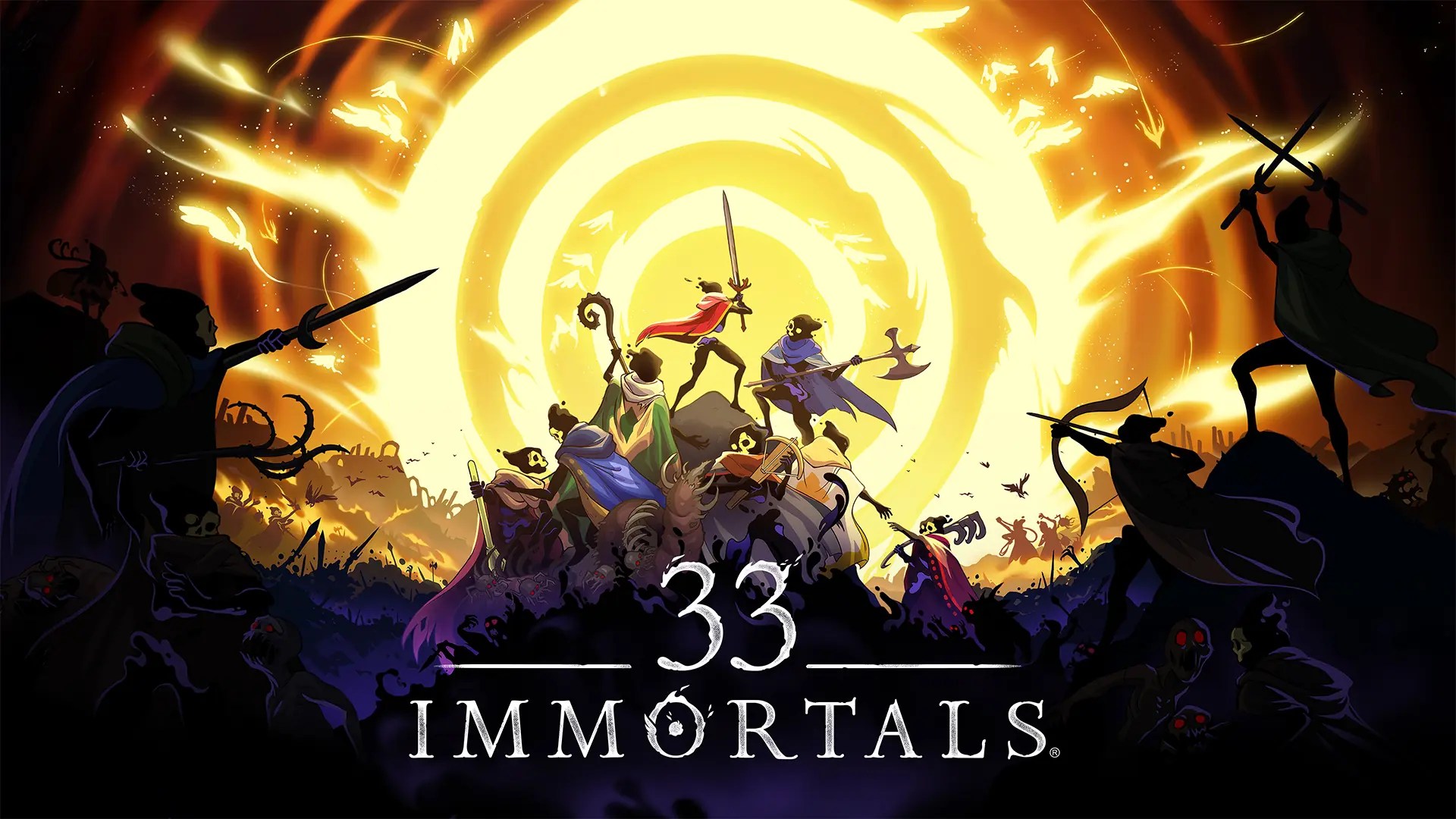
33 Immortals is one of the most genuinely ambitious ideas in the co-op roguelike space: a raid built for thirty-three players, coordinated entirely through emotes and pings, against bosses the size of the screen. From Thunder Lotus — the studio behind Spiritfarer and Jotun — it looks gorgeous, and when a full lobby comes together it delivers something no other roguelike quite does.
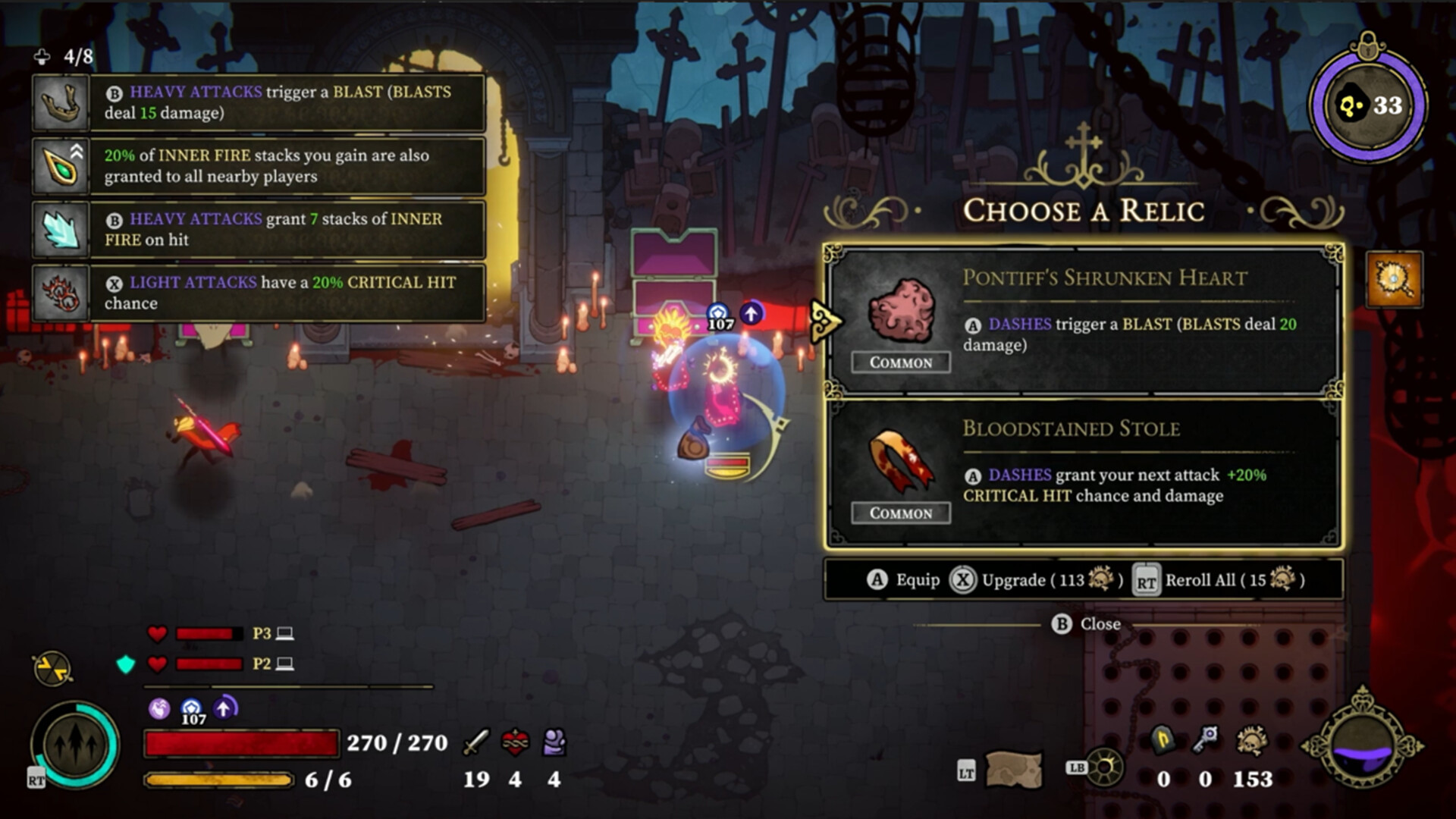
It’s also a game with real problems, some of them structural. The metaprogression grind is punishing in an old-fashioned way, the relic system lacks variety, content is thinner than the concept deserves, and — most critically — the population that the entire design depends on has thinned out considerably.
The Loop
Instant matchmaking with no lobbies or planning. Jump in solo or with up to four friends and you’re immediately in a live run.
Eight weapons define your role — two ranged, two caster, two tank, plus daggers and glaive. Each starts weak and improves the more you use it.
Emotes, pings and cooperative abilities carry all communication. Revive allies, combine powers, and somehow make it work with strangers.
Collect resources, unlock permanent soul upgrades, and chase weapon mastery. This is where the game asks the most patience of you.
When It Comes Together, It’s Brilliant
The presentation is a genuine cut above. Thunder Lotus’s hand-drawn art and character design are beautiful, which is no surprise from the Spiritfarer studio, and the enemy and boss mechanics are well designed. The eight weapons meaningfully change how you play — the crossbow player and the glaive player are having different experiences, and swapping when you tire of one is a real release valve.
Progression is also flexible in a way worth crediting. You can go at your own pace, or push into harder difficulties for better rewards. Multiple reviewers with 150+ hours are still recommending it, which tells you the core loop has genuine legs when the conditions are right.
The Grind Is the Sticking Point
Here’s where the design starts working against itself. The metaprogression asks a great deal, and it asks in a fairly old-fashioned way: to unlock significant damage increases, you’re required to play with every weapon, find multiple upgrades for each, and then play several rounds with each upgrade to master it. The final upgrade for each weapon has a notably low drop rate.
The effect is that you have to do things you don’t enjoy in order to reach things you do. One reviewer — who plays Old School RuneScape, so this is not someone with a low grind tolerance — called it one of the most monotonous progression grinds they’d encountered.
Content volume compounds it. Three worlds and a relatively small boss roster mean the maps become familiar faster than the grind expects them to. Several players independently landed on the same conclusion: more stages, more enemies, more elites and more bosses would have done more for this game than almost anything else.
Technical and Balance Issues
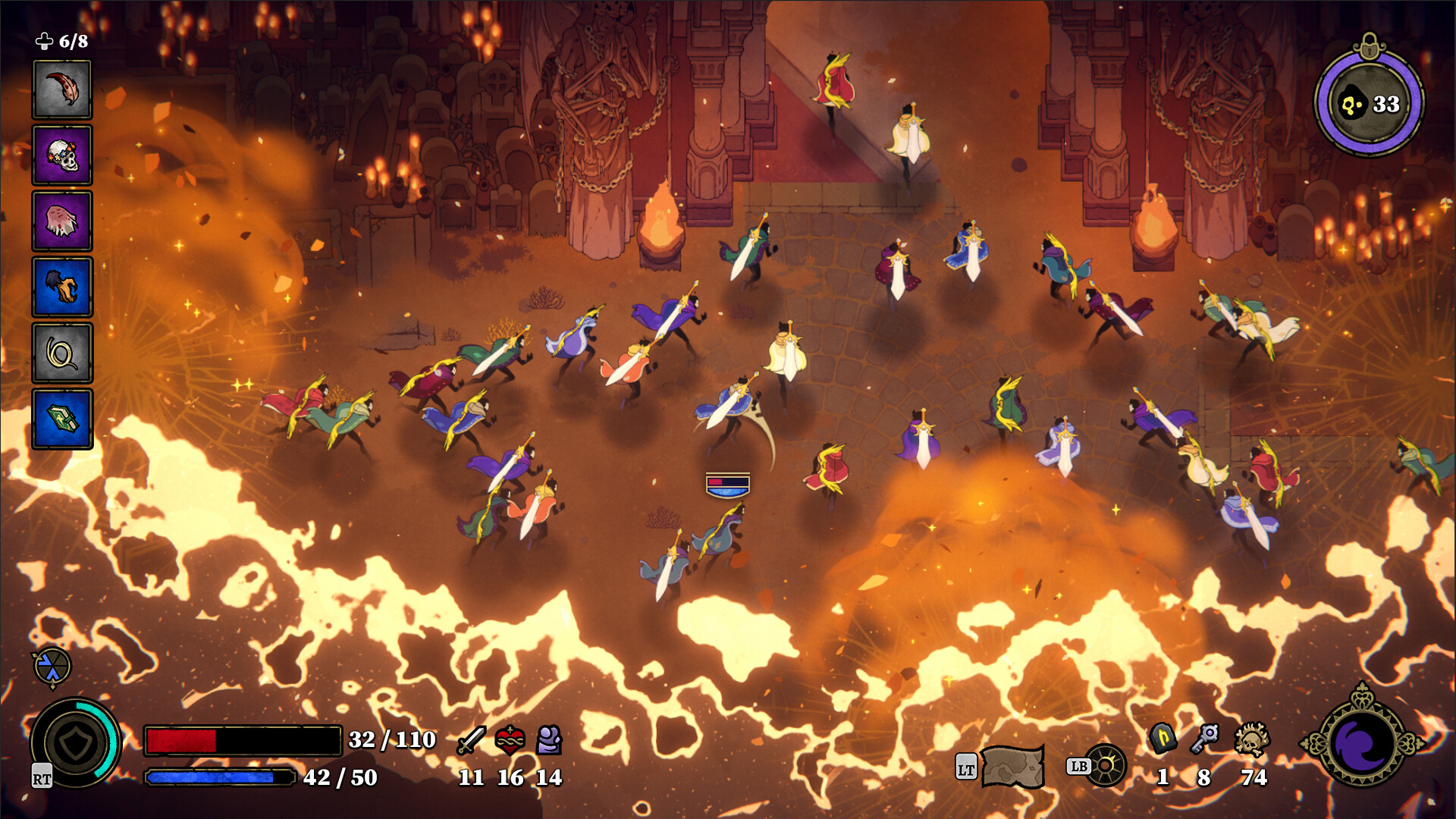
There are balance concerns too. Bosses feature DPS check mechanics, which means groups heavy on tank weapons are more likely to fail outright — the roles aren’t as balanced as they should be, and the sword in particular has shield interactions that behave oddly enough that experienced players avoid certain cooperative abilities on purpose.
Content updates remain the community’s loudest request. The game’s longevity depends directly on population, and population depends on reasons to return — several reviewers have been explicit that without new content, the lobby problem compounds itself.

The Good, The Bad, & The Ugly
| The Good | The Bad | The Ugly |
|---|---|---|
| A Genuinely Unique IdeaNobody else is doing 33-player co-op roguelike raids coordinated entirely through emotes. When a full lobby clicks against a screen-filling boss, it delivers something the genre simply doesn’t have elsewhere. Reviewers with 150 and 300+ hours are still recommending it. | A Punishing, Old-Fashioned GrindMajor upgrades require playing every weapon, farming six upgrades each, and mastering them over multiple rounds — with the final upgrades on brutal drop rates. You must do what you dislike to reach what you like. | The Population ProblemThe single biggest issue, and structural. Full lobbies are hard to find, endgame worlds worst of all — one player tried the final world ten times and never exceeded 7 of 11 players. A 33-player game needs 33 players. |
| Beautiful, and Mechanically SoundThunder Lotus’s hand-drawn art and character design are gorgeous, and the enemy and boss mechanics are well built. Eight weapons genuinely change your role and playstyle, so swapping is a real reset when one gets stale. | Relics Lack ImaginationFormulaic effects bolted to light attack, heavy attack or ability use, many of them useless for your chosen weapon. They rarely transform a build, so runs blur together — and stat-based metaprogression means later runs are just the same run with bigger numbers. | Desync and DisconnectsRubberbanding, freezes and dropouts are widely reported, and server-based hit detection turns poor connections into deaths you couldn’t avoid. Steam Deck players lose progress to it. With no pause and long runs, that hurts. |
| The Demo Is Basically the GameOnly Hard/Ultra-hard modes and half the weapons are locked. You can test matchmaking and lobby sizes at your own play times for free before committing a penny — which, given the population situation, is exactly the right way to evaluate it. | Not Enough ContentThree worlds and a small boss roster wear thin faster than the grind assumes. More stages, enemies, elites and bosses is the near-universal request — and content is what would keep the lobbies full. | Role Balance Is OffDPS check mechanics on bosses mean tank-heavy groups are likelier to fail outright, and sword shield interactions behave oddly enough that experienced players deliberately dodge certain co-op abilities. The roles don’t feel equally viable. |
The Verdict
33 Immortals is a chaotic blast where 33 players storm through roguelike mayhem together, making coordination hilariously fun despite the madness. That’s genuinely true — and it’s why this is a frustrating game to score, because the thing it does uniquely well is the thing most at risk.
The concept is excellent and the execution of the core raid is largely there. Thunder Lotus have made something beautiful and genuinely novel, and players who found their groove here have poured hundreds of hours in without regret. When a full lobby lands a coordinated run against a massive boss, nothing else quite scratches that itch.
But the problems are real and they interlock. The grind is monotonous, relics don’t create variety, content is thin, connections are unreliable, and the population that the entire design requires has fallen away. Each of those makes the others worse — thin content means fewer reasons to stay, fewer players means emptier raids, emptier raids mean less of what makes the game special.
The honest split: if you have a group of friends or you’ll use the Discord to find one, this is well worth playing. A coordinated squad sidesteps the biggest problem entirely, and the game scales so smaller raids remain beatable. At its current price it’s a genuinely good time.
If you’re planning to rely purely on public matchmaking, especially at endgame, temper your expectations considerably. And whatever you’re planning — play the free demo first. It’s nearly the whole game, and it will tell you in one evening whether the lobbies fill at the hours you actually play. No review can answer that question for you as well as twenty minutes of matchmaking can.
A brilliant idea that deserved more content and more players than it currently has. We’d love to be revising this upward.
For more game reviews, check out our full reviews section.