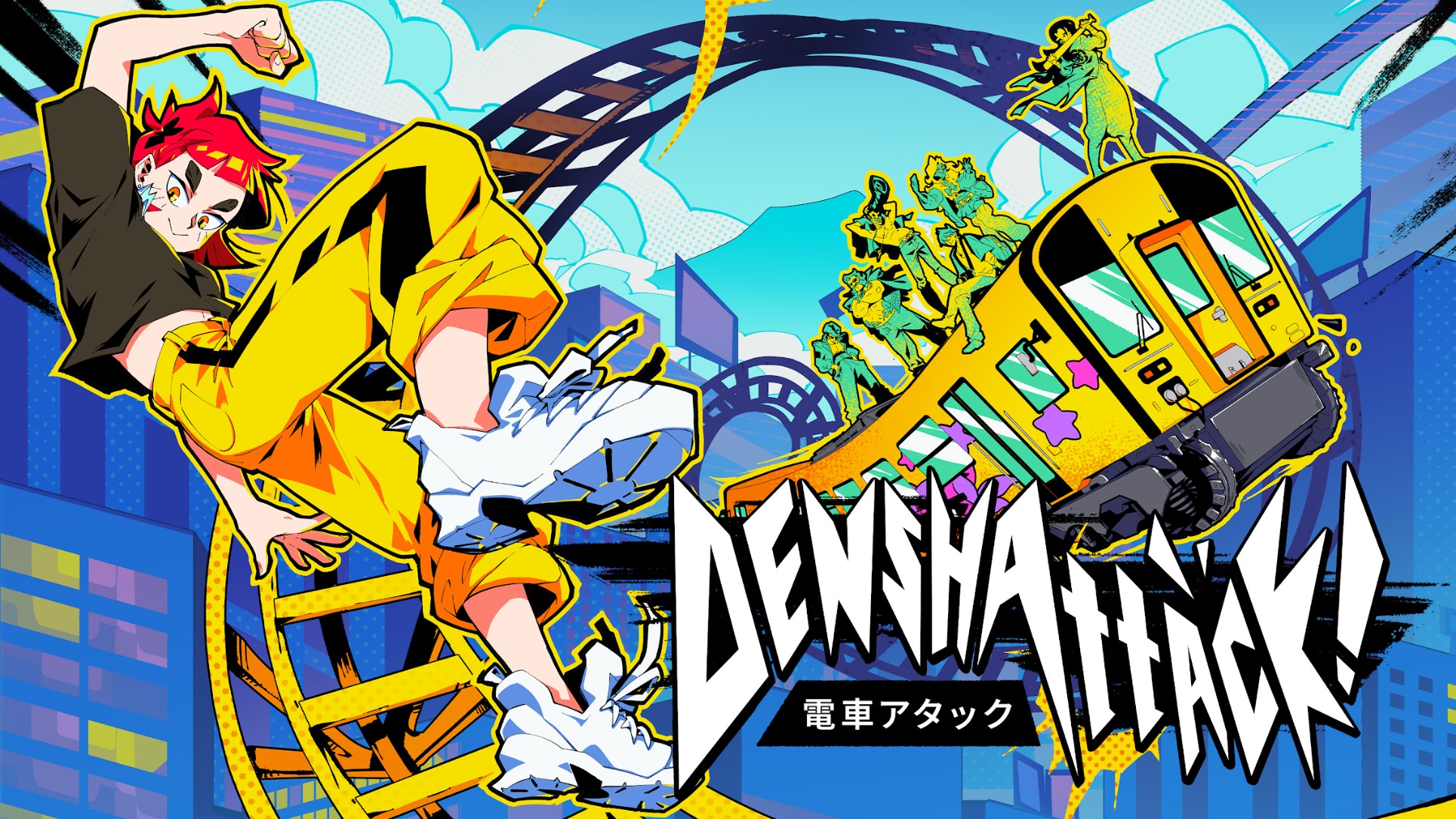
Denshattack! is a game about doing kickflips on a train. That sentence is either the best thing you’ve read all week or it means nothing to you, and I’d suggest that if you’re in the second group you should watch about thirty seconds of footage and then come back, because this is one of the most joyfully specific games of the year and it deserves more than a description.
Undercoders have built a trick-based arcade action game where you pilot a gravity-defying custom train through a Japanese dystopia sealed under corporate domes, grinding rails, chaining combos, chasing high scores, and fighting increasingly deranged bosses on your way to dismantling the Miraidō corporation. It reviews at 88 on both Metacritic and OpenCritic. The Steam community is Very Positive and mostly writing in capital letters. It’s twenty dollars.
The DNA
Everyone who plays this game reaches for the same comparisons, and they’re all correct at once:
The trick vocabulary and combo chaining. Ollie, kickflip, grind, stick the landing. The score-attack structure and the “one more run” compulsion come directly from this lineage.
The style, the attitude, the colour, the soundtrack, the anti-corporate outcast crew. Denshattack wears this influence proudly and earns the comparison rather than just invoking it.
Multiple reviewers independently identified this as made by people who thought Rail Canyon and Bullet Station were the best parts of Sonic Heroes. They’re not wrong, and neither were those people.
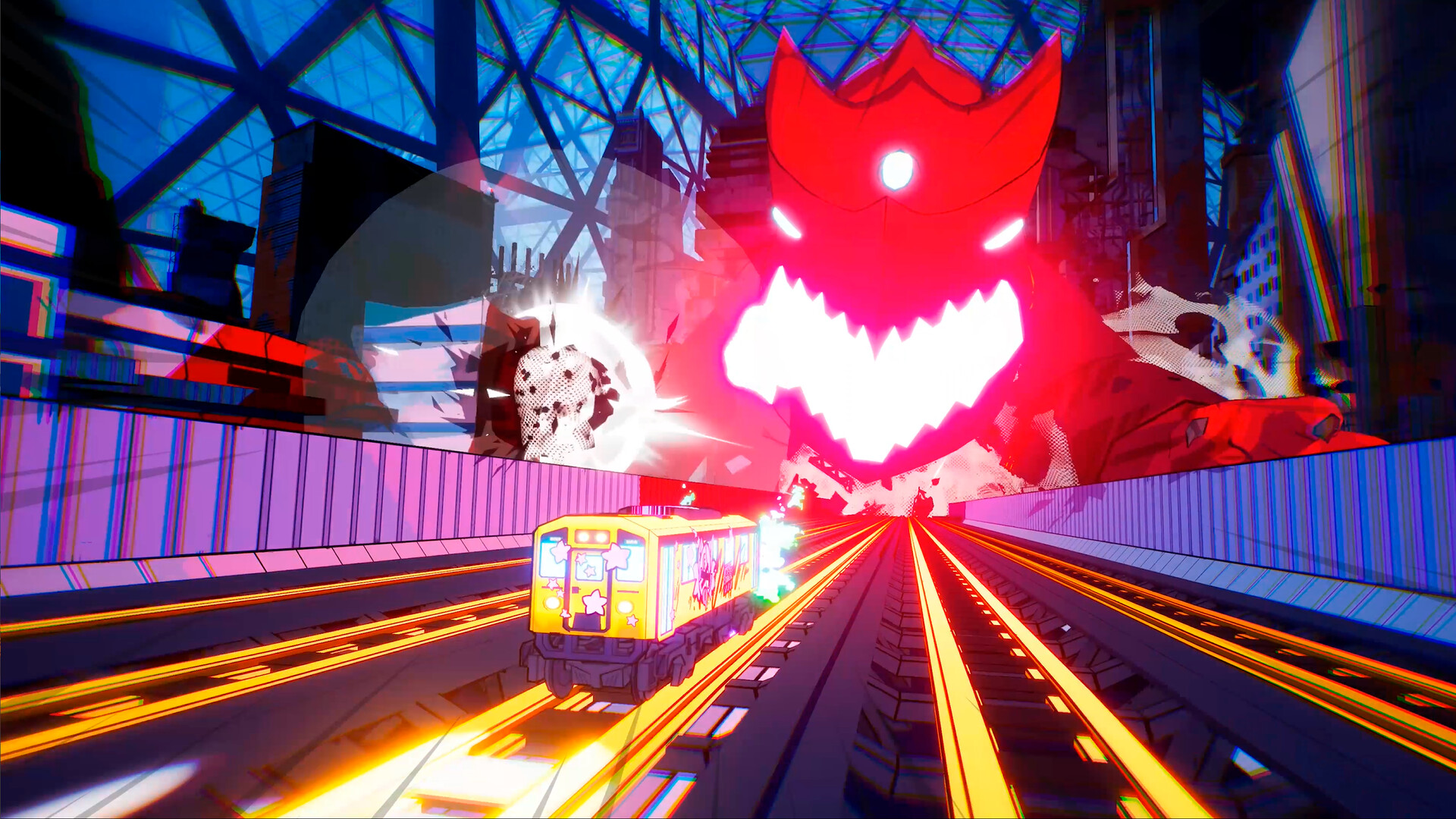
The train isn’t a gimmick layered on top. It’s the core. The on-rails constraint sounds limiting and somehow isn’t — players consistently report it doesn’t restrict expression at all.
That last point is the one that surprises people. “On-rails trick game” sounds like a contradiction — how do you have freedom of expression when your movement is constrained to a track? The answer is that Undercoders built the entire trick system around that constraint rather than in spite of it, and the skill ceiling that results is, per multiple experienced players, seemingly astronomical.
It’s Harder Than It Looks
This is worth flagging because the presentation is so colourful and cartoony that people expect a casual ride. It isn’t. Denshattack is technical and demanding, with a genuinely high skill ceiling, and the community’s most common surprise is exactly this — reviewers going in expecting a simple on-rails experience and finding something with real depth and real difficulty.
The game handles this well by introducing mechanics one at a time so you’re never overwhelmed, but make no mistake: chasing triple gold medals on every level is a serious undertaking. One community reviewer’s assessment — “if you don’t get triple gold medal on every level you haven’t really played the game” — is both a joke and completely sincere.
The Critical Reception
88 on Metacritic. 88 on OpenCritic — “Mighty” territory. Multiple 5/5s and a 9/10 from outlets that don’t hand those out casually. Denshattack is one of the best-reviewed games of the year and it came out of nowhere to do it.
The Bosses Are Unhinged
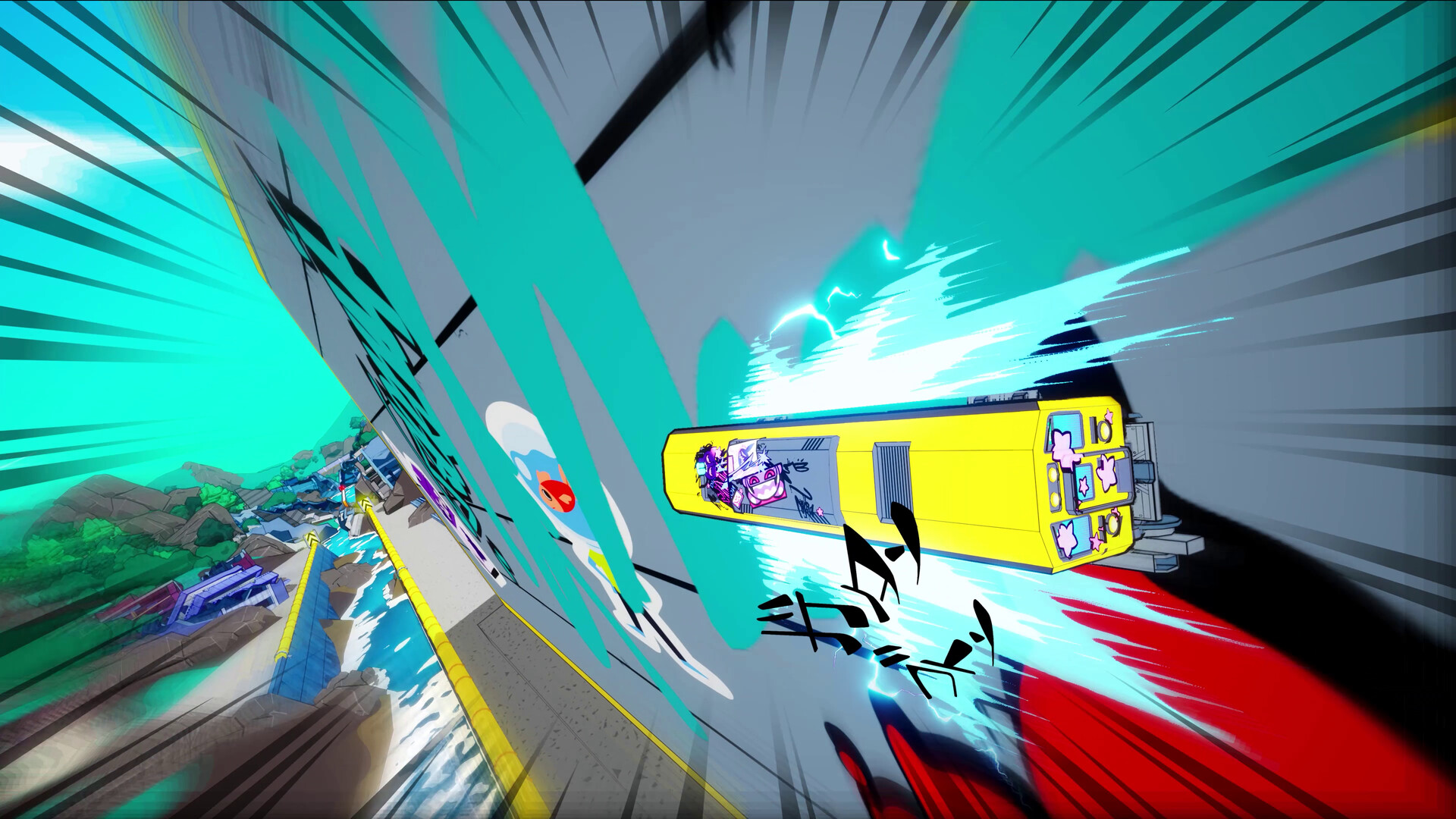
From mecha magical girls to moving castles, mechanical worms to an entire Denshattacker army — the boss lineup escalates from “that’s unusual” to “what am I looking at” and never stops. The community’s most common reaction to the back half of the game is some variation of “I have no idea what just happened but it was peak.” These are the setpieces the game is built around and they deliver, even if a few of them are where the jank lives.

The Good, The Bad, & The Ugly
| The Good | The Bad | The Ugly |
|---|---|---|
| The Controls Are TightKinetic, precise, and technical. The trick system has a skill ceiling that experienced trick-game players describe as astronomical, and the on-rails constraint genuinely doesn’t limit expression. This is the thing the entire game rests on and Undercoders absolutely nailed it. | Boss JankThe bosses are the game’s biggest spectacle and also where its rough edges live. Multiple reviewers note the boss encounters have janky moments that take a 10/10 experience down to an 8 in stretches. Not enough to spoil anything — but it’s the one consistent criticism. | Soundtrack Is DivisiveMost players call the music phenomenal and pumping. At least one found it not particularly catchy. For a game this indebted to Jet Set Radio, where the soundtrack is half the identity, that split is worth noting even though the majority position is strongly positive. |
| Visual SpectacleThe high-contrast, colour-saturated art direction is being compared to Persona 5 for sheer style density. It pops especially hard on Steam Deck OLED, and it runs well above 200fps on mid-range hardware. Gorgeous and performant is a rare combination. | Short-ish Main Story~8 hours to see the credits. That’s appropriate for an arcade score-attack game where the real content is medal-chasing and mastery, but if you’re a one-and-done player, know what you’re getting. | |
| It’s Twenty Dollars88 Metacritic, 88 OpenCritic, multiple 5/5s, a genuinely enormous skill ceiling, ~8 hours of story plus a mountain of medal content, and it runs beautifully on Steam Deck. There is no version of this where $19.99 isn’t an easy yes. | Controller Strongly RecommendedThe developers recommend it and the game is clearly built for it. Not a knock — but it’s a real requirement rather than a preference for a game this precision-dependent. |
The Verdict
Denshattack! is a stylish adrenaline rush that nails the blend of trick-based action and cyberpunk aesthetics in ways most games can’t touch. That’s the TBB Curator blurb, and for once it might be underselling it. This is one of the most confidently weird, mechanically sharp, visually loud games of 2026, and the fact that it’s a trick game about trains is the least interesting thing about it once you’re actually playing.
Undercoders took a premise that reads as a joke and built something with real technical depth underneath it. The controls are excellent. The skill ceiling is enormous. The presentation is gorgeous. The bosses are completely unhinged in the best way. The story and characters are better than they had any obligation to be. It runs at 200fps on modest hardware and 60 locked on a Steam Deck. It’s twenty dollars.
The boss jank is real and the story runtime is on the shorter side — but this is a score-attack arcade game, and judging it on story length is like judging Tony Hawk on its narrative. The content is in the mastery, and there’s a mountain of it.
If the trailer looks exciting to you, buy it. That’s the whole recommendation. Almost nobody who’s played this game has come away anything less than delighted, and the ones who list complaints are listing them from the other side of forty hours of medal-chasing.
For more game reviews, check out our full reviews section.