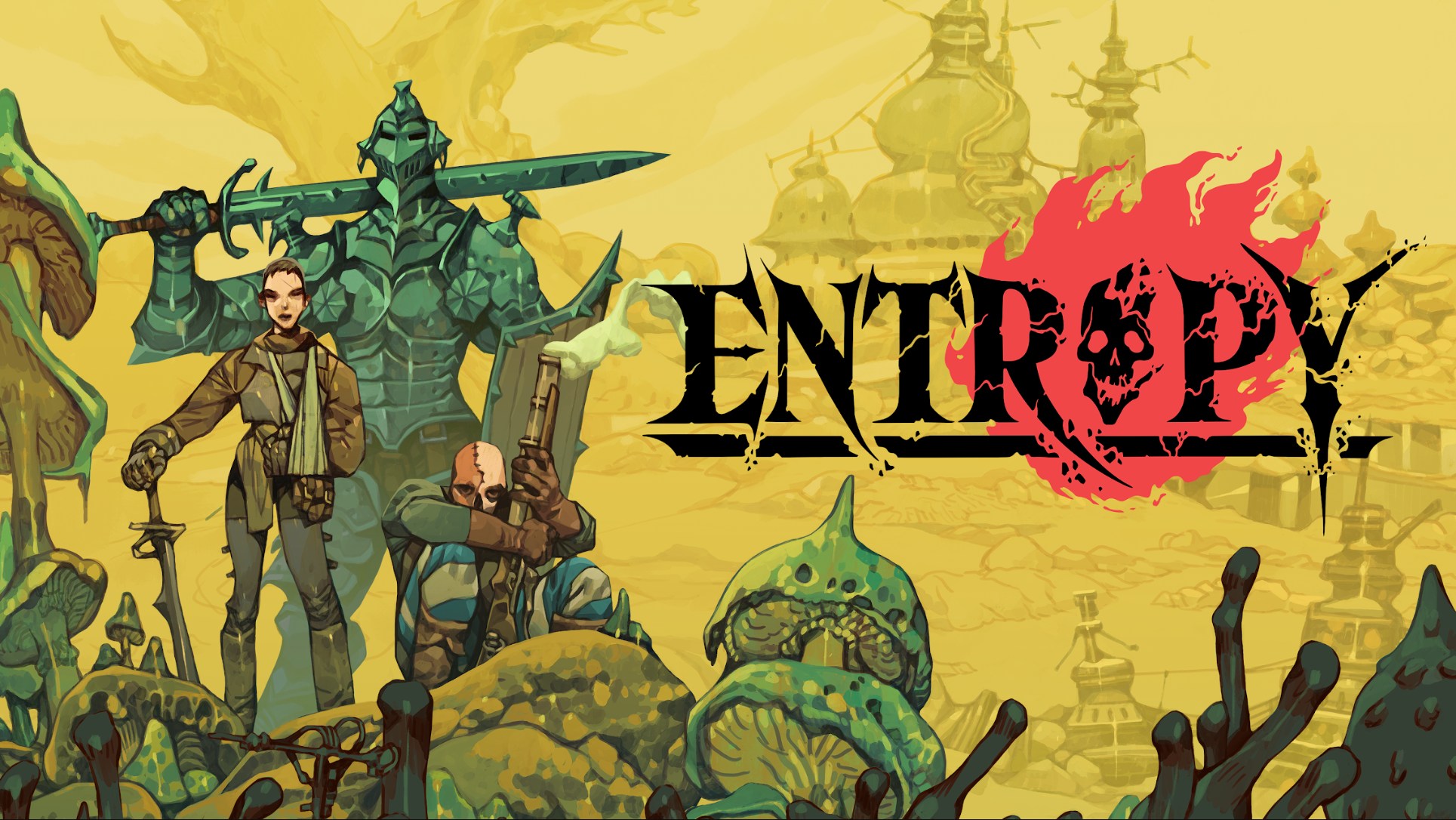
Entropy opens with your stage performance interrupted by fighting at the town gates. Demons have come to Draenog, your prop weapons will have to do, and the mercenary company you spend the next several hours assembling starts as a handful of actors who happened to be standing nearby.
It’s a tactical turn-based RPG from Lovely Hellplace — the studio behind the well-regarded Dread Delusion — published by DreadXP. And while the genre shift from first-person exploration to party-based tactics surprised a few returning fans, the thing that made that game special has carried over entirely.
The Worldbuilding Is the Headline
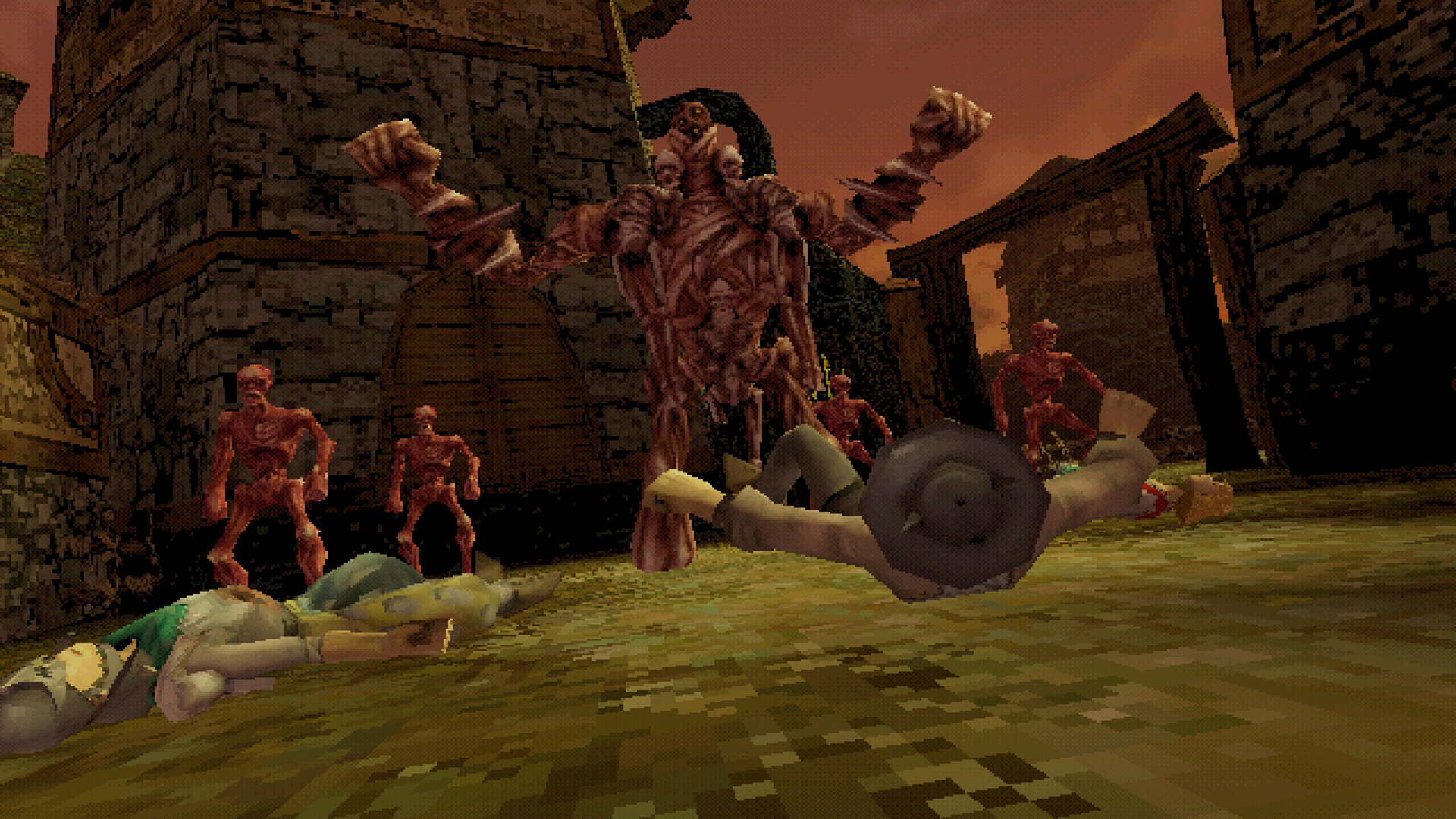
The reaction to that world was near-unanimous. Words like “exceptional” came up repeatedly, alongside a consistent instruction: talk to everyone. Understanding this place is most of the point, and the game rewards the effort.
Artist Artyom Trakhanov‘s work drew particular praise — designs and models both — and the retro 3D aesthetic (with an optional CRT filter) lands somewhere in PS2-era territory without feeling like a cheap nostalgia grab. Several players noted it creates what one called a beautiful space of endless decay.
The Loop
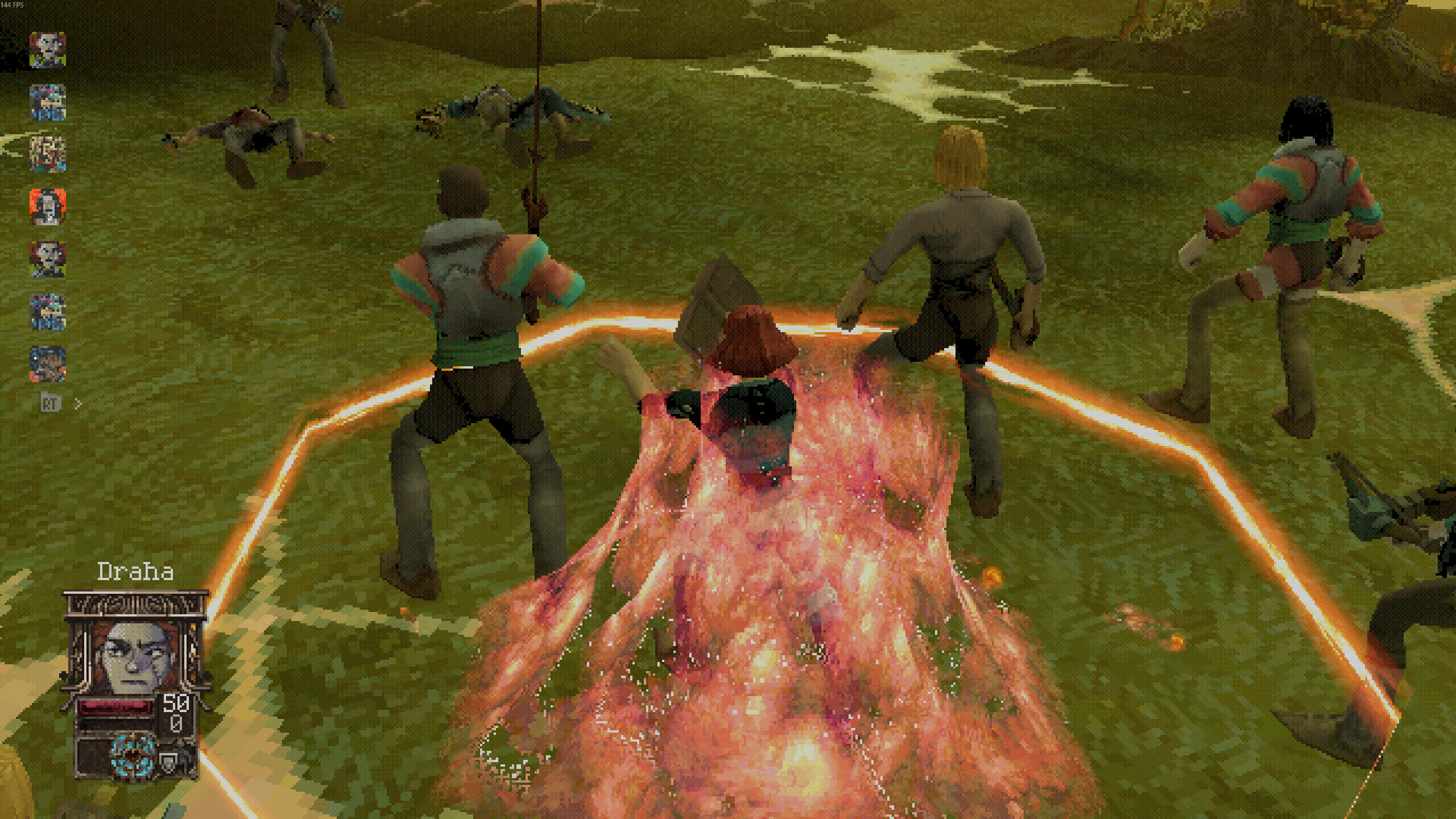
Turn-based combat with a targeting system that makes fights tactical from the first encounter rather than after you’ve unlocked abilities.
Up to six active party members with a reserve of fifteen. Recruit through NPCs or the inn board to replace whoever didn’t make it.
Every battle costs money — you pay your team afterwards. A bigger roster means bigger bills, balanced against gear, items and lodging.
A world map with random events, explorable towns, and decision points with genuinely different outcomes — some netting notably better gear.
Your Party Can Actually Lose Limbs
The permadeath framing does interesting things to how you play. Multiple reviewers described treating their party as genuinely precious — one noted that the possibility of loss made him treasure characters “in a weird way,” while another spent all of Hard mode braced for the mistake that would cost him someone.
Structurally, though, mercenaries are also resources. Six active slots and fifteen in reserve tells you the game expects attrition, and expects it to get worse. Comparisons to Battle Brothers and LISA: The Painful came up more than once, alongside Final Fantasy IX for the JRPG bones.
Where It Needs Work
The difficulty inconsistency is the one we’d prioritise. When experienced tactics players find Hard mode undemanding while others hit a wall at the same encounter, that’s a tuning problem rather than a matter of taste — and it’s exactly the kind of thing Early Access feedback exists to fix.
The camera is the other easy win. Inverted controls between first and third person is a straightforward bug rather than a design decision, and the unannounced rail transitions could be signposted cheaply.
What’s Coming
The Gloaming Isles. Two towns, three dungeons, numerous smaller locations. ~25% of the full game.
A major update opening a new chunk of the world — new towns, quests, dungeons and characters.
Split into two parts, with the finale arriving only at full 1.0 launch.
Roughly one year in Early Access. Fully funded — 1.0 is happening either way.
Lovely Hellplace have done this before, having taken Dread Delusion through Early Access to a successful launch, and the plan here is clearly modelled on that. Minor updates are promised between the major act drops.

The Good, The Bad, & The Ugly
| The Good | The Bad | The Ugly |
|---|---|---|
| Exceptional WorldbuildingA mycopunk world of lost tech, demons, fae, Shakespearean dialogue and spooky snails that coheres instead of collapsing. “Kenshi if mushrooms grew all over it.” Artyom Trakhanov’s art and the retro 3D aesthetic create a genuinely distinct space of beautiful decay. | Inconsistent DifficultyTactics veterans found Hard mode undemanding and the final boss trivial with a good build; others hit a severe spike at that same fight and had to grind. That’s a tuning problem, not a taste one. | Only Act 1 ExistsRoughly a quarter of the game and three to five hours of content. The store page doesn’t foreground the act structure, and at least one player felt genuinely misled by that. Know before you buy. |
| Maiming With ConsequencesParty members can lose limbs or die permanently — and the game references the injury in later dialogue. That follow-through turns a stat penalty into something that happened to a person, and it’s the detail players reacted to most. | Repetitive MusicWell-liked overall and called a highlight by several players, but the battle theme wears thin quickly. One player wanted it as strange as the environments, which is the right instinct. | Camera ProblemsWonky on mouse and keyboard, inverted between first and third person, and sudden unannounced switches to rail-camera sections. Minor individually, jarring together. |
| Smart Attrition EconomicsSix active party slots, fifteen in reserve, and every battle costs wages. Mercenaries are resources as much as characters, and the roster size makes it clear the game expects things to get considerably nastier. | Slow-Building CombatThe systems clearly have depth, but the first hour doesn’t show much of it. Players who stuck with it found the targeting and tactics far more rewarding later. | Present but Forgivable JankRough edges throughout — universally described as not immersion-breaking, but they’re there, and this is a year away from finished. |
The Verdict
Entropy delivers classic JRPG tactical combat with meaningful choices that actually shape your hellish journey, making every mercenary decision feel weighty and consequential. As an Early Access foundation, it’s a strong one.
The worldbuilding is doing the heaviest lifting and it’s genuinely excellent — a mycopunk dying world that feels authored rather than assembled, with art and writing to match. The combat has real teeth thanks to permanent loss, and the dialogue acknowledging your maimed party members is the sort of detail that signals a team paying attention.
What’s here is rough in the ways Early Access games are rough. Difficulty needs balancing, the camera needs fixing, the battle music needs company. None of it is structural, and all of it is squarely in the category of things a year of iteration should resolve.
The honest read: if you liked Dread Delusion, or you want grimdark turn-based tactics where losing people is routine, buy it now. The price only goes up from here, the studio has already taken one game through this process successfully, and 1.0 is funded regardless.
If reaching the end of Act 1 and stopping would frustrate you, wishlist it and come back later. Three to five hours is a real amount of game, but it ends mid-story by design, and that’s not what everyone wants from a purchase.
We’ll revisit this when Act 2 lands. On this evidence, it’s worth revisiting.
For more game reviews, check out our full reviews section.