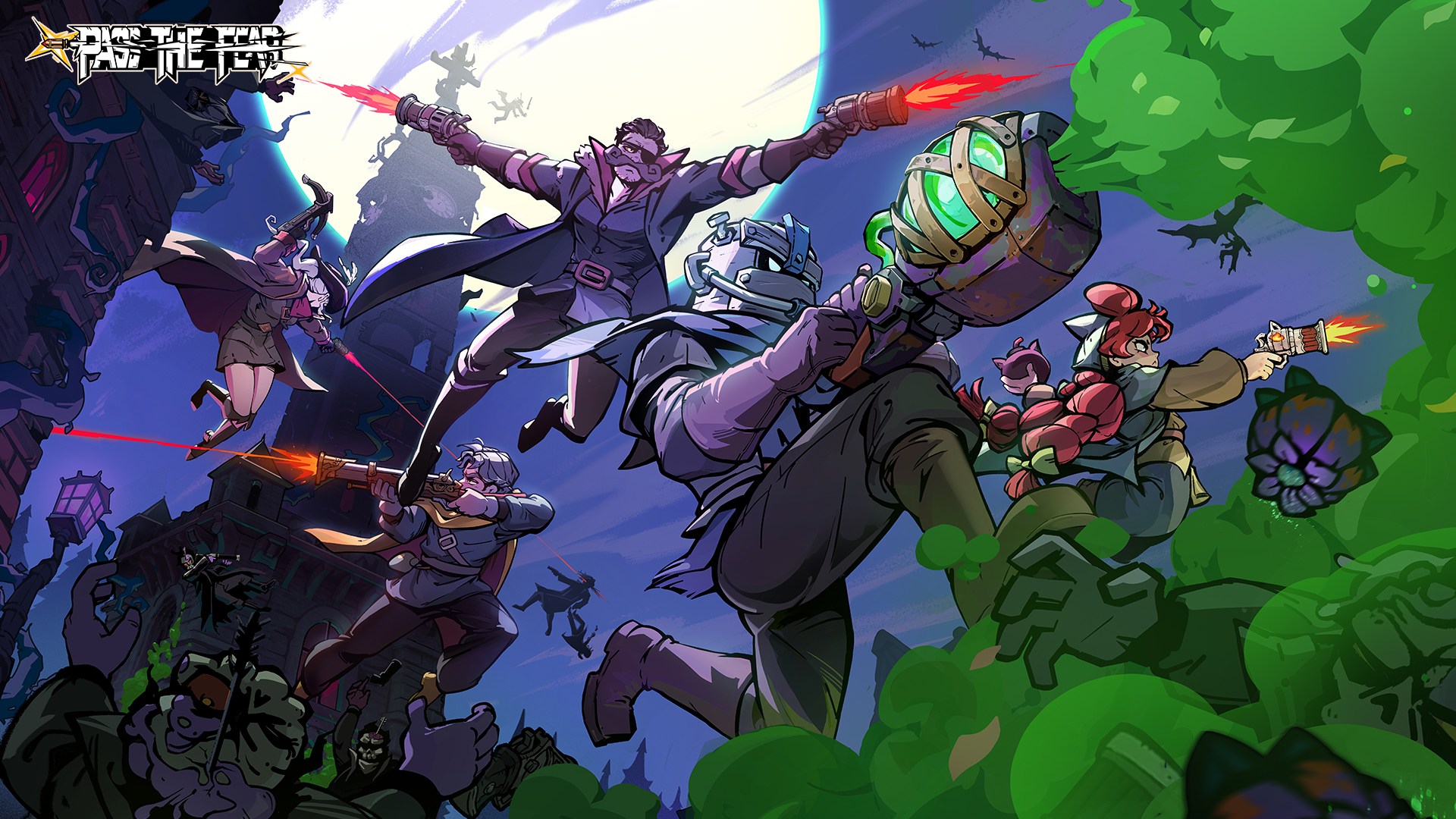
Our Pass the Fear review comes with a confession: none of us expected to like this one as much as we did. On paper it’s another roguelite bullet-hell shooter — a catastrophic Witch’s Disaster raises an ancient Wall of Storms, and your motley crew of demon hunters has twelve in-game hours to escape a corrupted island before dawn. In practice, it’s one of the most satisfying build-crafting roguelikes we’ve played this year, and it grabbed us far harder than its cute cartoon art style let on.
This Pass the Fear review is based on the full 1.0 release from PlayMud Studio and Paras Games, which launched to a Very Positive rating and a 22,901-player peak. We put in long solo runs and long co-op sessions — the kind where a friend and I looked up after nearly thirteen hours wondering where the evening went. There’s real depth here, and also some real, specific problems worth talking about honestly.
The Loop
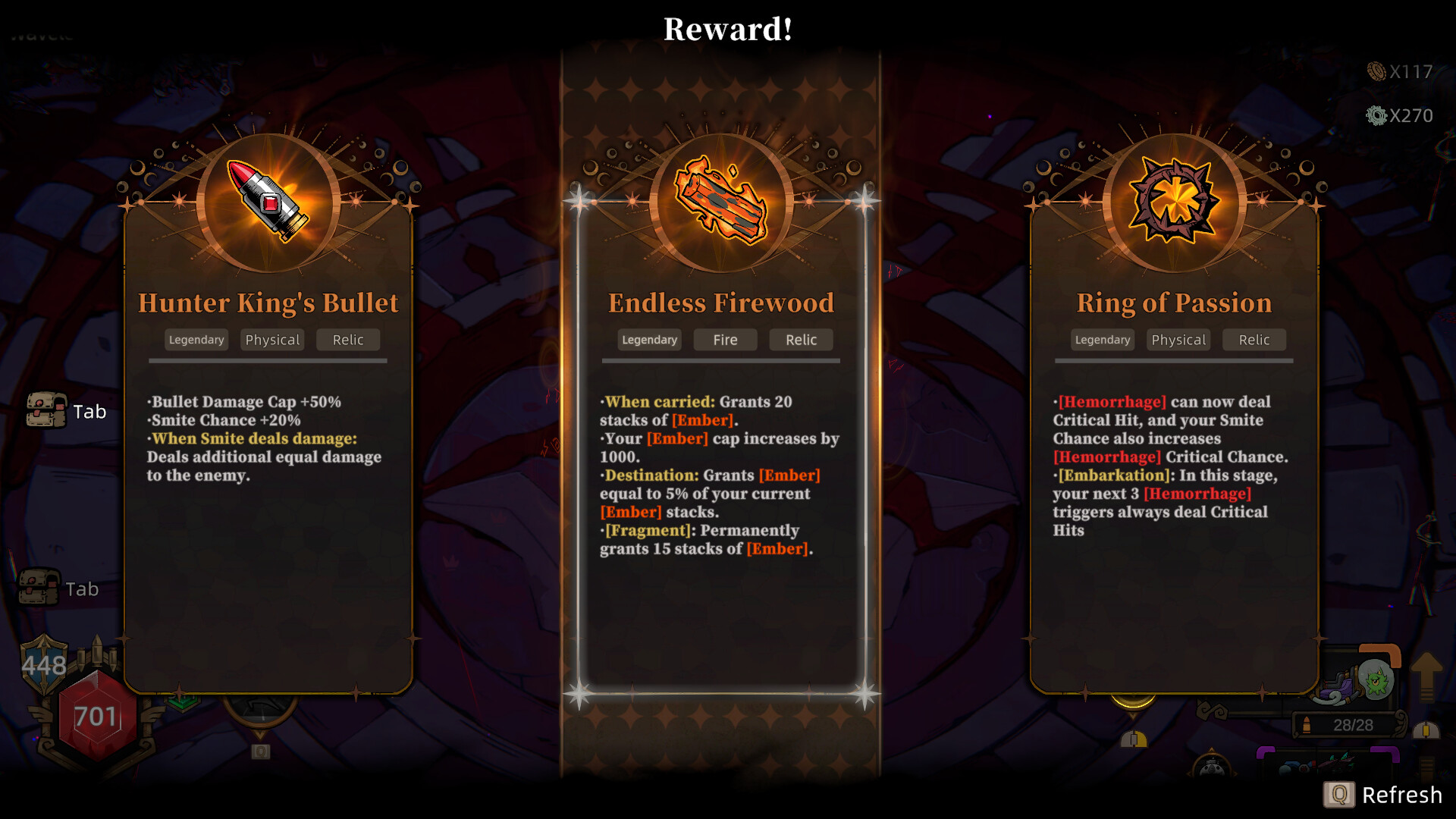
Fancy weapons, Weapon Parts, Relic fusion, Tarot Cards, elemental effects, random events — every pickup is another experiment. Stack projectiles into a “Fireworks Master,” or funnel everything into one shot that deletes a health bar.
Shatter, Embarkation, Growth, Final Shot, Disruption — there’s no single right answer. Mix them into Transmutation chains, looping triggers, and exponential scaling. When a build clicks, it’s wildly satisfying.
Character Talents and Team Talents make you stronger across runs. Eight characters, each with different traits and skill trees, give every escape attempt a distinct flavor.
Higher difficulties bring tougher enemies and better drops, and unlock Chaos Battle Scar mode — every Scar carries a boon and a curse. High risk, high reward, and the heart of the endgame.
Build Cohesion Over Bullet-Dodging
Here’s what makes Pass the Fear stand out from the roguelite pack: it’s not about stacking power on top of power. You actually have to think about your build as you move through the levels, and you can’t just play one style and expect to make it every time. It’s a bullet hell that’s far more focused on build cohesion than on twitch movement or fine-grained risk assessment — which is exactly why it hooks people who normally bounce off the genre. More than one of us described it as “baby’s first bullet hell” in the most affectionate sense: approachable on the surface, deceptively deep underneath.
The comparisons write themselves, and they’re all flattering: Enter the Gungeon’s gunplay, Binding of Isaac’s item chaos, a dash of Hades, with Castle Crashers energy in co-op. But the synergy layer is its own thing. A wide variety of legendary items can drastically change what you want to build and how, and there’s almost no criticism to level at the build variety — from the start of a run to the end, you’re still hunting for that one perfect synergy piece. That “just one more run” pull is the real product here, and it’s strong.
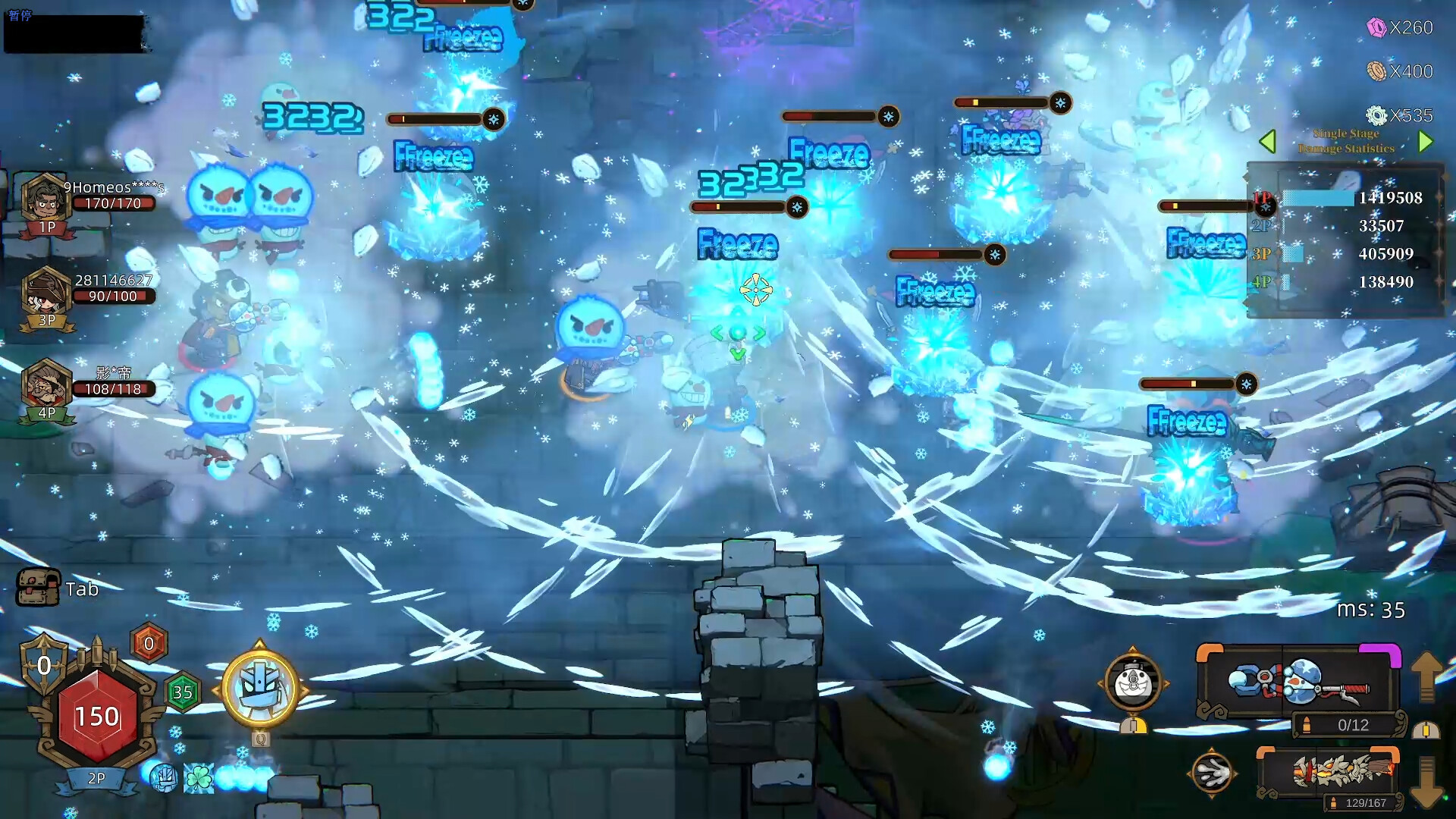
Co-op is where it truly comes alive. It has everything you’d expect — clutch saves, item swapping, fighting through tough encounters together — but the special sauce is the persistent Total Damage and Single-Stage Damage graph on screen at all times. It turns every session into a friendly competition over who’s the true damage king and who’s stuck as the team’s “support bot.” One of us ran the whole campaign with their partner and never stopped having fun. It’s simple, easy to work with, and genuinely addictive with a friend.
What Needs Work
The scaling curve is lopsided. This is the big one, and it’s a common thread across serious players. The midgame is the hardest part of almost every run — enemies do heavy damage and your survivability lags behind your offense, so every fight becomes a dodge-fest. Then you cross a threshold and your damage outscales the enemies so completely that their attacks barely happen. The final boss is frequently one-shot before it can act. The difficulty arc is a spike in the middle and a flatline at the end, when it should build to a climax.
Late-run “junk time.” Related, and echoed by high-level players: growth caps hit too early. With Embers capping at 999 and a limited pool of treasures, some runs are effectively “solved” by around Chapter 3 — most treasures become useless, many effects stop mattering, and new pickups are just dismantled for parts. The last stretch of a maxed run can feel like garbage time rather than a payoff.
Reality difficulty amplifies the imbalance. The modifiers mostly make you take more damage on the downside while the upsides synergize hard with one or more builds — so the highest difficulty reinforces the exact snowball problem instead of correcting it.
The co-op reconnect bug. A genuine sore spot: if a co-op partner goes AFK too long or drops mid-run, they can be unable to reconnect, forcing a full run restart. Losing a long run to a disconnect is brutal, and this needs to be near the top of the fix list.
Content ceiling arrives fast. The value is enormous, but the “real” endgame arrives around the 14-hour mark and there isn’t a huge amount to chase afterward. Players wanting more consistently ask for the same things: more characters, more boss and enemy variety, more weapons, and archetypes like an archer/rogue or a paladin/cleric.
Uncertain long-term support. Some players are skeptical this style of roguelike gets meaningful post-launch updates. That’s speculation, not fact — but it’s the difference between “great value now” and “a game I’ll play for a year,” and it’s worth setting expectations honestly.

The Good, The Bad, & The Ugly
| The Good | The Bad | The Ugly |
|---|---|---|
| Build-First DesignThe synergy system is the star. You genuinely have to think about your build, not just stack power — Transmutation chains, legendary items that reshape your whole plan, and near-limitless combinations. The “just one more run” hook is as strong as any roguelite this year. | Lopsided ScalingThe midgame is the hardest part of the run and the endgame is the easiest — you outscale enemies so hard that late fights, including the final boss, often end before they begin. The difficulty arc peaks in the middle instead of the end. | The Co-Op Reconnect BugIf a partner drops or goes AFK too long mid-run, they may be unable to rejoin — forcing a full restart. Losing a multi-hour co-op run to a disconnect is the single most painful thing in the game and needs fixing fast. |
| Co-Op & the DPS GraphSimple, easy, and genuinely addictive with a friend. The always-on Total and Single-Stage Damage graphs turn every run into a friendly damage-king competition. Perfect for the “where did the evening go” kind of session. | Early Growth CapsEmbers max at 999 and treasures are limited, so runs can feel “solved” by Chapter 3 — most later pickups become dismantle fodder and the final chapters drift into junk time rather than a climactic payoff. | Reality Difficulty Reinforces ItThe hardest mode’s modifiers mostly pile on incoming damage while the upsides synergize with strong builds — so the top difficulty amplifies the snowball problem rather than balancing it. |
| Charm, Value & ApproachabilityThe cartoon art, animation, and sound design are excellent, the raid-like boss mechanics land, and there’s surprising lore. It’s a bullet hell newcomers can actually enjoy — insane bang for the buck at under $19. | Content CeilingThe real endgame arrives around 14 hours and there’s not a ton to chase after. Players keep asking for more characters, bosses, enemies, and weapon variety — and new class archetypes like an archer or a cleric. | Long-Term Support UnknownThere’s community doubt about whether this style of roguelike gets sustained updates. Pure speculation — but it’s the line between “worth it now” and “worth it for a year,” so temper expectations. |
The Verdict
This roguelite bullet-hell delivers intense, fast-paced action with strategic depth that’ll keep you coming back for just one more run. That’s our TBB Curator take, and after a stack of solo runs and one co-op session that ate an entire evening, it’s earned. Pass the Fear is that rare roguelike that’s both approachable enough for genre newcomers and deep enough to obsess over — the build-crafting is the best thing about it, and it’s excellent.
It’s not flawless. The scaling curve is genuinely lopsided, the growth caps arrive too early and turn late runs into junk time, and the co-op reconnect bug can cost you hours in one cruel moment. These are real problems, and the kind that keep it off a top-tier score. But they’re balance-and-patch problems sitting on top of a fundamentally excellent foundation — not design rot.
The honest split: if you like Enter the Gungeon, Binding of Isaac, Brotato, or Hades — or you’ve got a friend for co-op — buy this now. The intro discount puts it around seventeen dollars, and even players who wish it had more content agree the value is enormous. The synergy hunt alone is worth the ticket.
If you specifically need a roguelike with a huge long-tail of content, go in with clear eyes. You’ll get a fantastic 15–20+ hours and probably a lot more in co-op, but the deepest endgame reveals its ceiling faster than the genre’s biggest names. Whether that ceiling rises depends on post-launch support we can’t yet promise.
Either way, this is a genuine surprise and an easy recommendation. It reminded several of us why we love the genre, and the fact that its biggest flaws are “the endgame gets too easy” and “we want more of it” tells you how good the core actually is. We’ll happily revisit if PlayMud keeps building.
For more game reviews, check out our full reviews section.